Photographs that put the rhythm machine back into the hands, rooms and stages where it mattered.
Each photograph is kept with the machine story it illuminates. Captions say plainly whether the image shows the instrument itself or provides the surrounding artist and studio context.
143 images to explore
No images match. Try another maker or clear the filters.
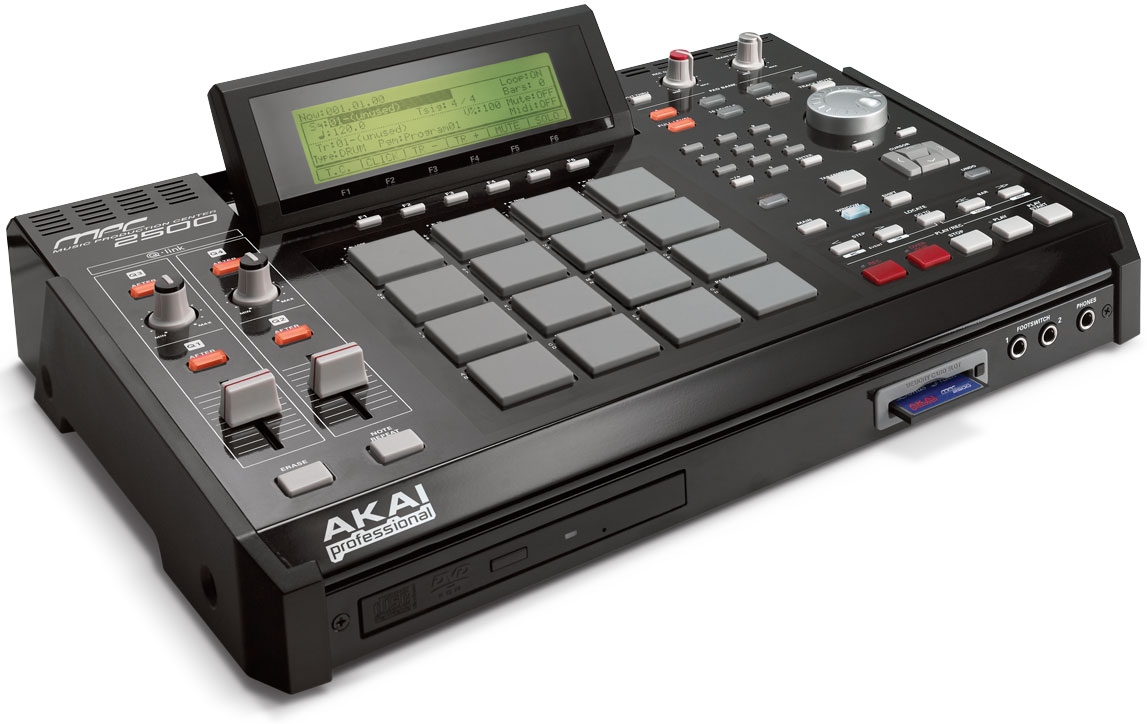
The Akai MPC2500 from Reverb’s 2016 AraabMuzik interview. It is a product photograph rather than AraabMuzik’s own unit; the interview identifies the MPC2500 as his mid-range studio choice and follows the making of Dream World.
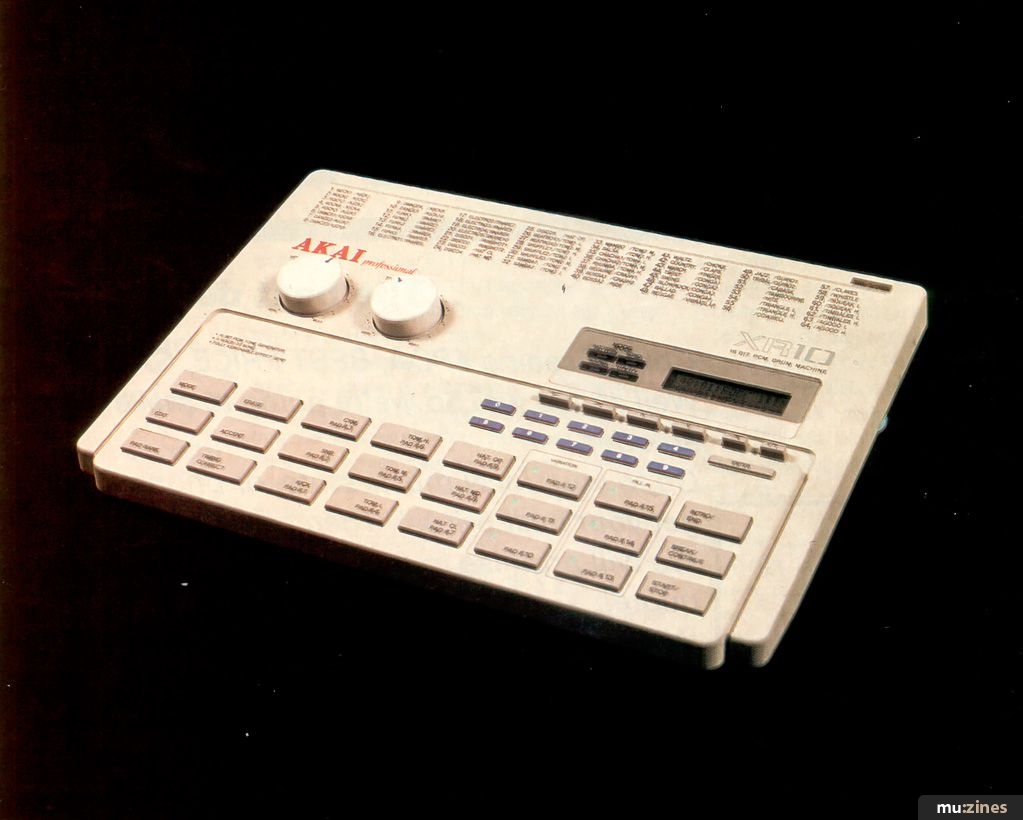
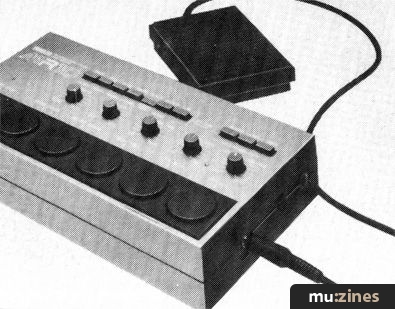
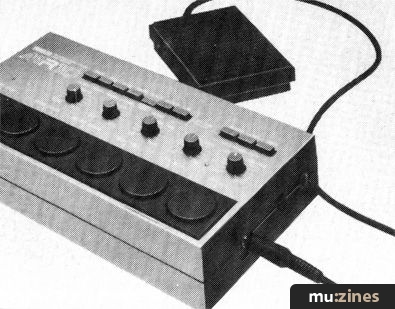
Akai’s XR10 in period review photography. D Fast identifies the XR10 in the making of “Do You Wanna Dance With Me?”; this image shows the machine rather than the artist’s specific studio.
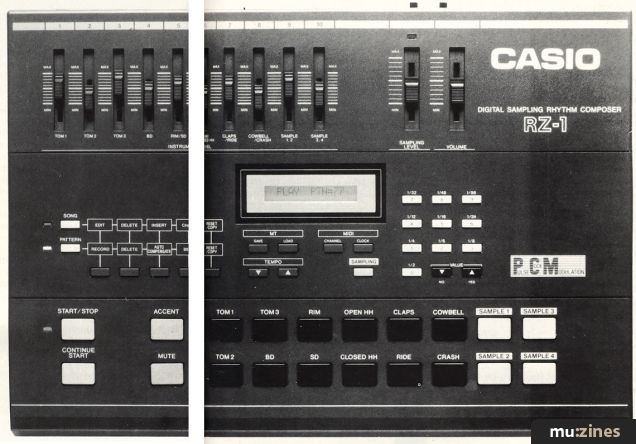
Beauty And The Beat; Casio Digital Sampling Rhythm Composer RZ-1; Casio RZ1; Sampling Perc!
Casio’s RZ-1 in period review context. Nathan Fake names the 1986 sampling rhythm composer among the machines behind Providence; this document returns to the instrument’s original public moment.
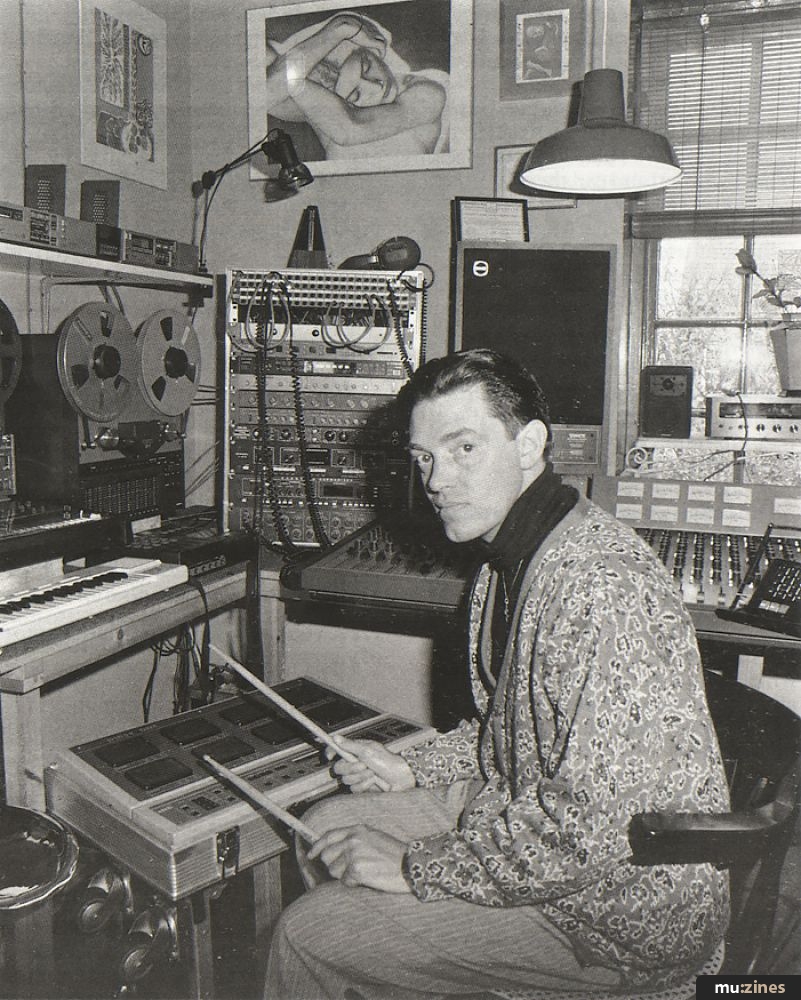
Bill Nelson in his 1986 studio with the distinctive eight-pad AHB Inpulse One in the foreground. The accompanying interview identifies it as the machine behind every drum part on Getting the Holy Ghost Across.
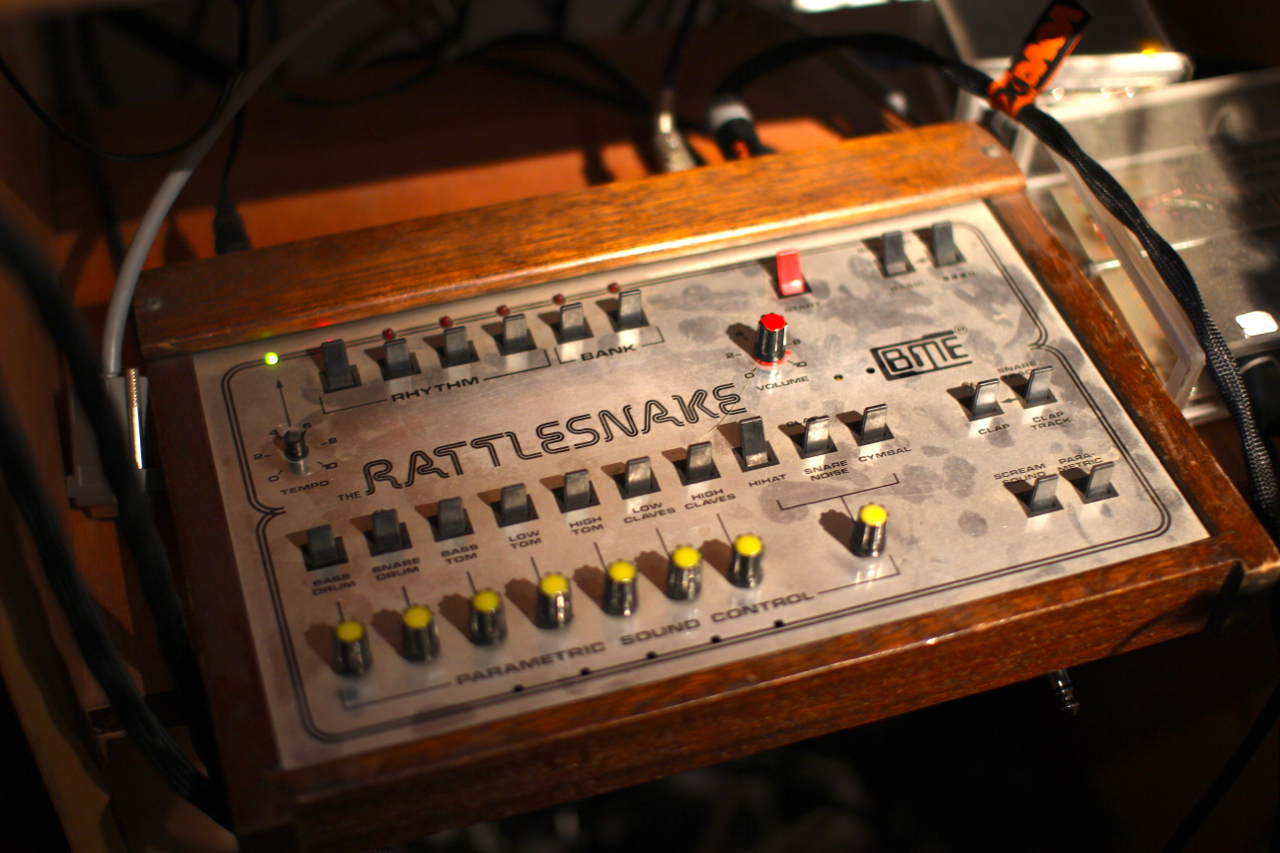
The BME RattleSnake Parametric Percussion System in a retained reference photograph. Hainbach’s RattleSnake project gives the unusual instrument an artist story without claiming the image is his unit.
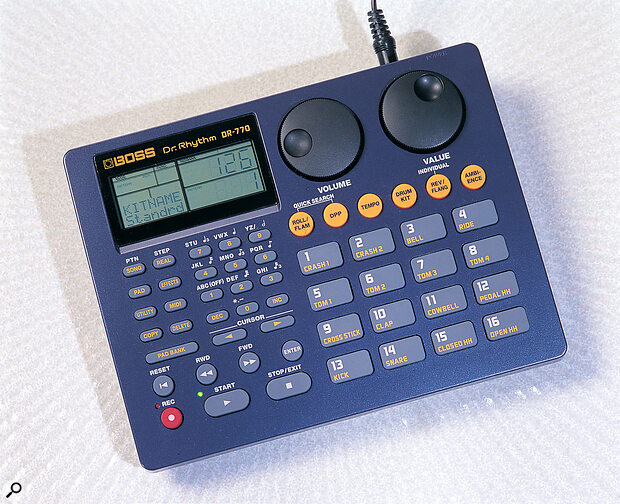
BOSS DR-770 review photography from Sound On Sound. Caro C identifies the machine on “V To The Dub”; the scan documents the production model, not the exact recording unit.
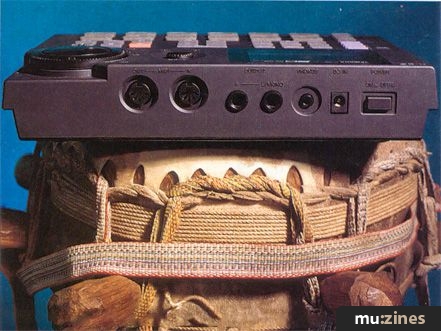
The rear of Yamaha’s RY20 in period coverage. LWSAMY recalls using one through home-recording years; this is a launch-era product view rather than a personal studio photograph.
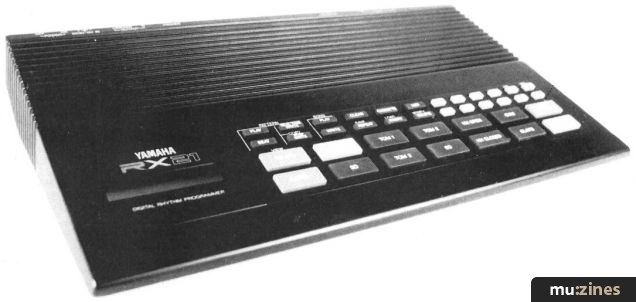
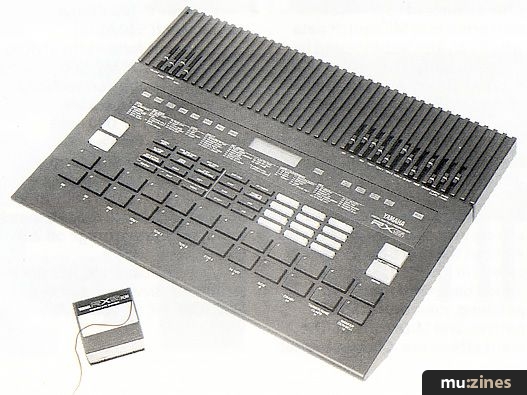
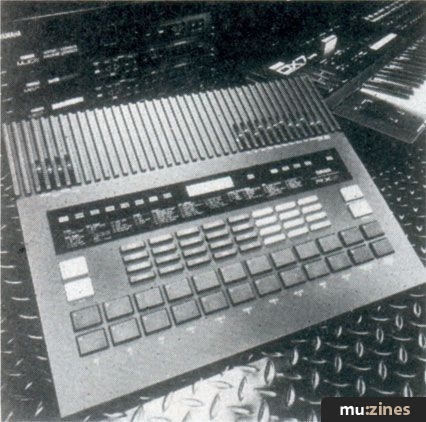
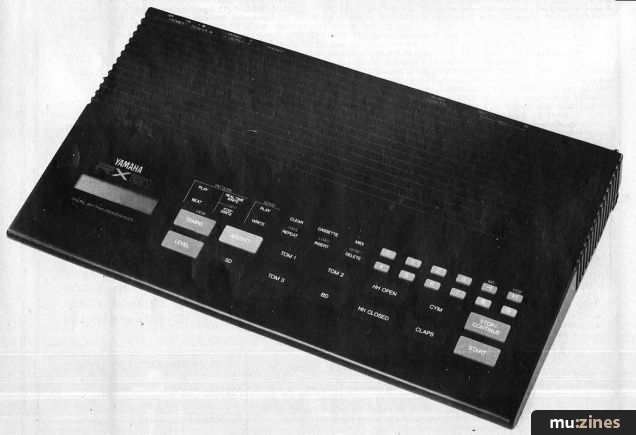
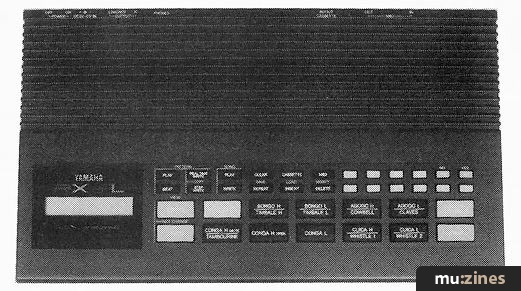
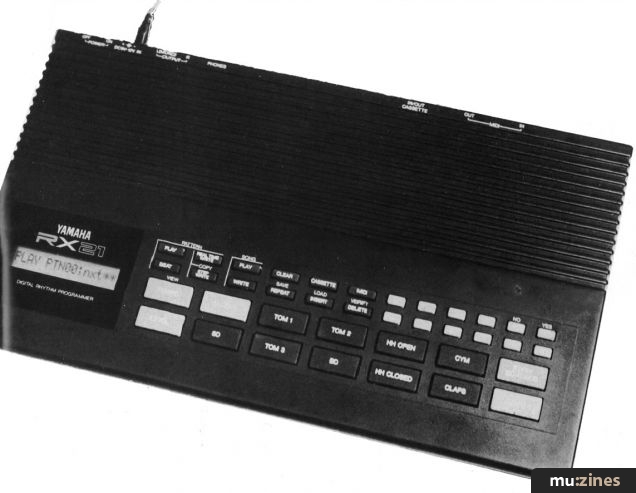
The Yamaha RX21 in a period review. Stephin Merritt includes it in the deliberately limited palette of Distant Plastic Trees; this scan shows the machine rather than the Magnetic Fields’ studio.
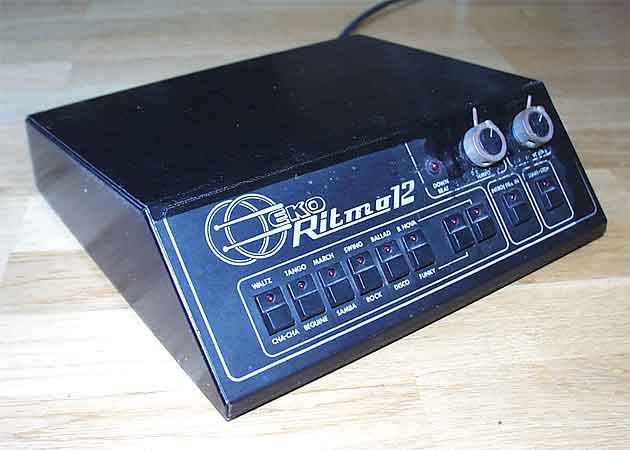
The Eko Ritmo 12 front panel, retained as an object photograph. Ricky Zeta’s “2019027988” association lets this modest preset machine enter a later recording story without making the photo a session claim.
Undated photograph; hosting page last modified 2003-04-21
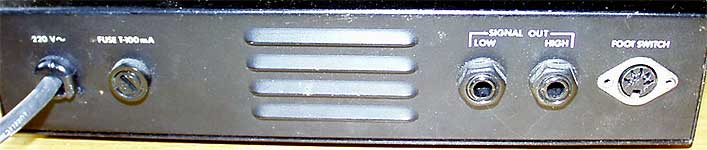
The rear panel of an Eko Ritmo 12. Ricky Zeta’s album credit is a separate musical association; this owner photograph documents the little Italian machine as an object.
Undated photograph; hosting page last modified 2003-04-21
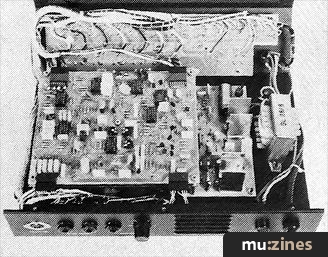
An internal view of the Eko Ritmo 20 in period coverage. Its linked dossier retains the relevant artist association; this image is technical object context.
Electronics & Music Maker — AHB Inpulse One Drum Computer
The AHB Inpulse One in its 1984 Electronics & Music Maker review. Bill Nelson says it supplied every drum part on Getting the Holy Ghost Across; the scan shows the unusual British machine before it became his rhythmic engine.
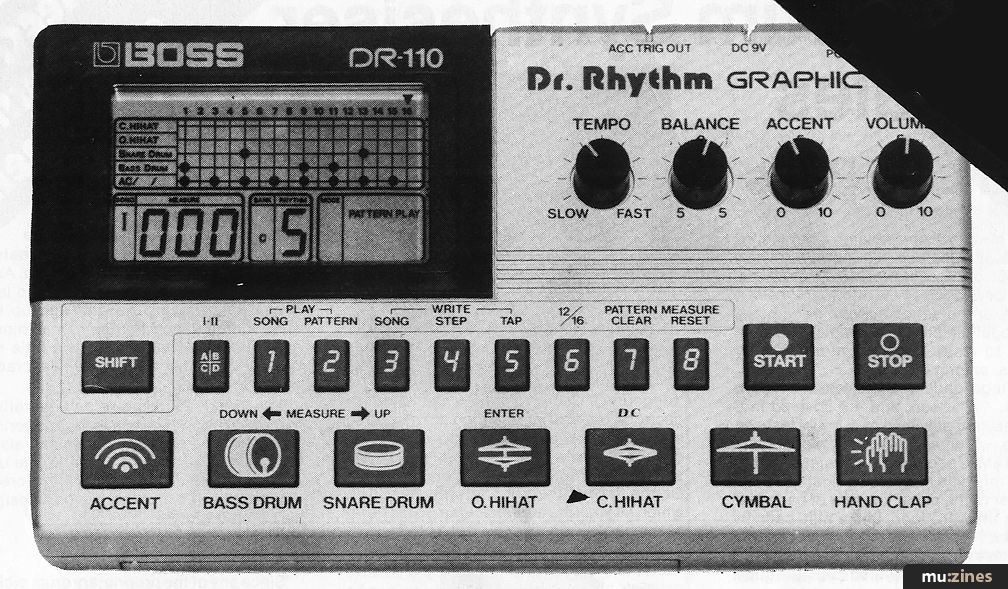
Electronics & Music Maker — BOSS DR-110 Dr. Rhythm Graphic review
BOSS’s DR-110 in a 1984 review. King Britt paired one with a Moog Sonic Six on the Fiction Science EP; the scan shows the small rhythm box that sat within that economical setup.
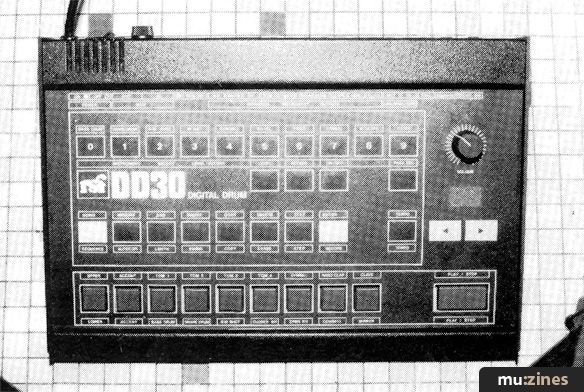
Electronics & Music Maker — French Lessons: RSF DD30 Drum Machine
RSF’s DD-30 in a period Electronics & Music Maker review. Lil Crucified identifies “Sellin Kush in Style” as an RSF DD-30 beat; this document supplies the machine’s original public context.
Instrument-family records / Hammond · Instrument photograph
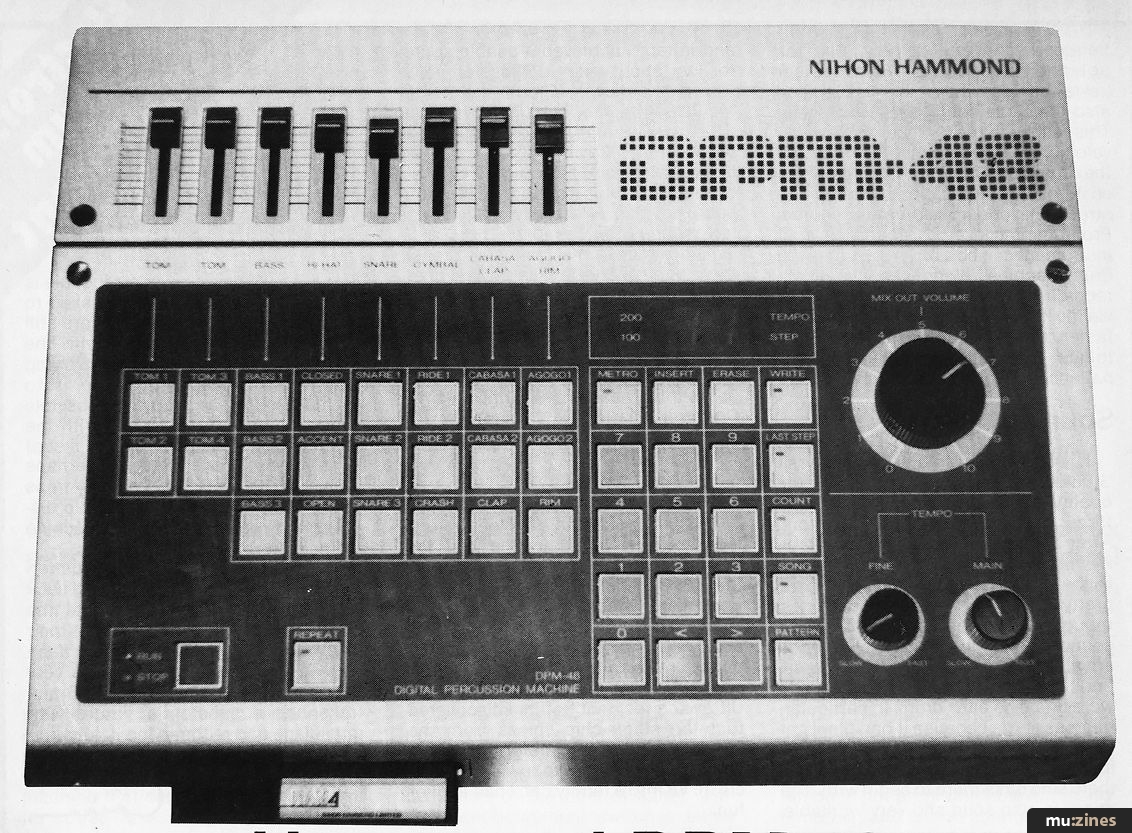
Electronics & Music Maker — Hammond DPM-48
The DPM-48 front panel, marked Nihon Hammond, in the March 1984 review. The photograph shows the instrument’s controls; the separately reported Prince association does not establish ownership or a recording session.
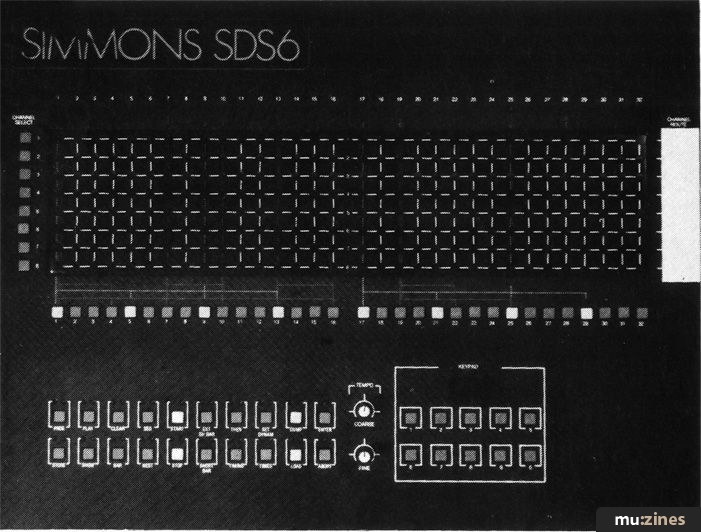
Electronics & Music Maker — Simmons SDS6 sequencer
The Simmons SDS6 sequencer in its original review. Simmons later named Howard Jones among its users; the photograph shows the dedicated brain behind the performance system.
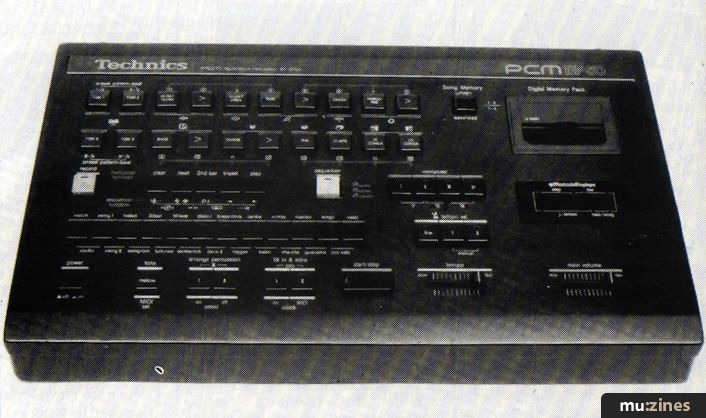
The Technics DP50 in its original Electronics & Music Maker review. Peter Semiletov’s later Drum Sklad work keeps its PCM kit playable as software; the printed image returns us to the hardware source.
Electronics & Music Maker — Yamaha RX Digital Rhythm Machines
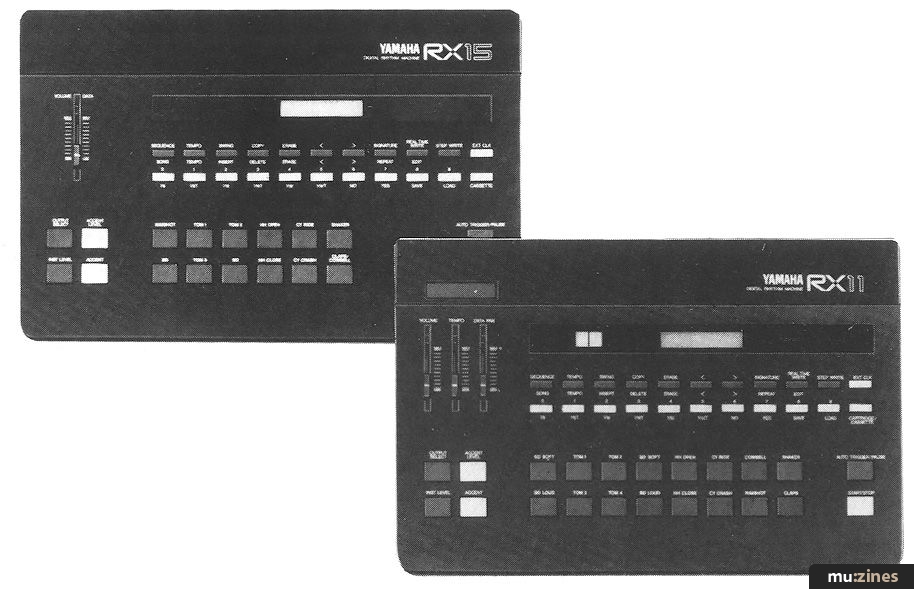
Yamaha’s RX digital rhythm machines in an early Electronics & Music Maker preview. Jack Dangers places an RX-5 in the Storm the Studio equipment around Meat Beat Manifesto; the spread belongs to the machine’s launch moment.
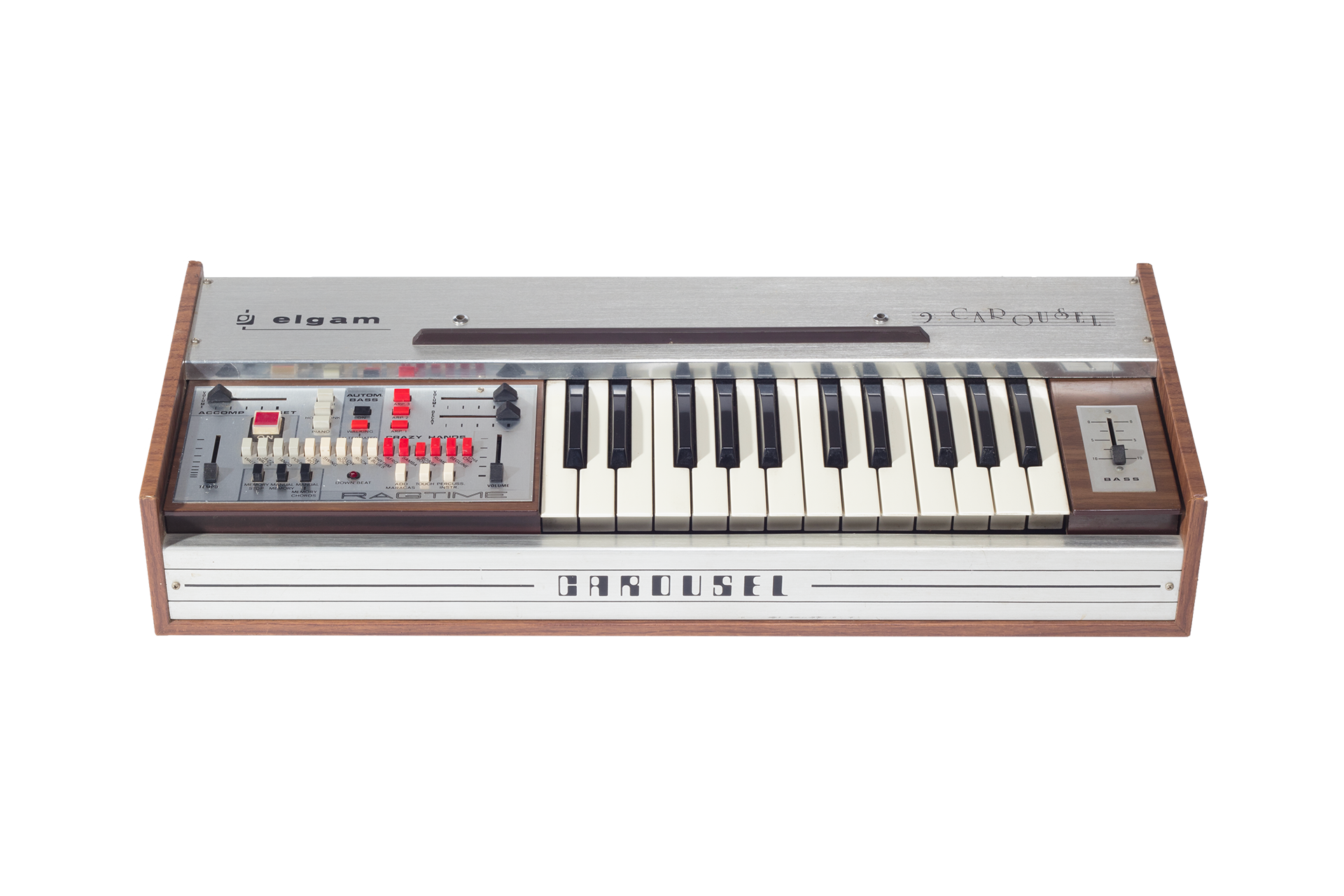
An Elgam Carousel from the Museum collection. Musica E Computer credits Agostino Maria Ticino playing one; this image is a collection view, not an album-session photograph.
Current collection page accessed 24 September 2026
SMEM / Swiss Museum for Electronic Music Instruments · Source & credit ↗
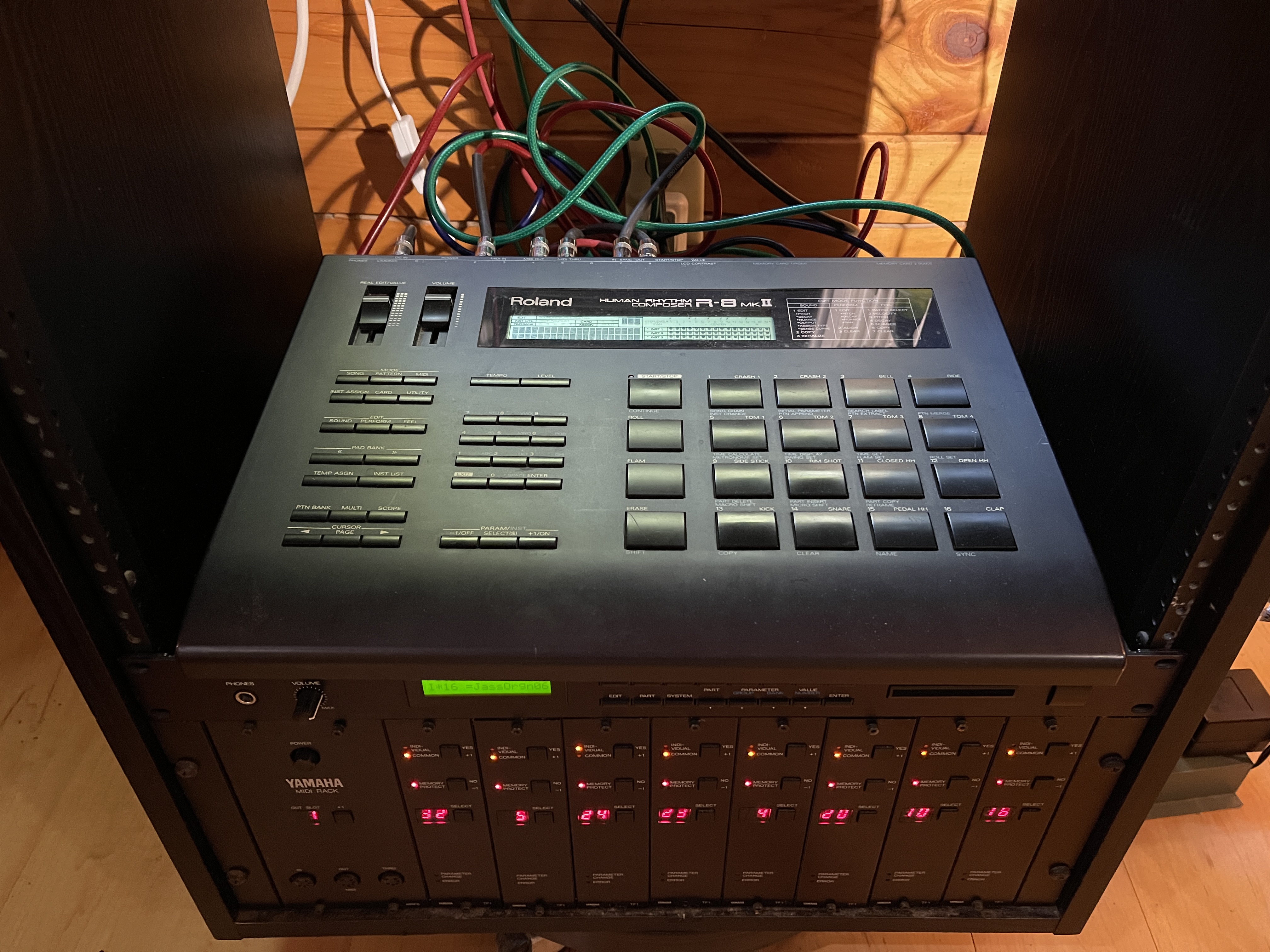
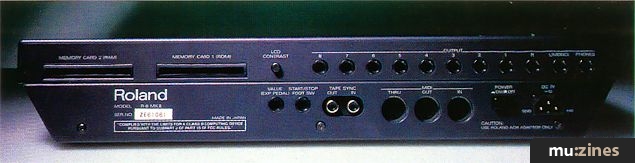
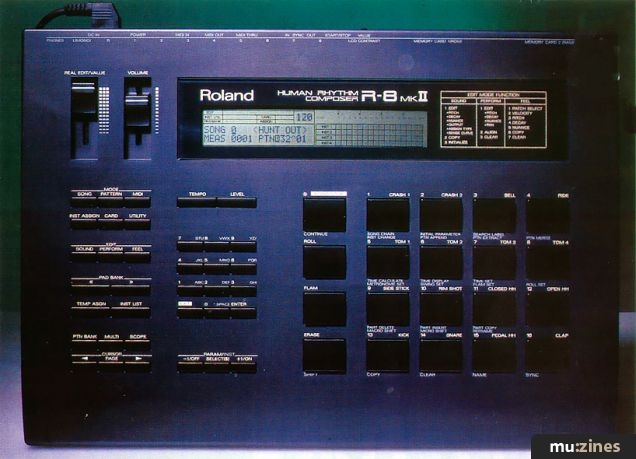
Eris Drew’s own Roland R-8 MKII, shown in Reverb’s Quivering in Time interview. She calls it a go-to drum machine for the album, where its built-in 808 and 909 material sits alongside samples and programmed parts.
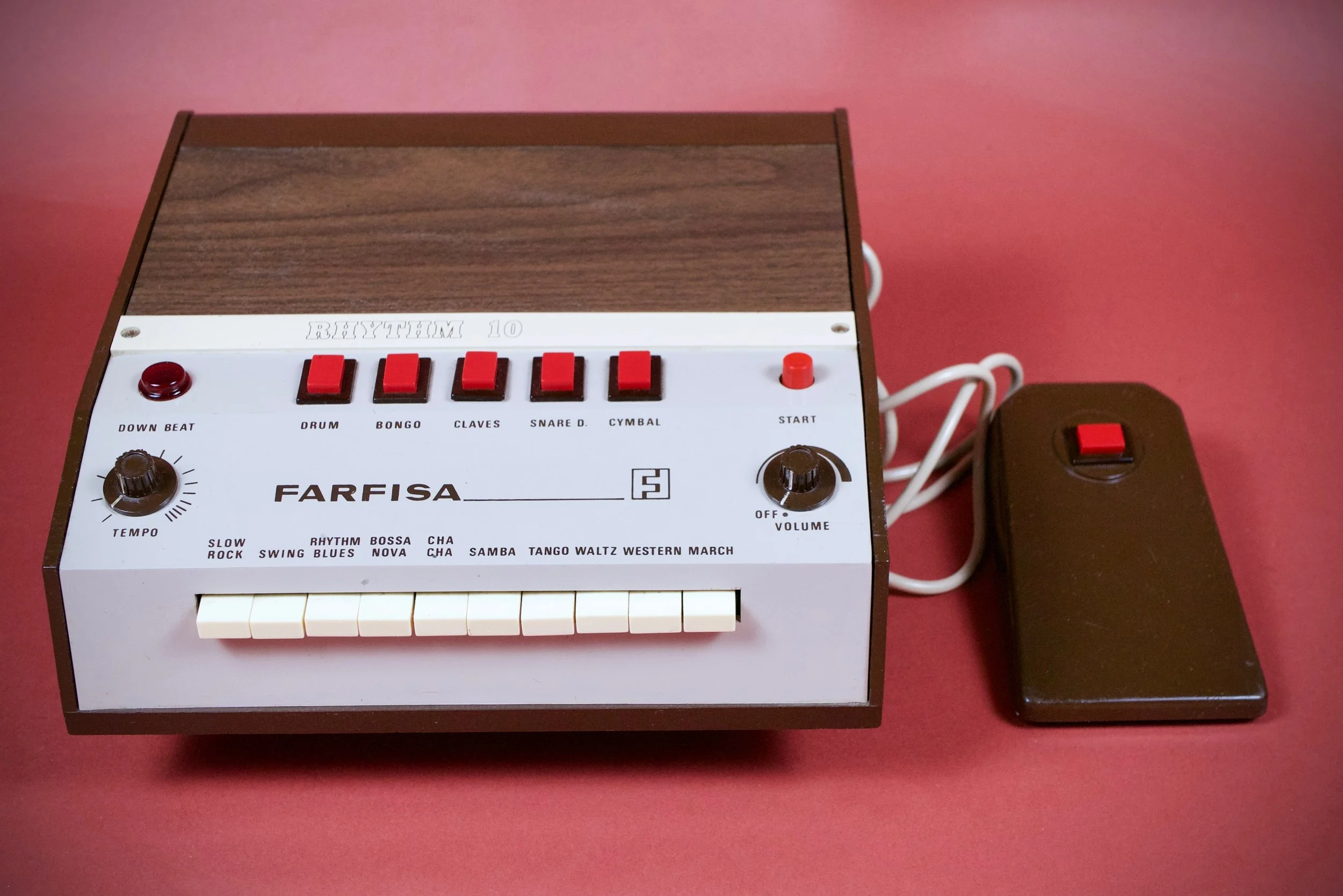
A Farfisa Rhythm 10 with its pedal, retained as a clear object photograph. Wolfgang Flür’s Kraftwerk performance association provides the musical context beyond the image.
Undated modern photograph
Marina Denisova, credited on Vintage Audio Institute page · Source & credit ↗
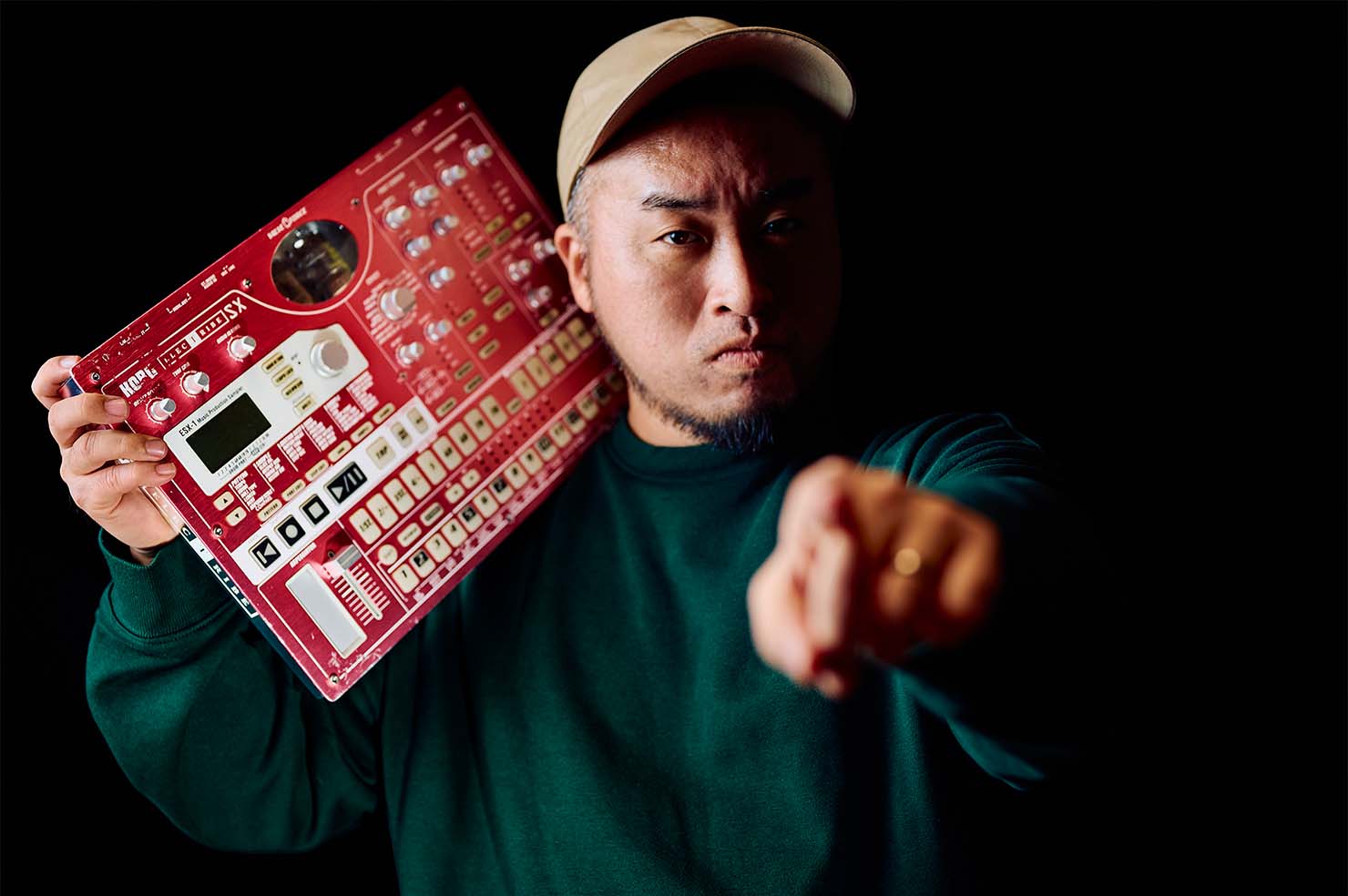
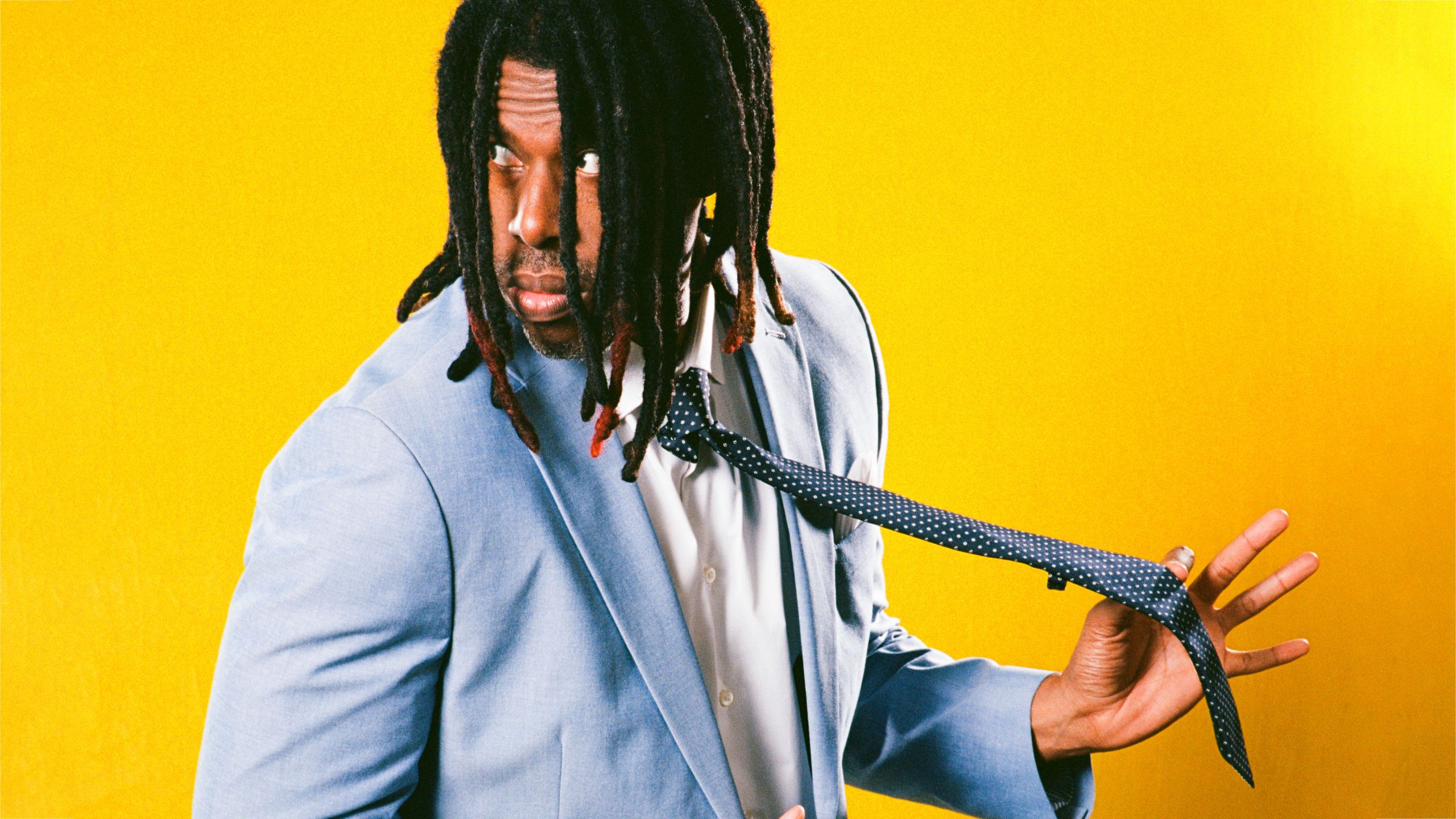
Foodman holding the ESX-1 he identifies as his original machine. His account connects the box to the Ez Minzoku period while the photograph keeps the actual instrument in view.
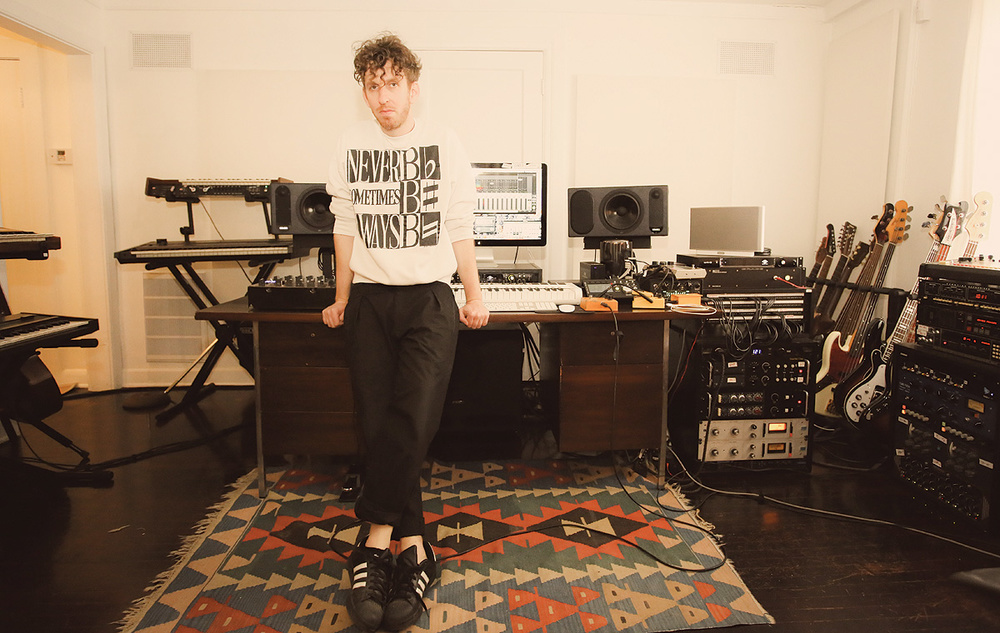
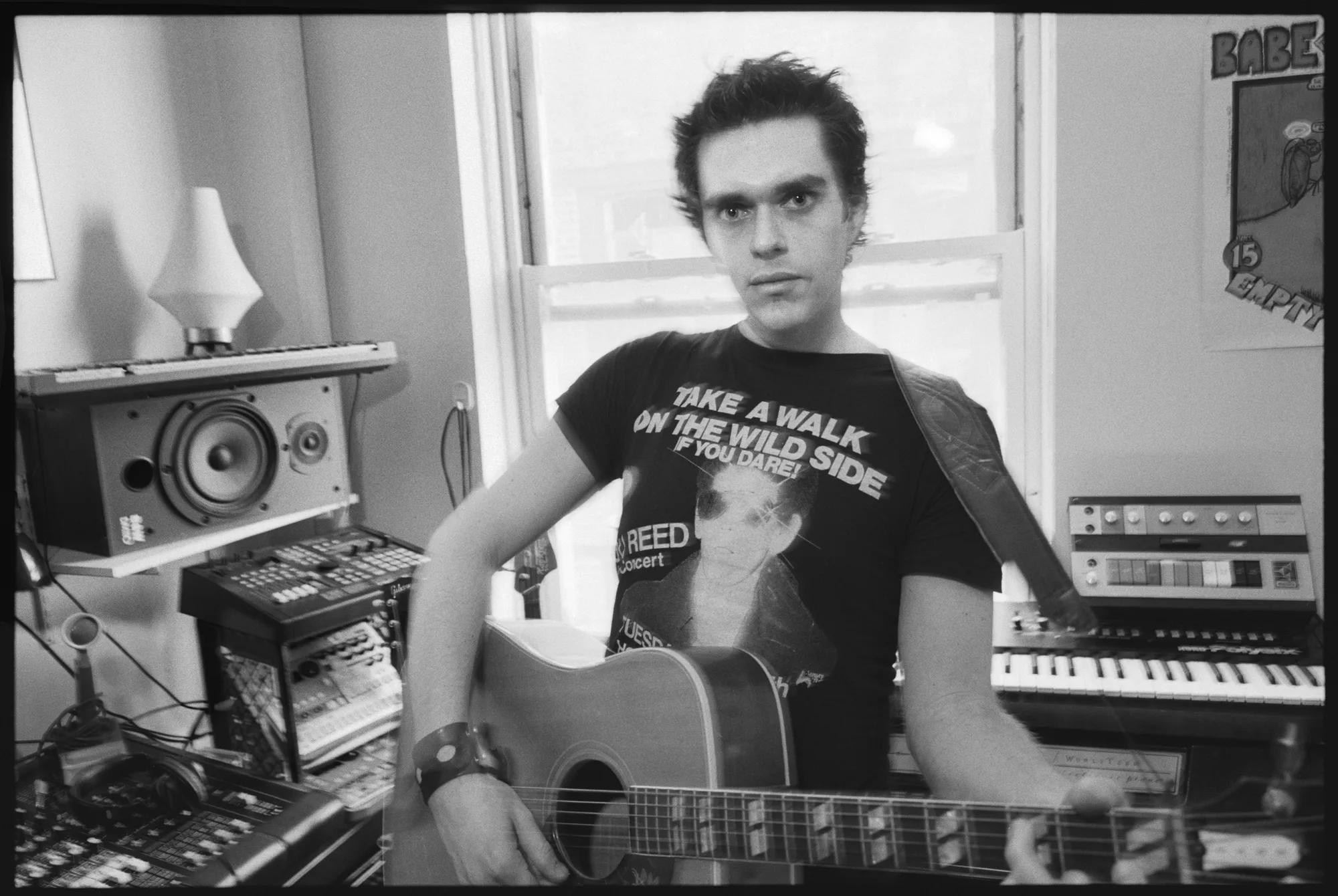
Howie Statland in the one-bedroom recording room where he described putting a Suzuki RPM-40 through a DigiTech delay, then recording its beat first to set a song’s tempo. The photograph is studio context: the pictured rhythm box is not identified as the RPM-40.
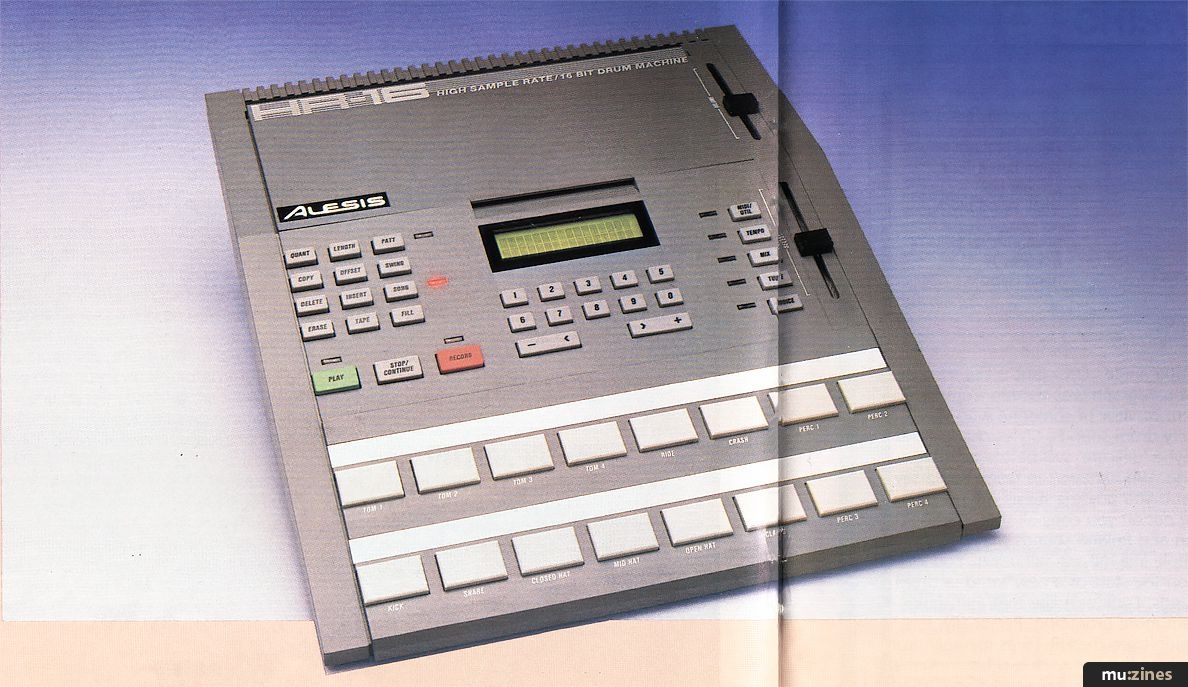
Alesis HR-16 review photography from 1988. Godflesh’s documented use on the Streetcleaner period belongs to the story; the scan shows the commercial instrument rather than the band’s particular unit.
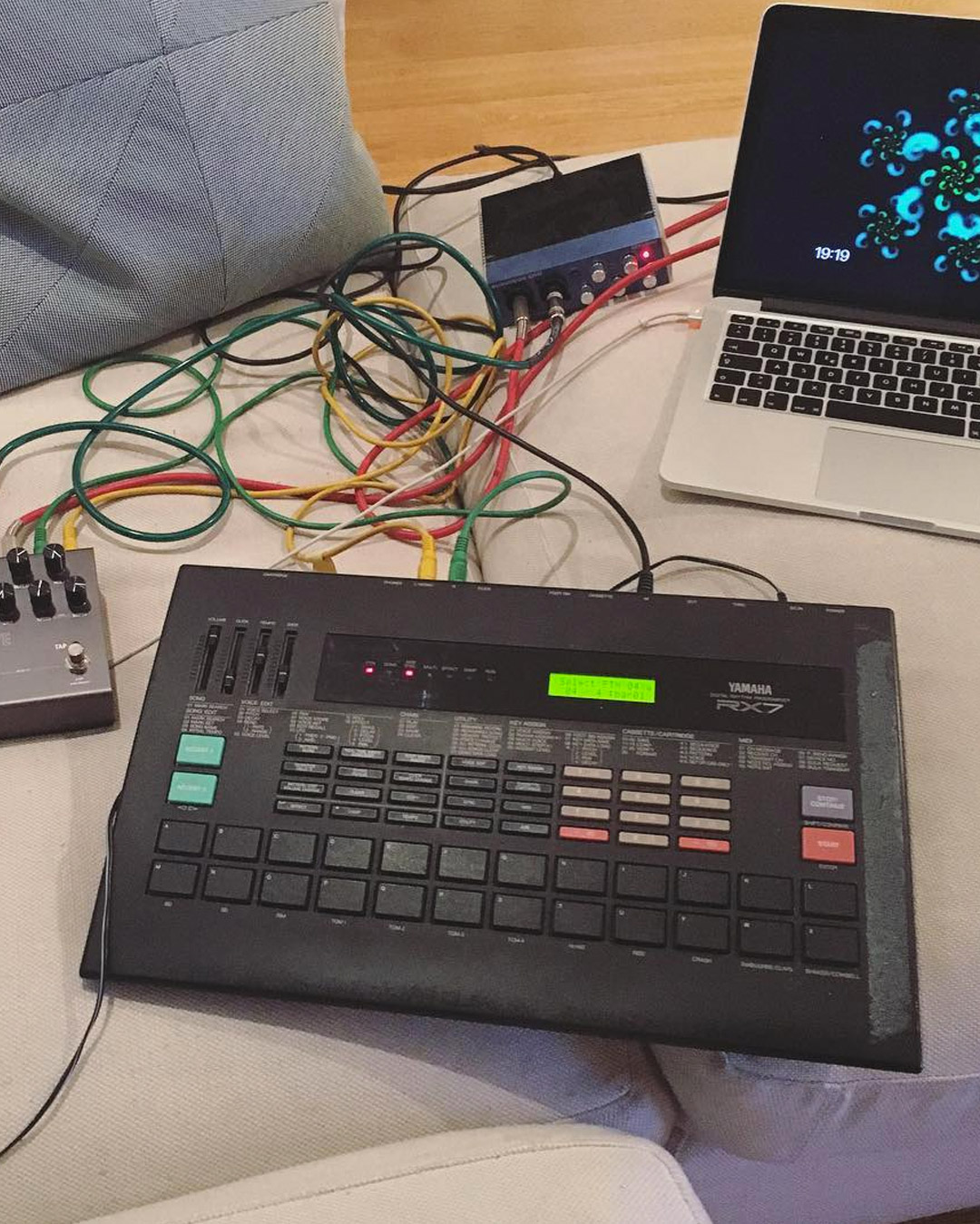
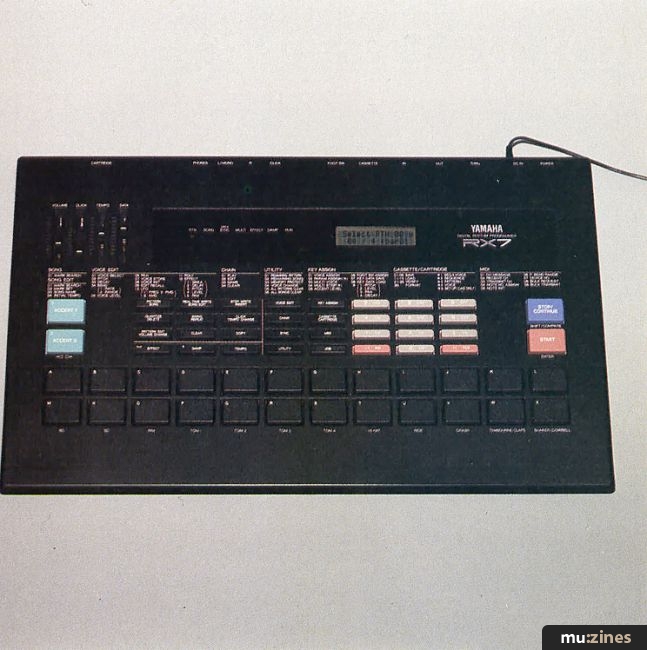
Ian Pooley’s Yamaha RX7 in his Berlin studio. Reverb identifies it as the drum machine he received for Christmas in 1987 and has kept in use ever since: a small survivor from the beginning of a long record-making life.
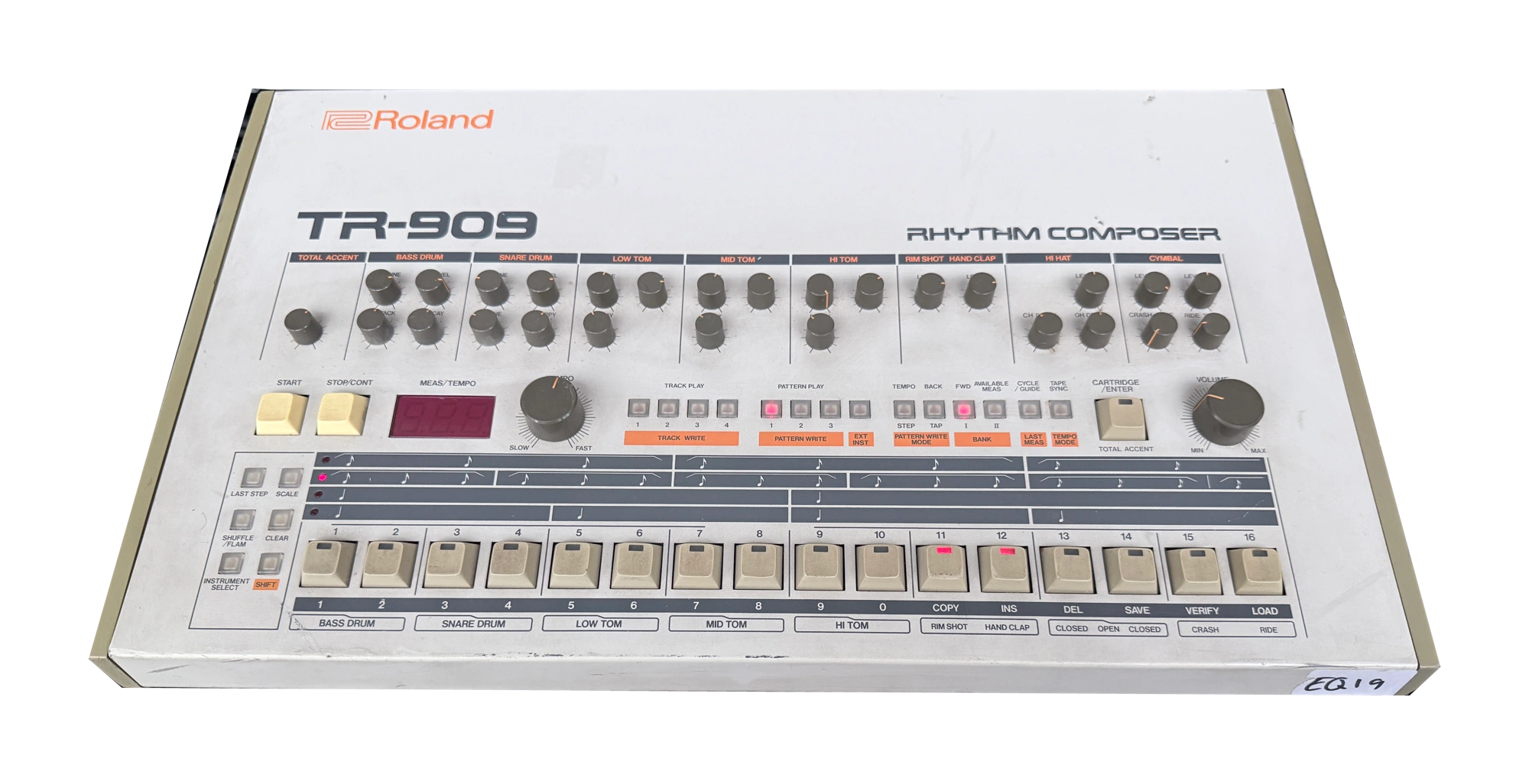
Jeff Mills in Roland’s official TR-909 story. The company calls him a leading 909 performer, known for real-time live manipulation; the image is performance context, not a named-record credit.
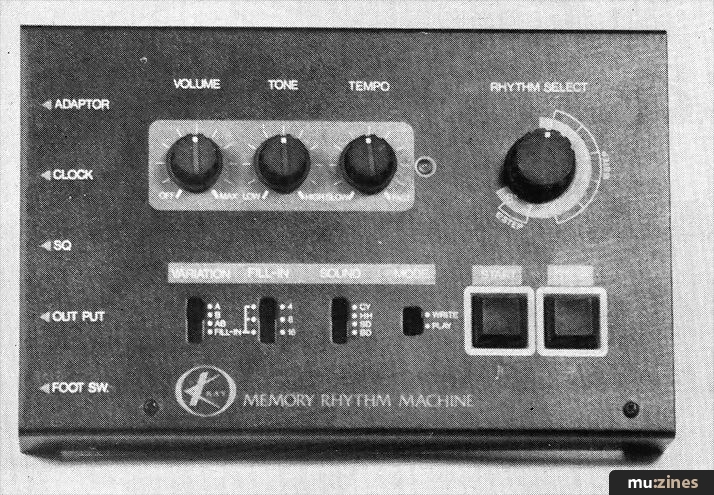
A 1982 view of the Kay Memory Rhythm Machine prototype. o[rlawren] and Tui’s early-instrument collection account gives the prototype its later human setting without claiming this is their machine.
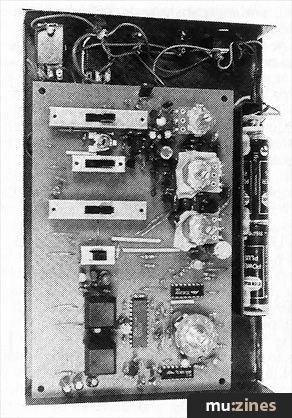
The interior of the Kay Memory Rhythm Machine prototype in 1982 press coverage. o[rlawren]’s catalogue-machine memory is a later ownership account; the image records the early machine’s construction.
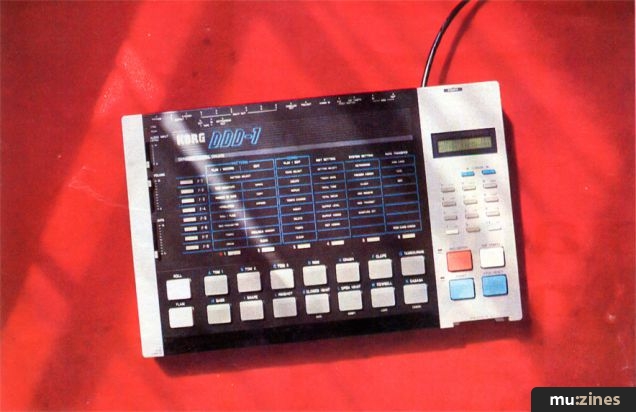
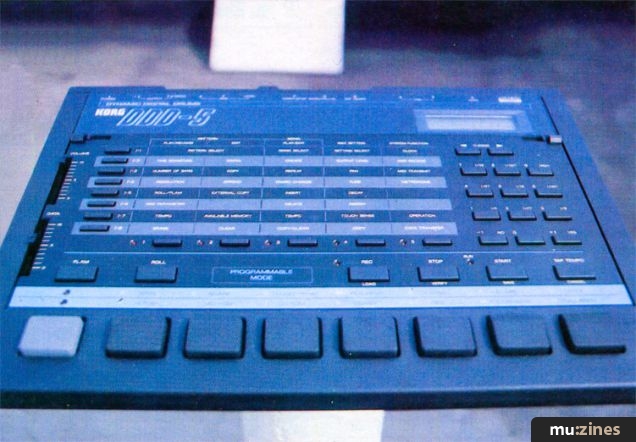
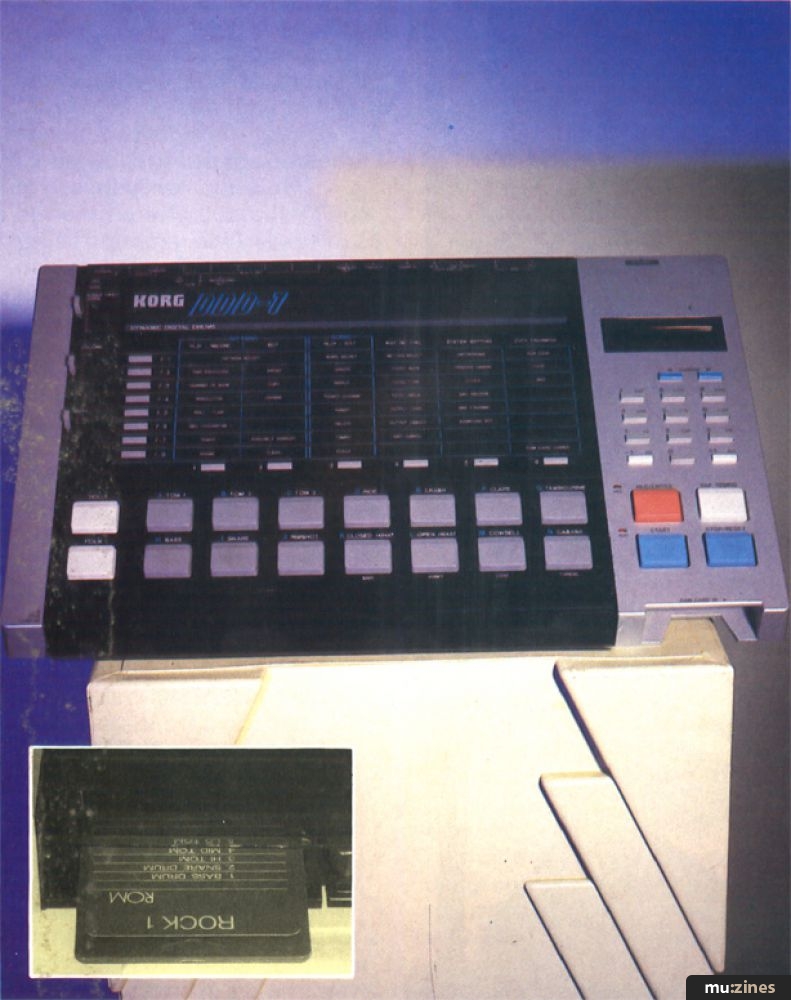
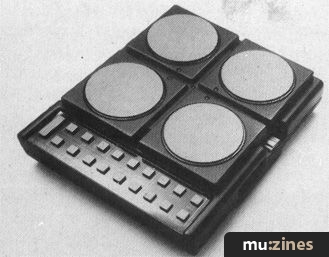
Korg’s DDD-1 in period press. The linked dossier carries its sourced artist and record associations; this photograph stays with the instrument’s launch-era form.
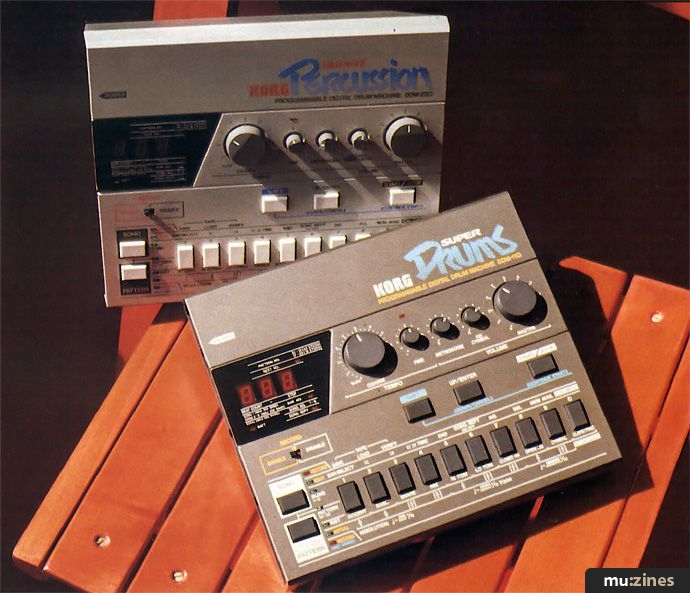
Korg DDM rhythm machines in a retained product photograph. Timothy J. Fairplay names the DDM-220 in his studio set-up; the picture documents the instrument family, not his individual unit.
The Korg DDM-220 in period press photography. Lustwig and Marc’o Dope-Ra list it among the instruments at Brainstorm-Studio Bonn for Lust; this scan shows the compact digital Korg in its own era.
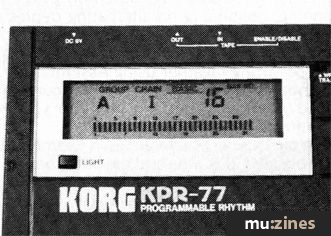
Korg’s KPR-77 display and panel in period photography. Amato identifies it in the compact “Ostbahnhof” set-up; the image returns to the box that carried that restrained pulse.
Korg volca sample2: product and artist collaborations
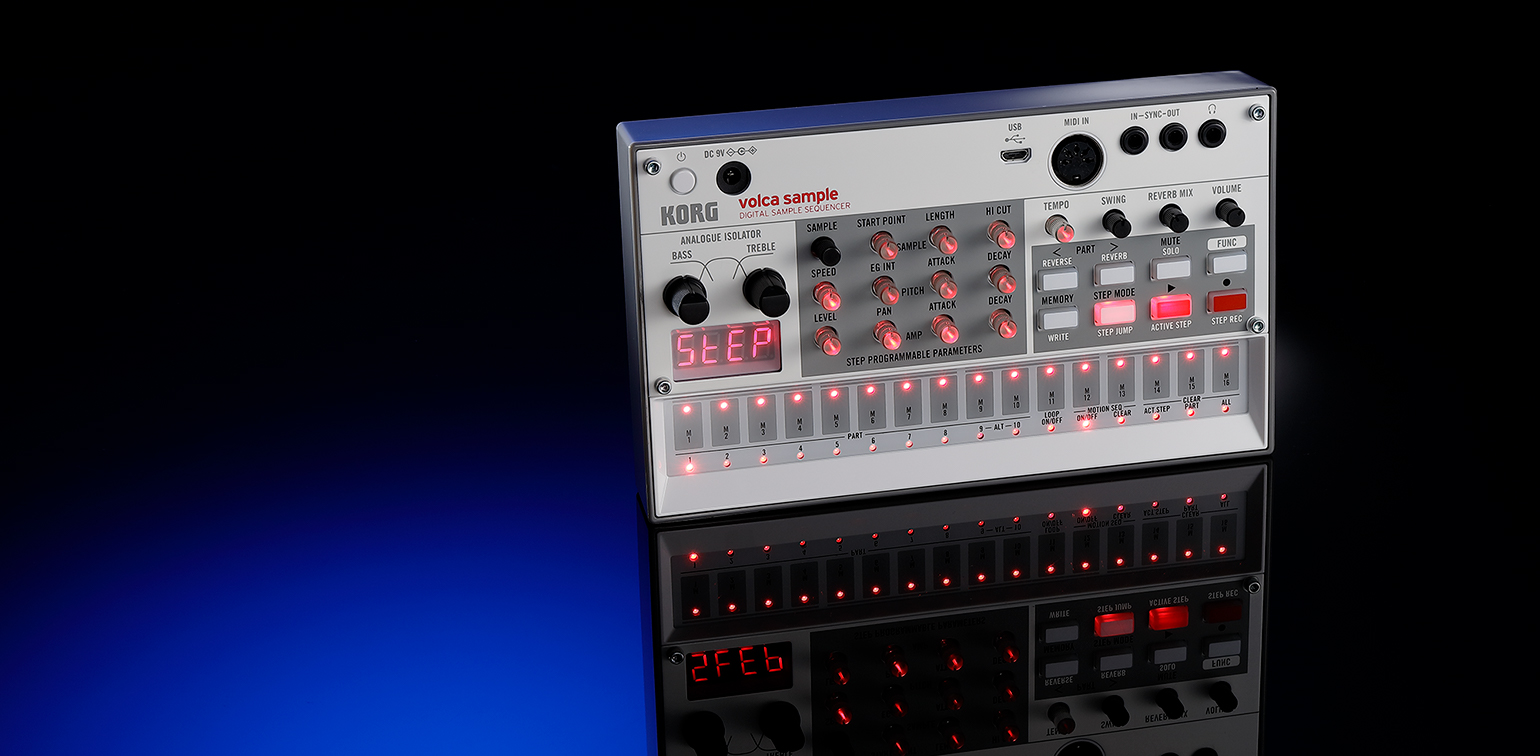
Korg’s Volca Sample 2 product image. Moe Shop’s commissioned demonstration gives the revised sampler a current musical use; this is manufacturer imagery, not a studio photograph.
Undated evolving product page; artist items dated 2021; accessed 23 September 2026
Kurtis Mantronik, pictured for Reverb’s 2024 interview
Kurtis Mantronik in Reverb’s 2024 interview. He recalls linking a TR-606 and TB-303 with DIN sync to program early beats; the portrait sets that first-person account in view without pretending the machine is pictured or assigning it to a named release.
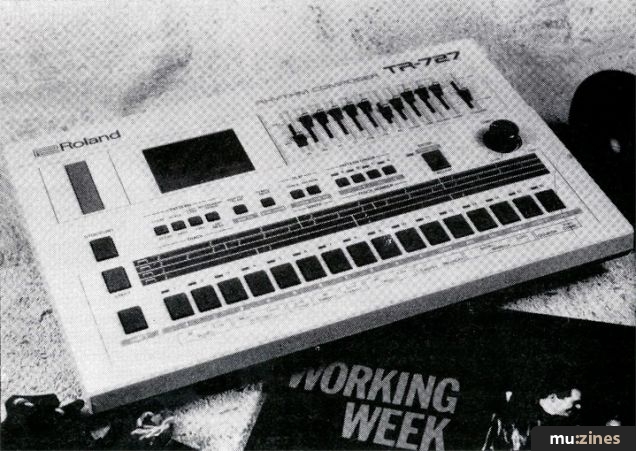
Roland’s TR-727 in period press. Phuture’s “Acid Tracks” history places it alongside a TR-707; the image shows the Latin-percussion machine in its own time.
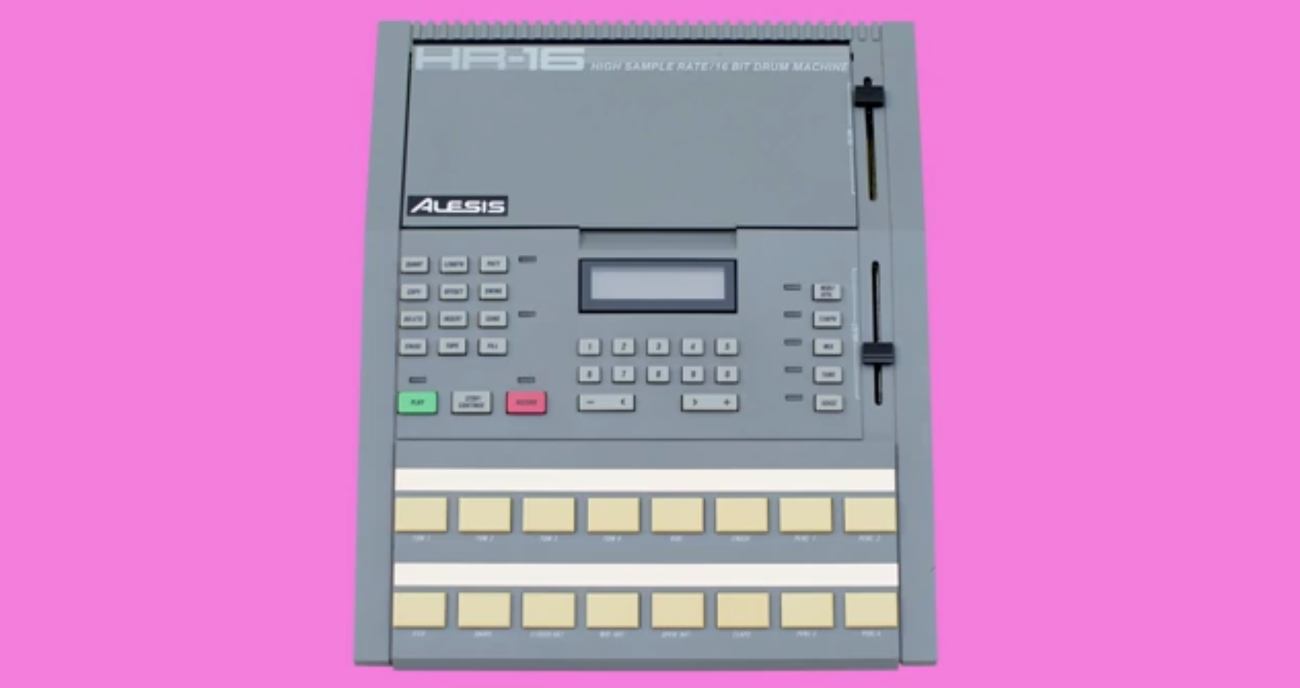
Le Tigre’s Deceptacon source frame — Alesis HR-16 family
A published frame from the source that credits Johanna Fateman’s HR-16B on Le Tigre’s “Deceptacon.” The visible machine reads HR-16, so it is shown as close family context beside the B-variant production story rather than passed off as the exact unit.
24 May 2014
Emily Strax / cited Red Bull Music Academy beat:repeat material · Source & credit ↗
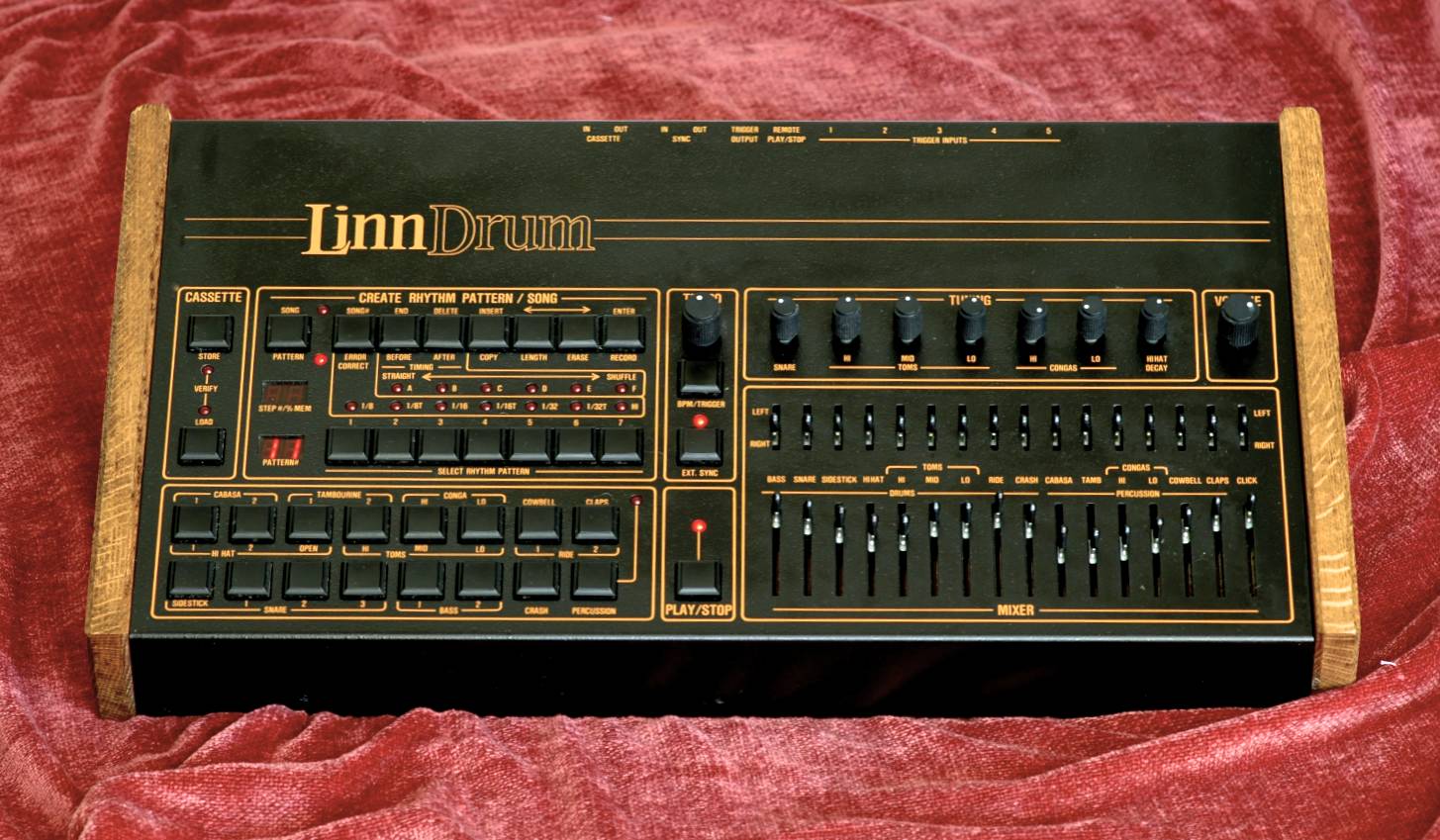
LinnDrum front-panel photograph hosted by Roger Linn
A LinnDrum front-panel photograph hosted by Roger Linn. The a-ha “Take On Me” production account belongs to the record’s history; this image is a close look at the machine’s physical working surface.
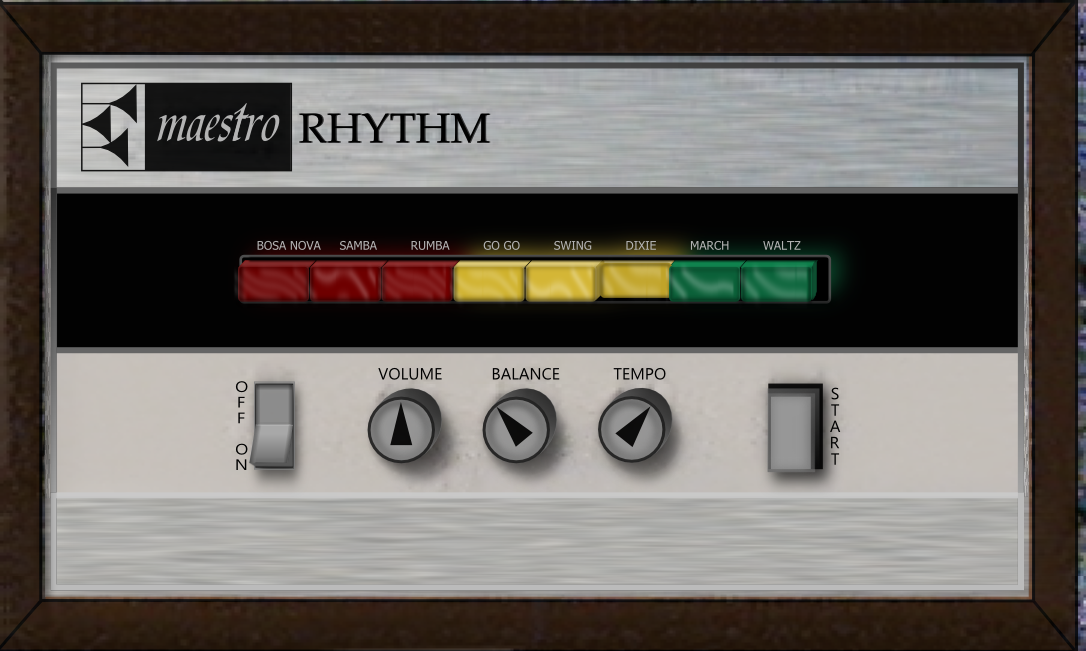
A clear Maestro Rhythm MRQ-1 exterior photograph. Jason Booth’s Rhythm King sample-board association is a later sound-source story; this picture preserves the original object.
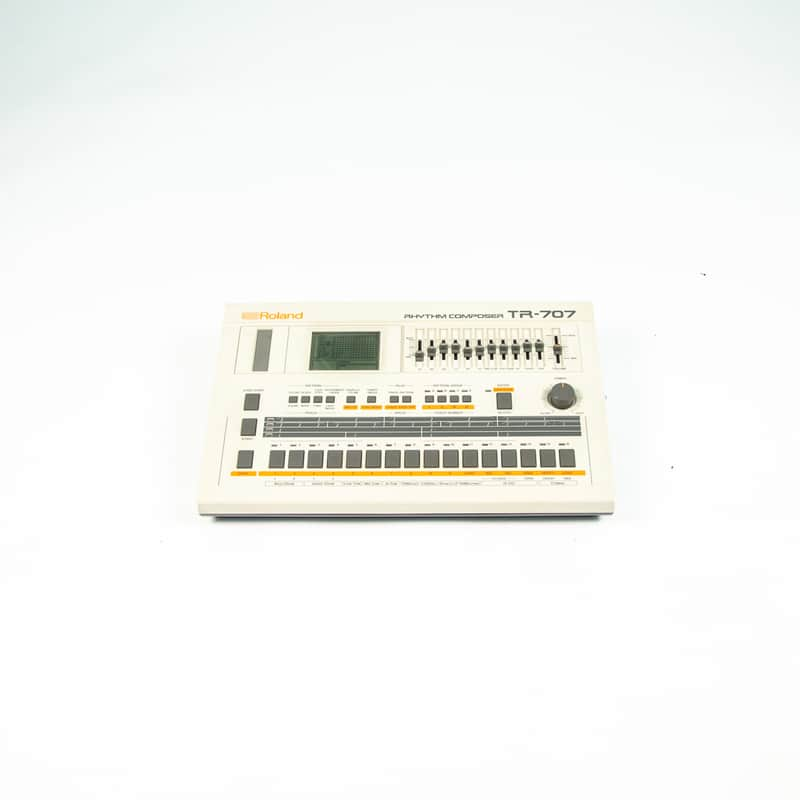
A Roland TR-707 offered from Martin Gore’s official Reverb shop. The listing identifies it as part of his private collection; it establishes ownership, not a Depeche Mode recording credit.
2019 listing; accessed 2026-09-28
Official Martin Gore of Depeche Mode Reverb Shop / Reverb · Source & credit ↗
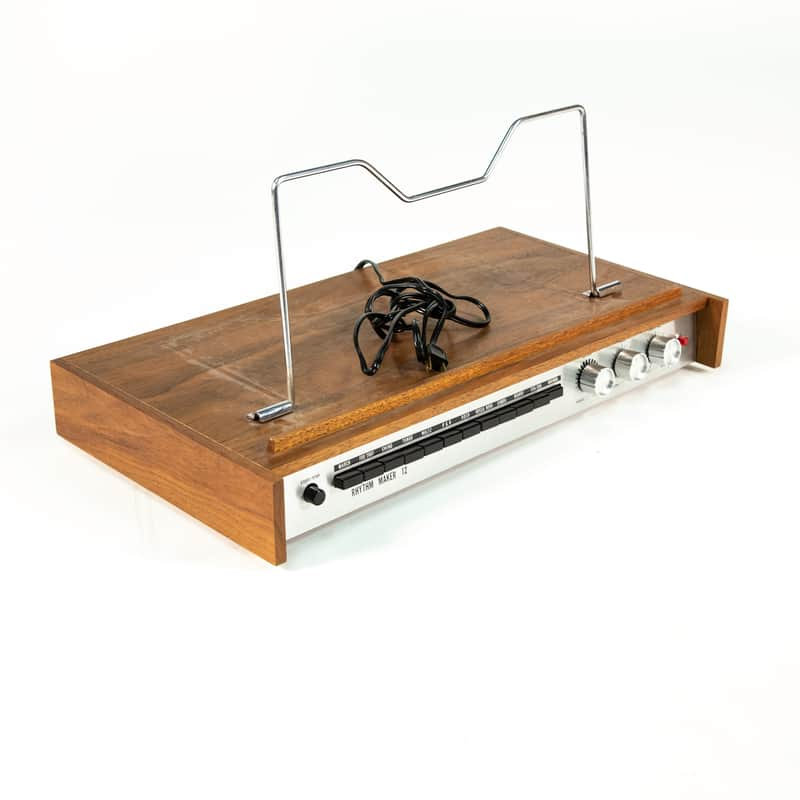
An angled view of Moby’s Rhythm Maker 12 from the same 2018 collection sale. The wooden case, elevated carry frame and row of preset buttons turn a bare catalogue name into a real, surviving machine.
2018 Moby drum-machine sale; listing accessed 28 September 2026
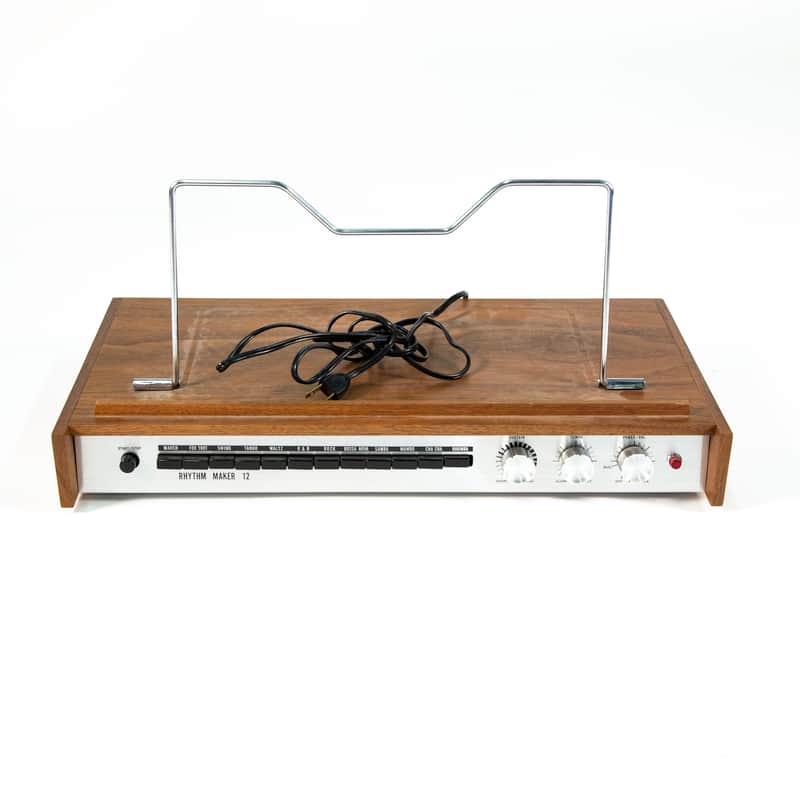
Moby’s Ace Tone Rhythm Maker 12, photographed for his 2018 official Reverb-shop sale. The front panel lets the rare box speak for itself: its own lettering says “Rhythm Maker 12,” even as the listing used “Rhythm Master 12.”
2018 Moby drum-machine sale; listing accessed 28 September 2026
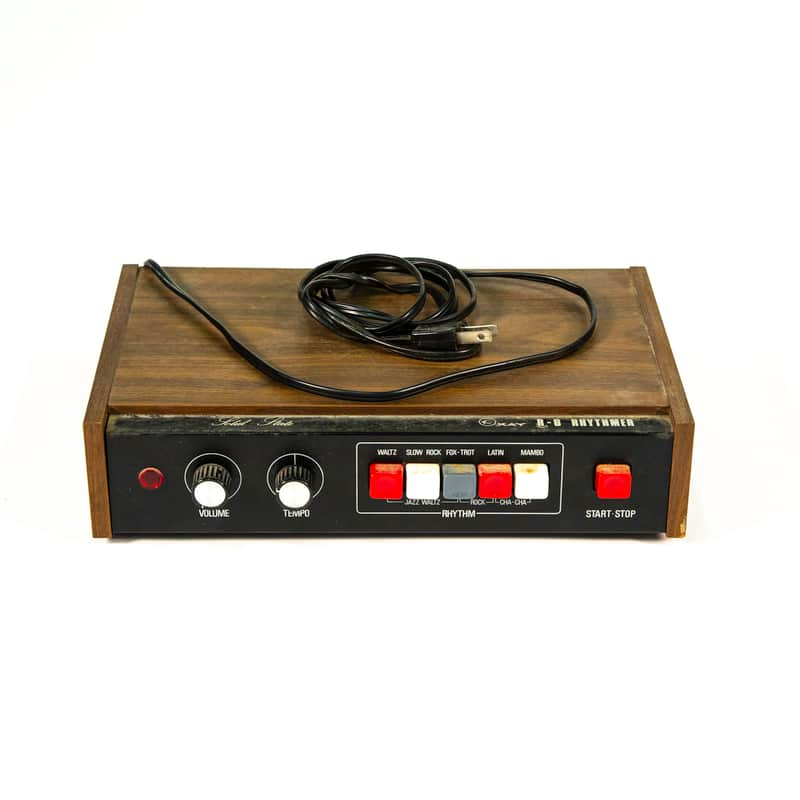
Moby’s Kay R-8 Rhythmer, photographed for his 2018 official Reverb-shop sale. The front panel preserves the full eight-preset layout; it is a Moby collection story, set beside Nick Rhodes’ separate memory of taking a Kay R-8 onstage at Duran Duran’s first art-college show.
2018 Moby drum-machine sale; listing accessed 28 September 2026
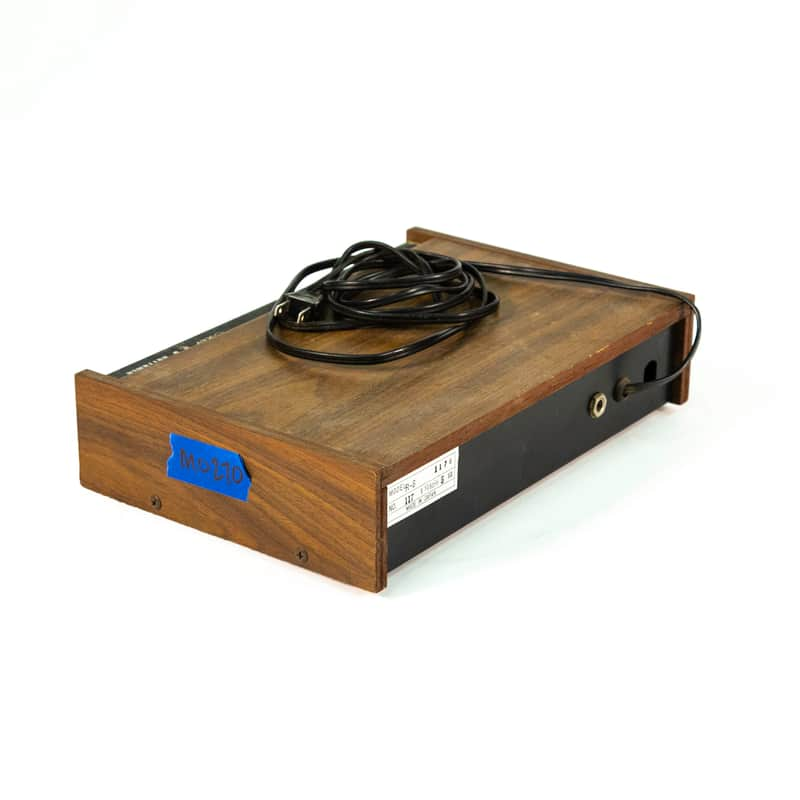
The rear of Moby’s Kay R-8 Rhythmer, photographed for the same sale. The original model plate and lone output make the little wood-cased rhythm box feel like a real instrument rather than an equipment-list footnote.
2018 Moby drum-machine sale; listing accessed 28 September 2026
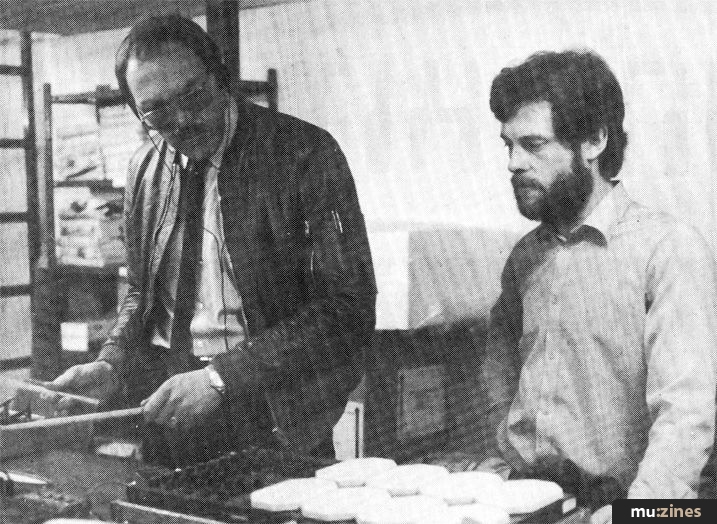
MPC Electronics founders Mike Coxhead and Clive Button with their machine. It is maker and development context for the MPC story, not an assertion about a specific finished record.
A Yamaha MR10 illustration from a period Music Maker feature. Robin Johnson recalls the machine in an early cassette-recording rig; the image supplies the object beside that first-person studio memory.
Yamaha’s MR10 in a period Music Maker scene. Robin Johnson’s early-cassette story gives the box its human connection; the image records the machine’s original era.
Akai’s XE8 in a 1988 Music Technology review. AtomicBeats later sampled the unit for a producer library; the magazine image keeps that later afterlife beside the original drum box.
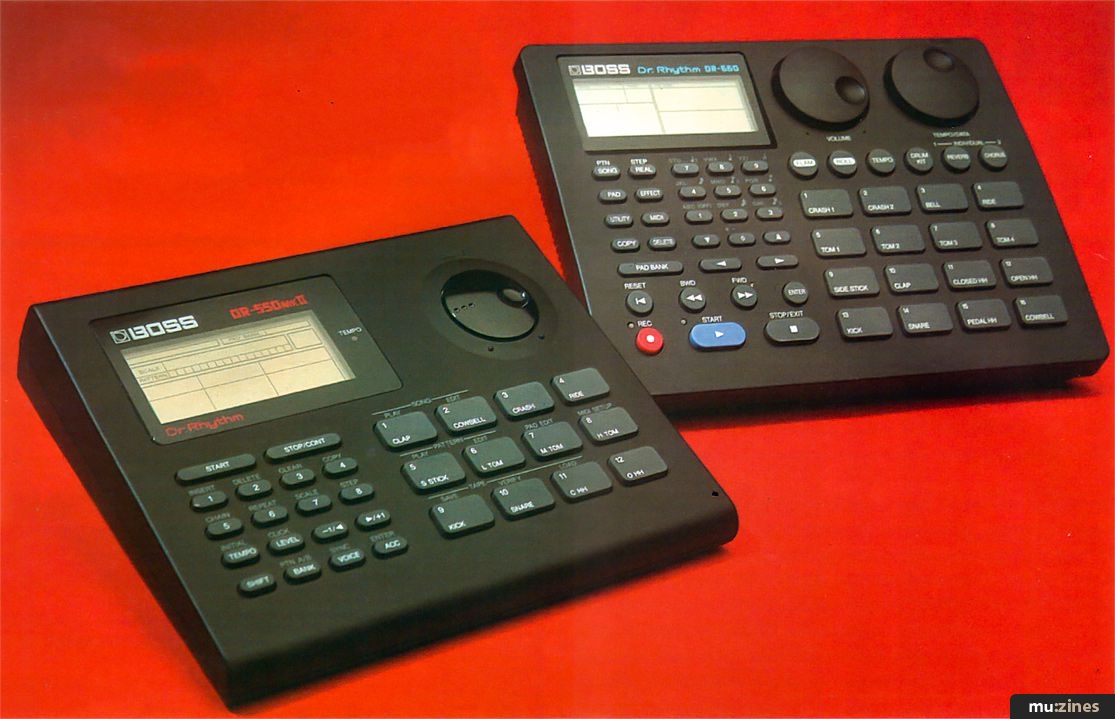
The BOSS DR-660 in a contemporary comparative review. Benn Jordan recalls building early tape recordings around the machine; this is the retail-era instrument, not a photograph from those sessions.
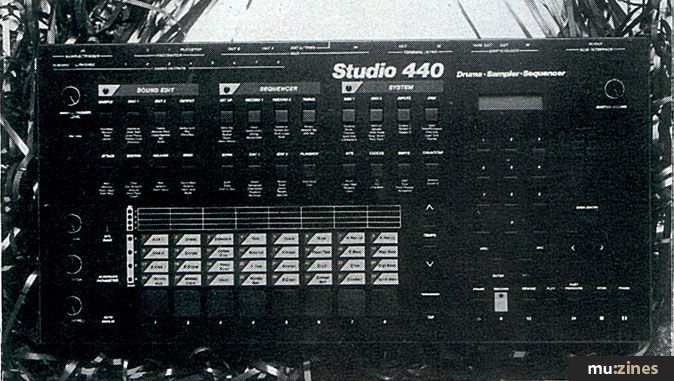
Sequential’s Studio 440 in Music Technology. Kurtis Mantronik says he made “King Of The Beats” on one; the review captures the formidable sampler at the moment it entered the studio market.
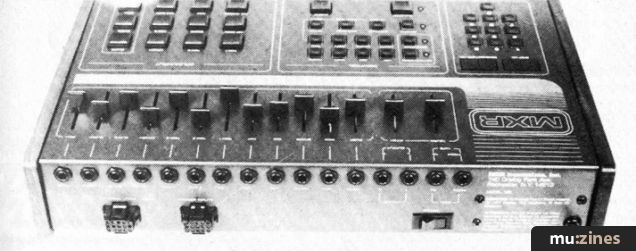
The rear of the MXR 185 Drum Computer in period press. Richard H. Kirk called the machine central to Cabaret Voltaire’s 1984 writing room; the image documents the hardware, not that studio.
Naked Elka Beauty — exposed chassis in Colleen’s studio
Colleen’s own studio view of an opened Elka Drummer One. The image and her account of “Gazing at Taurus – Santa Eulalia” bring machine and recording practice together without overstating track allocation.
Published 2020-06-28; capture date not independently established
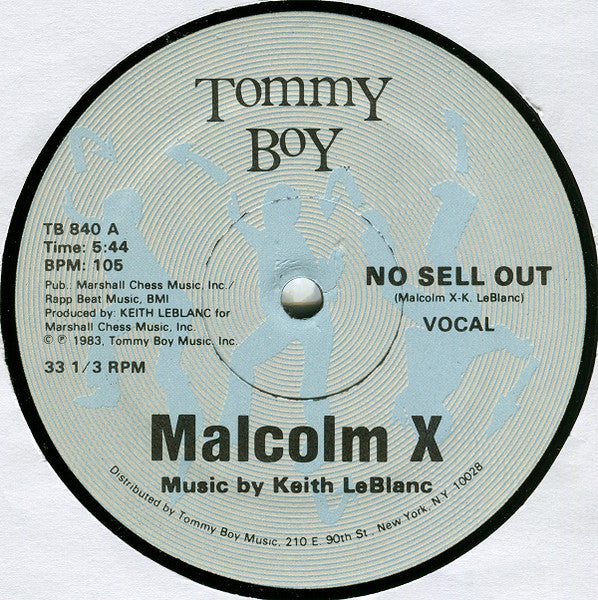
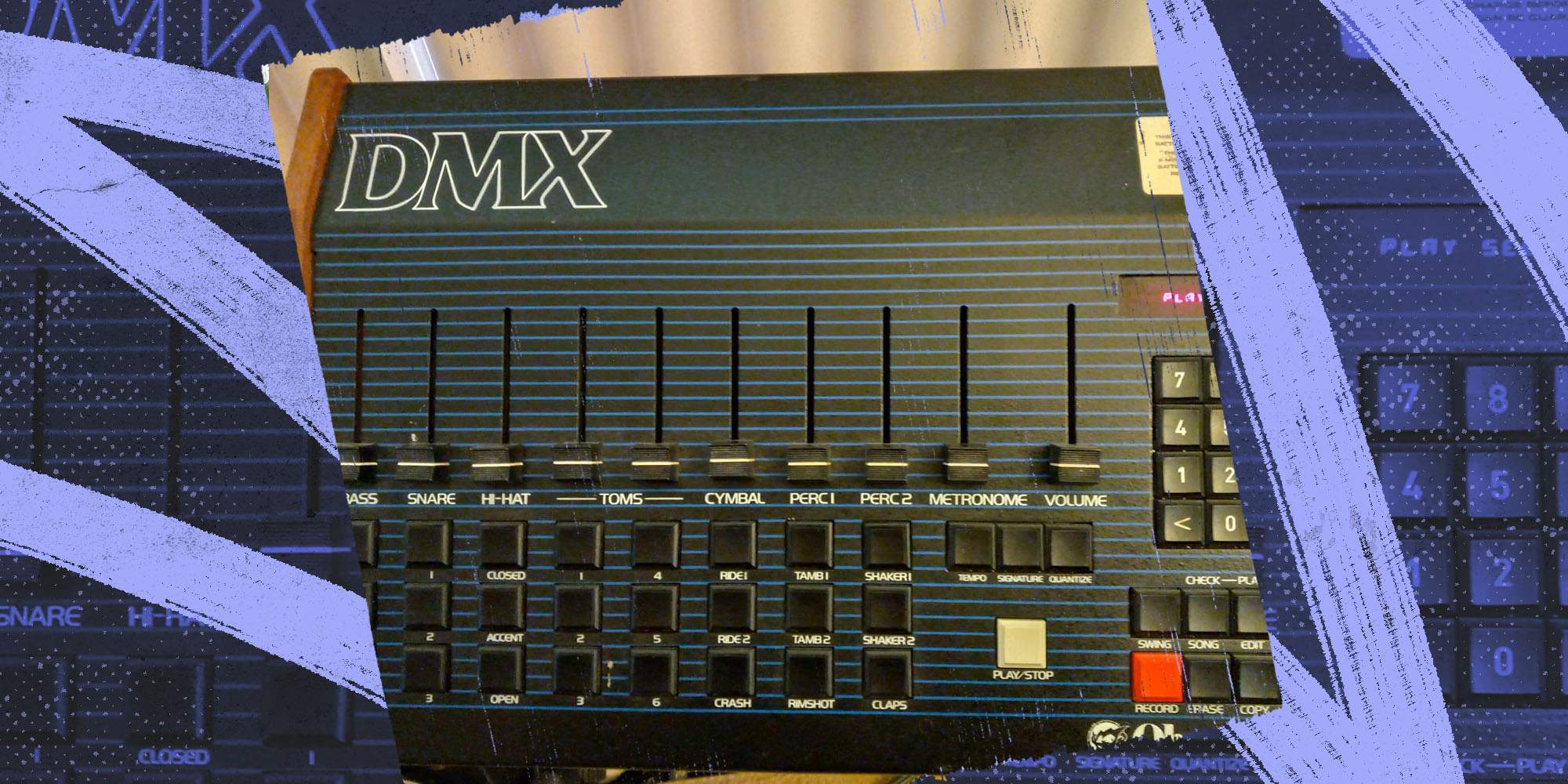
The A-side label of No Sell Out. The linked DMX dossier keeps the record’s machine association in its sourced story; this is the surviving record label, not evidence of an Oberheim unit in the studio.
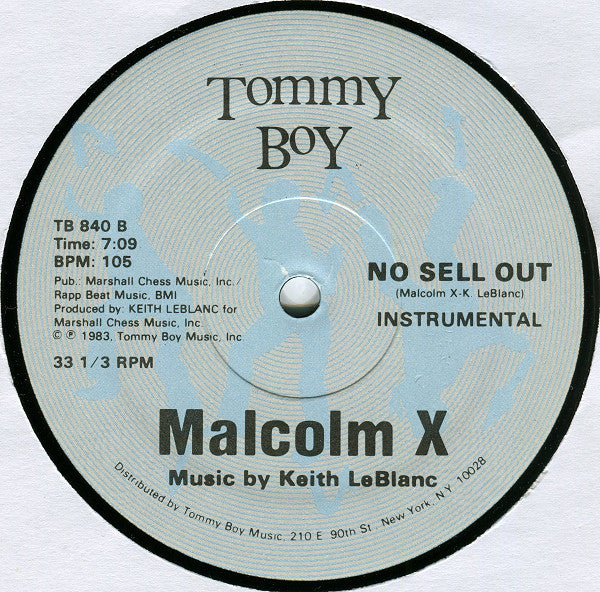
The B-side label of No Sell Out. The linked Oberheim DMX dossier carries the record’s sourced machine context; this is the surviving disc, not studio evidence.
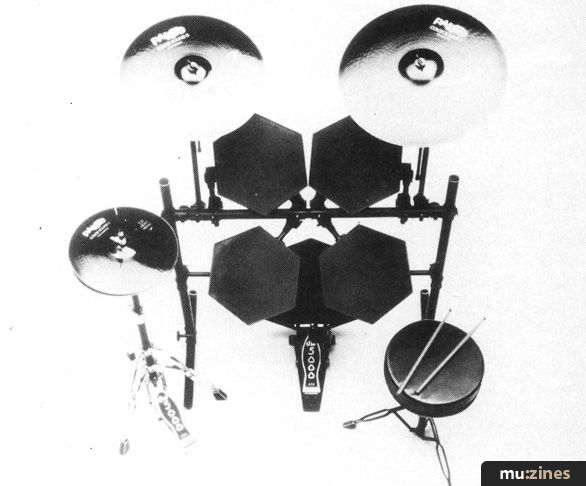
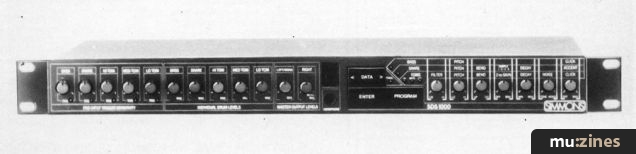
The Simmons SDS1000 in a retained magazine image. The reported Jimmy Edgar lead remains properly scoped in the dossier, while the scan documents the product.
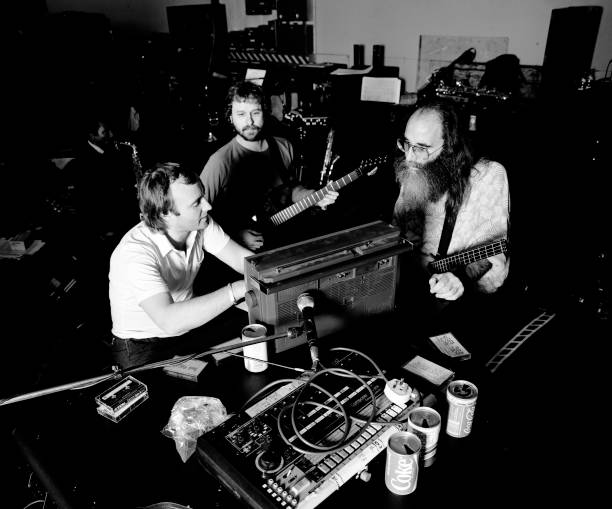
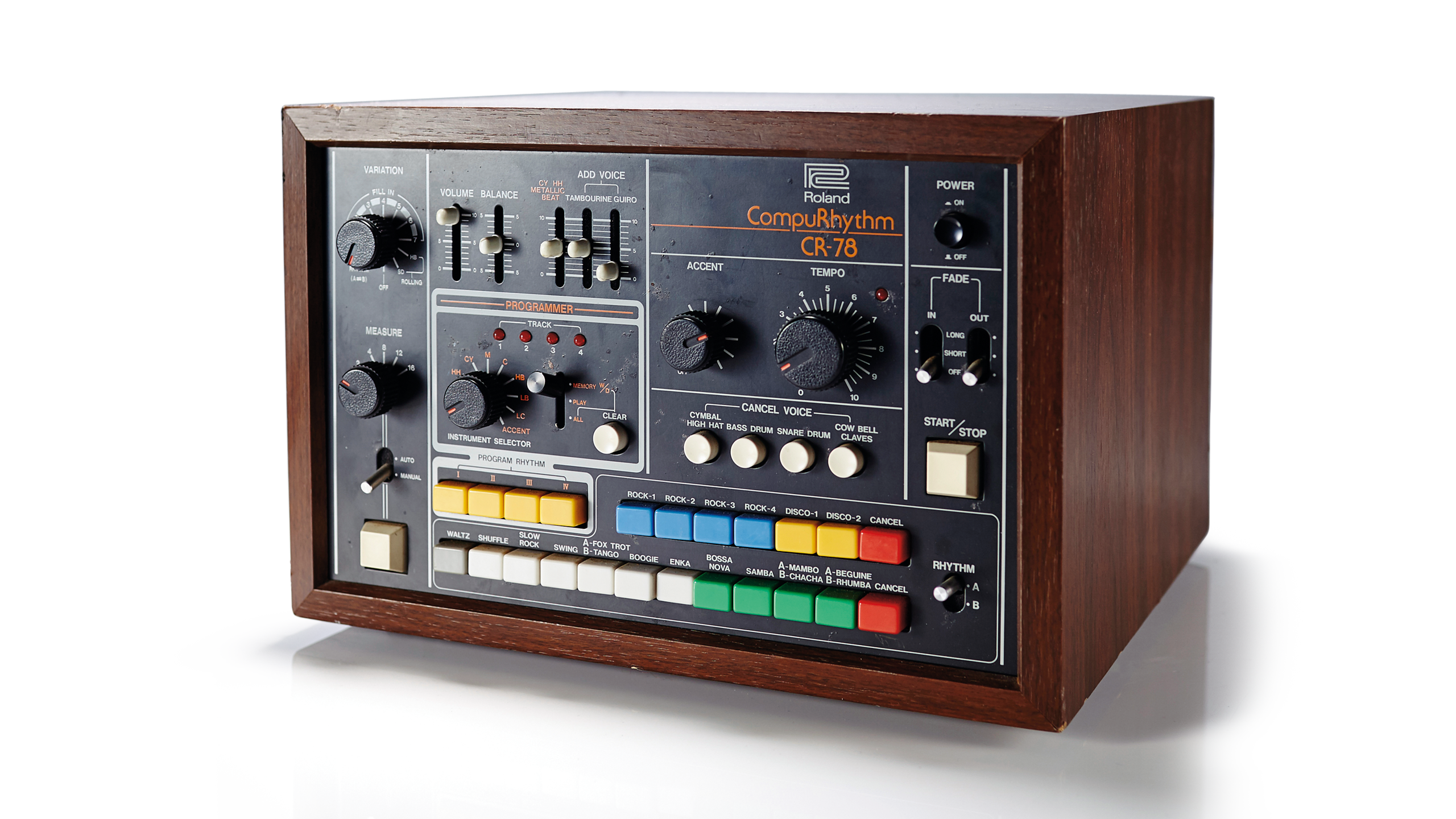
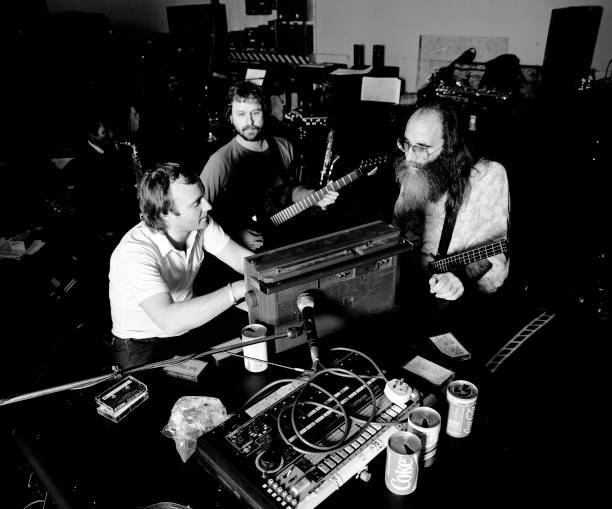
Phil Collins and Leland Sklar in a 1985 studio photograph. The foreground machine is a TR-808; the CR-78 story for “In the Air Tonight” is documented separately.
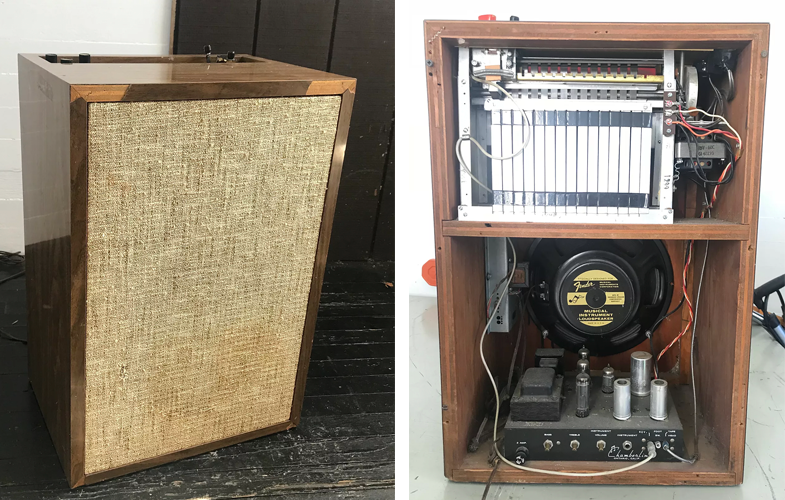
Phil Elverum’s Chamberlin Rhythmate Model 40, photographed for his 2018 Reverb feature. Elverum says it played on Microphones records including The Glow Pt. 2; it is a later Rhythmate, shown here as family context for the earlier Model 100.
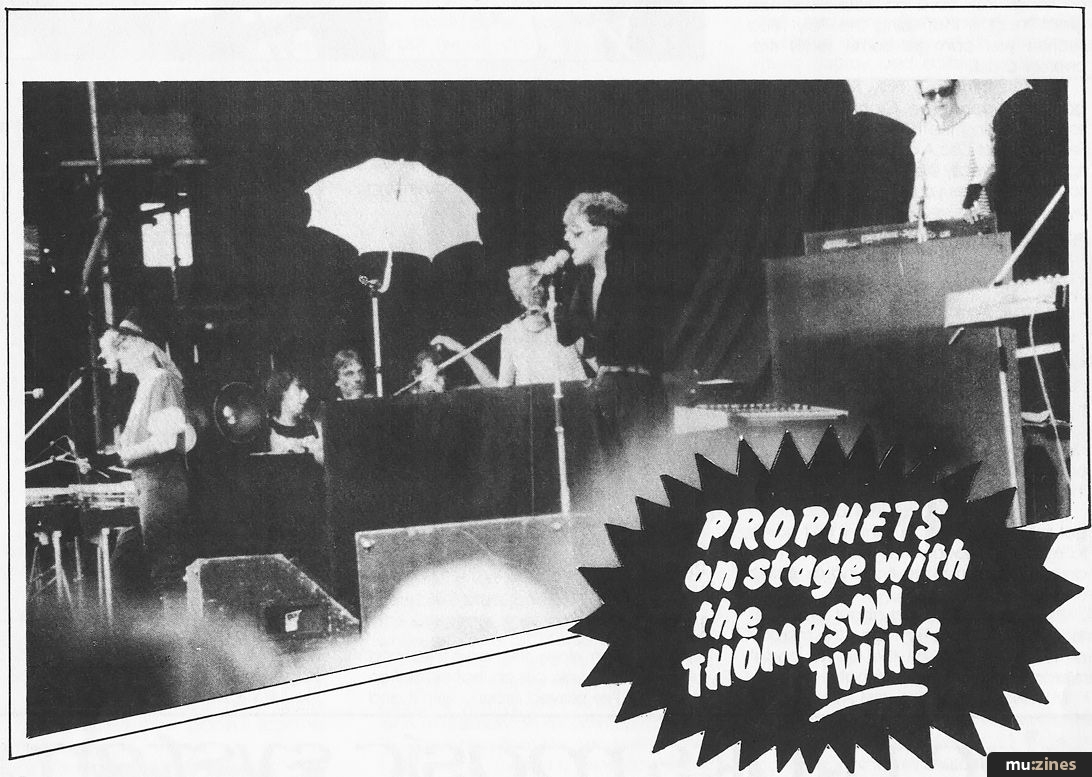
Prophecies Spring 1984 / Thompson Twins stage photograph
Thompson Twins in Sequential’s 1984 Prophecies spread. This is a period stage photograph, not a Drumtraks advertisement or product view; the cleared full-page Drumtraks advertisement remains the separate lead document.
Rare DM, photographed for her 2022 Chaos Control interview. Erin Hoagg describes using a BeatStep Pro to trigger the SDS-9 for sequenced drum sounds, part of a tactile rig built for jamming alone. This is an artist portrait; the SDS-9 is not in the frame.
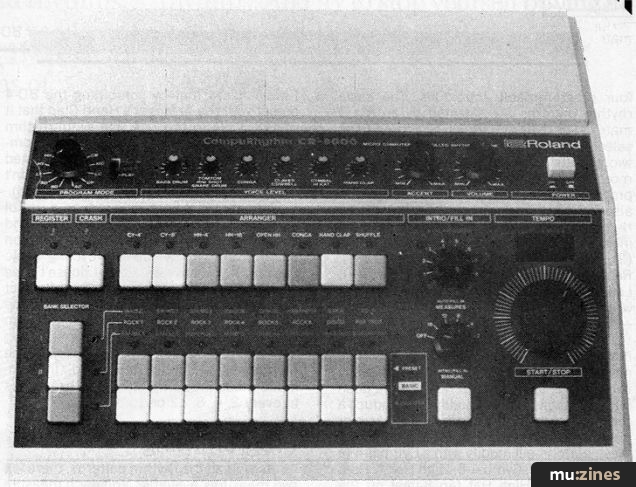
Roland’s CR-8000 rhythm unit in period press. Chris Barbosa names it in the bedroom system behind the Fire and Ice demo; the photograph shows the preset machine in its original market setting.
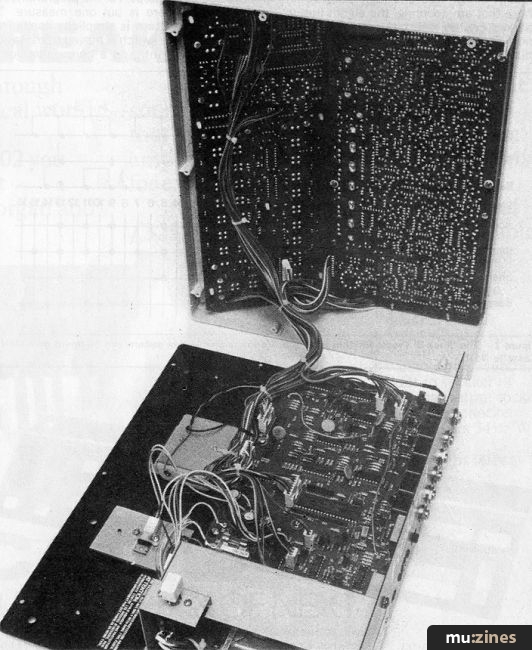
An internal view of Roland’s CR-8000. Chris Barbosa’s Fire and Ice account is a separate studio story; this scan is a technical view of the machine rather than a session photograph.
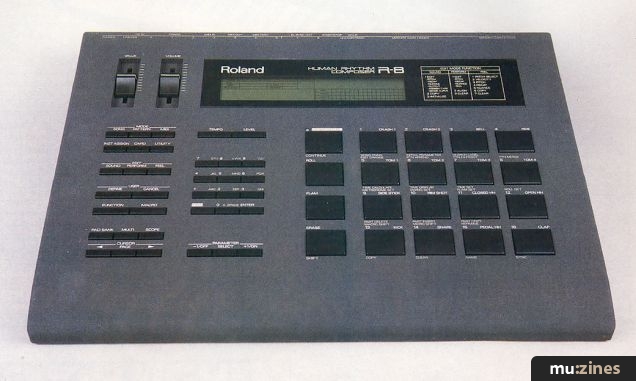
The Roland R-8 MKII in a retained period photograph. Eris Drew names it as a go-to machine on Quivering in Time; the scan is original product context, not her studio.
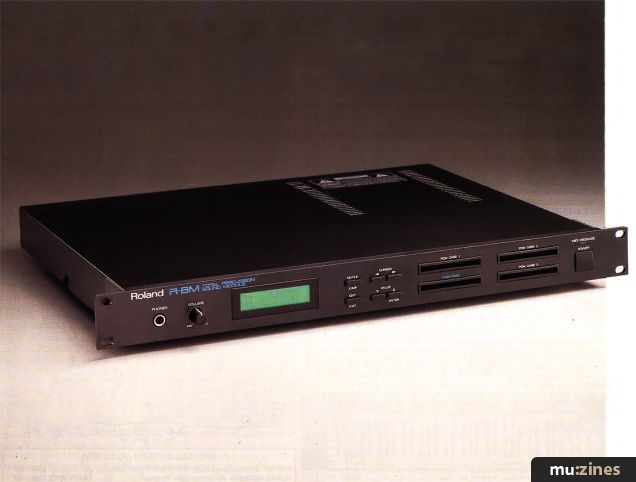
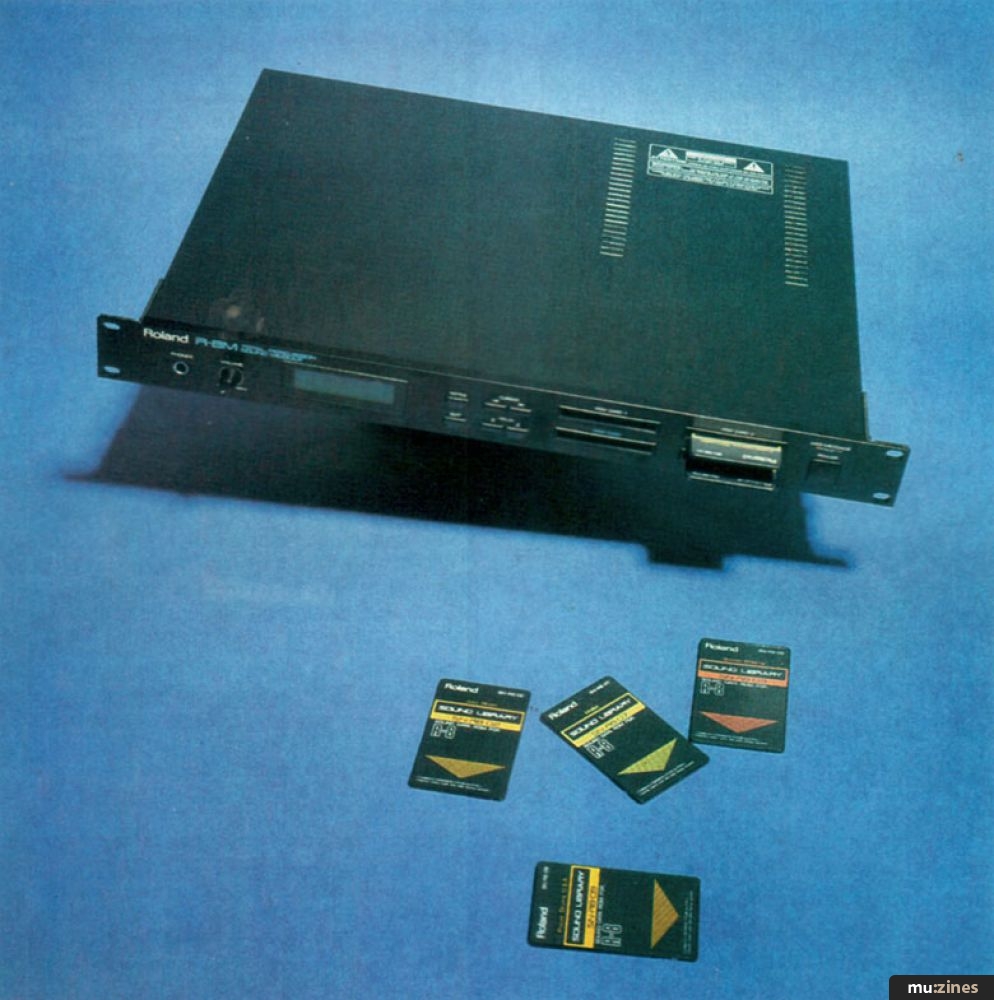
Roland’s R-8M in a contemporary review. Romain FX names the rack machine as a source of heavy, classic drum sounds in his working room; the photograph is period product context, rather than his own studio.
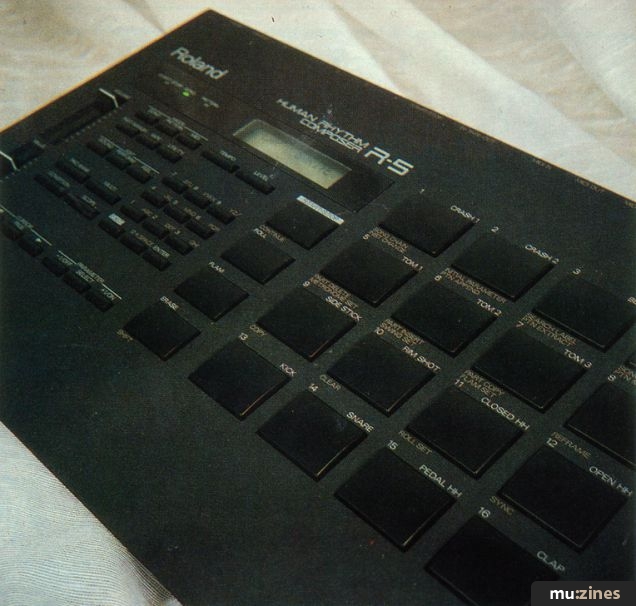
Roland’s R-5 in period press. Daru Jones remembers learning New Jack Swing programming on one; this image records the machine that became part of that education.
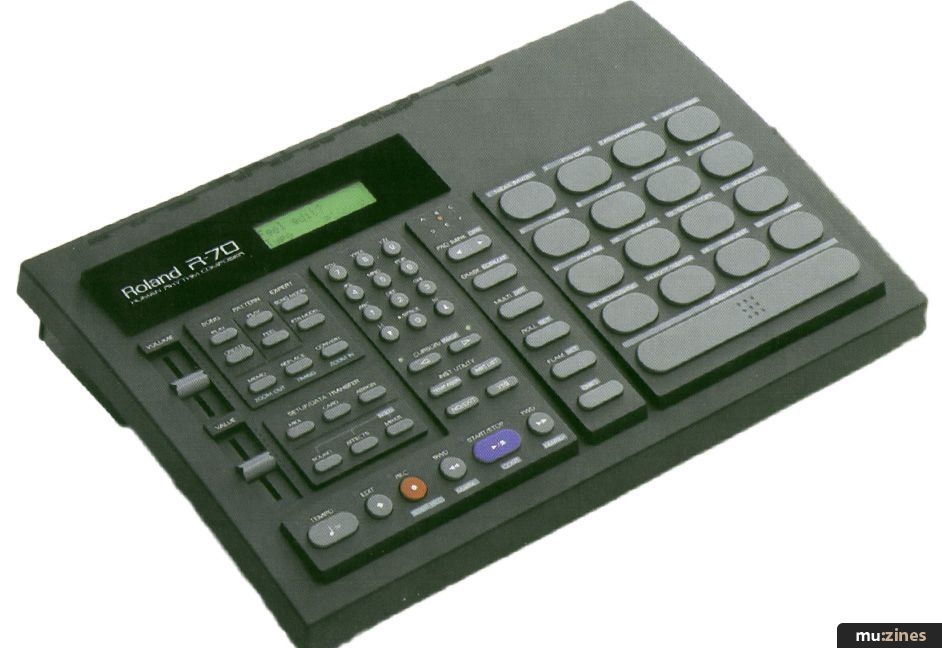
Roland’s R70 in period product imagery. RP Boo’s “Under’D-Stat” association puts the machine in Chicago footwork history; the image is an instrument view, not a claim about the track’s session.
Texas Radio’s own Roland TR-66, photographed from the front. Will Sergeant recalls experimenting with two TR-66 machines around Echo & the Bunnymen; this image preserves a surviving example, not the band’s unit.
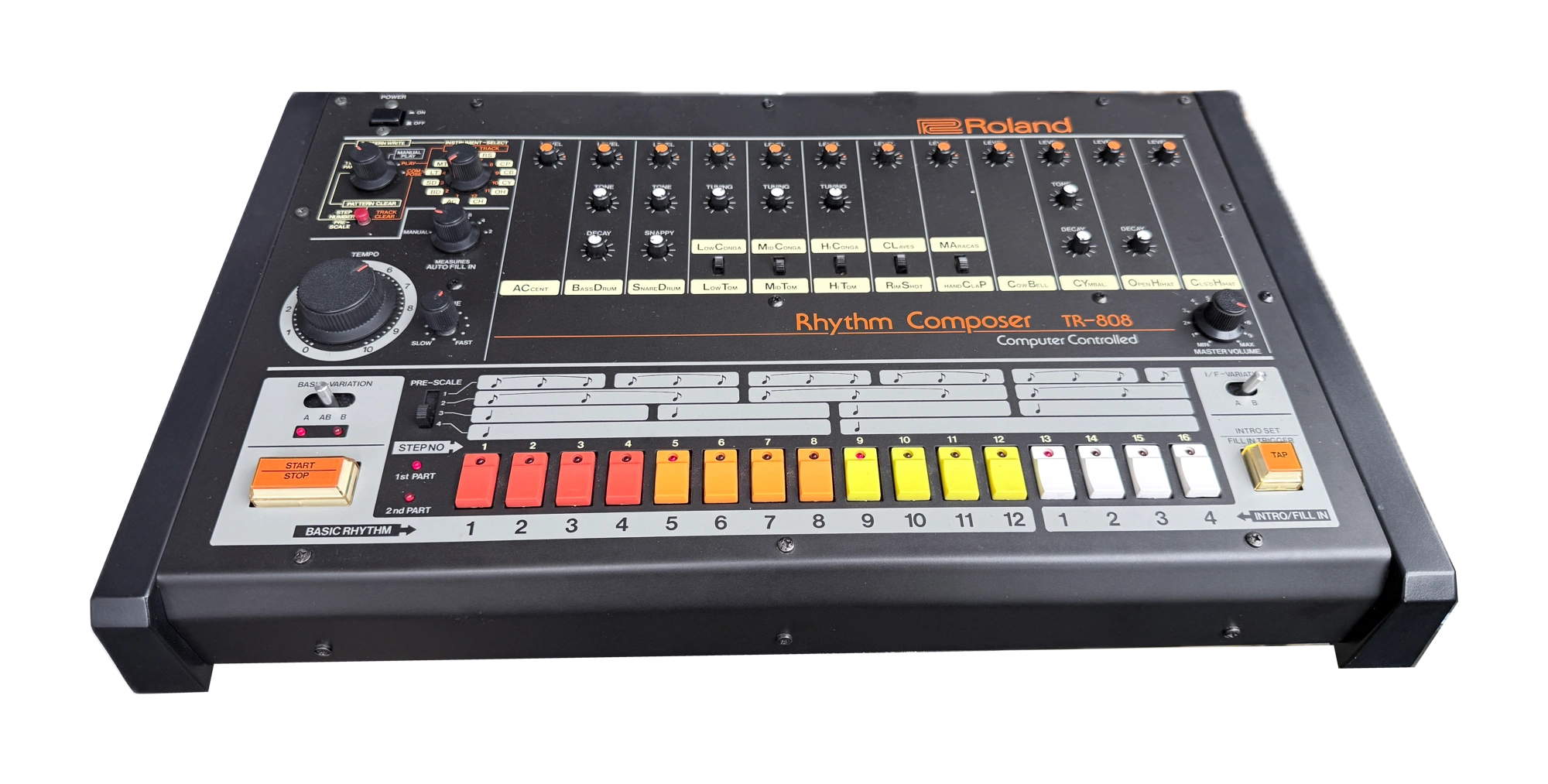
Texas Radio’s own Roland TR-808, photographed from the front. The Planet Rock account belongs to Arthur Baker’s record-making history; this is a collection photograph of a surviving machine.
Texas Radio’s own Roland TR-909, photographed from the front. Juan Atkins names the 909 with Drumtraks on Model 500’s “No UFOs”; this is a collection photograph, not the original studio unit.
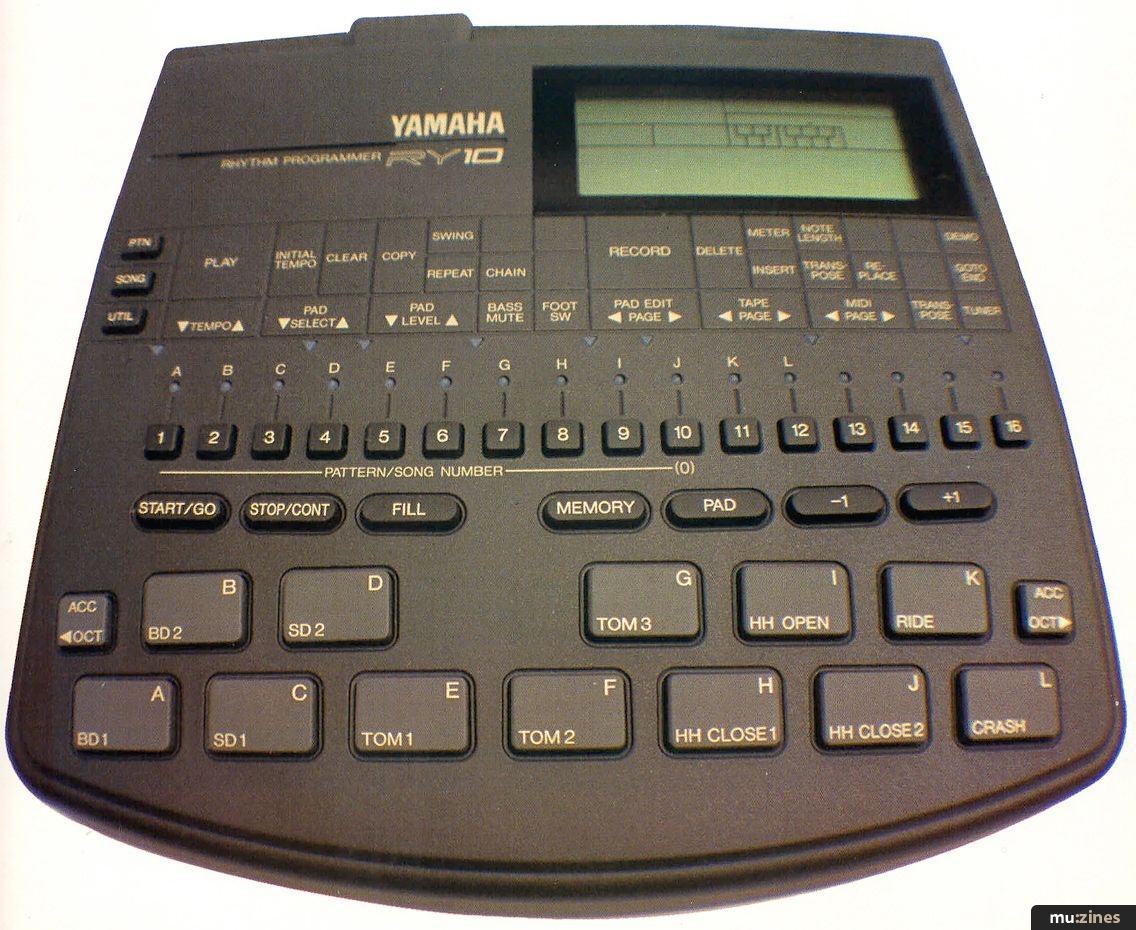
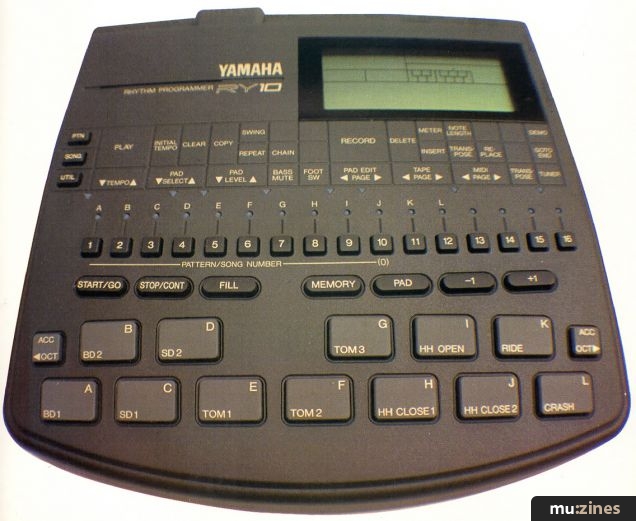
Yamaha’s portable RY10 in review photography. Cat Inside names the machine on “Whispering (Rewind)”; the photograph is period product context rather than a session image.
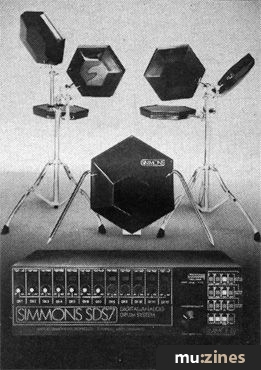
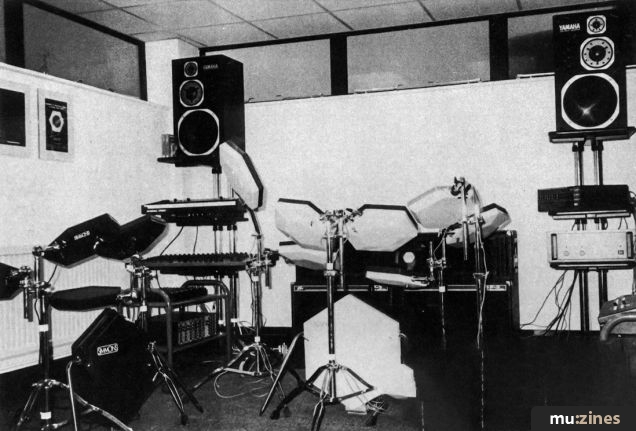
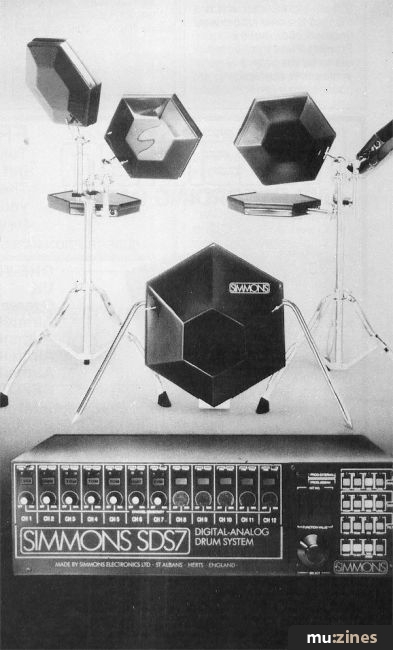
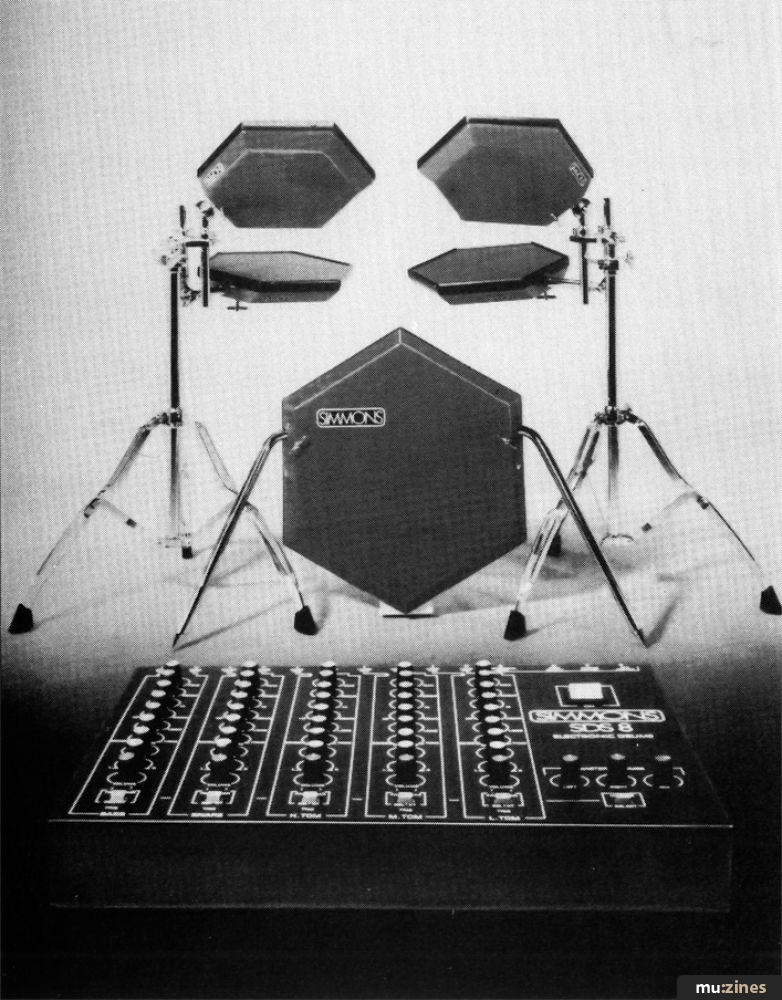
A Simmons electronic kit in SDS7 review context. Neil Peart’s Power Windows account gives the programmable system its recording story; this period image shows the kit in the public eye.
Simmons SDS1000 rack module — July 1986 front panel
The Simmons SDS1000 in period photography. A Jimmy Edgar EP connection is recorded as a reported association in the dossier; the scan preserves the hardware without inventing a session.
Simmons SDS7; The New Simmons Kits; Simmons Sounds
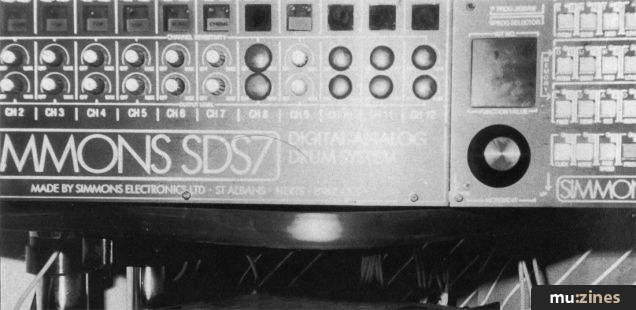
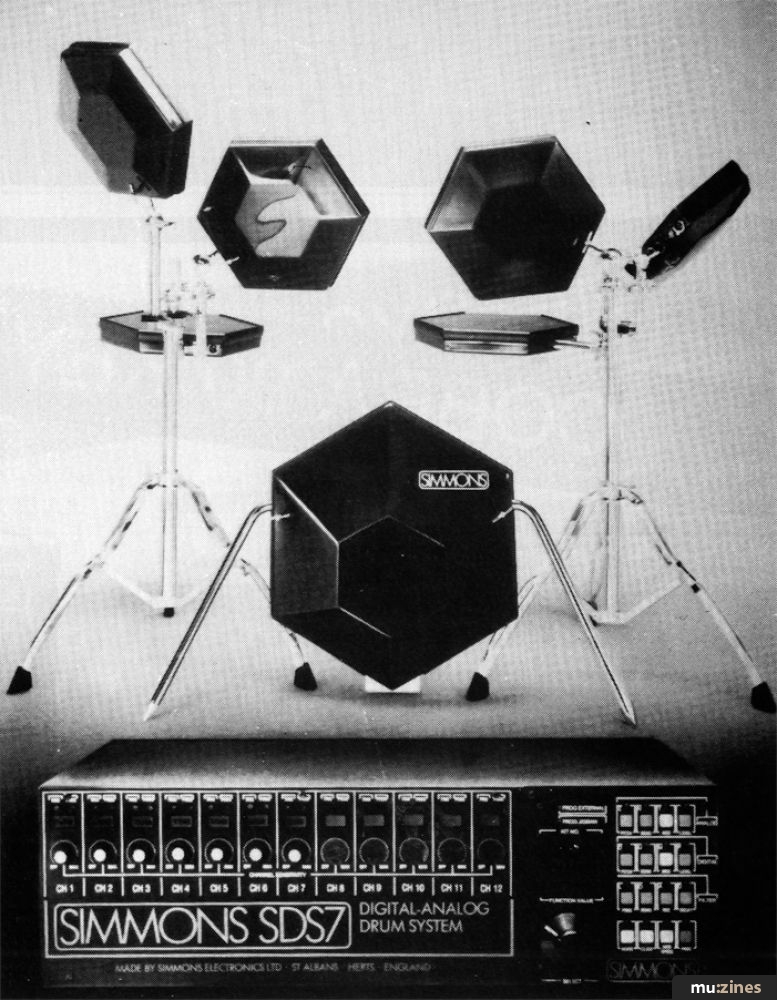
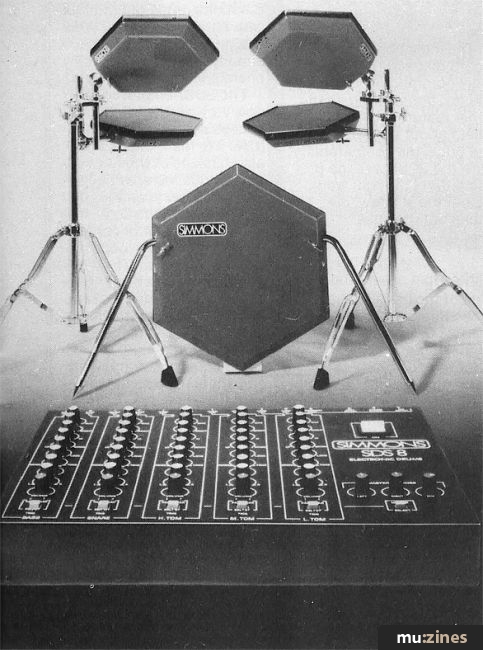
A Simmons SDS7 system in period press. The linked artist histories belong to musicians and recordings; this image documents the rack-and-pad instrument itself.
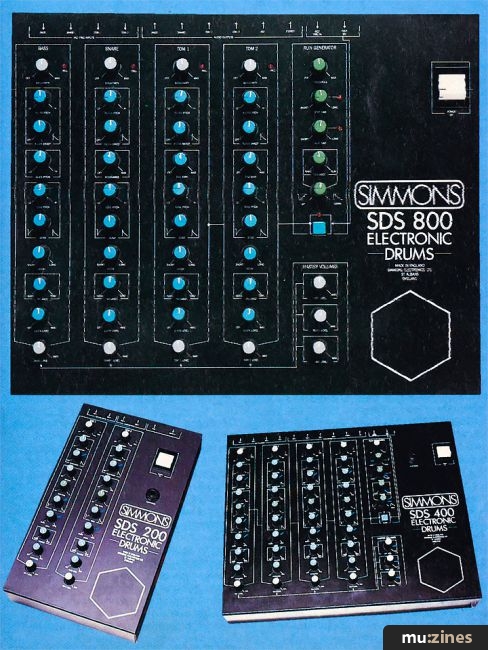
Simmons SDS800 at top, SDS200 and SDS400 below — September 1985
The Simmons SDS800 series in period coverage. Mathew Jonson names an SDS800 among the electronic drums on Her Blurry Pictures; the image documents the earlier hardware range.
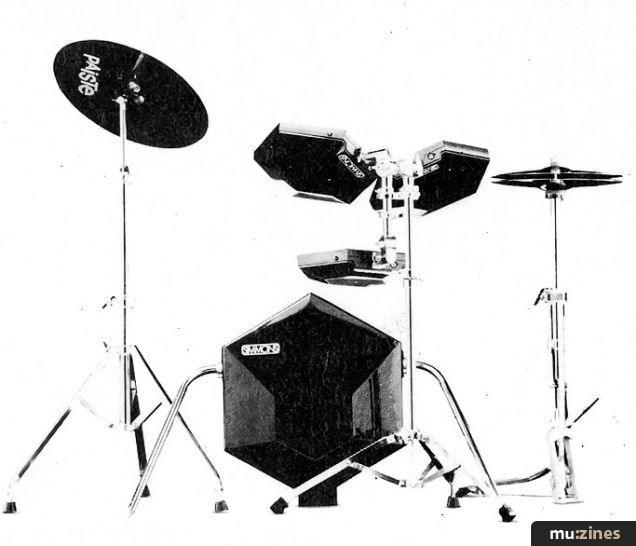
A Simmons SDS800 kit in a retained period image. Mathew Jonson’s album account belongs to the dossier; the photograph gives the modular electronic drums their public visual context.
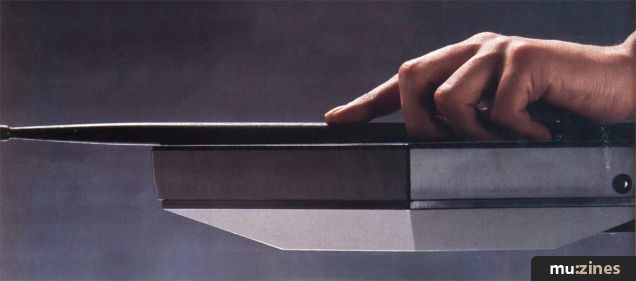
A Simmons SDS9 snare-rim detail in period press. Rare DM’s later sequenced set-up shows the module’s afterlife; this image records the machine’s own design.
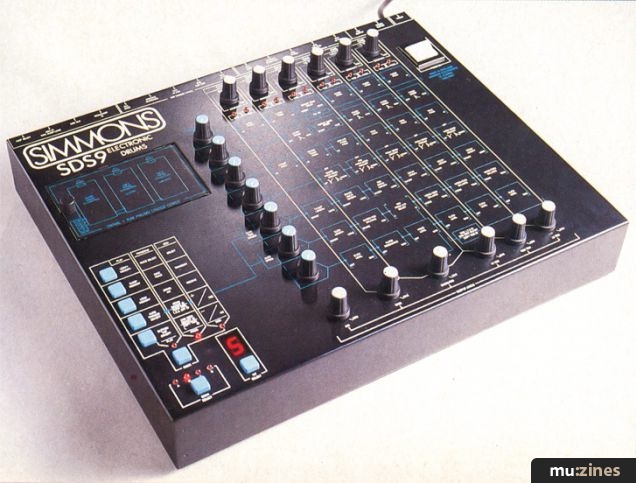
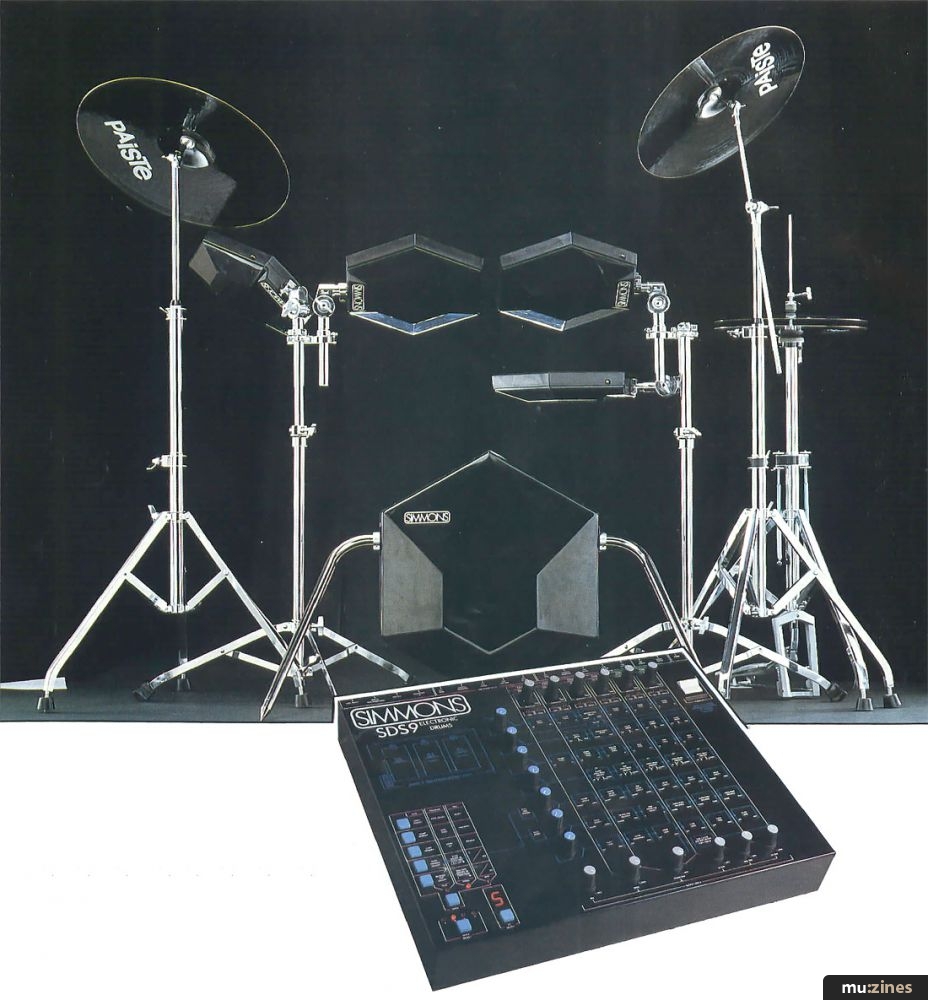
The Simmons SDS9 control unit and kit in a period review. Rare DM’s sequenced SDS-9 practice is a later artist account; the photograph is launch-era product context.
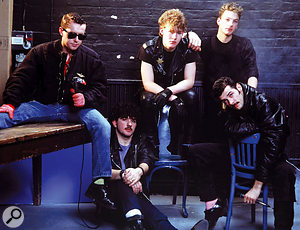
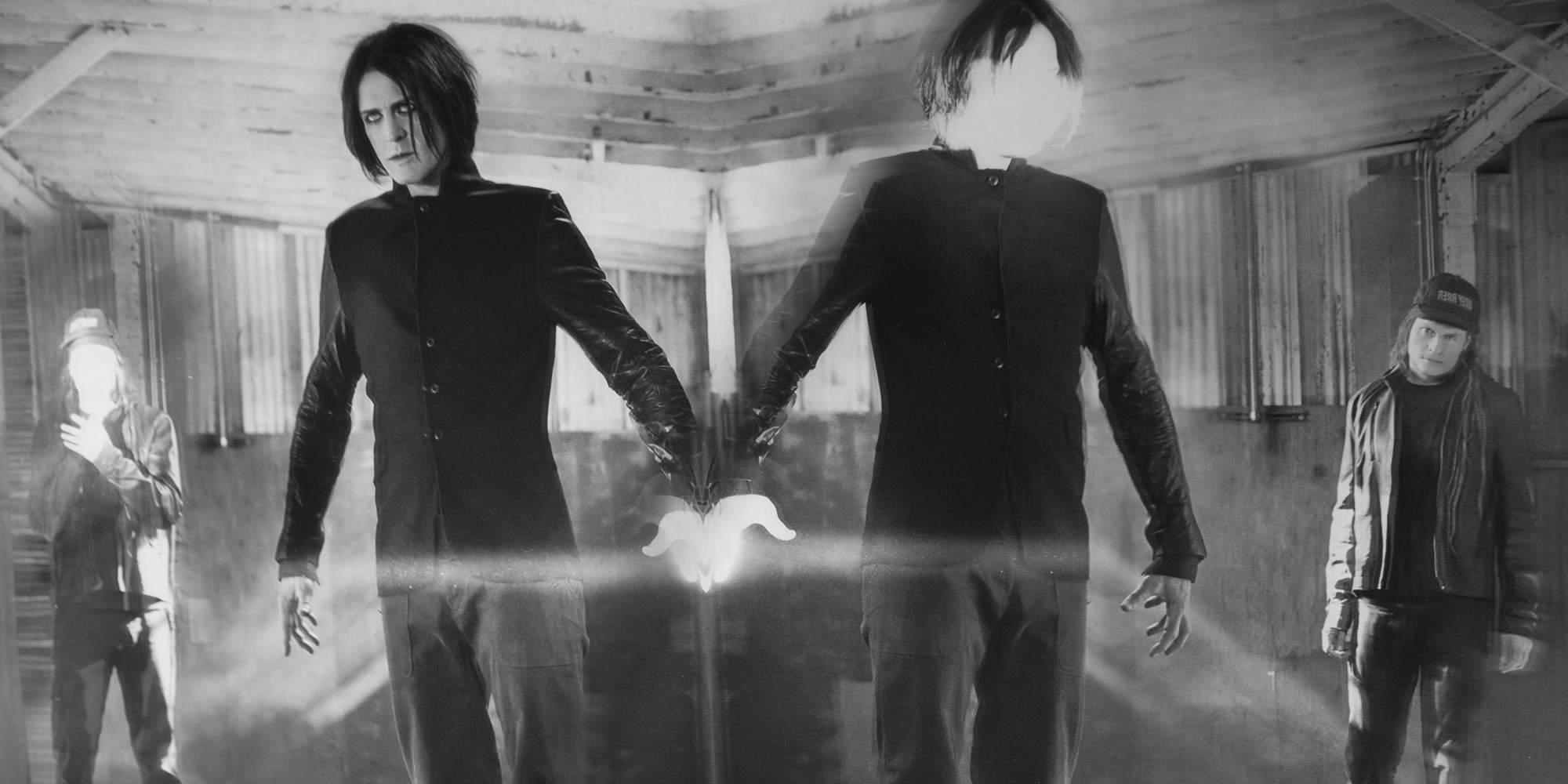
Skinny Puppy, pictured for Reverb’s cEvin Key feature
Skinny Puppy in Reverb’s 2017 cEvin Key feature. The accompanying account places the TR-808 and TR-909 among the group’s early machines and describes the TR-808 triggering role; neither machine appears in this portrait.
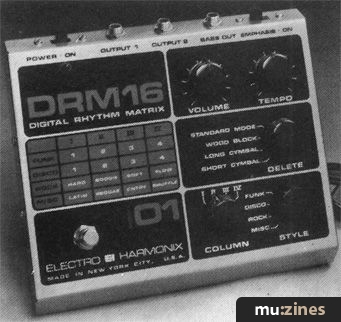
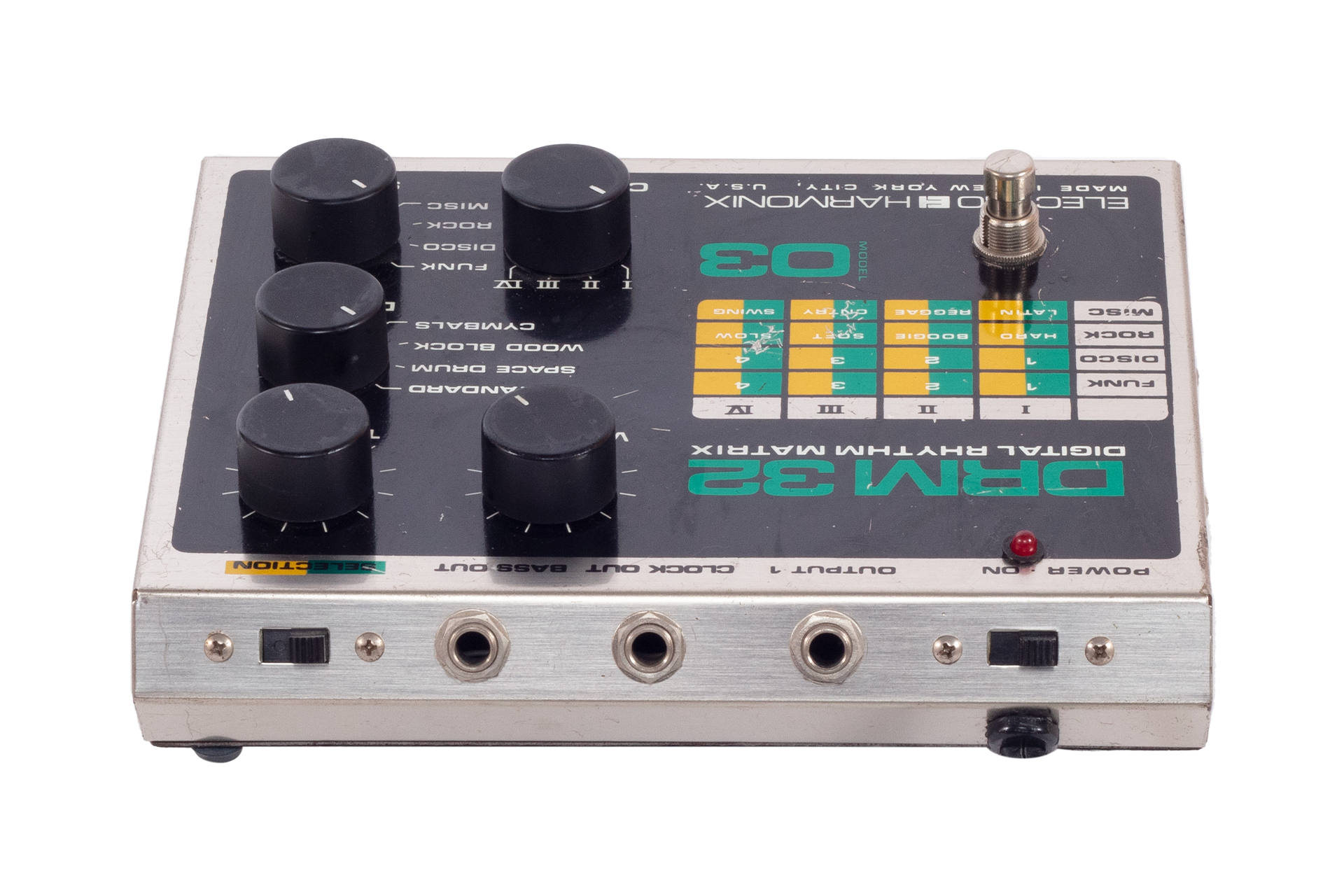
The rear panel of an Electro-Harmonix DRM32 in a retained object photograph. Sam Gendel built DRM around the machine; this view shows the instrument’s connections rather than the artist’s recording room.
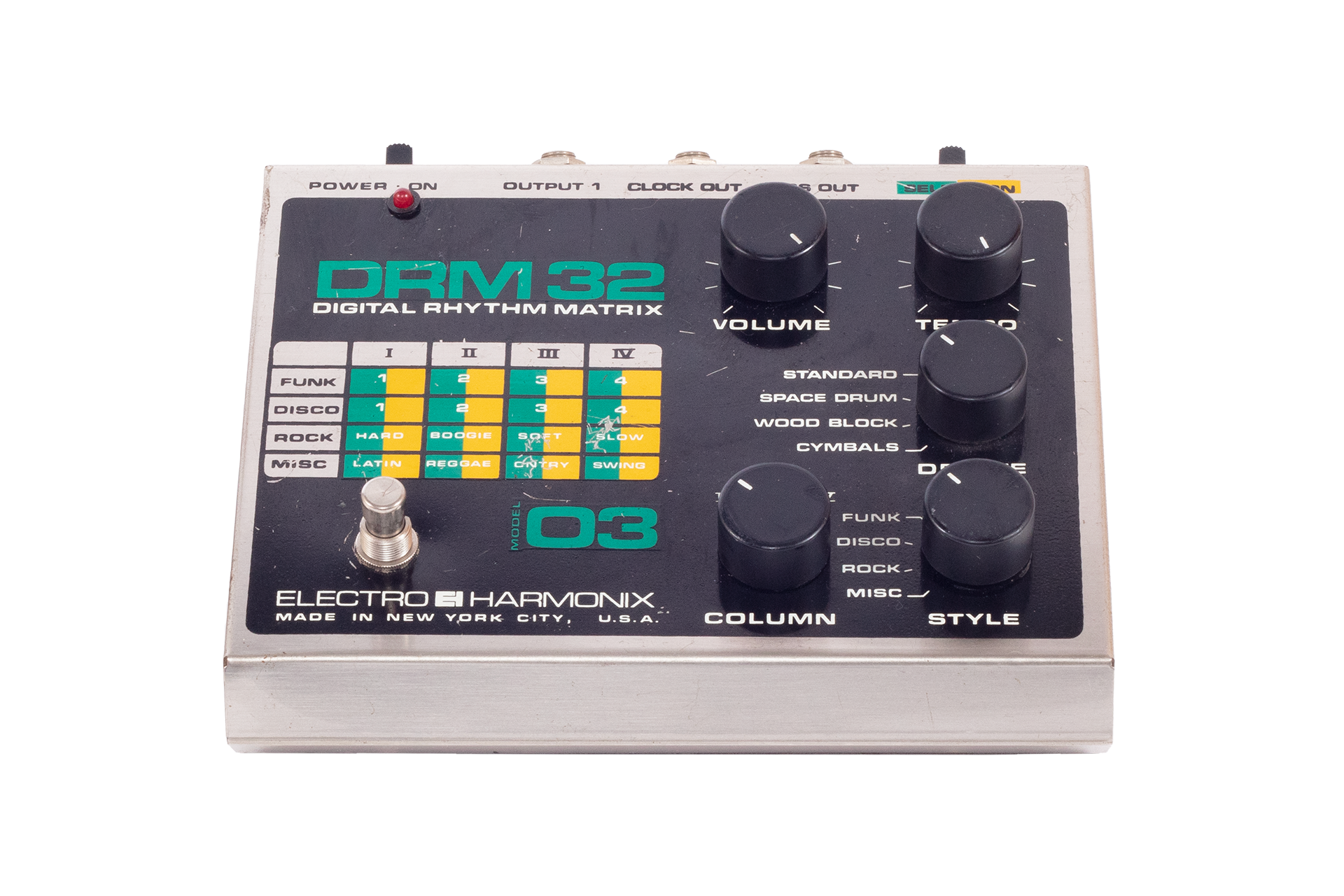
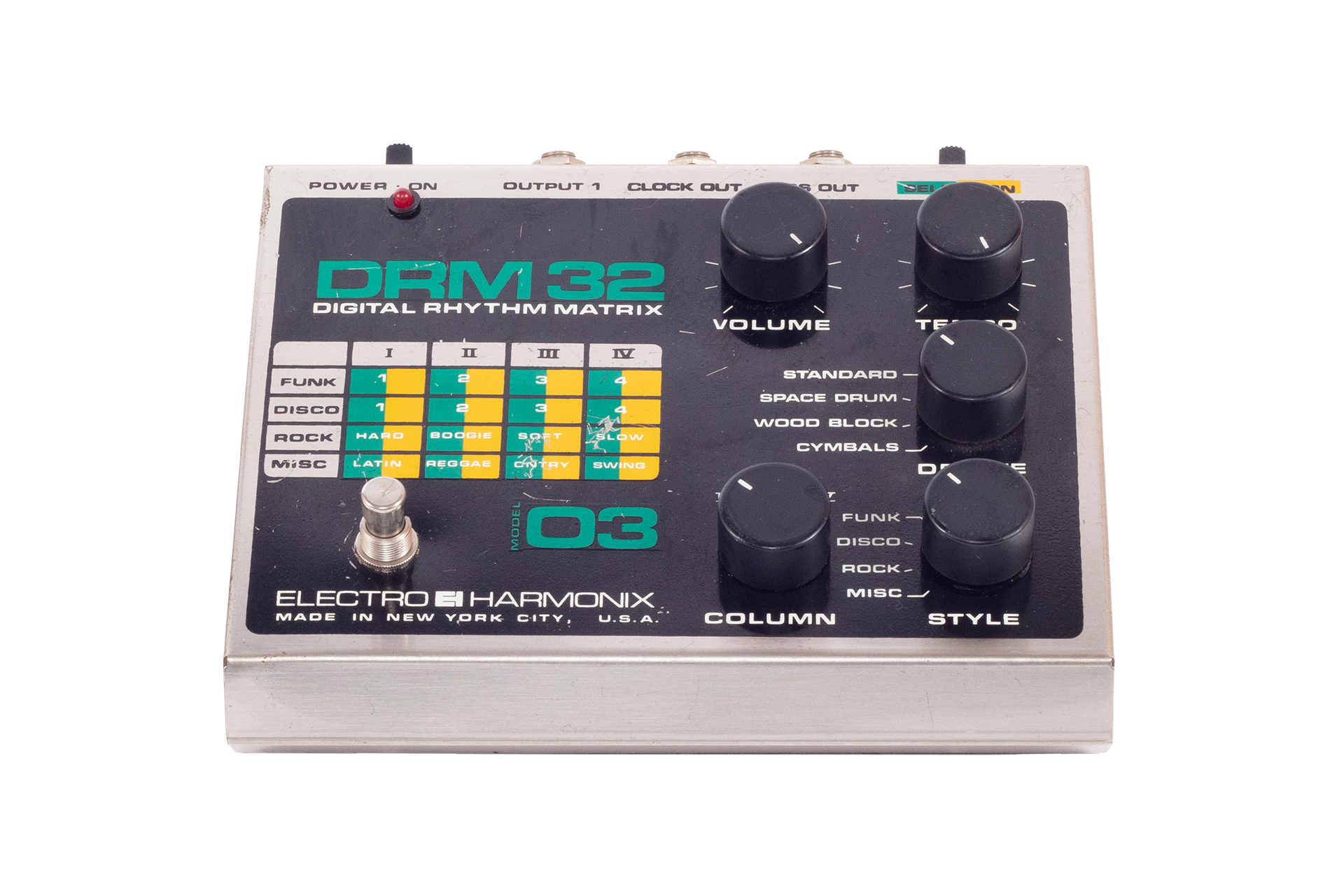
The Electro-Harmonix DRM32 front panel in a retained SMEM photograph. Sam Gendel’s “DRM” association offers the musical lead; this image shows the distinct instrument itself.
Pollard Syndrums in Sound International. Yukihiro Takahashi’s touring-kit association gives the 477 a Yellow Magic Orchestra connection; the period review shows the electronic percussion system itself.
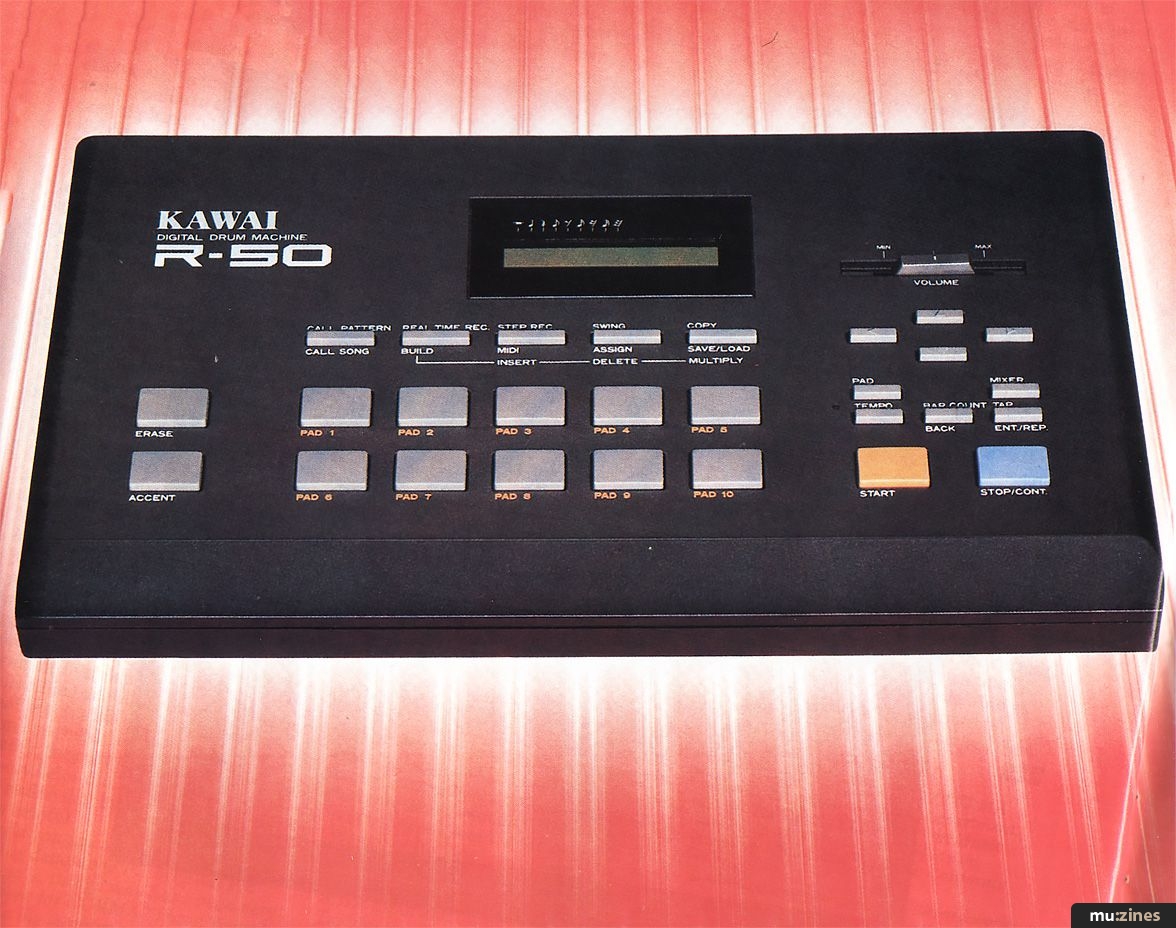
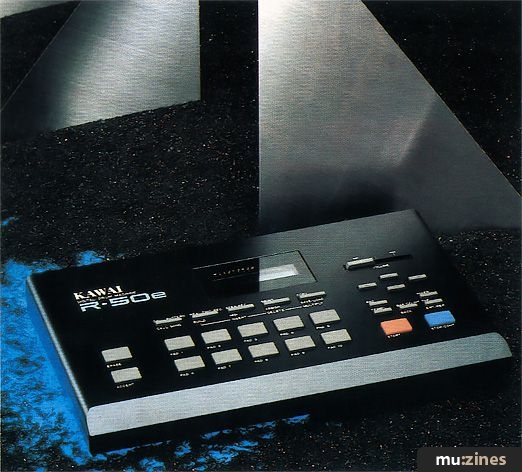
Kawai’s R-50 in period review photography. Roman Flügel remembers the machine in his first electronic set-up around 1987; the image gives that early studio memory a physical shape.
Stewart Copeland’s own Oberheim DMX, photographed for Reverb in 2023. The machine’s later sale history reaches back to Copeland’s solo work, including Rumble Fish and The Rhythmatist; the page carefully stops short of calling it the actual unit heard on “Every Breath You Take”.
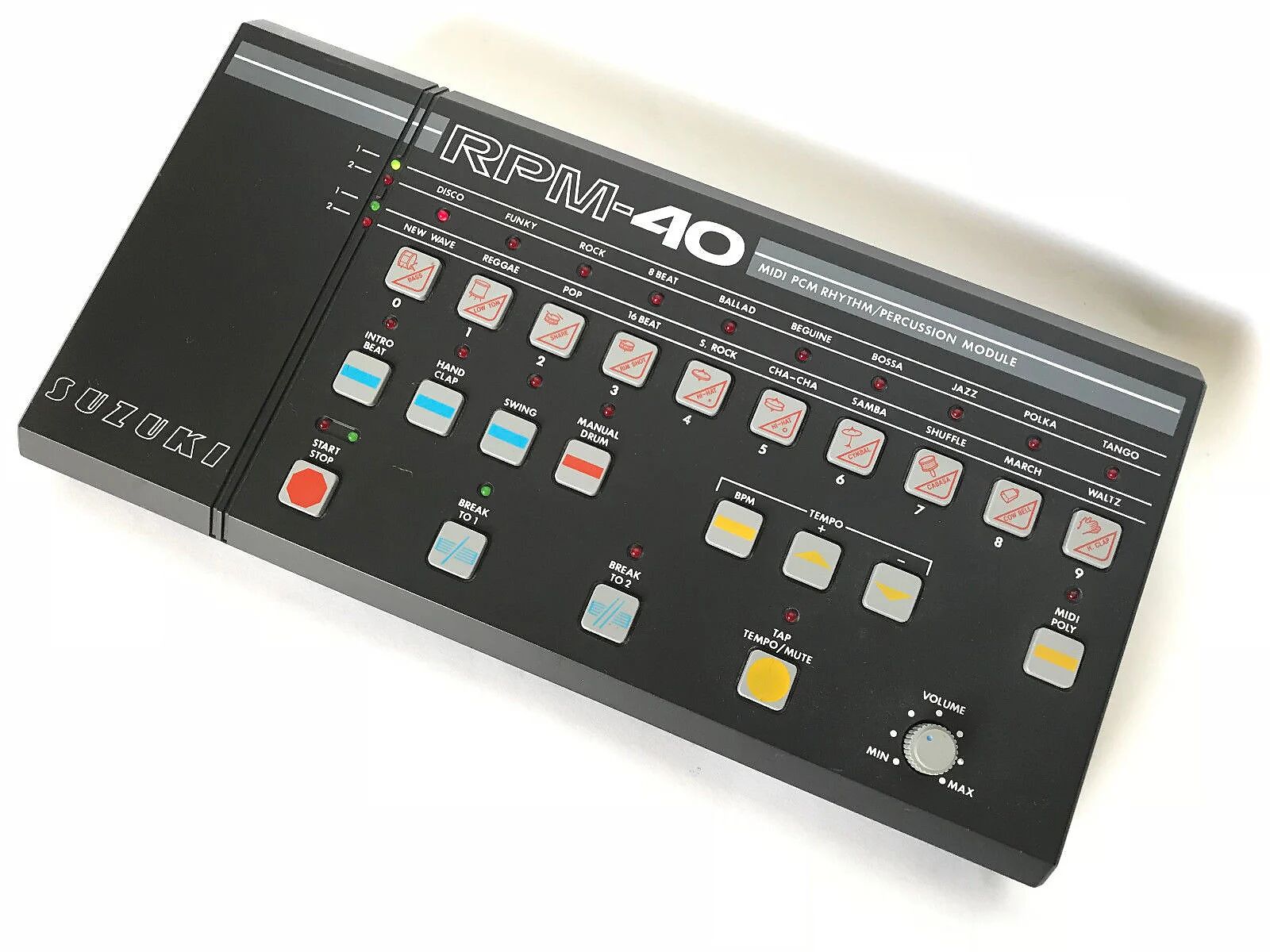
A Suzuki RPM-40 product view retained from a source listing. Moby’s collection history is a separate provenance story; this image records the machine itself.
Current Audiofanzine image record; accessed 24 September 2026
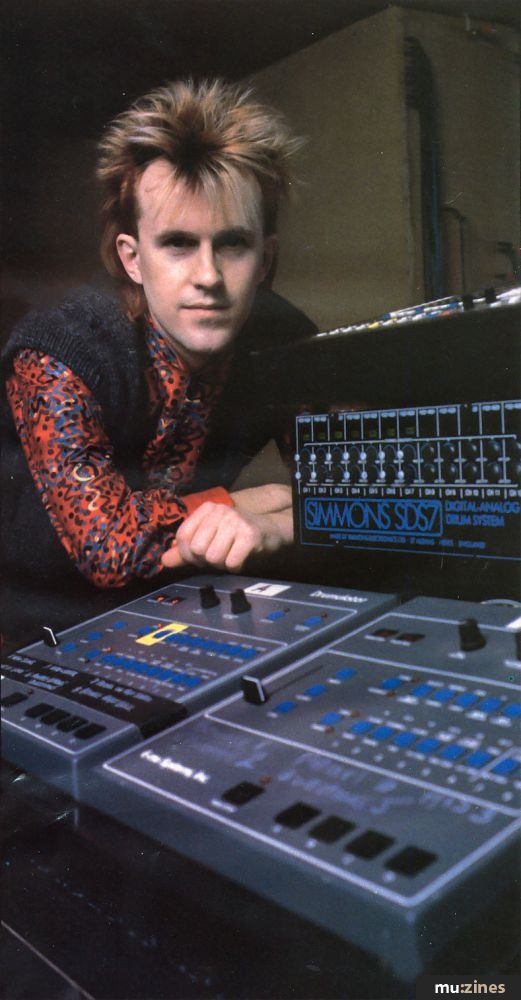
Howard Jones beside a clearly marked Simmons SDS7 brain in a 1985 studio photograph. The card records the visual connection without assigning a specific recording to the unit.
The DR770's back panel: compared to its predecessor, the DR660, it gains a dual footswitch socket, but loses one of the older unit's two individual outputs.
The BOSS DR-770’s rear panel in a contemporary review. Caro C names the machine in the hardware arrangement for “V To The Dub”; the photograph is product documentation, not a session image.
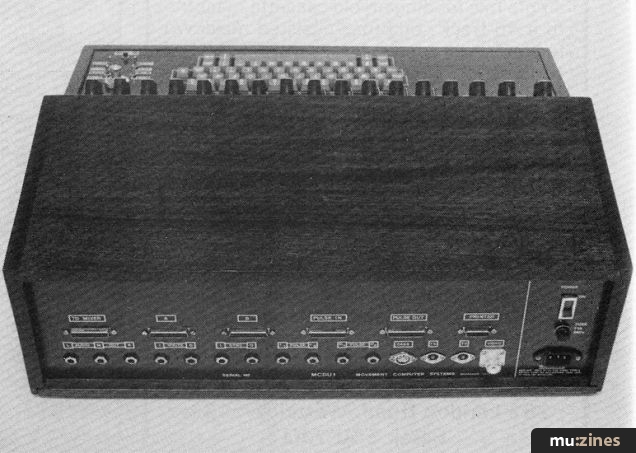
The rear of the Movement MCS Percussion Computer. Dave Stewart’s Sweet Dreams account gives the hybrid British machine its record history; the photograph is an object document.
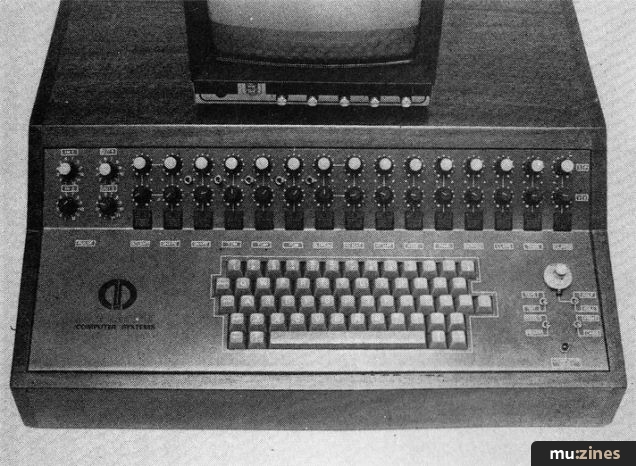
The Movement MCS controls in a retained period image. The linked Sweet Dreams story comes from Dave Stewart; the detail view stays with what the instrument itself visibly offers.
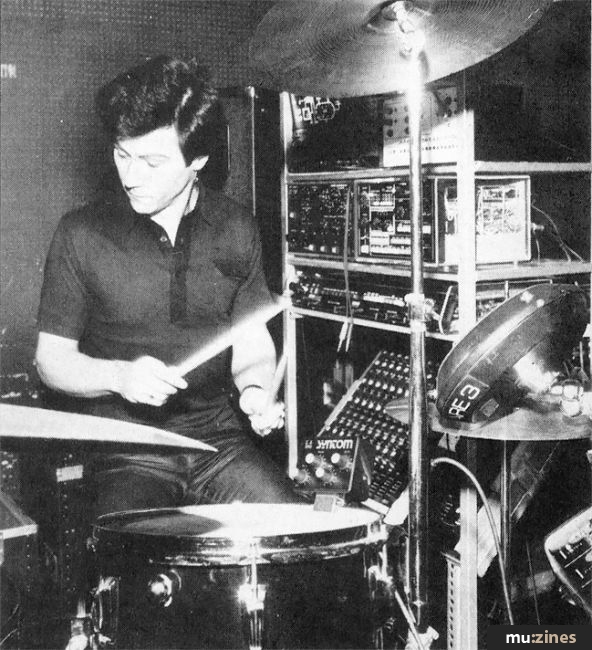
Warren Cann at his Ultravox set-up, with a legible Synare 3 shell at right. It joins his period profile with the Synare’s later documented Joy Division and Touch Sensitive stories.
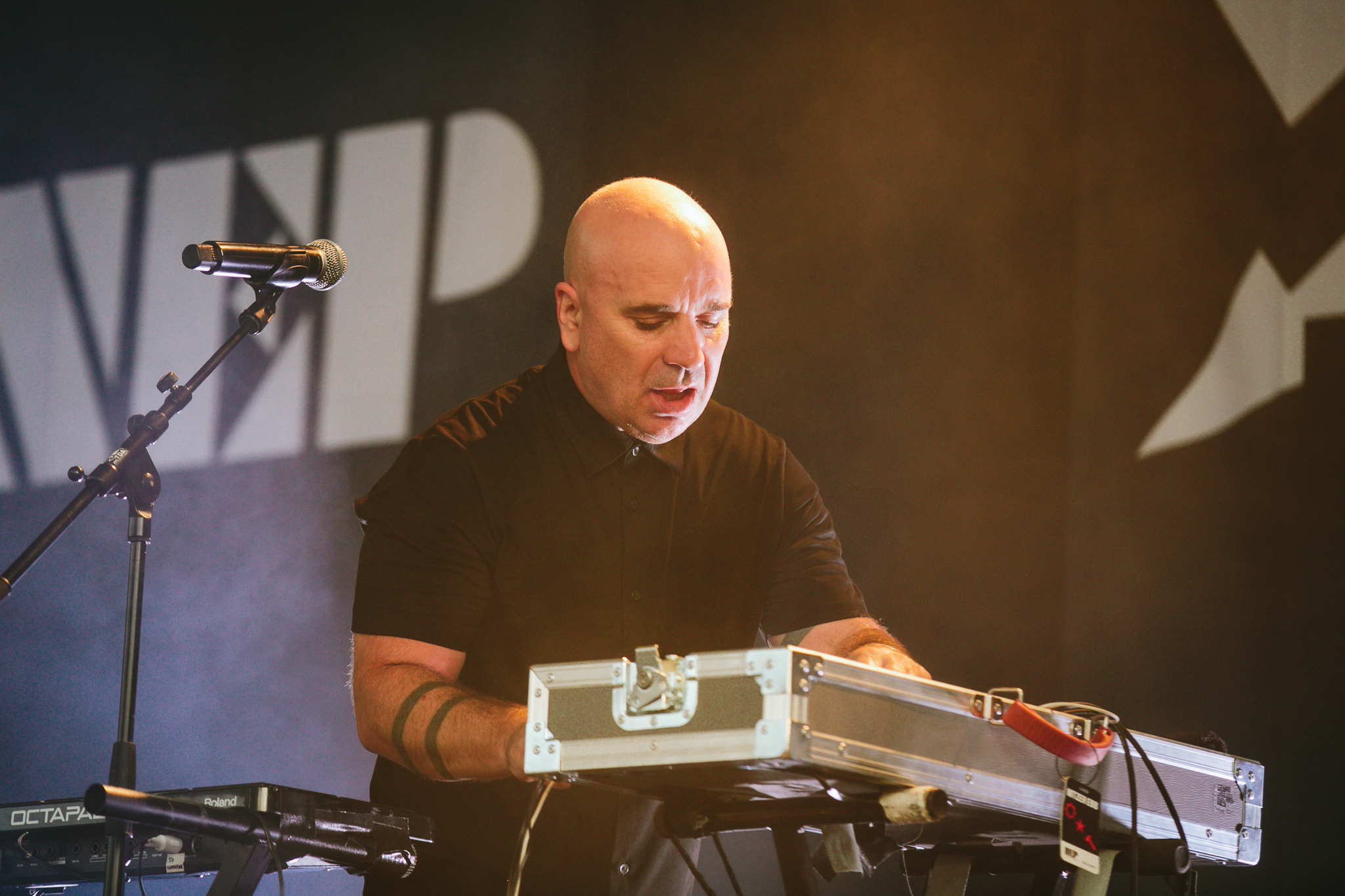
Karl Hyde in Underworld’s live working environment. The linked dossier carries the MPC2000 account around Everything, Everything; the image is a performance-context photograph.
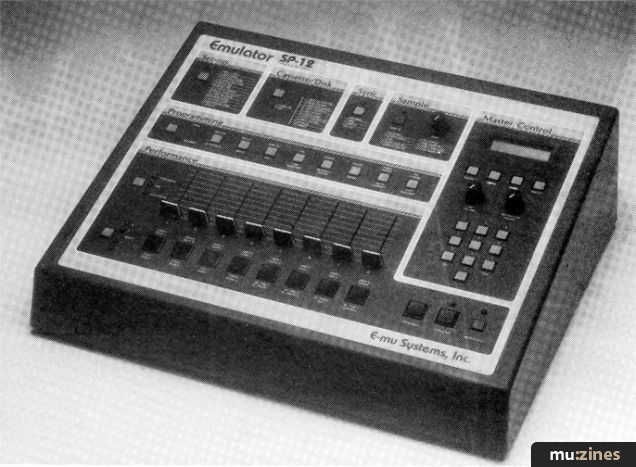
E-mu’s SP-12 in period press. Prince Paul distinguishes it from the later SP-1200 in the De La Soul Is Dead equipment story; the scan makes the earlier sampler visible on its own terms.
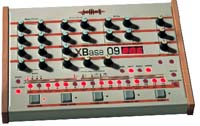
The Jomox XBase09 as an archive product image. Andreas Henneberg’s “All Right Now” account gives the box its record-making context; the photograph is a product view.
The Yamaha RX21 in period coverage. Its artist history is held in the dossier; the page shows the small digital rhythm machine in its original public setting.
Yamaha’s RX7 in a period photograph. Ian Pooley calls it his first drum machine and says he still uses it; this is the object at the beginning of that long working relationship.
The Yamaha RY10 in period review context. Cat Inside’s “Whispering (Rewind)” makes the small programmer part of a named record story; the photograph shows the machine itself.
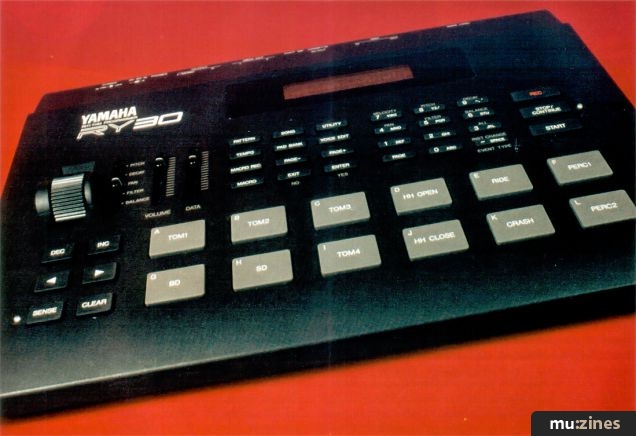
Yamaha’s RY30 in a retained period image. Mark Gamble remembers shaping its sounds from the wheel and panel for Rhythmatic; the scan captures the programmable instrument he describes.
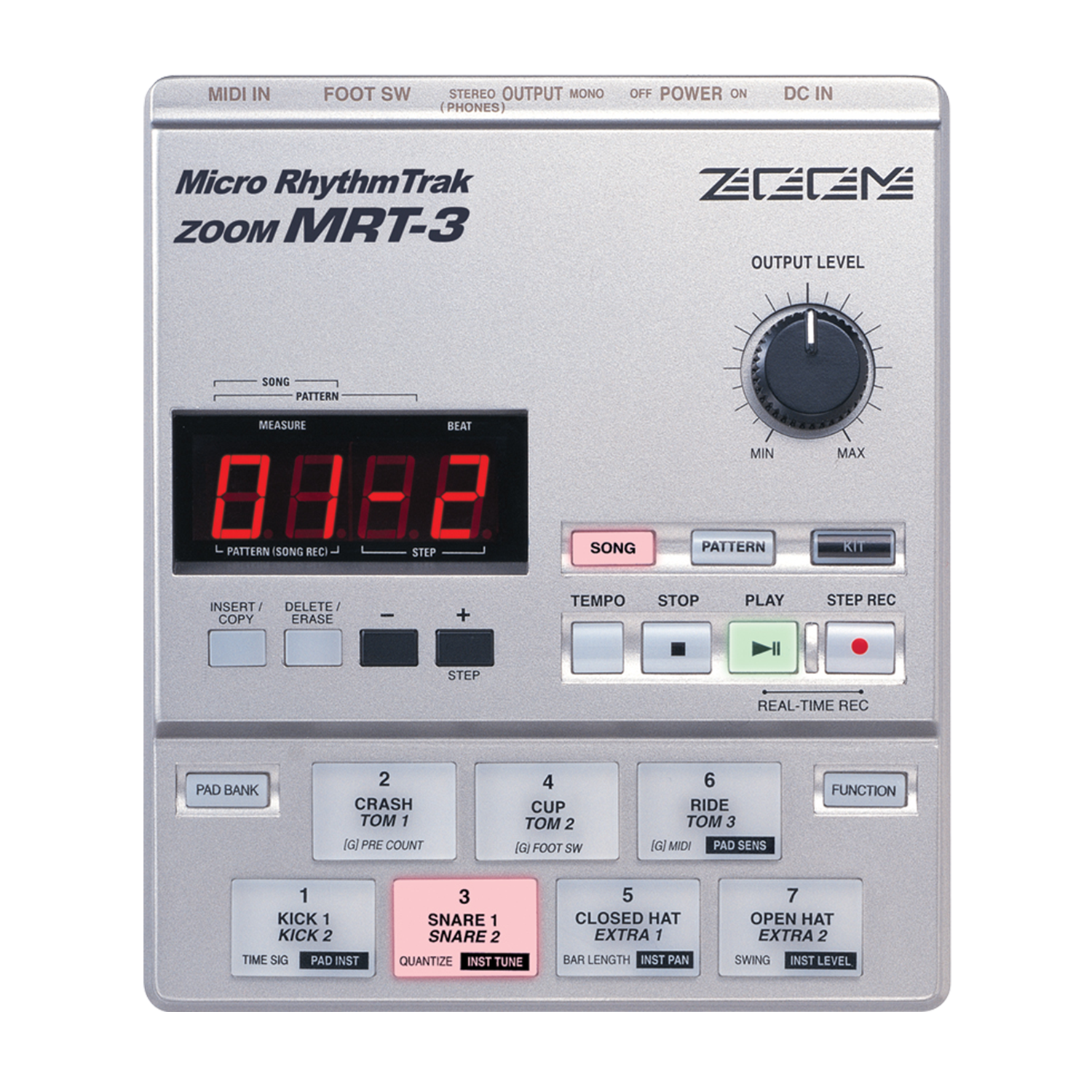
Zoom MRT-3 Micro RhythmTrak official product photograph
Zoom’s official MRT-3 product photograph. Ian Evans lists the compact RhythmTrak on the self-documented Reader’s Voice EP; the image shows the all-in-one machine rather than the recording set-up.
Current Zoom product record; accessed 24 September 2026