
Roland’s R-70 Human Rhythm Composer was on sale in Britain by June 1992 at £499 including VAT; Roland’s later product record dates the model to 1992–1997.
Silent positional-pad study
Touch and position.
These documented controls explain pitch, decay, nuance and pan. They are not an R-70 audio demonstration or factory-pattern reconstruction.
Pitch
Position can alter pitch.
Decay
Position can alter decay.
Nuance
Only supported sounds expose nuance.
Pan
Position can alter stereo placement.
Pads and aftertouch on a PCM machine
Strike a pad to enter a drum hit, then use the long positional pad to change pitch, decay, Nuance or pan across its length. Sixteen velocity-sensitive pads supplied the main playing surface. Rhythm Expert could generate a pattern or song model that the player could save and revise.
R-70 Owner’s Manual ↗ Roland R70 ↗ Roland R70 Drum Machine ↗ R-70: Technical Specifications ↗
A serious British price, a connected studio
The R-70 offered a stereo pair and two individual audio outputs, MIDI and intelligent FSK tape synchronisation. Its optional M-256E card added pattern and song storage to the hundred patterns and twenty songs held internally. Ian Steele and Simon Trask each reported a £499 UK price including VAT in June and July 1992.
Roland R70 ↗ Roland R70 Drum Machine ↗ R-70: Technical Specifications ↗
Sounds that could be moved around
The factory manual lists 210 internal instruments and 32 locations for edited copies. Roland’s 1993 advertisement counts these as 242 sounds, then advertises 58,564 possibilities through layering. A player could combine instruments, shape their parameters and add effects; pattern append, merge and instrument-change functions offered ways to rework the rhythm itself.
What the reviewers found
Steele liked the sounds and ease of use, and found Rhythm Expert a useful time saver. Trask valued the editable ideas and kick/snare variation, but criticised the pads, absent filtering and the trade between internal effects and individual outputs.
The machine in the record
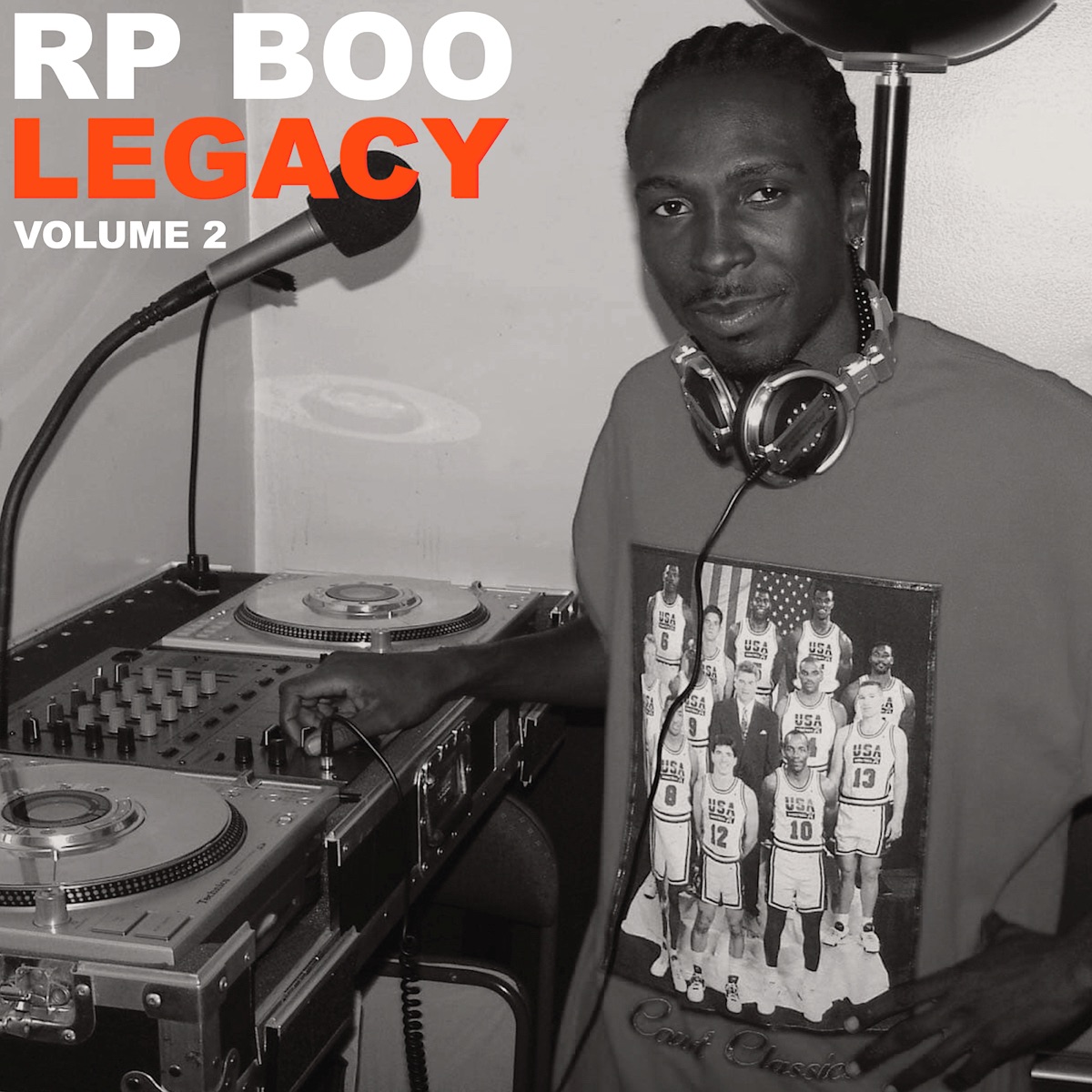
RP Boo / “Under’D-Stat”.
RP Boo used the R-70 with Tascam equipment on “Under’D-Stat”, a Japanese bonus track on Legacy. It is a small but vivid point in a wider Chicago story: a rarely celebrated Roland becoming a personal tool for one of footwork’s defining producers.
Read RP Boo, Montréal Academy lecture ↗RP Boo’s R-70
In Adam Wray’s 2013 interview, RP Boo described leaving an R-70 pattern running and returning when he wanted to finish it. Repair and lack of access also interrupted his work for months or years. In his 2016 lecture, he recalled bringing the R-70 together with a Tascam trackboard on “Under’D-Stat,” a breakthrough he placed around 2009.
Question in the Form of an Answer: An Interview with Juke Legend, RP Boo ↗ RP Boo, Montréal Academy lecture ↗ RP Boo: Legacy, MBIP-5523 ↗
A Chicago machine with a long memory
RP Boo learned to make beats on a Roland R-70 after DJ Slugo demonstrated one; in his Red Bull Music Academy lecture, he says he later bought the last store display unit. He also said that the majority of the tracks people were hearing came from that R-70. It puts a precise piece of hardware inside the story of Chicago juke and footwork without falsely assigning a machine voice to every individual record.
An R-70 in Orbital’s instrument pool
Paul Hartnoll recalled recording In Sides in a small room at Strongroom, with an R-70 and R-8 among the drum machines. His account also names the 808, 909 and sampled live drumming. The R-70 belongs to that album’s working instrument pool; the interview does not separate its parts track by track.
A release-wide credit on Sugar Water
Harmony House’s Sugar Water credits Noah Engel with R-70 alongside vocals, guitars, bass and prepared drill. Tony Giambrone is credited with arrangements, post-production mixing and TR-08. Released on 8 April 2025, the three-track record is described as work made over ten years in New York and Chicago.
A home-recording equipment list
Yorkshire Fields’ I Heard You Were Looking for Me names an R-70 beside a Korg ER-1, guitars, bass and a Yamaha MT8X. The artist’s release page dates it to 17 August 2014. This is an album-wide equipment account, not a claim that the R-70 supplied every drum sound.
A deliberately limited percussive palette
In Bandcamp Daily’s January 2026 feature, Jude Noel reports that djsn3s limited Next’s percussion to an R-70. Djsn3s identifies early Traxman and DJ Clent music as inspiration. The feature documents a chosen instrument palette; its listening descriptions remain the writer’s observations.
In the market
Explore 1 period price record
- June 1992 · GBP 499
UK review-period price. R-70; optional memory card not assumed included
Recording and working accounts
Explore 9 source accounts
- RP Boo — Under’D-Stat (Legacy Japanese bonus track)
RP Boo recalls using an R-70 with his Tascam recording setup for “Under’D-Stat”.
- RP Boo
Read this account in the story ↑
Question in the Form of an Answer: An Interview with Juke Legend, RP Boo ↗
- RP Boo — Early Chicago juke / footwork tracks (titles not specified)
- Paul Hartnoll / Orbital — In Sides
- Harmony House — Sugar Water
- djsn3s — Next
- Yorkshire Fields — I Heard You Were Looking for Me
- 24 Satori / Steve Satori — Dreaming Towers
- Nine Inch Nails / Trent Reznor — The Downward Spiral
Read the longer R-70 story
Browse records and studio photographs
Musical archive
Records, studios and sampled sounds.
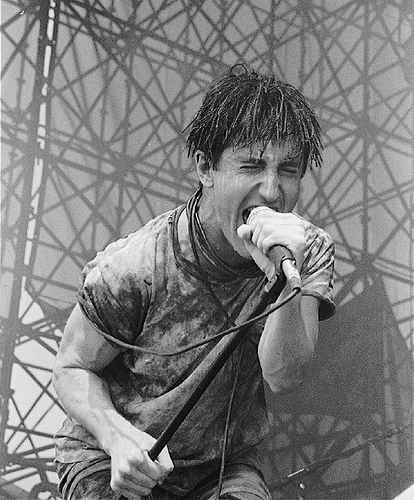
Nine Inch Nails / Trent Reznor / The Downward Spiral
Sound On Sound lists a Roland R-70 among the drum machines and instruments in the studio used for Nine Inch Nails’ The Downward Spiral sessions.
Read Classic Tracks: Nine Inch Nails “Closer” ↗
Paul Hartnoll / Orbital / In Sides
Paul Hartnoll says the Roland R-70 remained part of Orbital’s In Sides setup alongside an R-8, 808, 909 and sampled live drums. It places the overlooked Human Rhythm Composer in an album whose scale came from an intensely compact studio room.
Read Orbital on how they made In Sides ↗RP Boo
Describes pattern composition on R-70 and interruptions when it was unavailable.
Read Question in the Form of an Answer: An Interview with Juke Legend, RP Boo ↗RP Boo / Early Chicago juke / footwork tracks (titles not specified)
RP Boo says the majority of the tracks discussed were made with his Roland R-70; DJ Slugo separately recalls teaching him on an R-70 and lending him one for beats.
Read RP Boo lecture ↗
Harmony House / Sugar Water
Harmony House credit Noah Engel with Roland R-70 drum machine on Sugar Water, alongside vocals, guitars, bass and prepared drill.
Read Harmony House / Sugar Water ↗
djsn3s / Next
Bandcamp Daily reports that djsn3s restricted Next’s percussive palette to the Roland R-70, turning a modest limitation into a sparse footwork language.
Read Footwork’s New Wave — djsn3s / Next ↗
Yorkshire Fields / I Heard You Were Looking for Me
The album’s home-recording account names a Roland R-70.
Read Yorkshire Fields — I Heard You Were Looking for Me ↗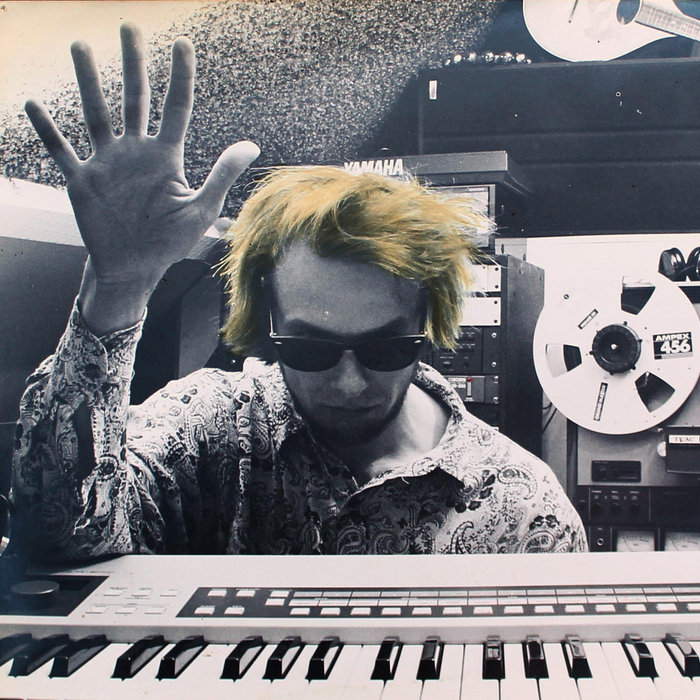
24 Satori / Steve Satori / Dreaming Towers
Satori’s first-person track account names Roland R-70 drums in the 1991–96 studio.
Read 24 Satori — Dreaming Towers ↗Sources
- Roland R70
- Roland R70 Drum Machine
- R-70: Technical Specifications
- R-70 Owner’s Manual
- R-70 US advertisement
- Question in the Form of an Answer: An Interview with Juke Legend, RP Boo
- RP Boo, Montréal Academy lecture
- RP Boo: Legacy, MBIP-5523
- Legacy Volume 2, ZIQ456
- Roland & ME: Dave, Getting Calibrated
- ROLAND R 70 service document listing
- R-70 Service Notes, First Edition
- Korg S3: Rhythm Workstation
- RP Boo lecture
- Ghettotech oral history
- Orbital on how they made In Sides
- Harmony House / Sugar Water
- Yorkshire Fields — I Heard You Were Looking for Me
- Footwork’s New Wave — djsn3s / Next
The visual archive
Further visual evidence.
Sources for images shown earlier (9)
- Roland R70 ↗
- djsn3s / Bandcamp Daily feature illustration ↗
- RP Boo / Red Bull Music Academy ↗
- Harmony House — Sugar Water ↗
8 April 2025 · Harmony House / release artwork via Bandcamp · Official Bandcamp release-page artwork (Open Graph image) - Yorkshire Fields — I Heard You Were Looking for Me ↗
17 August 2014 · Yorkshire Fields / release artwork via Bandcamp · Official Bandcamp release-page artwork (Open Graph image) - 24 Satori / Steve Satori — Dreaming Towers ↗
2018-01-05 · 24 Satori / Steve Satori / release artwork via Bandcamp · Official Bandcamp release-page artwork (Open Graph image) - Orbital — In Sides ↗
1996-01-01T08:00:00Z · Orbital / release artwork via Apple Music catalog artwork · Release catalogue and retained front artwork - RP Boo — Legacy Volume 2 ↗
12 May 2023 · RP Boo / release artwork via Apple Music catalogue · Retained cover visibly reads Legacy Volume 2; label lists Under’D-Stat as track 5. Original image URL retained; not the 2013 Japanese-edition cover. - Trent Reznor / Lollapalooza ↗
July–August 1991 · Rik Goldman · Reznor performing with Nine Inch Nails on the 1991 Lollapalooza tour.
Additional visual sources (4)
Original publications and related image sources.
- R-70 Owner’s Manual ↗
Undated document · Roland · Cover and printed p.2 visually inspected; 280-page scan - R-70 US advertisement ↗
February 1993 · Roland Corporation US / Musician · Original magazine PDF page4; one-page extract visually inspected - ROLAND R 70 service document listing ↗
Undated listing · Audio Service Manuals · Linked listing or article - R-70 Service Notes, First Edition ↗
May 1992 · Roland · Cover; pp.15–16 change information