Family · Catalogue / document
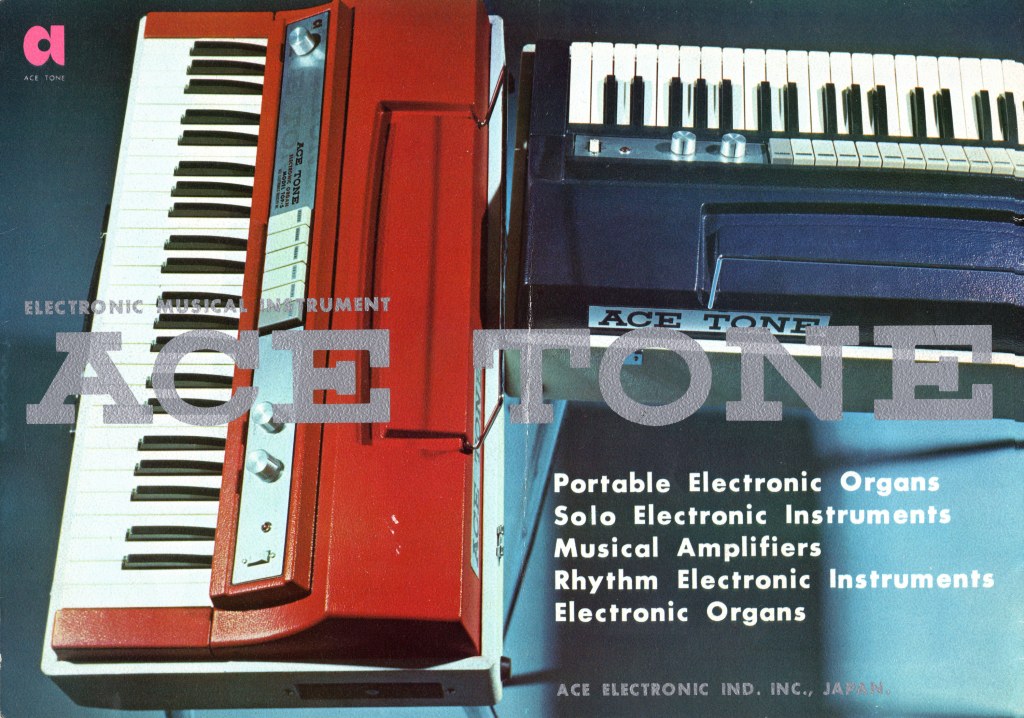
Ace Tone electronic instruments — catalogue cover
1968
Big Beat machine archive · Source & credit ↗

The document archive
Catalogues, brochures and operating guides from the archive.
Read the documents that introduced these machines and explained how to use them. Follow their links back to the instrument stories.
No images match. Try another maker or clear the filters.
Family · Catalogue / document
1968
Big Beat machine archive · Source & credit ↗
Simmons · Period article / document
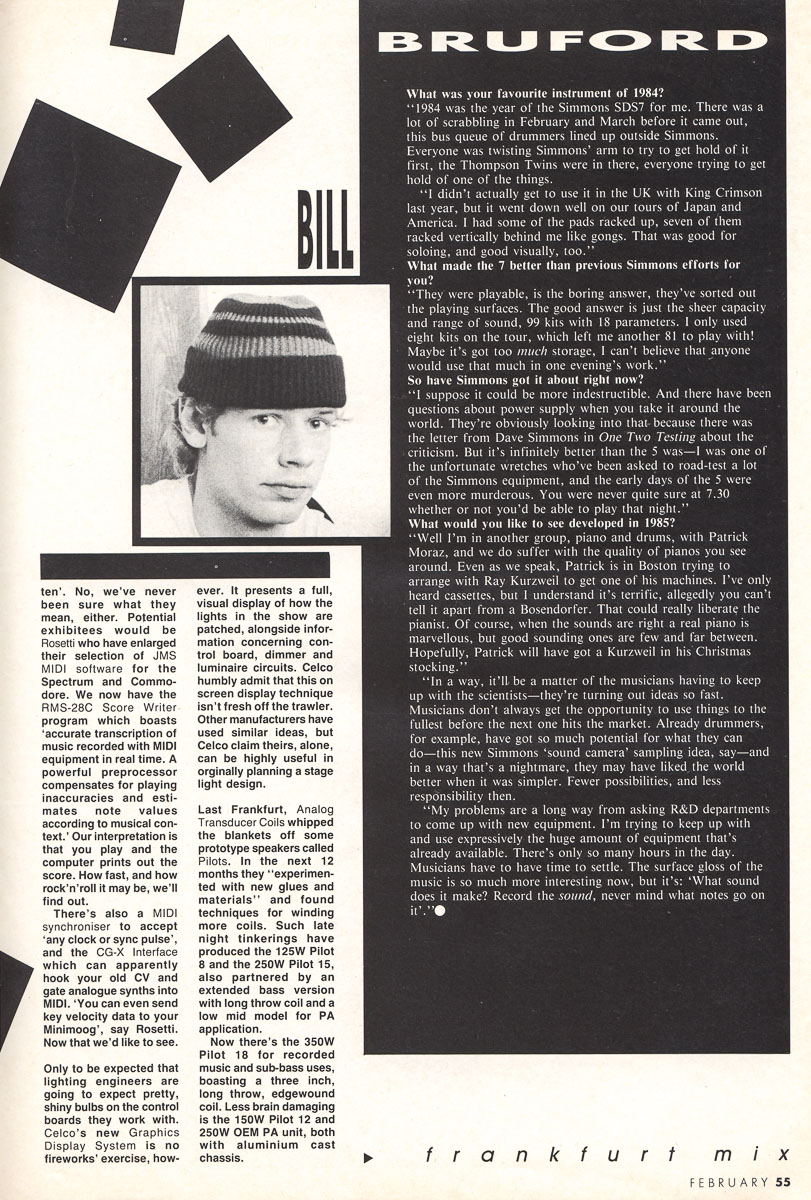
Bill Bruford’s 1985 One Two Testing interview, kept as a period document for the Simmons SDS7. He remembers using seven pads racked vertically behind him on King Crimson’s Japanese and American tours: a drummer’s explanation of why the new kit finally felt playable. The scan does not show the instrument.
February 1985
One Two Testing · Source & credit ↗
Roland · Catalogue / document
1978
Big Beat machine archive · Source & credit ↗
Roland · Catalogue / document
Undated document
Big Beat machine archive · Source & credit ↗
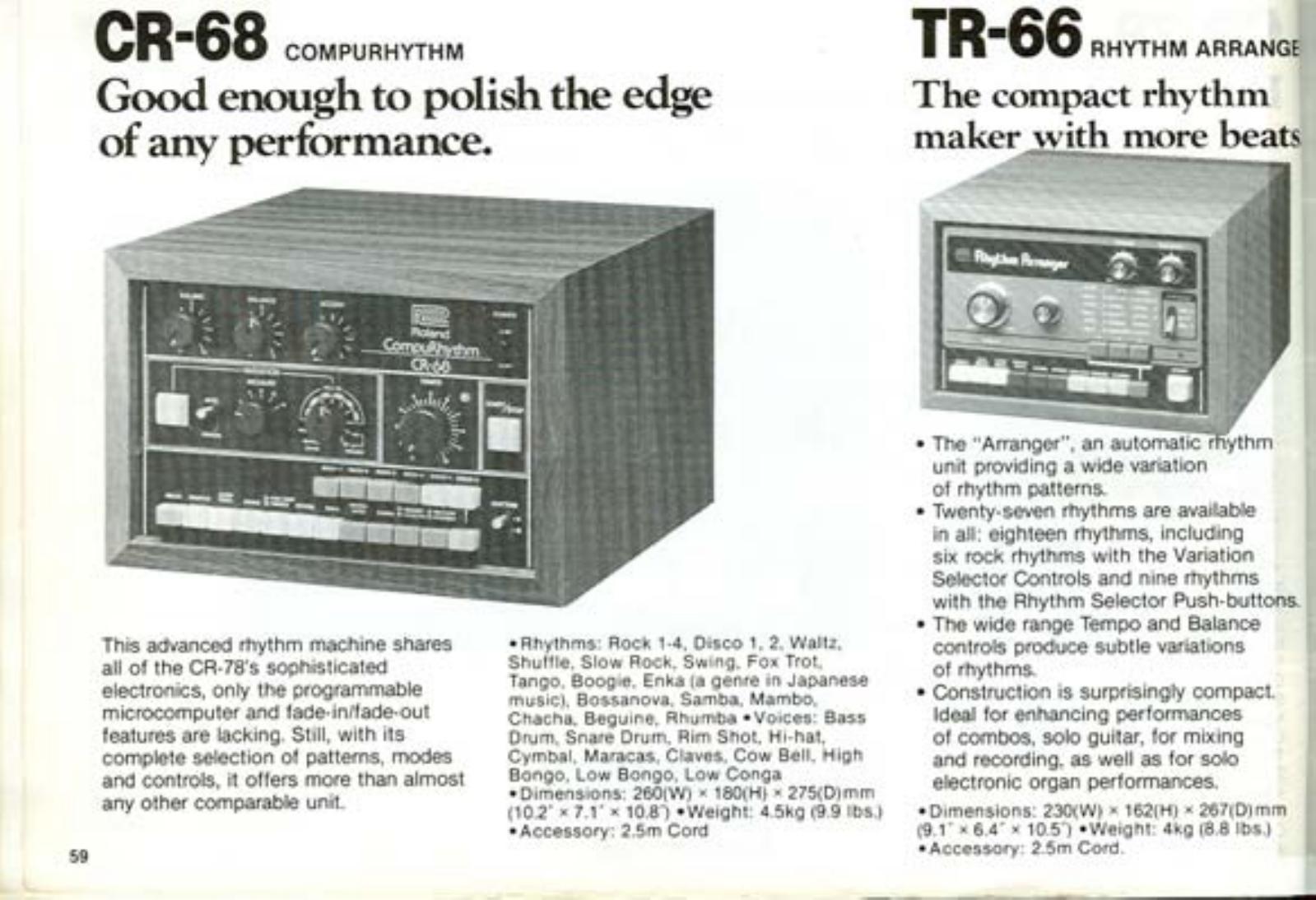
Roland · Catalogue / document
1981
Big Beat machine archive · Source & credit ↗
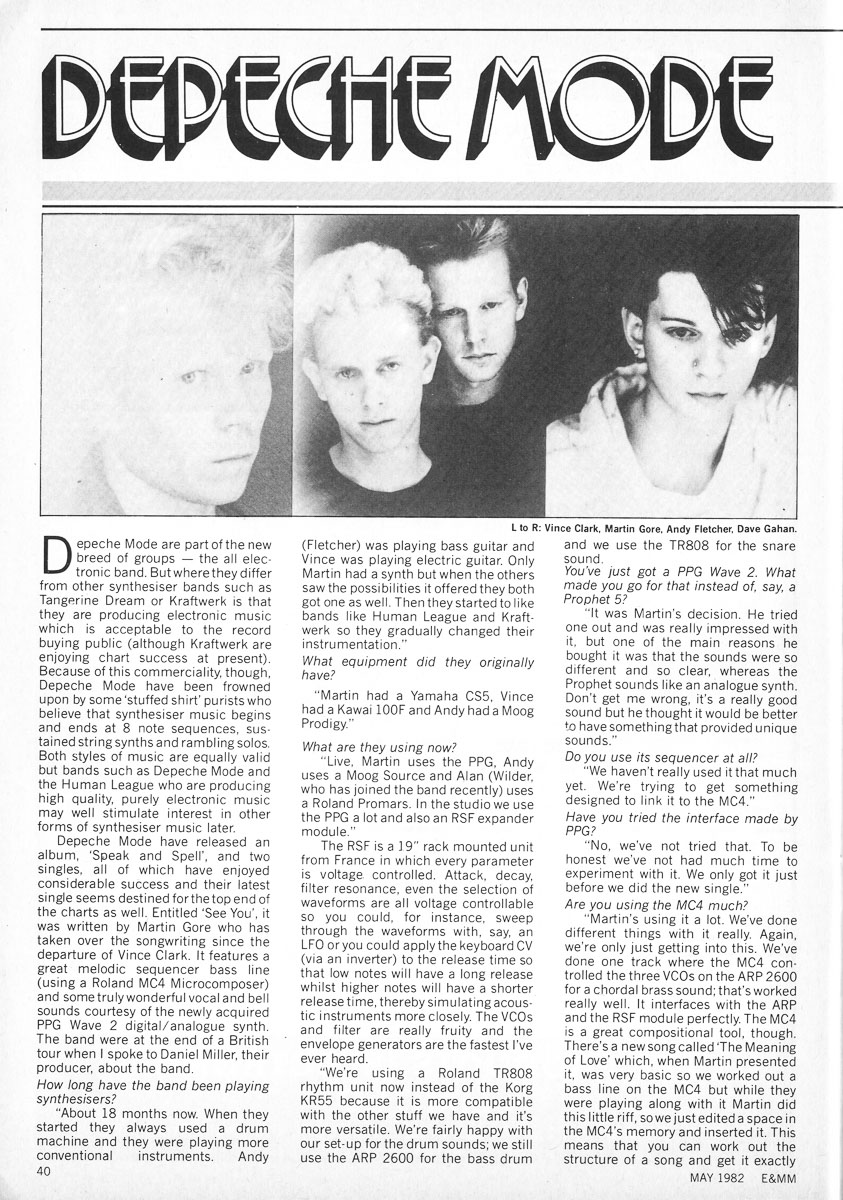
Korg / Keio / Roland · Period article / document
Depeche Mode in Electronics & Music Maker, May 1982. Daniel Miller explains why their Korg KR-55 gave way to the Roland TR-808: it was more versatile and easier to join to the rest of the set-up. The printed account keeps the ARP 2600 bass drum and 808 snare in the picture; the group portrait does not show either box.
May 1982
Steve Howell / Electronics & Music Maker · Source & credit ↗
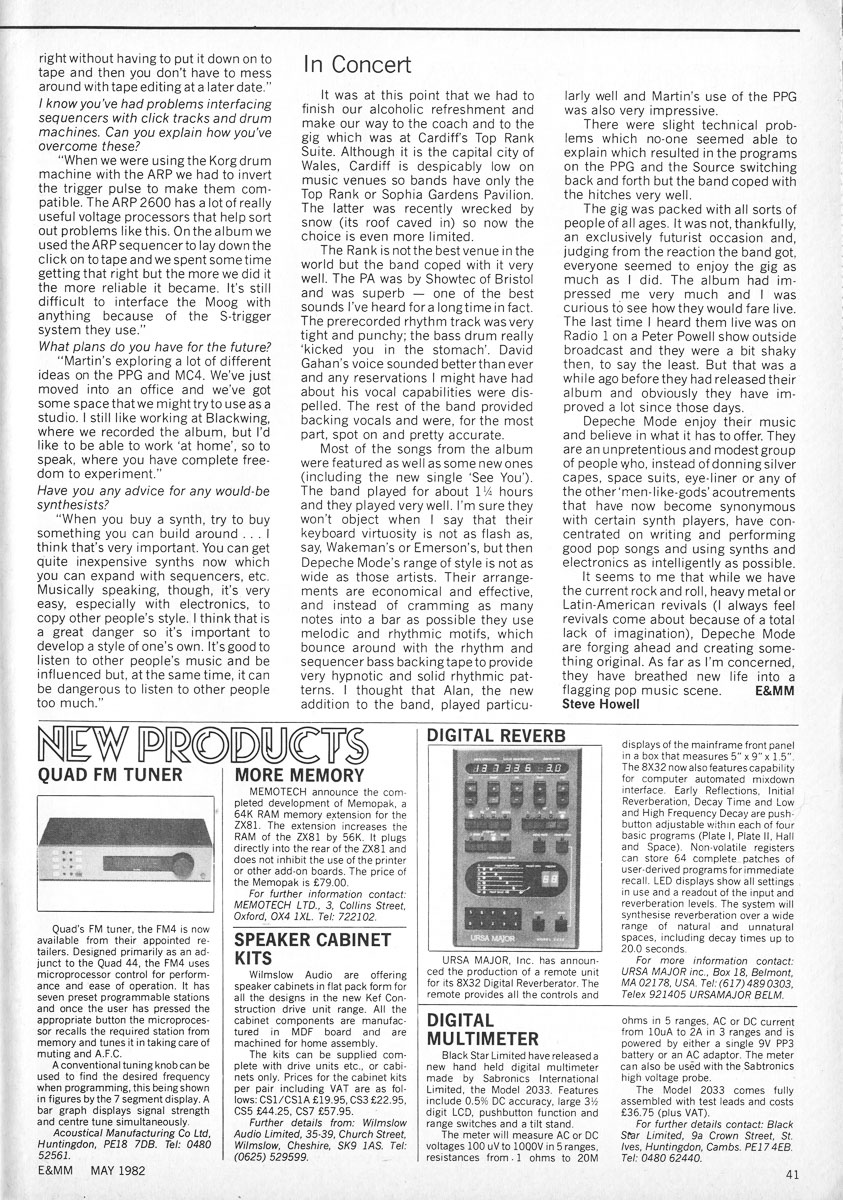
Korg / Keio / Roland · Period article / document
The second page of the 1982 Electronics & Music Maker interview, retained with page one as a complete period document. It adds recording and live context to the KR-55 and TR-808 changeover, without pretending either machine is visible in the portrait.
May 1982
Steve Howell / Electronics & Music Maker · Source & credit ↗
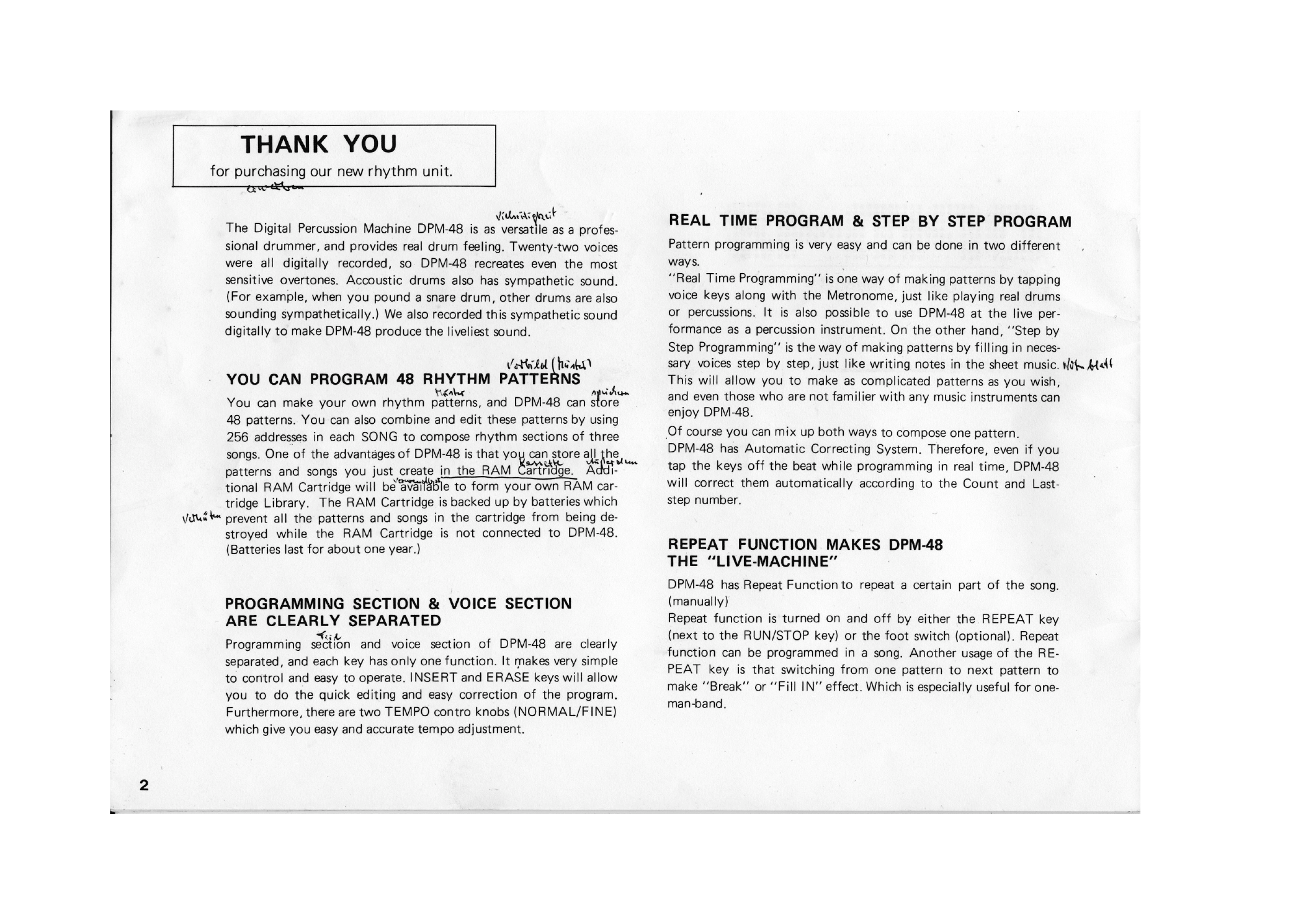
Sakata · Catalogue / document
A Sakata DPM-48 owner-manual page showing programming, voices and storage. The reported Prince association remains a lead in the linked dossier; this document identifies the machine’s actual working vocabulary.
Undated
Original issuer unconfirmed · Source & credit ↗
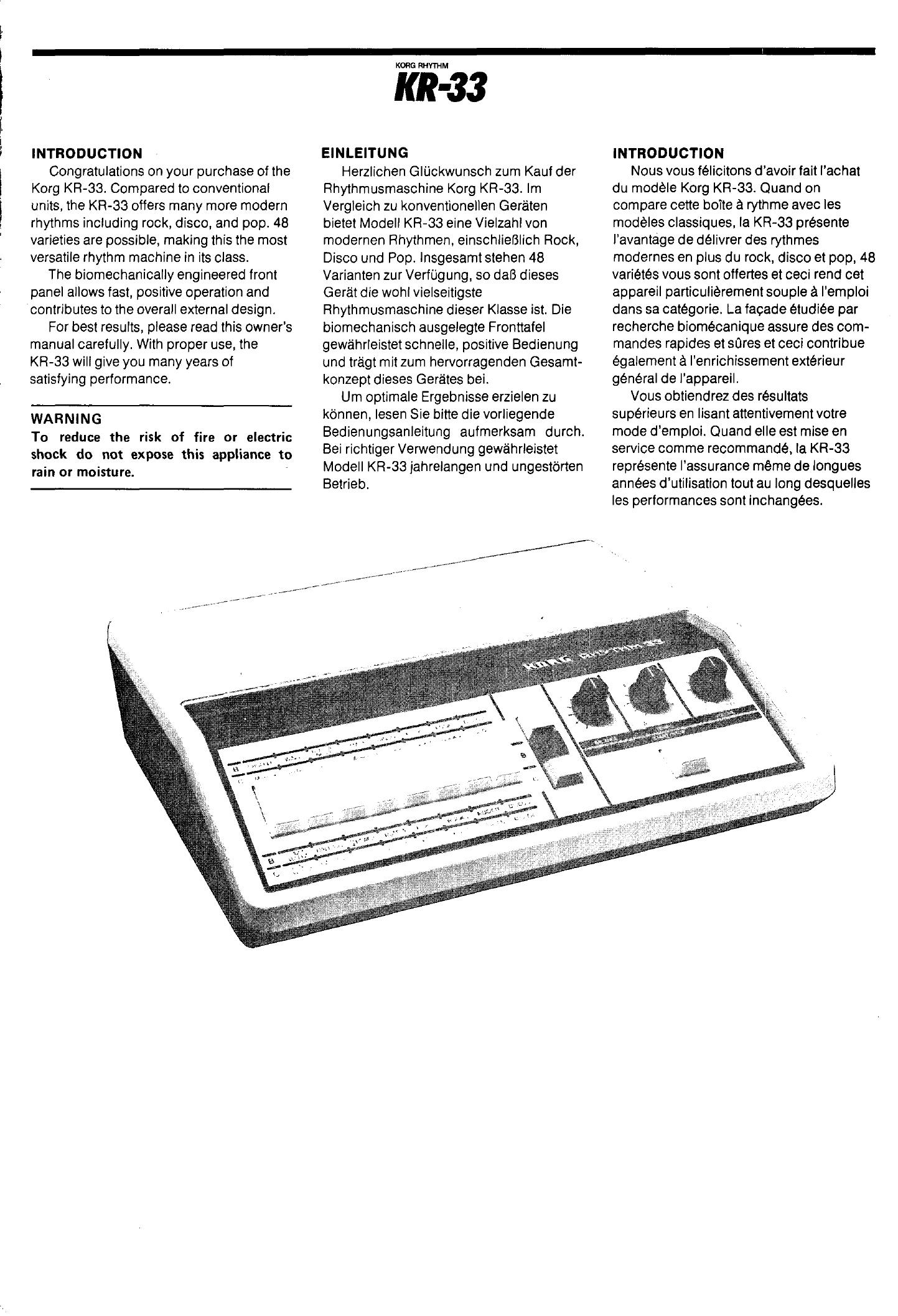
Korg / Keio · Catalogue / document
Korg’s KR-33 owner-manual view. James Petralli describes the machine as part of the White Denim studio set-up; the document shows the instrument as its manufacturer presented it.
Undated
Korg / Keio Electronic Laboratory · Source & credit ↗
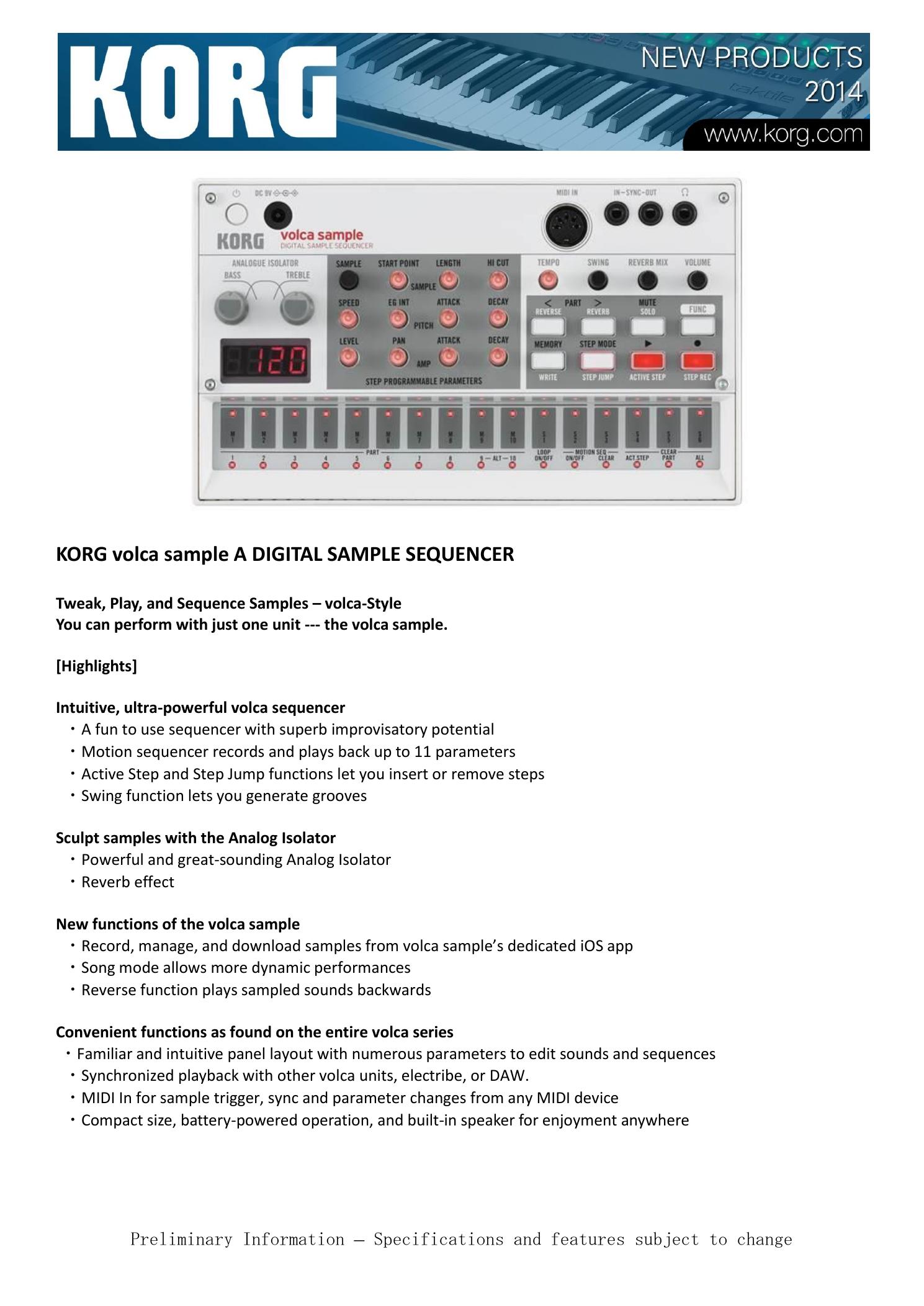
Korg / Keio · Period article / document
Korg’s 2014 volca sample product material. Moe Shop’s account of working with the compact sampler is a user story; this is a factory-era product image.
2014; exact issue date unknown
Korg · Source & credit ↗
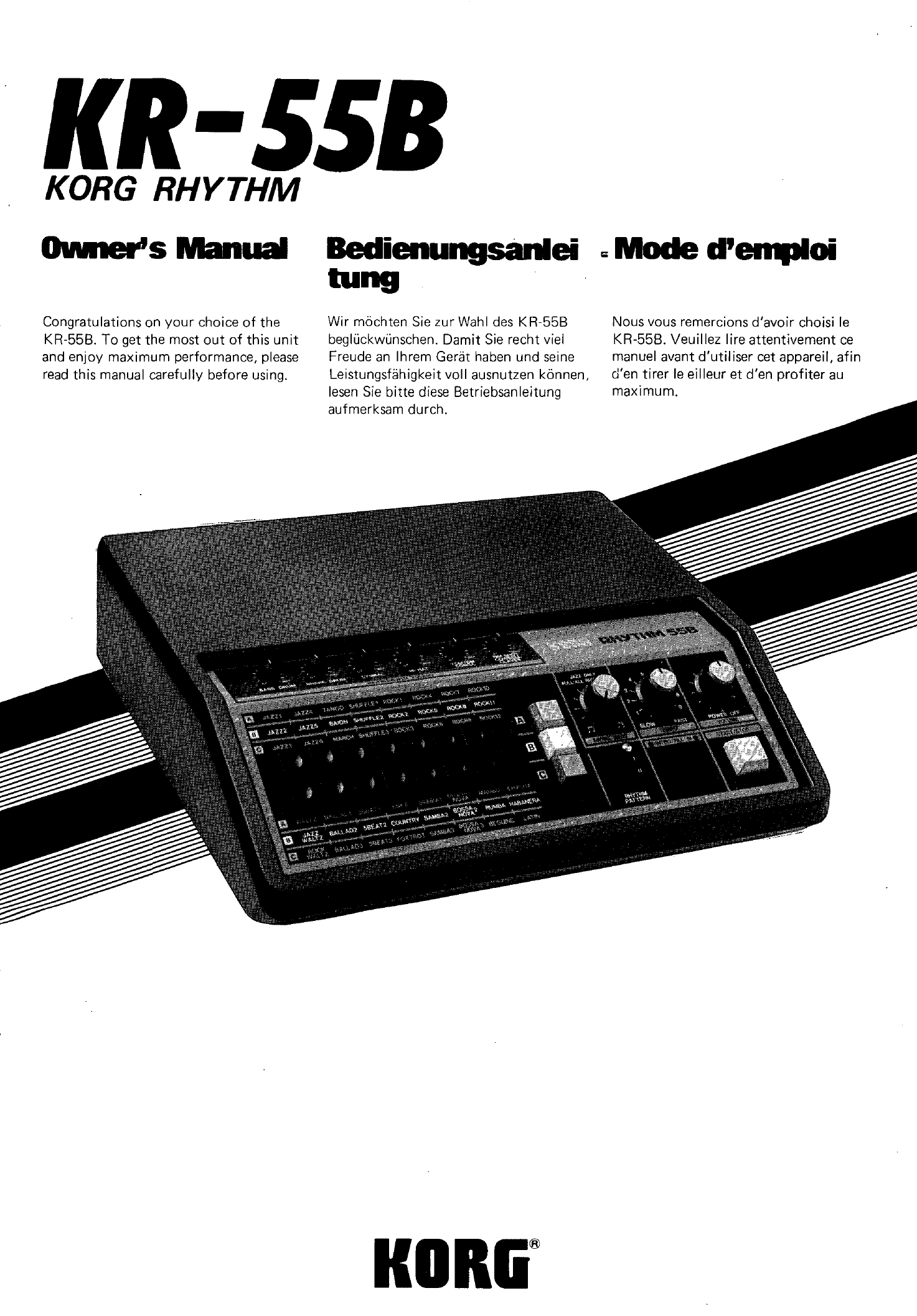
Korg / Keio · Catalogue / document
Korg’s official KR-55B owner manual. A reported Équinoxe booklet connection links the Rhythm 55 family to Jean-Michel Jarre; the manual plainly documents the machine itself.
Undated original edition
Keio Electronic Laboratory / Korg · Source & credit ↗
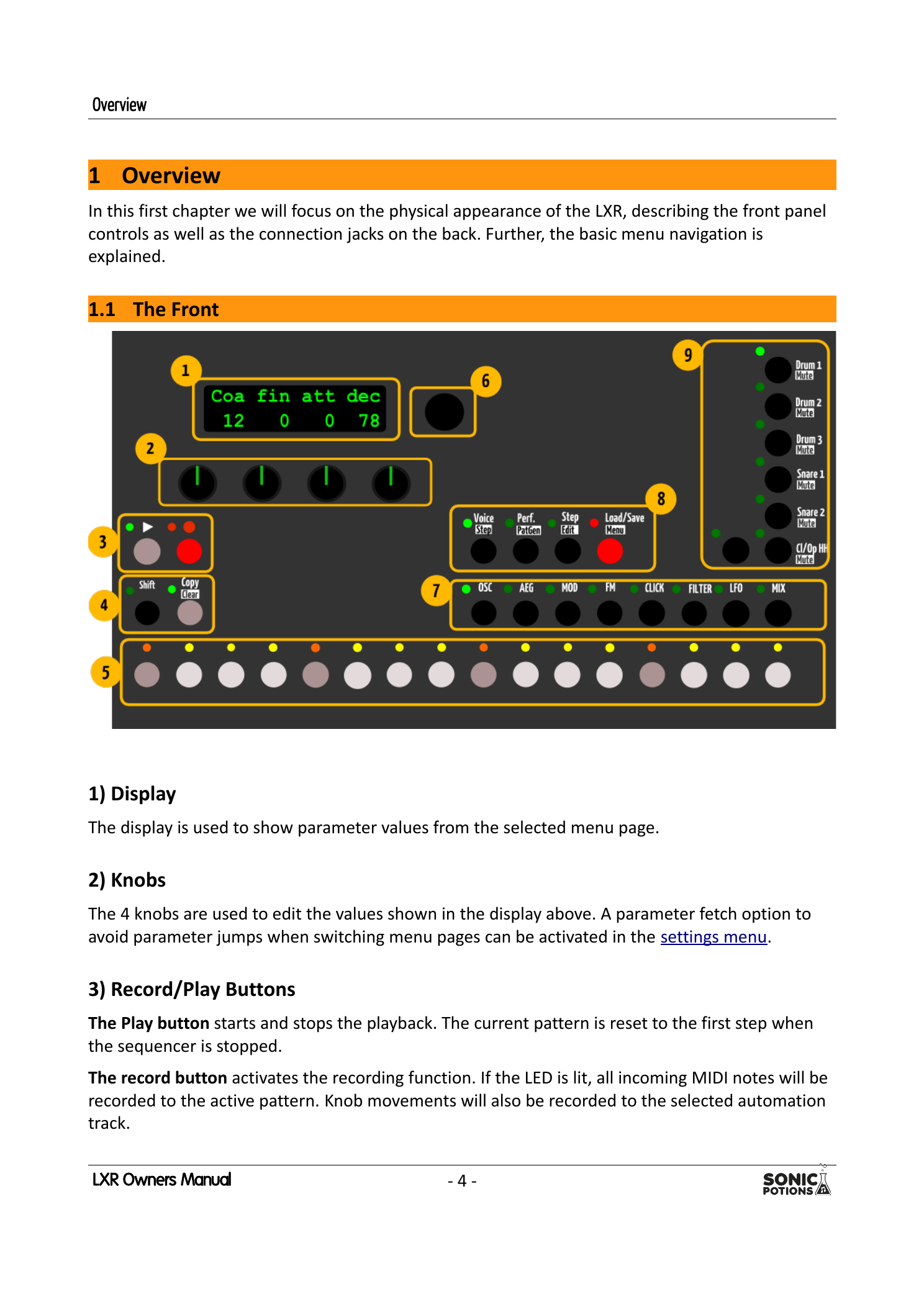
Sonic Potions · Catalogue / document
The Sonic Potions LXR in its original owner documentation. The community compilation is a later collective afterlife, not evidence that this manual copy appears in any recording session.
28 June 2013
Julian Schmidt / Sonic Potions · Source & credit ↗
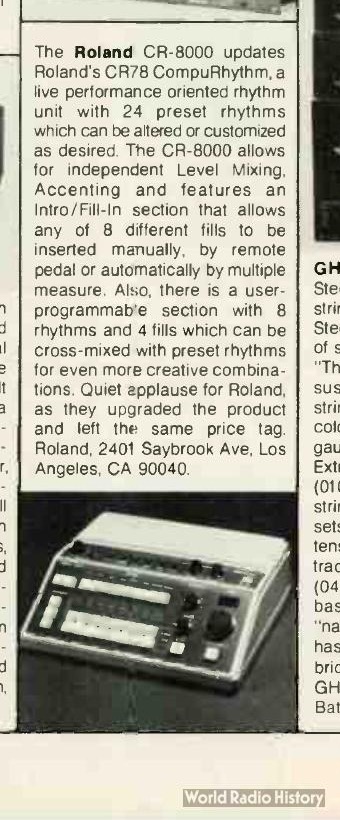
Roland · Catalogue / document
1981
Big Beat machine archive · Source & credit ↗
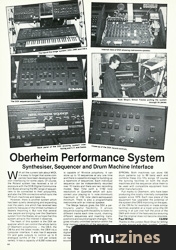
Oberheim · Period article / document
The Oberheim Performance System in Electronics & Music Maker, January 1984. New Order’s “Blue Monday” DMX history runs alongside it, while the page preserves the machine’s own period setting.
January 1984
Electronics & Music Maker · Source & credit ↗
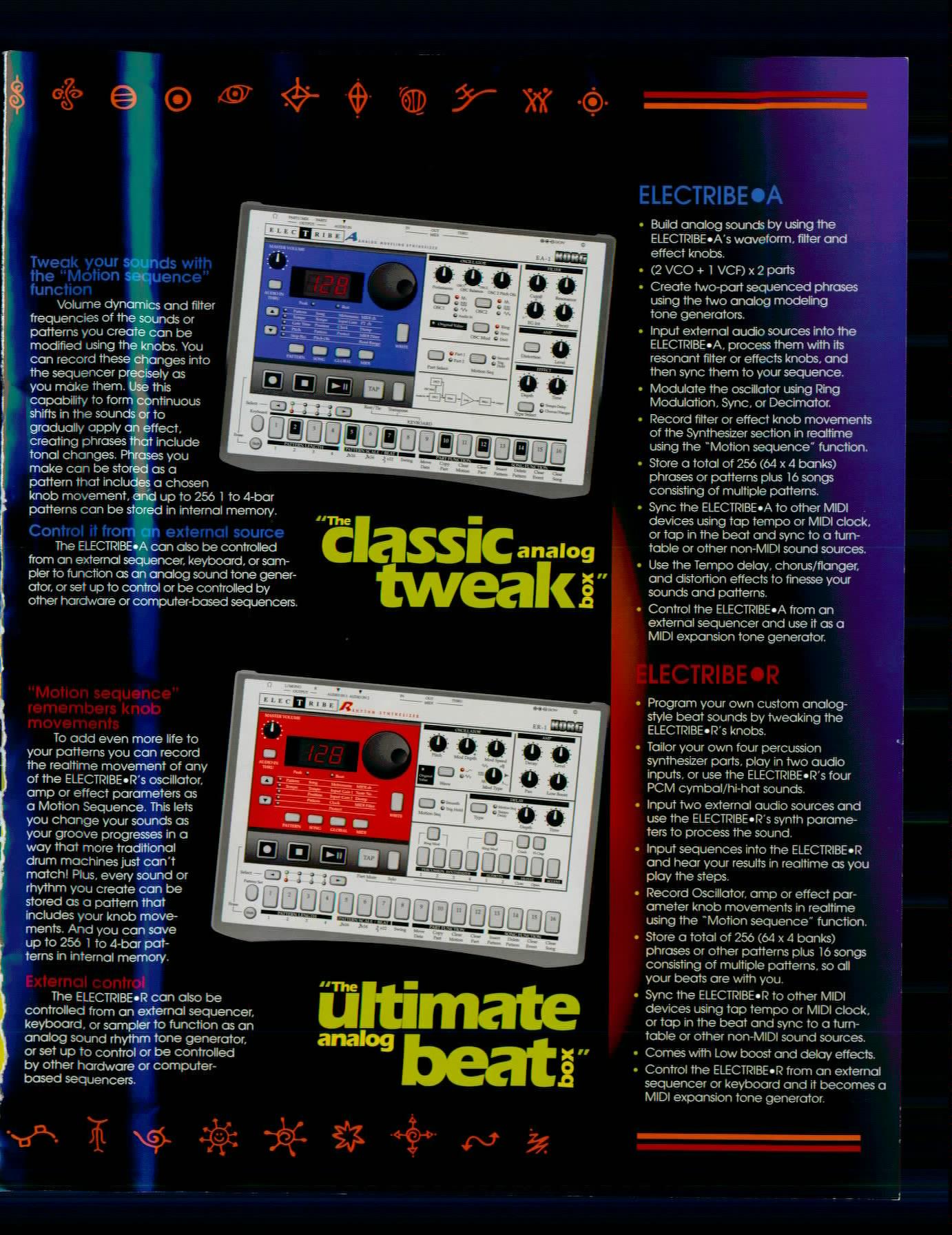
Korg / Keio · Catalogue / document
Korg’s original Electribe R brochure spread. Phil Hartnoll’s The Altogether setup points toward the ER-1 with a qualified model identification; the brochure supplies its launch-era context.
1999 copyright; scan dated 2005
Korg USA · Source & credit ↗
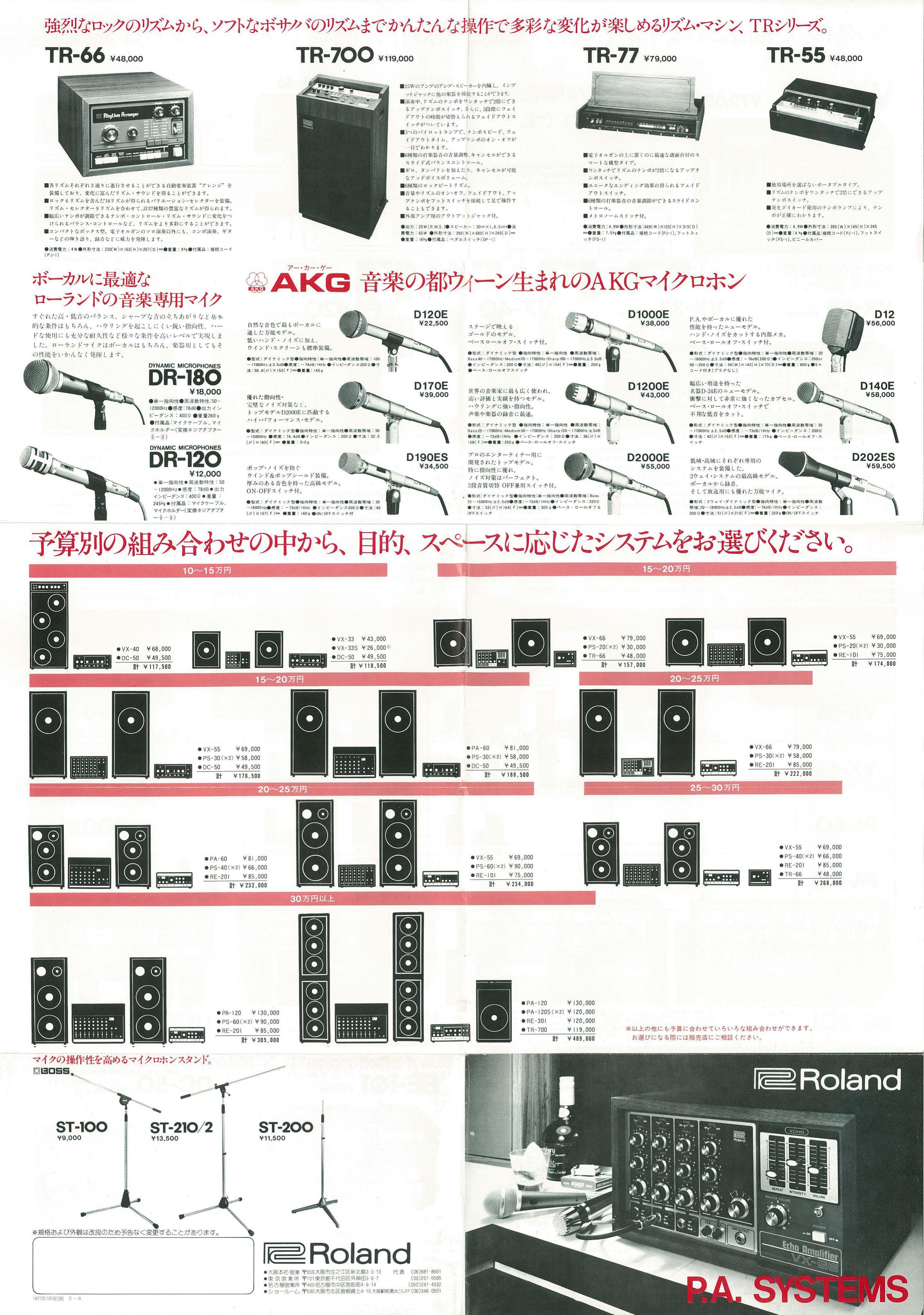
Family · Catalogue / document
1977
Big Beat machine archive · Source & credit ↗
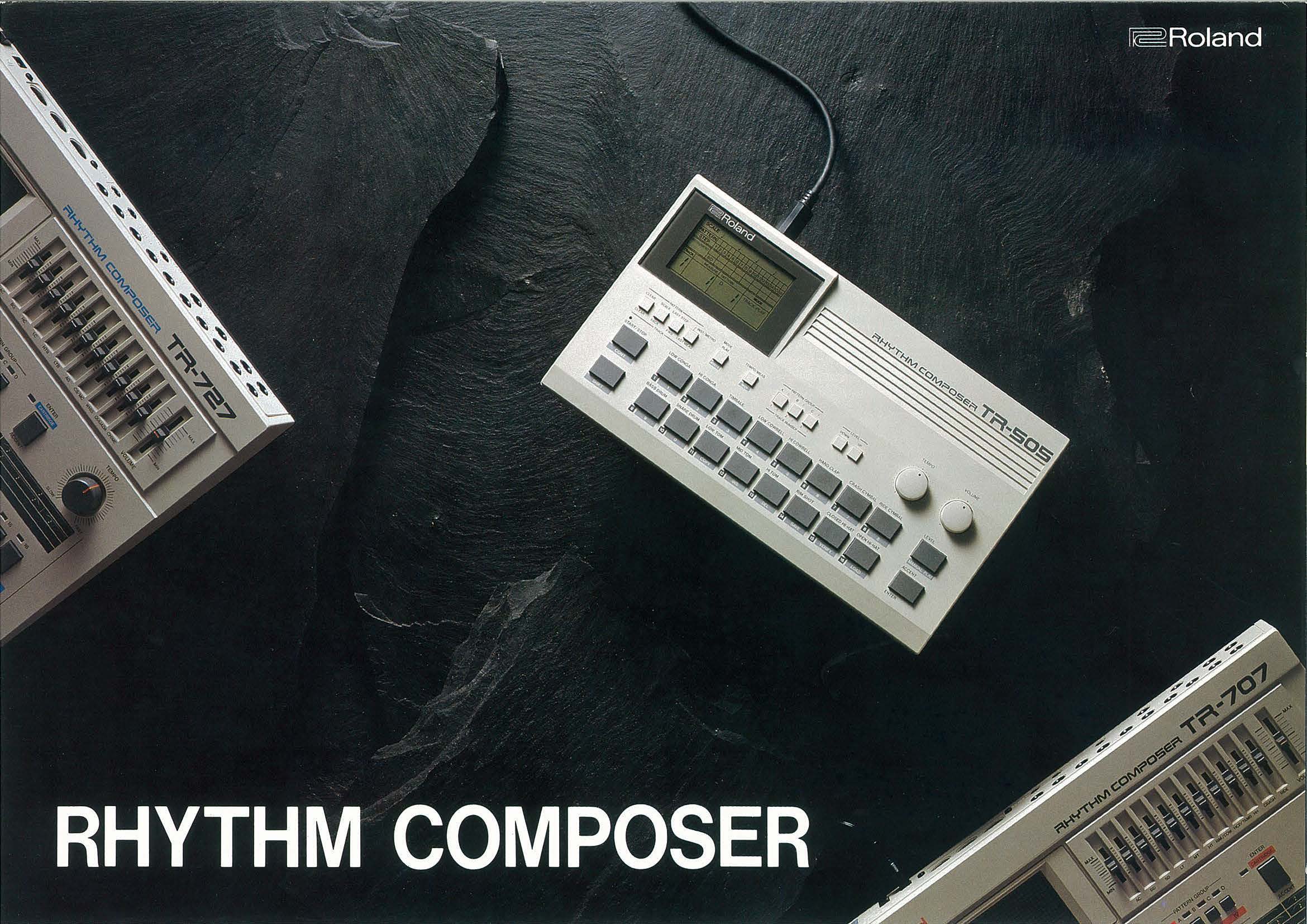
Family · Catalogue / document
1985
Big Beat machine archive · Source & credit ↗
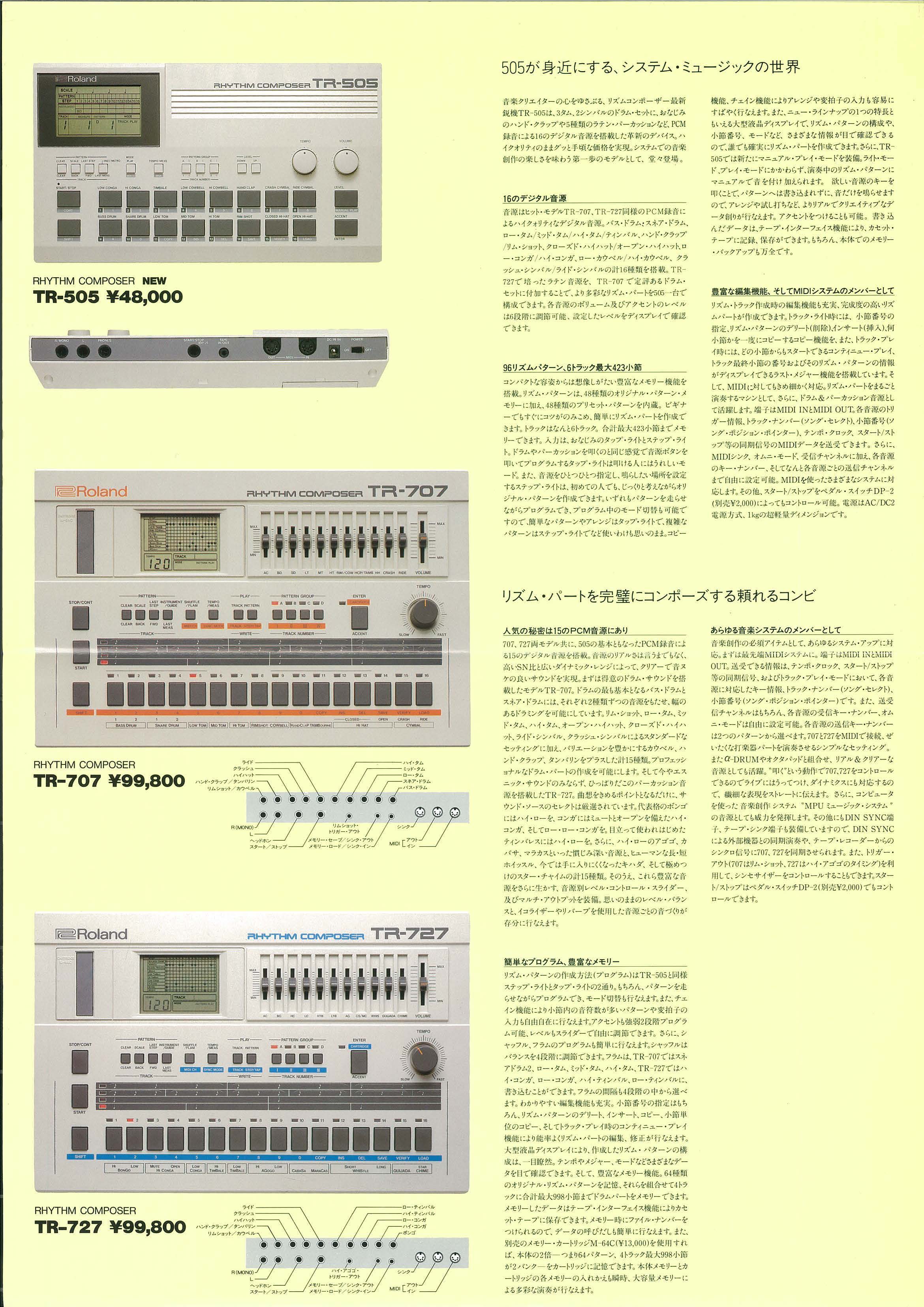
Family · Catalogue / document
1985
Big Beat machine archive · Source & credit ↗
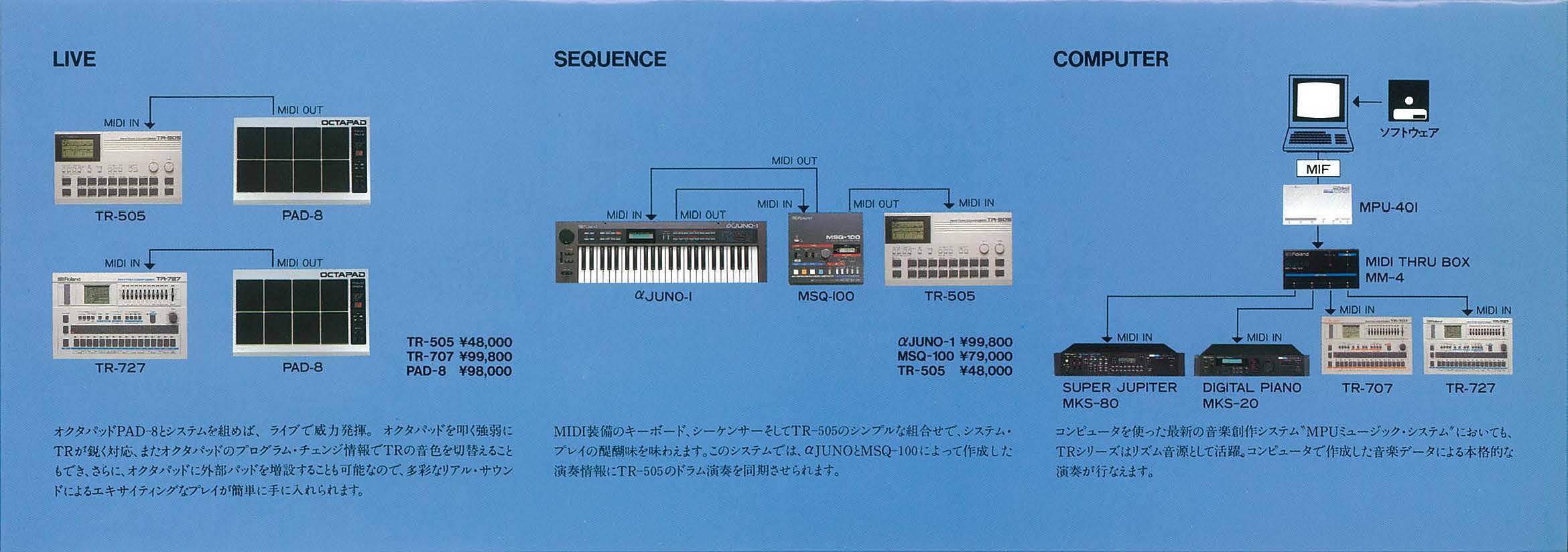
Family · Catalogue / document
1985
Big Beat machine archive · Source & credit ↗
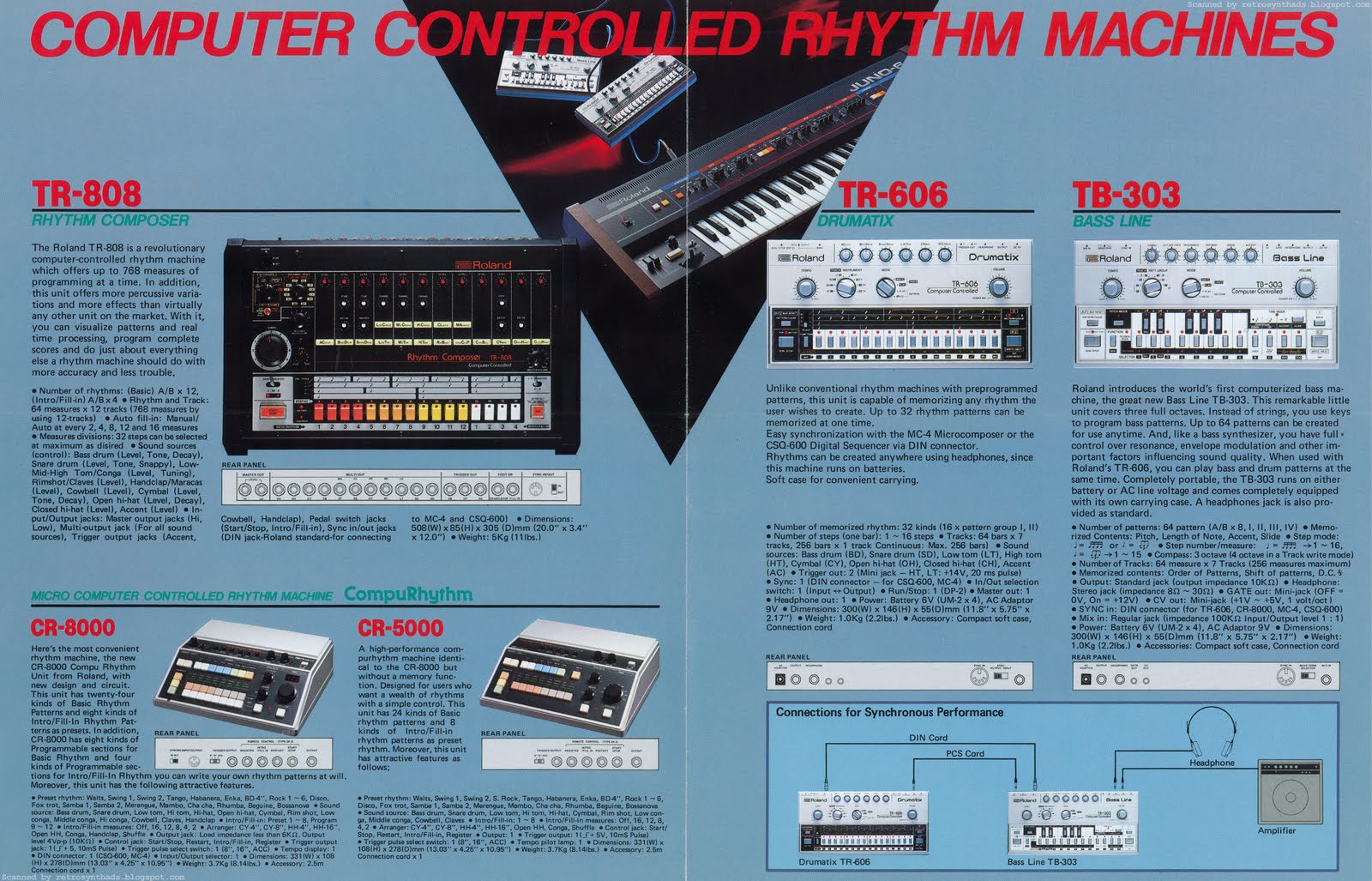
Roland · Catalogue / document
1982
Big Beat machine archive · Source & credit ↗
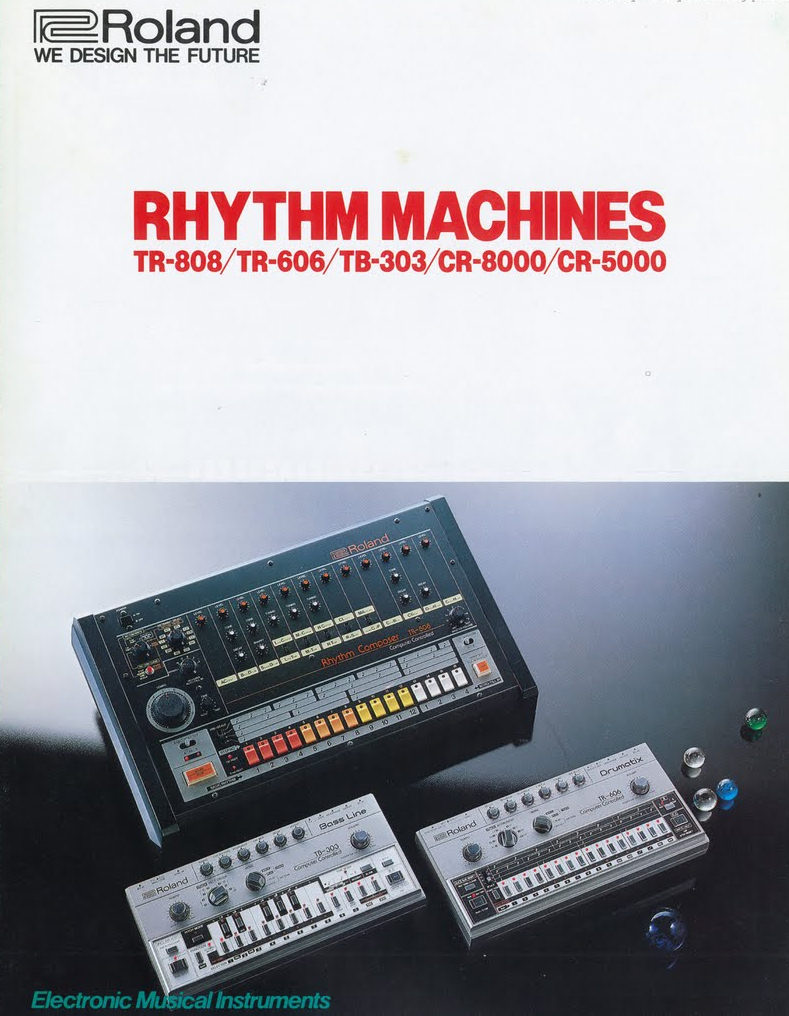
Roland · Catalogue / document
Undated document
Big Beat machine archive · Source & credit ↗
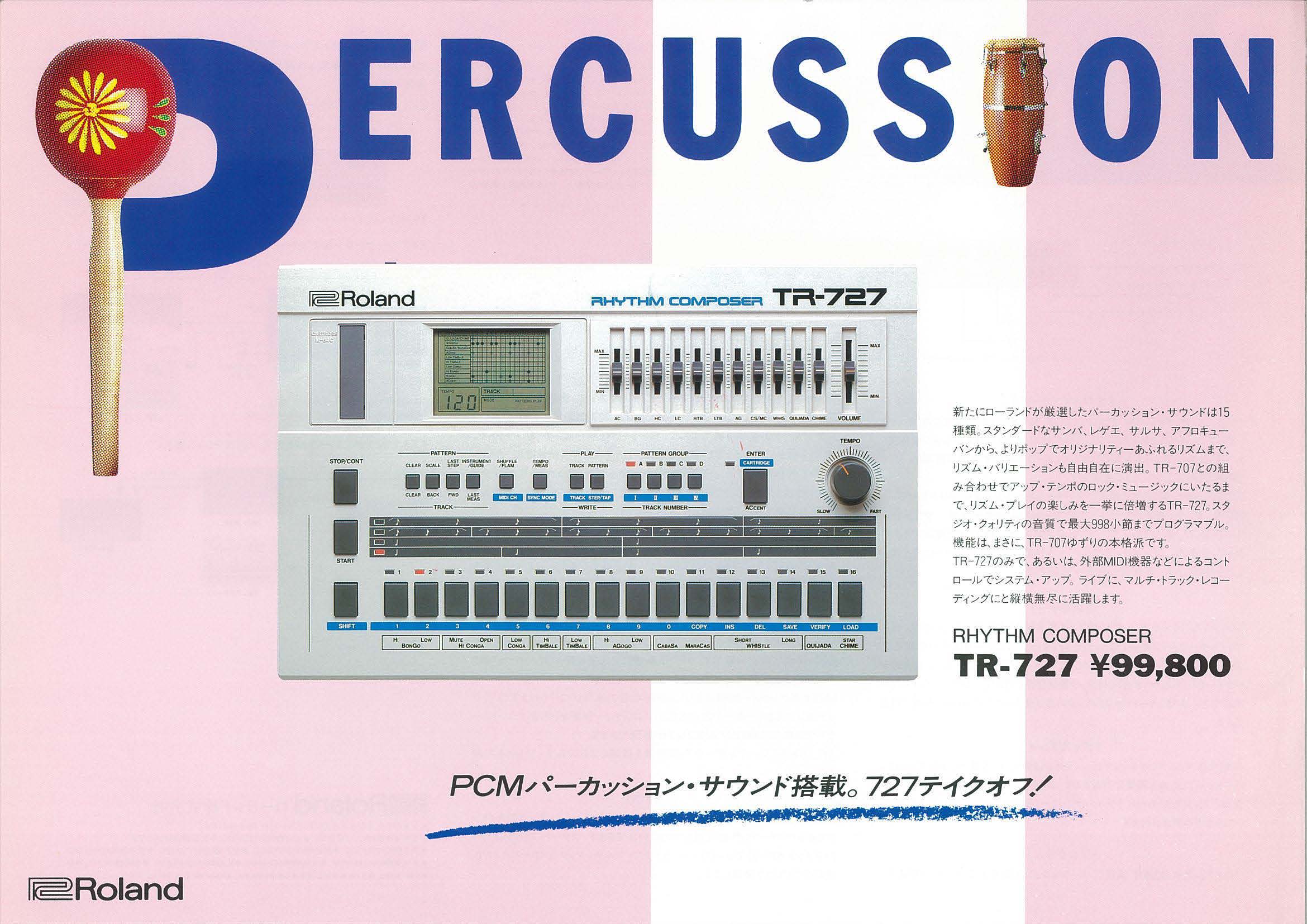
Roland · Catalogue / document
Undated document
Big Beat machine archive · Source & credit ↗
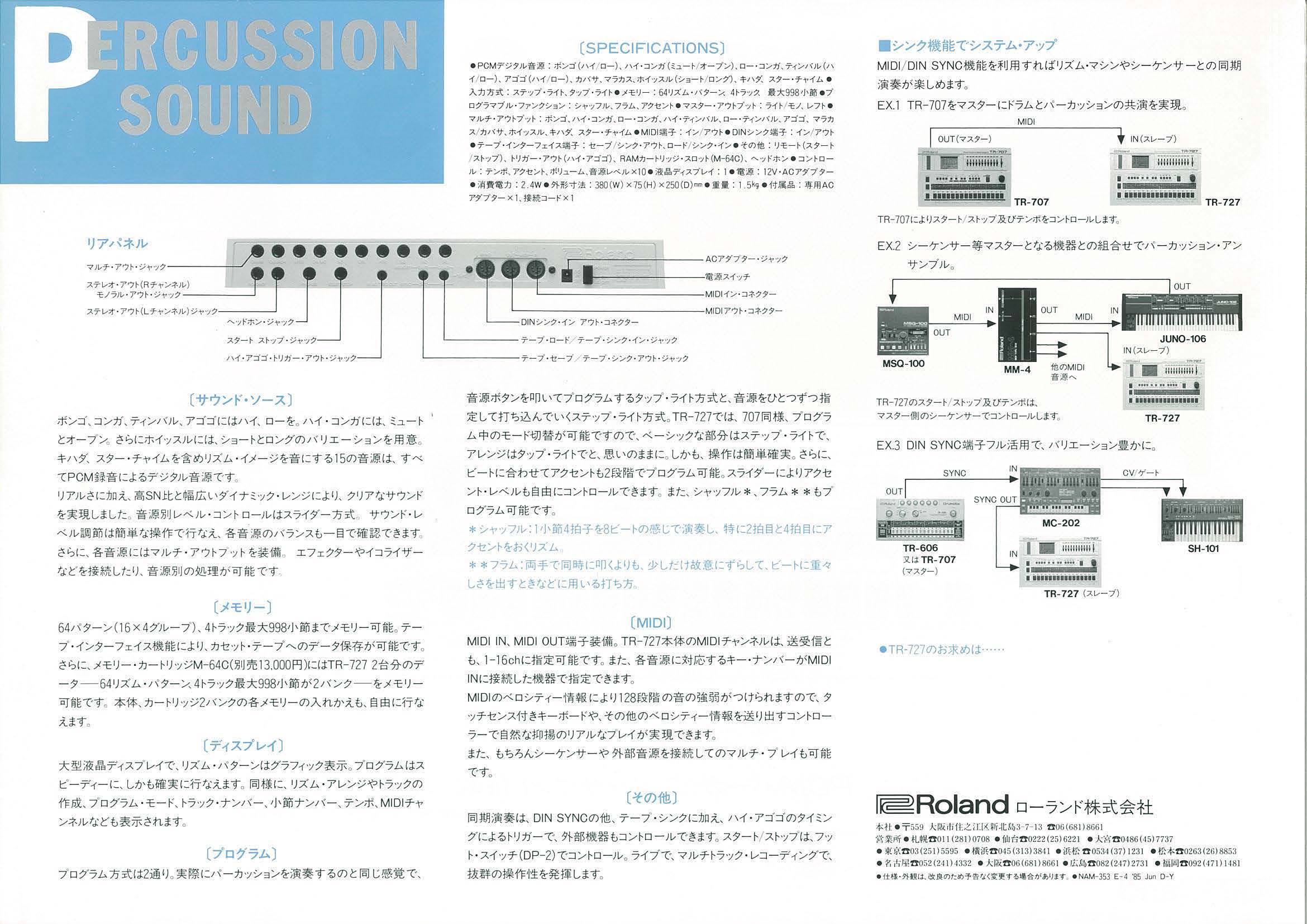
Roland · Catalogue / document
Undated document
Big Beat machine archive · Source & credit ↗
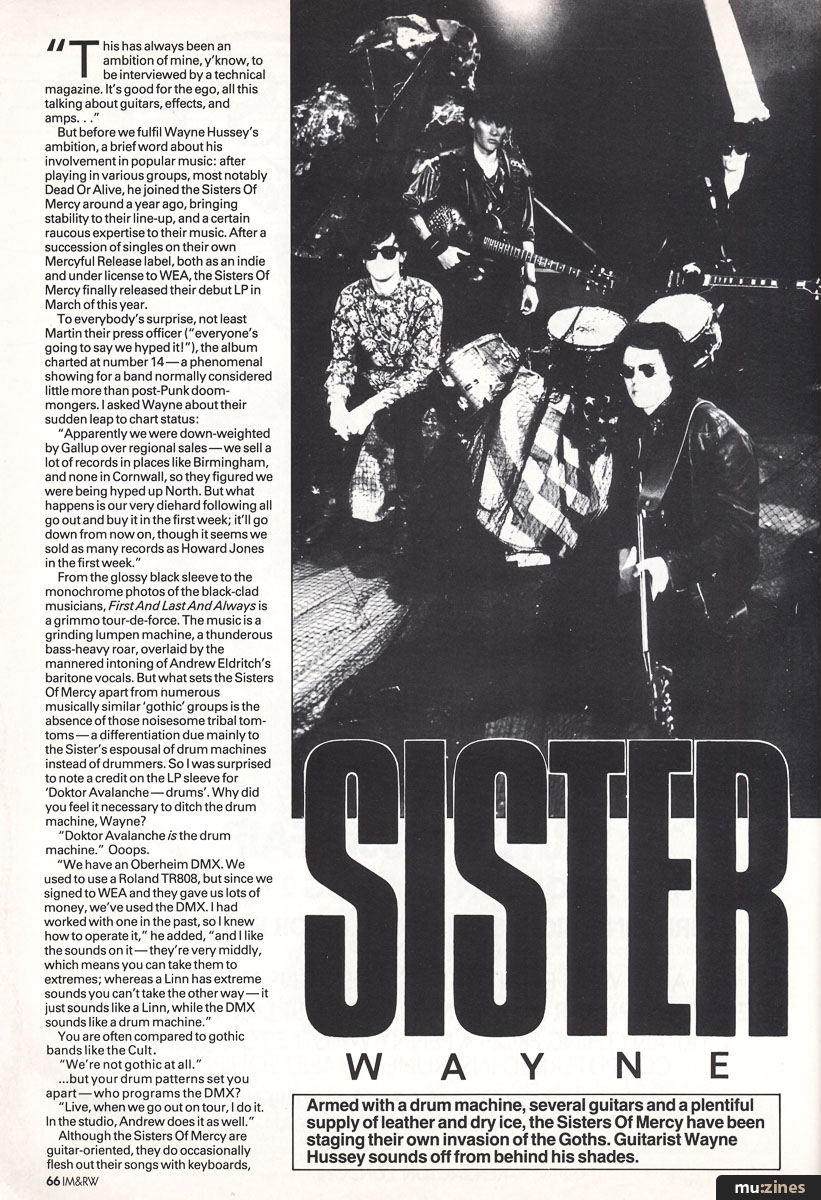
Roland / Oberheim · Period article / document
Sisters of Mercy in International Musician’s July 1985 Wayne Hussey interview. The printed conversation gives Doktor Avalanche its human history: a Roland TR-808 first, then an Oberheim DMX once the WEA deal arrived. This is the original magazine page and a period band portrait, not a photograph of either machine.
July 1985
International Musician & Recording World / Cover Publications Ltd · Source & credit ↗
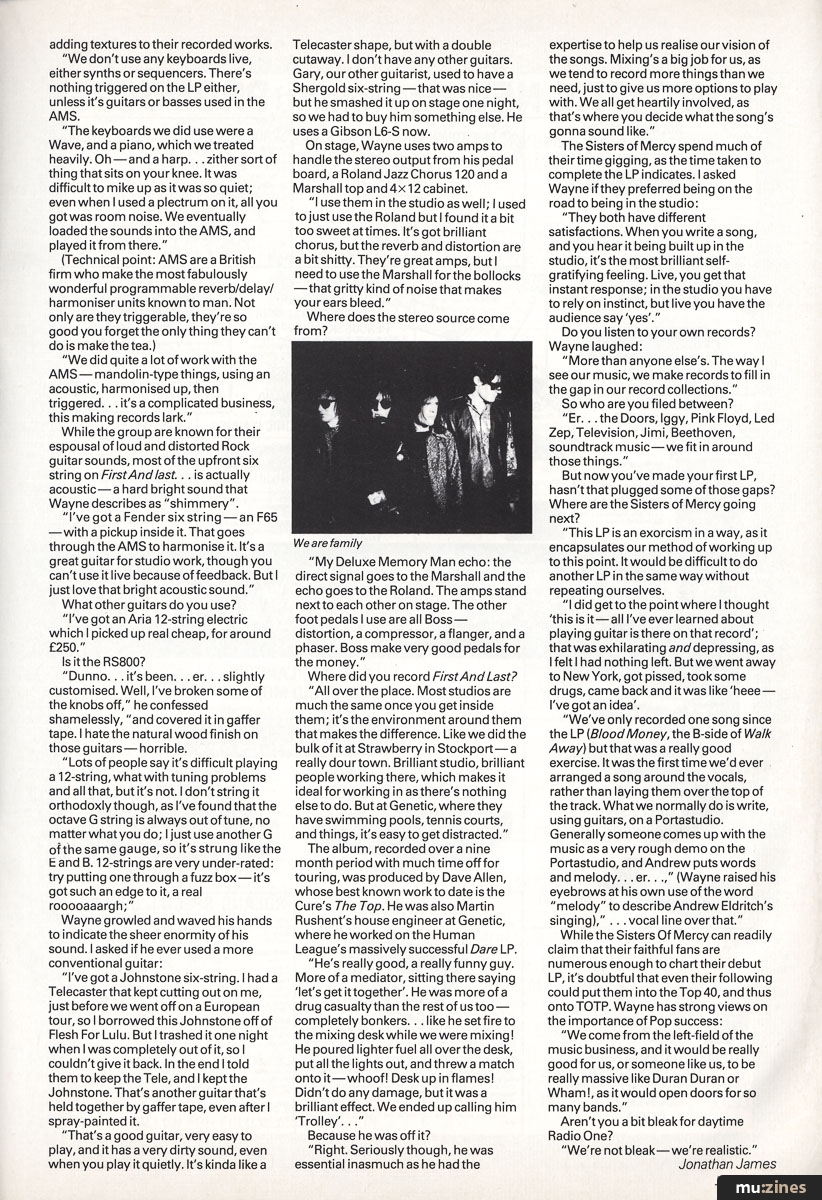
Roland / Oberheim · Period article / document
The continuation of the 1985 International Musician interview, retained as the second page of the period document. Hussey describes the nine-month making of First and Last and Always; the portrait is context for the record, not evidence that either drum machine is in the frame.
July 1985
International Musician & Recording World / Cover Publications Ltd · Source & credit ↗
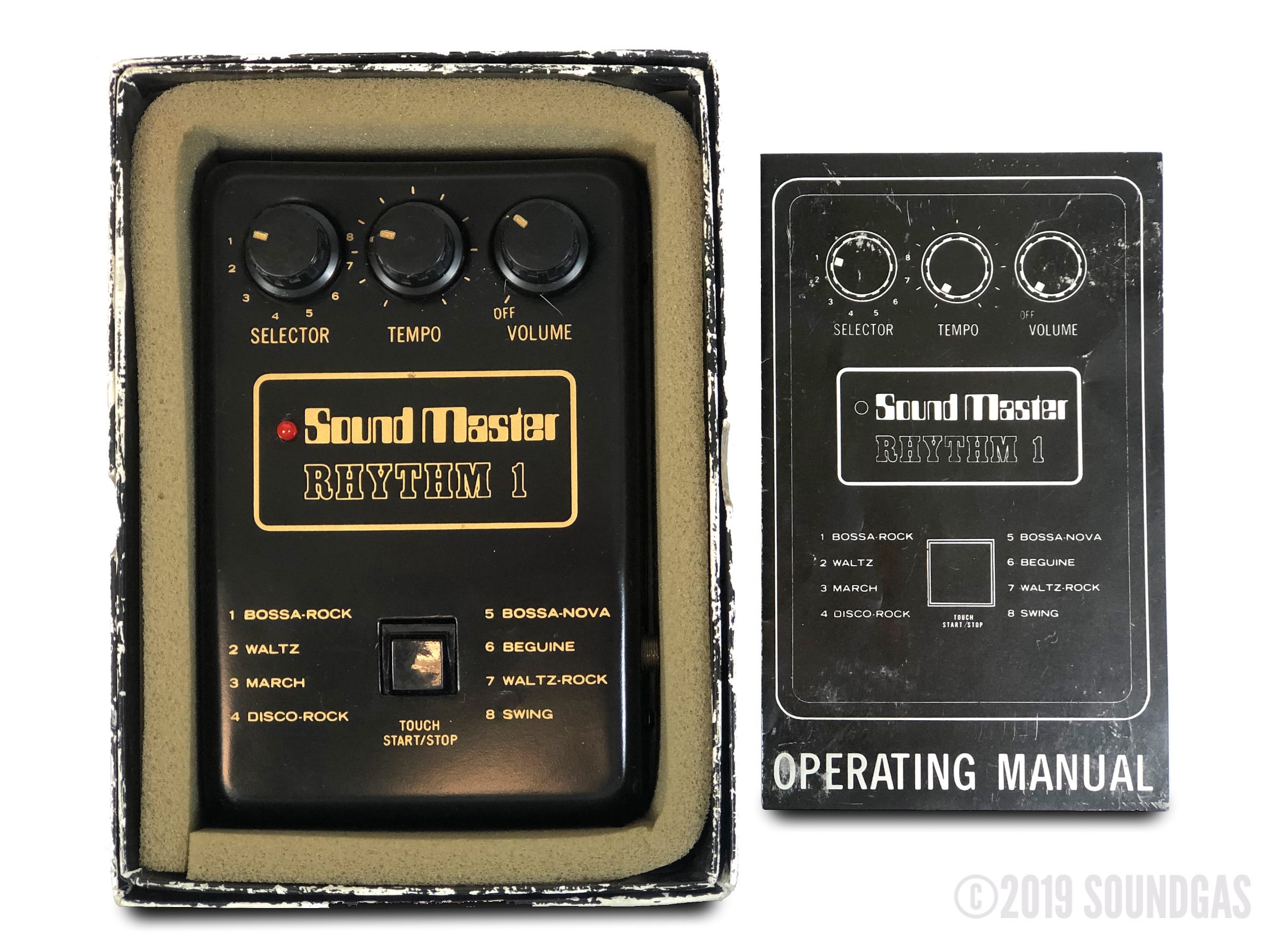
Sound Master · Catalogue / document
A boxed Sound Master Rhythm 1 pedal with its operating manual. David Packouz cites the foot-operated box as a BeatBuddy predecessor; the photograph documents the historical object that informed that design work.
Undated specialist dealer page; image copyright 2019 Soundgas
Soundgas Tech Ltd · Source & credit ↗
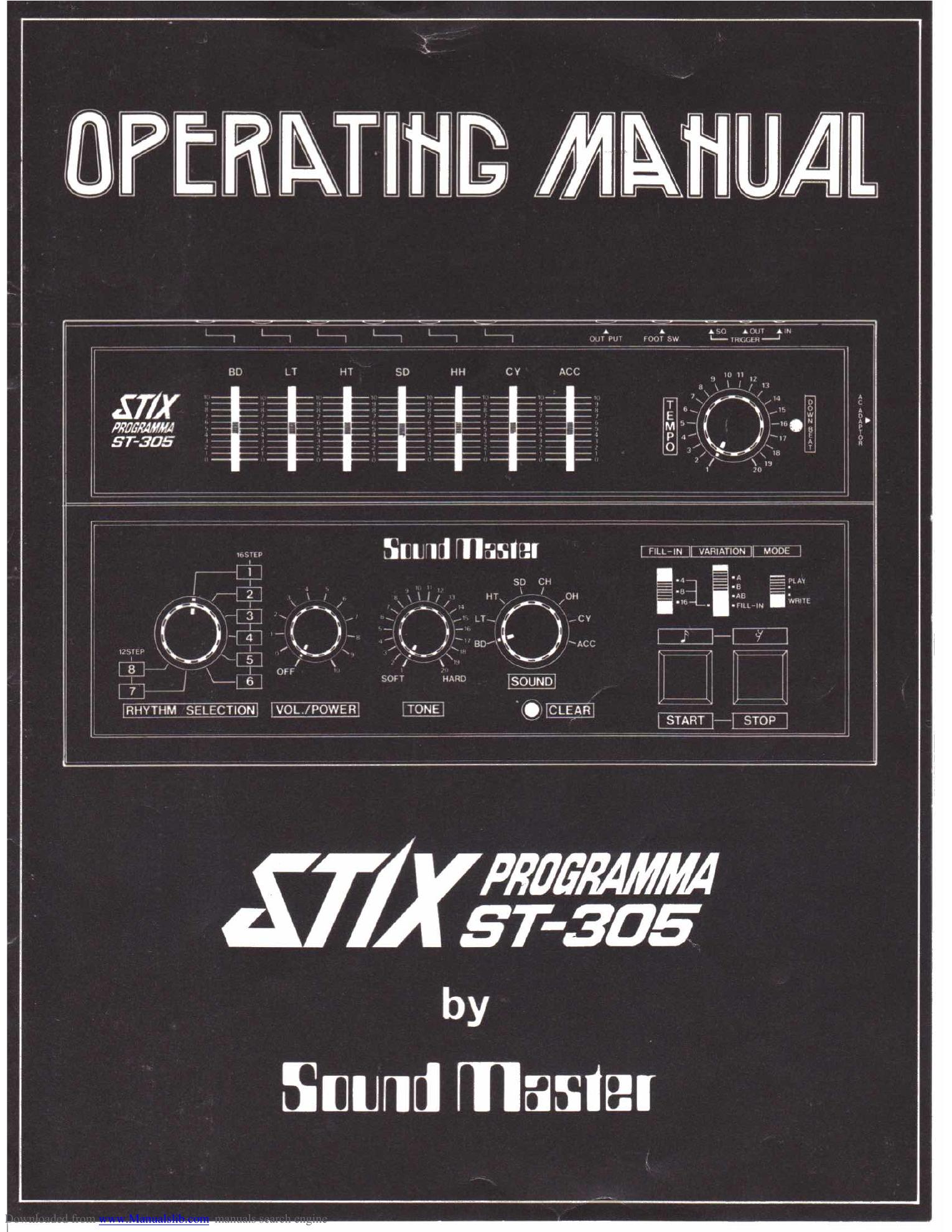
Sound Master · Catalogue / document
The Soundmaster Stix ST-305 in its operating manual. Rayspark Industries’ compilation connection is presented as a later artist-use lead, while the document establishes the machine’s own interface.
Undated
Sound Master · Source & credit ↗
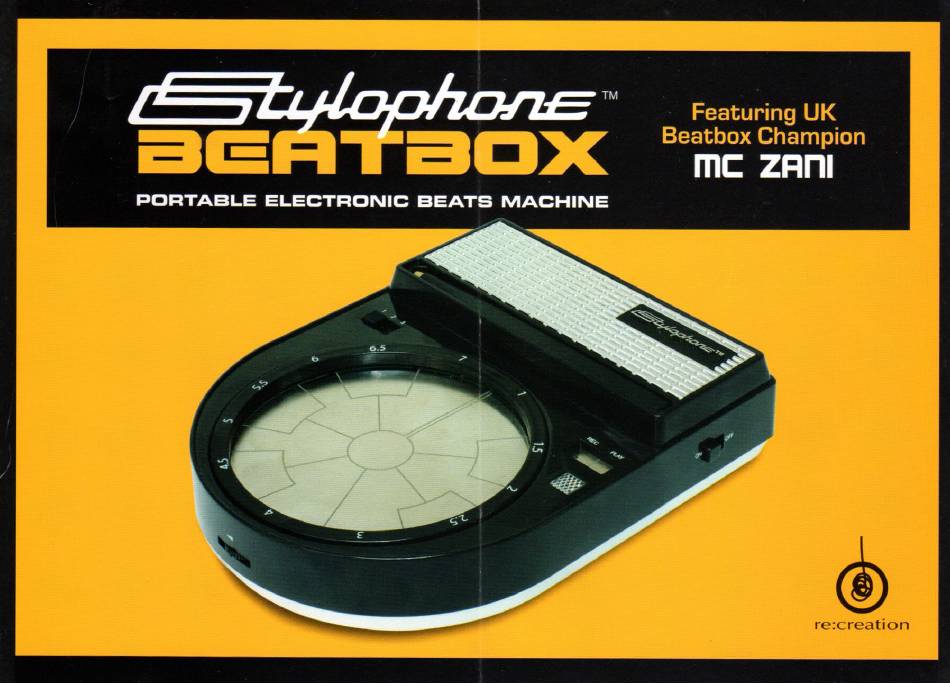
Dubreq · Catalogue / document
The Stylophone Beatbox quick-start cover. The Wackids credit one in the FUTUR 2000 performance line-up; the booklet presents the portable device in its own public language.
c. 2009 manual; host page accessed 24 September 2026
Dubreq / Re:creation · Source & credit ↗
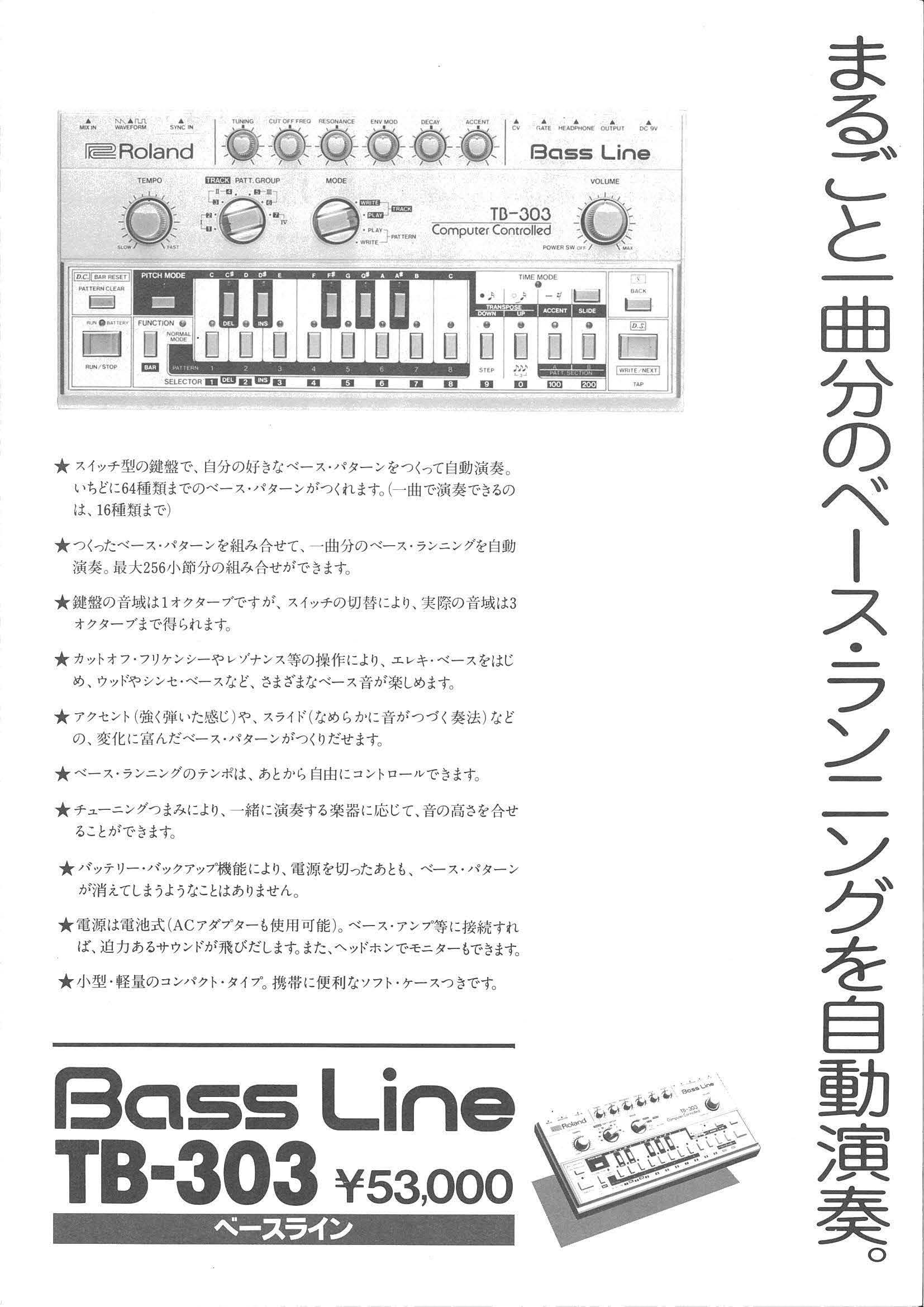
Roland · Catalogue / document
1982
Big Beat machine archive · Source & credit ↗
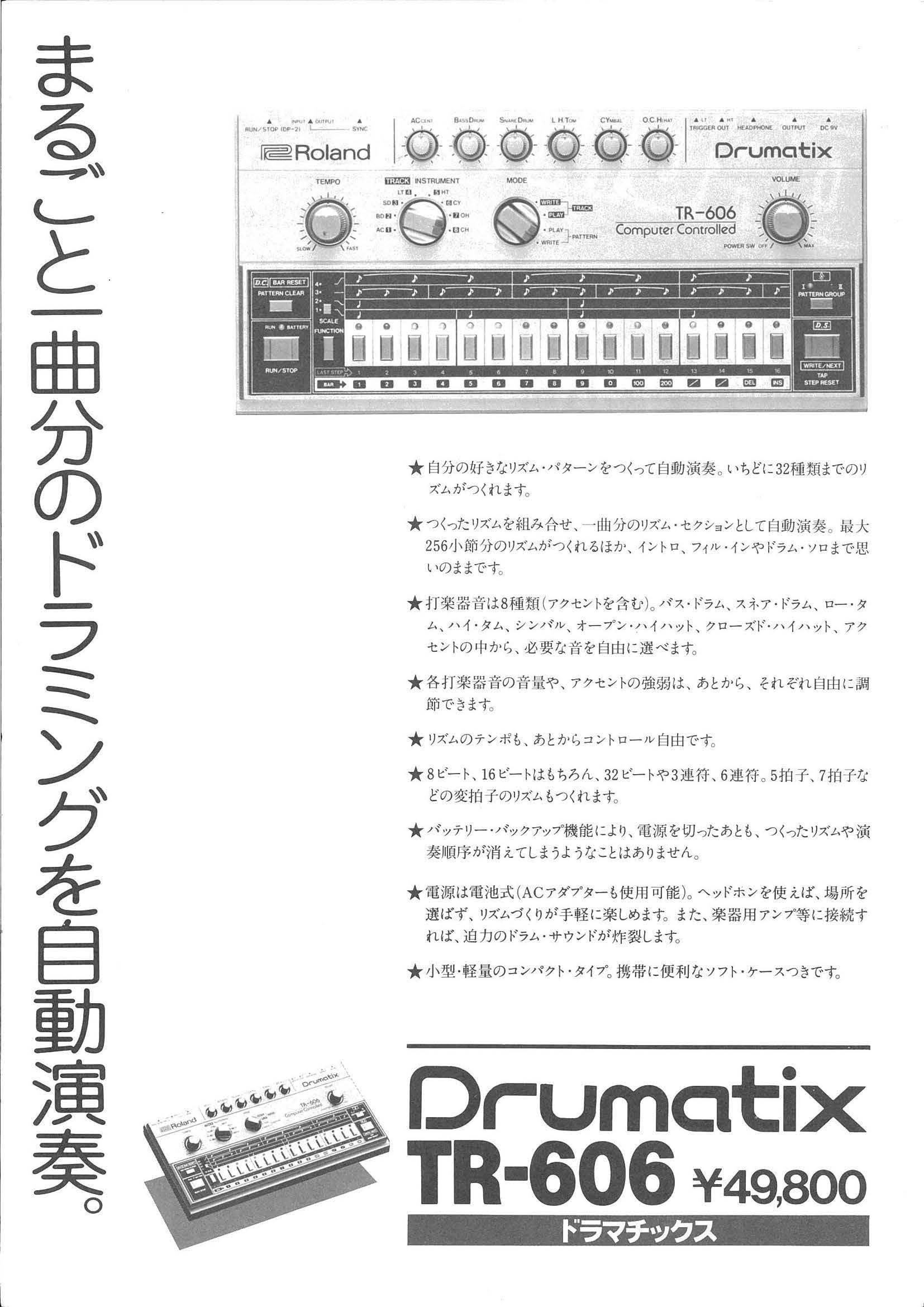
Roland · Catalogue / document
1982
Big Beat machine archive · Source & credit ↗
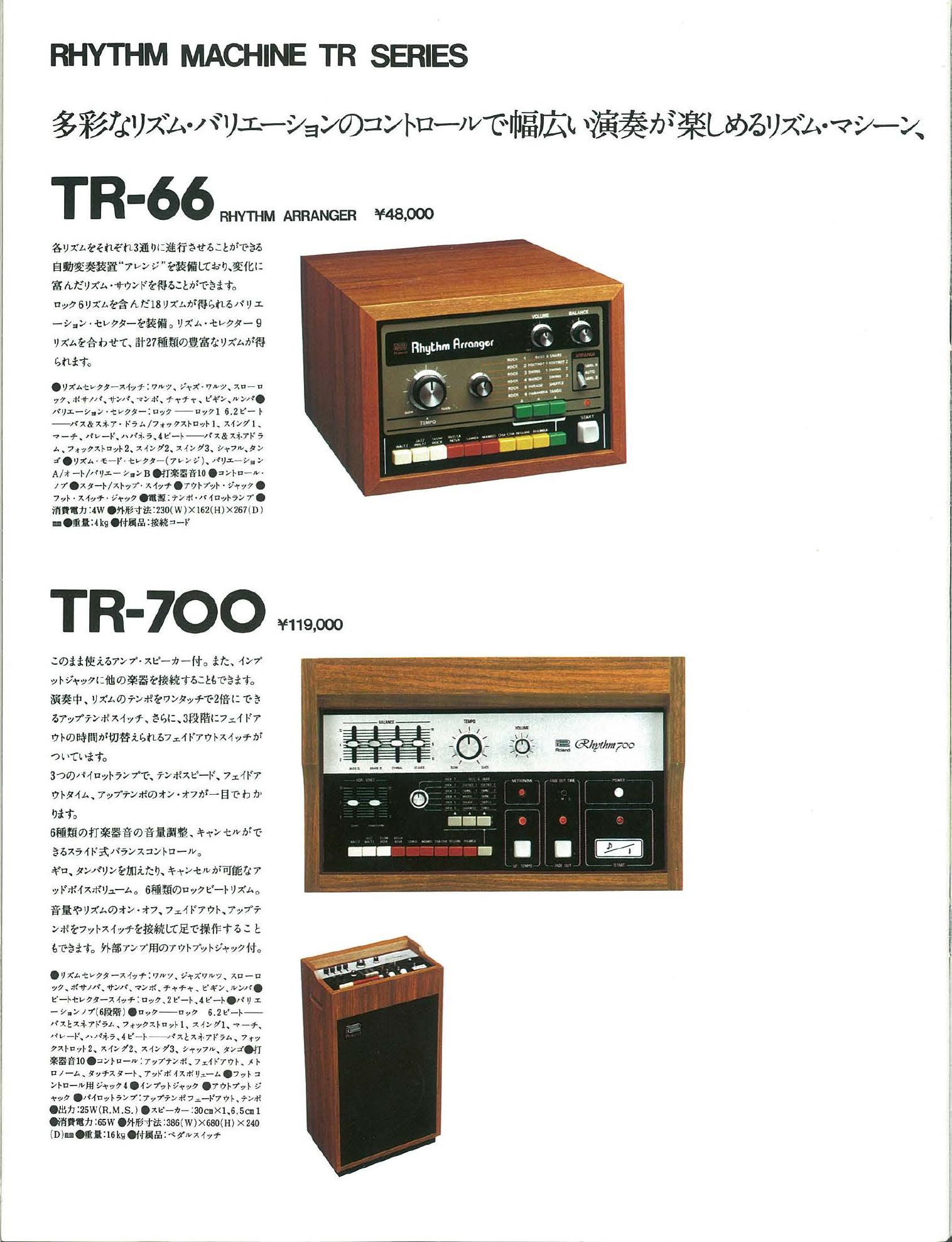
Roland · Catalogue / document
Undated document
Big Beat machine archive · Source & credit ↗
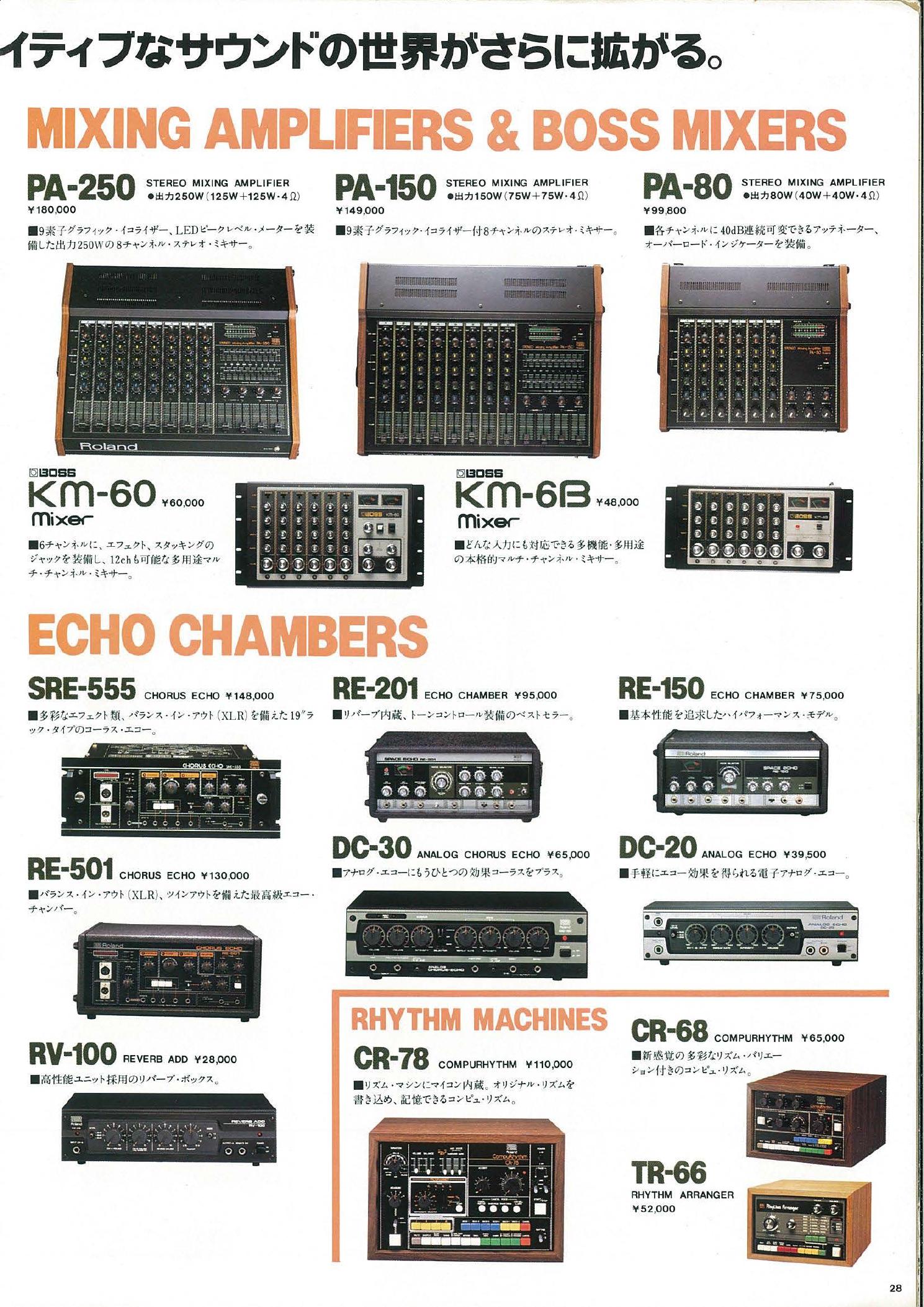
Roland · Catalogue / document
Undated document
Big Beat machine archive · Source & credit ↗
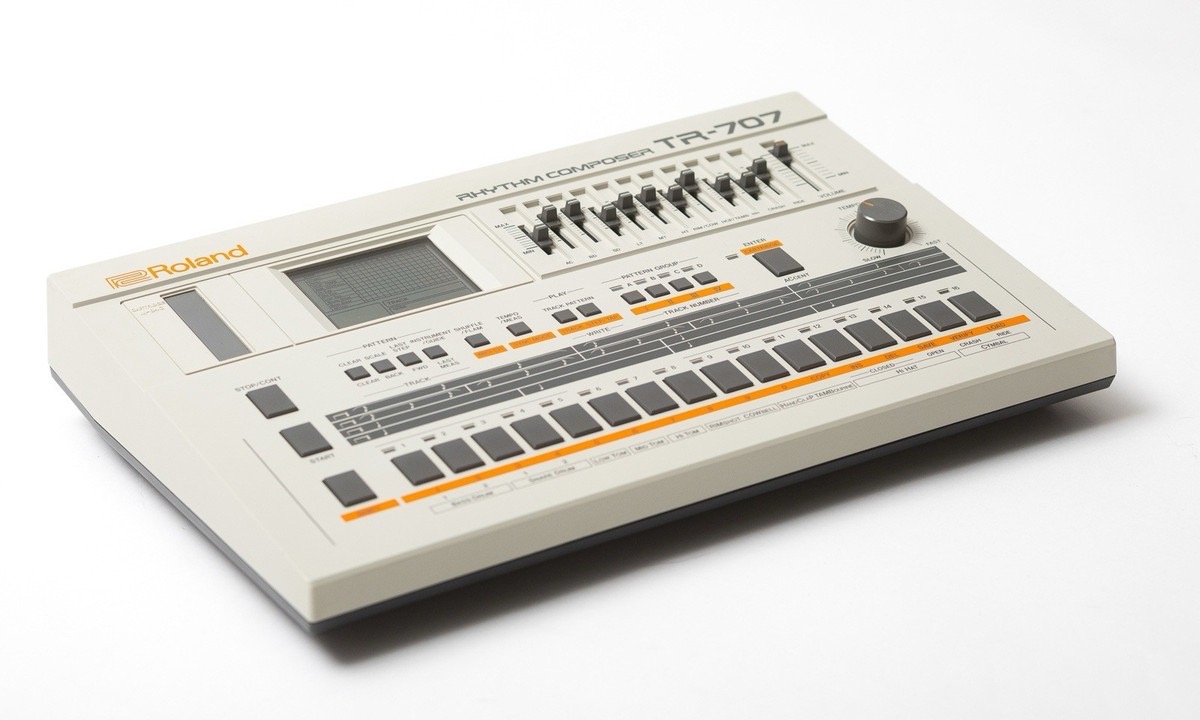
Roland · Catalogue / document
Undated document
Big Beat machine archive · Source & credit ↗
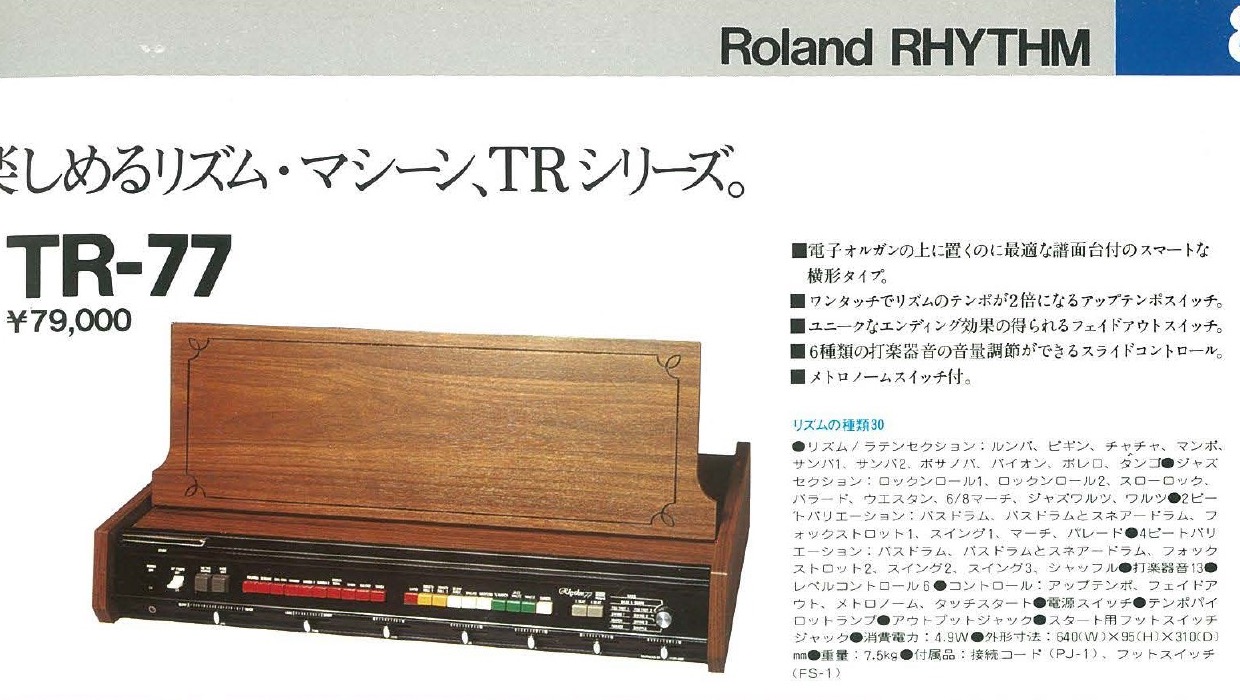
Roland · Catalogue / document
1977
Big Beat machine archive · Source & credit ↗
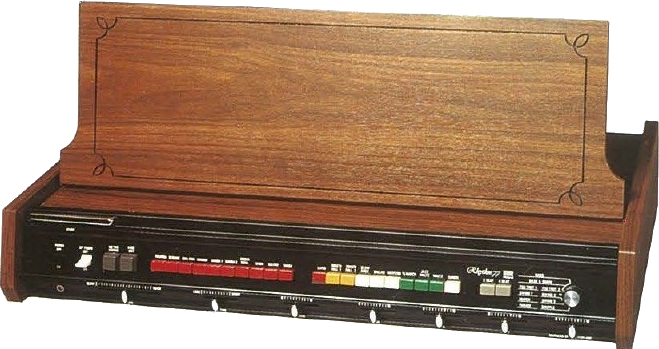
Roland · Catalogue / document
Undated document
Big Beat machine archive · Source & credit ↗
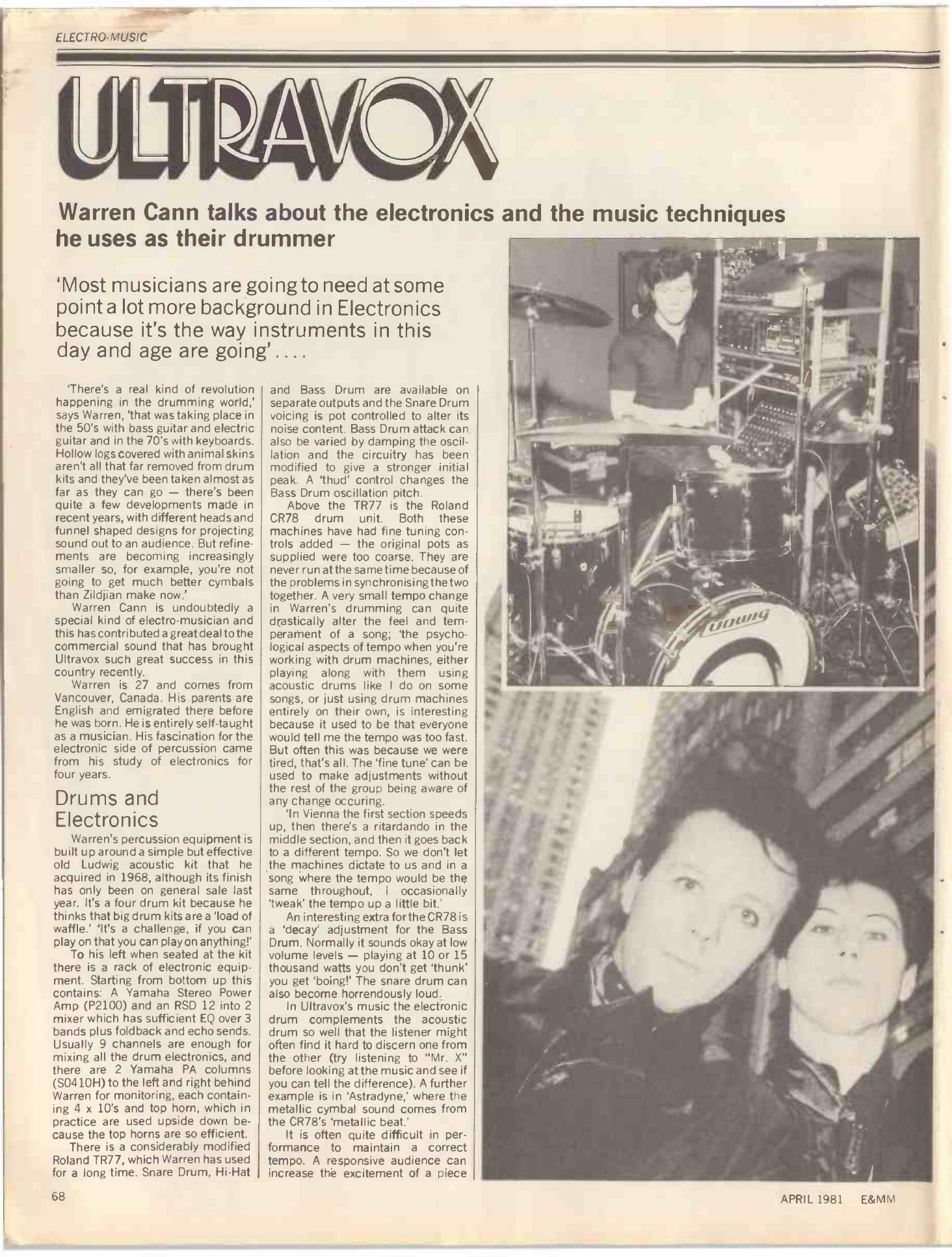
Roland · Period article / document
Warren Cann in a 1981 Ultravox profile that documents his long-used, heavily modified TR-77. The machine is discussed in the printed text rather than shown in the photograph.
1981-04
Mike Beecher / Electronics & Music Maker · Source & credit ↗
Viscount · Catalogue / document
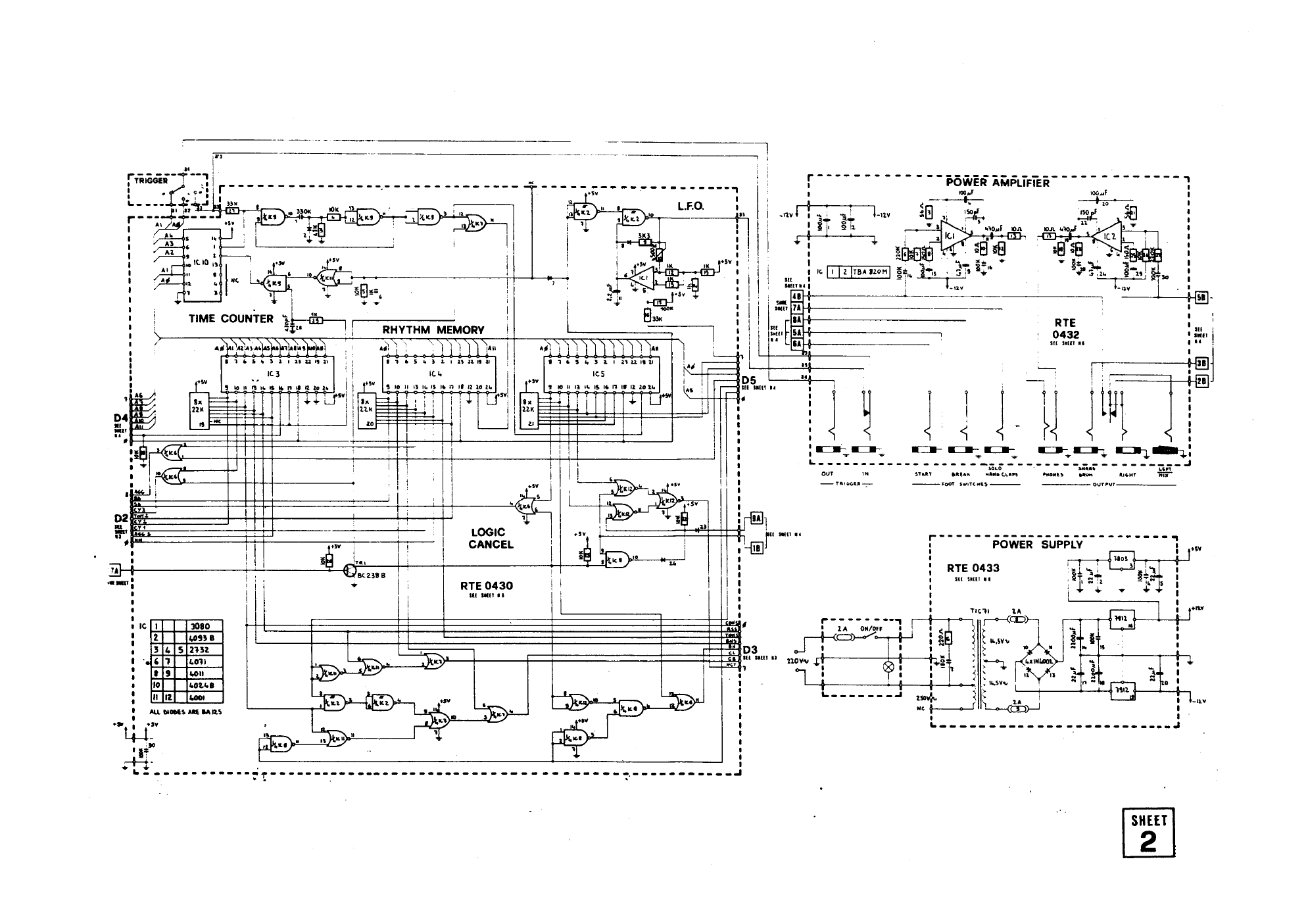
The Viscount R64’s rhythm-memory and control diagram. Rodion & Mammarella’s later record connection is separate from this technical document, which shows how the machine was organised.
July 1984 (cover)
Viscount / Intercontinental Electronics S.p.A. · Source & credit ↗
Yamaha · Period article / document
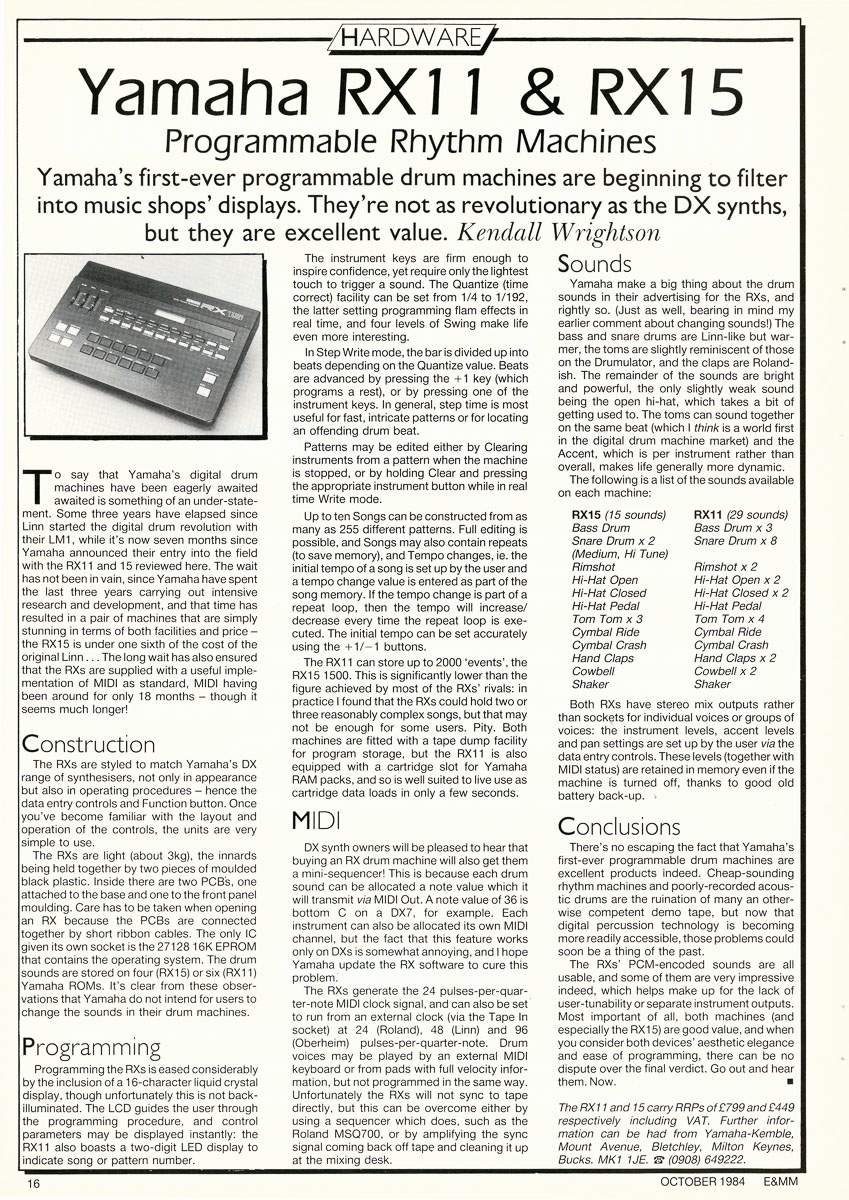
The RX11 and RX15 in a period review. Baseck’s early RX15 experiments belong to a later artist account; the page shows Yamaha’s machines in their original market context.
October 1984
Electronics & Music Maker · Source & credit ↗
A growing collection of archival images. Document dates and source credits accompany each image.
Back to all machines →
