
The ER-1 and EA-1 appear in a contemporary Winter NAMM 1999 report; Chris Carter reviewed them for Sound On Sound that July. These establish period availability, not an exact first-shipment date.
The machine in the record
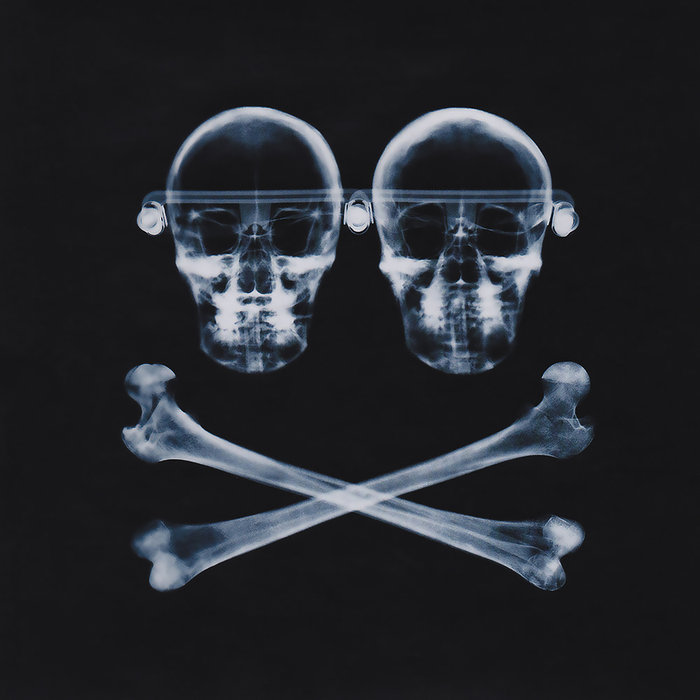
Orbital / The Altogether.
Phil Hartnoll names a Korg ER drum machine in the setup for The Altogether; the available context points to the ER-1, though the model identification remains qualified. It is an attractive reminder that a compact box could survive inside Orbital’s famously expansive system.
Read Orbital interview: Toys in the attic ↗More records in the archive
The machine keeps turning up.
Darius Syrossian
Explicit ER-1 use and an unnamed project signed to Moon Harbour.
Read Desert Island Kit: Darius Syrossian’s £100 Studio Saviour ↗Reported association
Darius Syrossian / Hammer
Artist identifies Hammer as an all-hardware production on Moon Harbour.
Read Darius Syrossian: This is our passion, I can’t wait to get started in Ibiza ↗
Milieu / Amtrax Plus
Brian Grainger says a Korg ER-1 appears on every track of Amtrax Plus, often layered as rhythm, tonal material and texture.
Read Milieu / Amtrax Plus ↗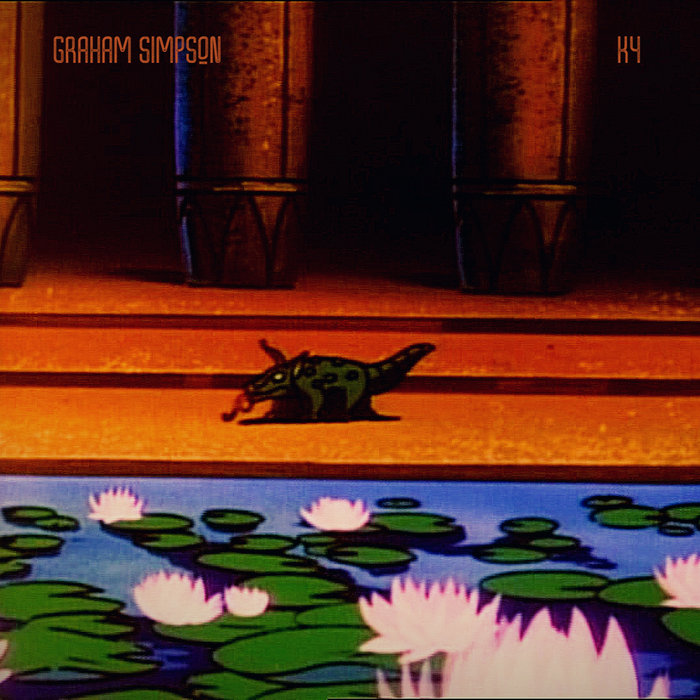
Graham Simpson / K4
Graham Simpson says K4 uses a Korg Electribe ER-1 alongside a BOSS DR-660 and DrumBrute as three contrasting hardware rhythm machines.
Read Graham Simpson / K4 ↗
Samm Bennett / Craving
Samm Bennett credits only diddley bow and Korg ER-1 on “Craving”, a deliberately spare Tokyo performance.
Read Samm Bennett / Craving ↗In the market
- July 1999: GBP 349 — UK review-period price. ER-1 Source ↗
- Early Spring 1999: USD 499 — US Winter NAMM report quoted price; list/street classification unstated. ER-1; accessories unspecified Source ↗
On record
- Orbital — The Altogether. Orbital named a Korg ER drum machine in The Altogether setup; the source’s abbreviated wording makes the ER-1 identification qualified. Source ↗
- Darius Syrossian. Explicit ER-1 use and an unnamed project signed to Moon Harbour. Source ↗
- Darius Syrossian — Hammer. Artist identifies Hammer as an all-hardware production on Moon Harbour. Source ↗
- Milieu — Amtrax Plus. Brian Grainger says a Korg ER-1 appears on every track of Amtrax Plus, often layered as rhythm, tonal material and texture. Source ↗
- Graham Simpson — K4. Graham Simpson says K4 uses a Korg Electribe ER-1 alongside a BOSS DR-660 and DrumBrute as three contrasting hardware rhythm machines. Source ↗
- Samm Bennett — Craving. Samm Bennett credits only diddley bow and Korg ER-1 on “Craving”, a deliberately spare Tokyo performance. Source ↗
A rhythm made one part at a time
On the original red Electribe R, select a part and mark its rhythm on the sixteen step keys, or record by striking the part keys in time. Four percussion-synth parts offer sine or triangle waves with pitch modulation; four PCM parts supply closed and open hi-hat, crash and handclap. The hats share a sounding slot, as do crash and clap: separate buttons do not mean every sound can play together. Two audio-input parts and an accent part complete the pattern.
Electribe EA-1 / ER-1 family brochure ↗ Electribe R ER-1 Owner’s Manual E2 ↗
Record the movement, not just the hits
Motion Sequence captures one sound-control movement per part over a pattern cycle. Record another knob on that part and the previous movement is replaced. Smooth joins the recorded values; Trig Hold holds a value at each note trigger. The delay has its own sequence and can record Depth and Time together. With up to 64 steps per part, 256 stored patterns and sixteen songs, the pattern can carry changing sound as well as changing rhythm. Use Write before changing patterns or switching off; an unsaved edit is not retained.
Bring another sound into the rhythm
The two line-level inputs can be gated by the pattern, with Decay setting the gate duration. They do not sample the incoming audio: playback opens the gate onto whatever signal is arriving then. A connected source must keep supplying sound. MIDI clock allows the ER-1 to work in a synchronized setup rather than alone.
Carter’s invitation to experiment
In July 1999, Chris Carter preferred the ER-1’s oscillator and modulation possibilities to its small PCM selection. He found step programming immediate and liked the unusual patterns it could produce, while noting restricted voice assignments and only one effect. His enthusiasm concerns making percussion sounds, not evidence that the digital machine contains an analogue drum circuit.
A small box in two different working rooms
Discussing The Altogether in May 2001, Phil Hartnoll added a Korg ER drum machine to Orbital’s deliberately reduced album setup. The abbreviated name supports an ER-family association, not an unqualified ER-1 identification or individual track allocation. In May 2018, Darius Syrossian explicitly named his ER-1: rediscovering an old track had led him back to it and into an unnamed production signed to Moon Harbour. The following month he described Hammer as made entirely with hardware, but did not name an ER-1. The label catalogue identifies the release; it cannot close that equipment-to-track gap.
Orbital interview: Toys in the attic ↗ Desert Island Kit: Darius Syrossian’s £100 Studio Saviour ↗ Darius Syrossian: This is our passion, I can’t wait to get started in Ibiza ↗ Various Artists – Moon Harbour Inhouse Vol. 8 (MHRLP023) ↗
The software branch is a different instrument
Korg’s later Collection ELECTRIBE-R draws on the 2010 iELECTRIBE and includes original ER-1 and mkII modes alongside expanded sequencing and effects. That is a documented software continuation, not a reason to read its added facilities back into the original red hardware.
Sources
- Electribe EA-1 / ER-1 family brochure
- Korg Electribe EA1 & ER1
- Electribe R ER-1 Owner’s Manual E2
- Orbital interview: Toys in the attic
- Desert Island Kit: Darius Syrossian’s £100 Studio Saviour
- Korg Collection: ELECTRIBE-R
- Darius Syrossian: This is our passion, I can’t wait to get started in Ibiza
- Various Artists – Moon Harbour Inhouse Vol. 8 (MHRLP023)
- Winter NAMM report, Sweet Notes Early Spring 1999, pp3–4
The visual archive
Further visual evidence.
Sources for images shown earlier (4)
- Milieu — Amtrax Plus ↗
Release date not stated on source page · Milieu / release artwork via Bandcamp · Official Bandcamp release-page artwork (Open Graph image) - Graham Simpson — K4 ↗
Release date not stated on source page · Graham Simpson / release artwork via Bandcamp · Official Bandcamp release-page artwork (Open Graph image) - Samm Bennett — Craving ↗
Release date not stated on source page · Samm Bennett / release artwork via Bandcamp · Official Bandcamp release-page artwork (Open Graph image) - Orbital — The Altogether ↗
14 September 2001 · Orbital / release artwork via official Bandcamp · Official Bandcamp release-page artwork (Open Graph image)
Additional visual sources (2)
Original publications and related image sources.
- Original EA-1 / ER-1 brochure ↗
1999 copyright · Korg USA · Four pages; contact sheet reviewed, pp. 3–4 inspected at full size - ER-1 Owner’s Manual E2 ↗
1999 copyright · Korg · 52 pages; cover and printed p. 44 visually inspected