
Retrospective histories place the MP-5 in 1966 or 1967. Its compact transistor-based design belongs to Keio’s early Mini Pops family; a dated original announcement has not yet settled the introduction year.
The wider Mini Pops family
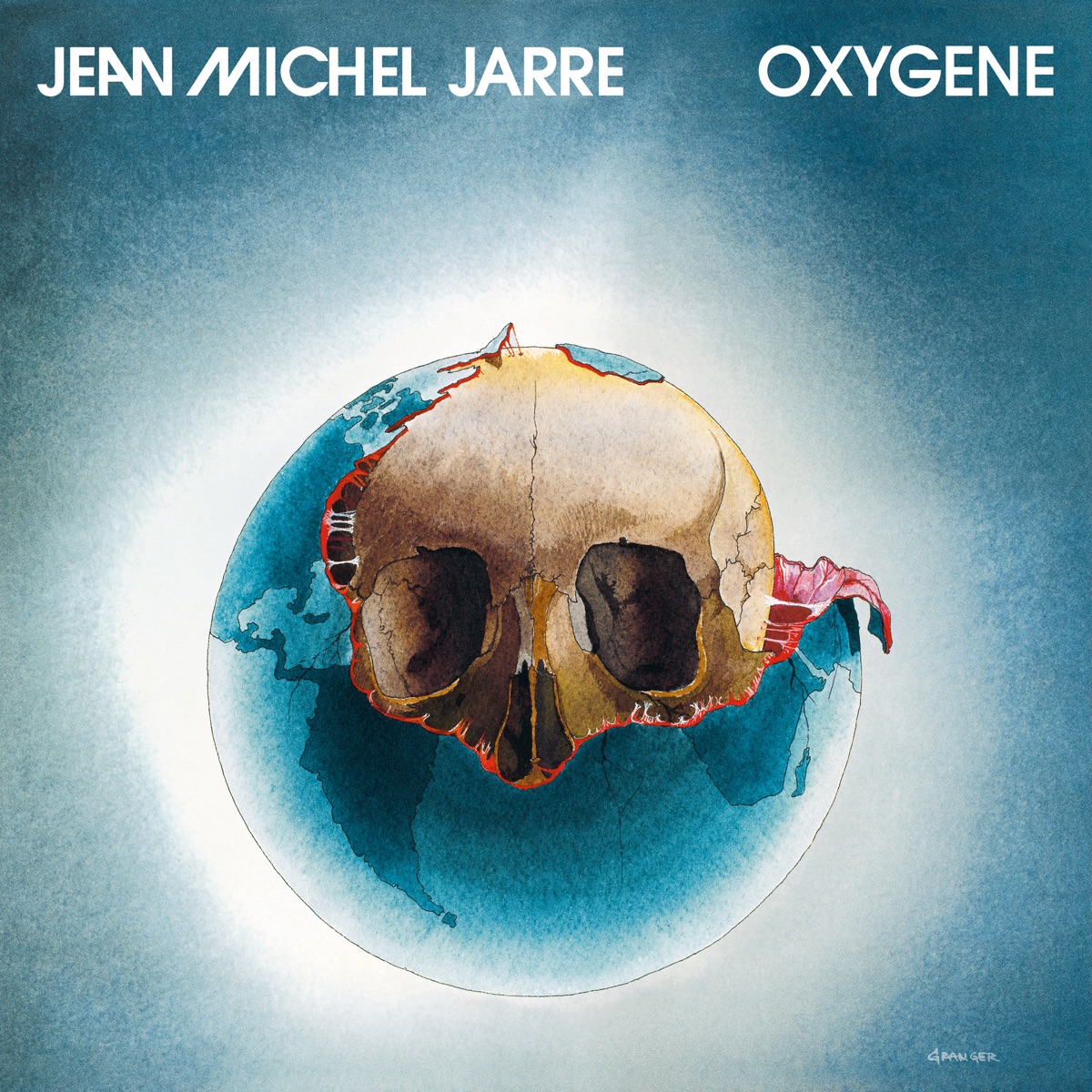
Jean-Michel Jarre / a reported Mini Pops connection.
FACT’s retrospective names the MP-7 in its account of Jean-Michel Jarre’s Oxygène. This supplies wider Mini Pops family context, not an MP-5 recording credit.
Read Keio Minipops MP-5/MP-7 ↗More records in the archive
The machine keeps turning up.
Jean-Michel Jarre / Oxygène
Jarre recalls that the only drum machine in his Oxygène setup was a Korg Mini Pops, whose preset rhythms he combined with Sellotape for Parts IV and VI.
Read Jean-Michel Jarre and a Korg Mini Pops on Oxygène ↗A rhythm box for the tabletop
The smaller MP-5 and larger MP-7 put Keio’s electronic accompaniment into compact boxes. FACT’s retrospective describes the MP-5 with ten preset rhythms and tone, tempo and volume controls. Its economy is the point: select an accompaniment, shape its overall sound and place it beneath a performance. The preset supplies the pattern; the player supplies the song.
The MP-5 and the family around it
The MP-7’s twenty rhythms and separate percussion faders belong to the larger model. Its familiar association with Jarre’s Oxygène should not turn into an MP-5 recording credit. FACT explicitly names the MP-7 there; Jarre’s separate account names a Mini Pops without resolving the model. Both illuminate the family while leaving this smaller instrument’s recording history open.
Keio Minipops MP-5/MP-7 ↗ Jean-Michel Jarre and a Korg Mini Pops on Oxygène ↗
Before the model histories settle
Retrospective accounts place the early Mini Pops in a 1966/67 window, during Keio’s move away from rotating-disc accompaniment. A dated launch document is still needed to settle the MP-5’s own introduction. The later Mini Pops Junior has its own page and recording credits; a shared family name does not make it interchangeable with this model.
Recording and working accounts
Explore 2 source accounts
- Jean-Michel Jarre — Oxygène
FACT’s retrospective names the MP-7 in its account of Jean-Michel Jarre’s Oxygène. This supplies wider Mini Pops family context, not an MP-5 recording credit.
- Jean-Michel Jarre — Oxygène
Jarre recalls that the only drum machine in his Oxygène setup was a Korg Mini Pops, whose preset rhythms he combined with Sellotape for Parts IV and VI.
Sources
The visual archive
Further visual evidence.
Sources for images shown earlier (1)
- Jean-Michel Jarre — Oxygène ↗
1976-12-05T08:00:00Z · Jean-Michel Jarre / release artwork via Apple Music catalog artwork · Release catalogue and retained front artwork
Additional visual sources (1)
Original publications and related image sources.
- Korg Mini-Pops 5 — Wikimedia Commons file record ↗
Undated file record · See linked Wikimedia Commons file record · File: Korg Mini-Pops 5.jpg