
The Mini Pops-7 manual identifies Keio Electronic Laboratory Corporation, while Korg’s later Volume 4 catalogue preserves the MP7 designation. Together they trace the compact rhythm machine from Keio’s early catalogue identity to the Korg name.
The machine in the record
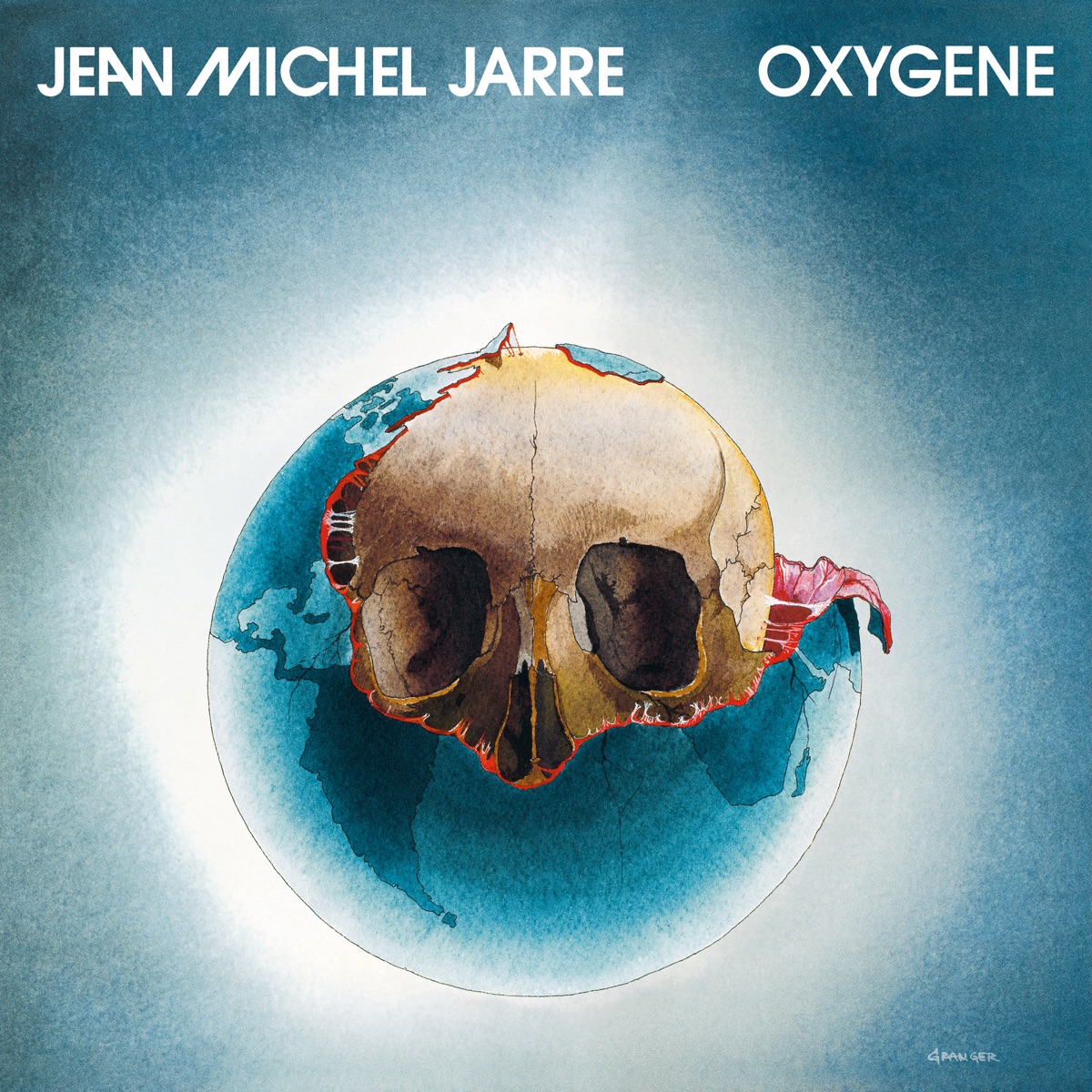
Jean-Michel Jarre / Oxygène.
Jean-Michel Jarre describes using the Mini Pops 7 to record the rhythms of Oxygène, with its combined presets heard on Parts 2, 4 and 6. A domestic accompaniment machine becomes one of the quiet engines of an electronic landmark.
Read Jean-Michel Jarre on the instruments of Oxygène ↗More records in the archive
The machine keeps turning up.
Claude Samard with Jean-Michel Jarre / Oxygène 2008 live recreation
Claude Samard operated two Keio Mini Pops machines in Jean-Michel Jarre’s 2008 Oxygène recreation.
Read 30 Years of Oxygene ↗Twenty rhythms, ready under the hand
The Mini Pops-7 is a preset accompaniment instrument with twenty named rhythms, selected by buttons and divided with an A/B section lever. A foot pedal starts and stops the machine, leaving the player’s hands on an organ, guitar or keyboard.Source (1)
A little rhythm section with colour
Sliders for quijada, guiro and tambourine, plus a balance control for cymbal and maracas, give the Mini Pops-7 more personality than its small cabinet suggests. The manual’s notation pages show that these were real arranged patterns, not just style names on a strip.
Playing together before sync
For the 2008 *Oxygène* recreation, Claude Samard operated two Keio Mini Pops machines from cues shared with the other performers. Jean-Michel Jarre described counting from the noise crescendo in “Oxygène IV” to start the running rhythm and bass sequence at the right moment. The machine makes the human coordination audible.Source (1)
The Mini Pops name in the Oxygène story
Jarre has described using a primitive Korg Mini Pops and combining its presets for *Oxygène*. That account made the family part of the album’s instrument lore, while the Mini Pops-7 manual preserves the specific compact design, controls and rhythm vocabulary that visitors can see here.
Keio on the faceplate
The manufacturer-hosted manual calls it MINI POPS-7 and identifies Keio Electronic Laboratory Corporation. Korg’s later catalogue retains the MP7 designation, preserving the path from Keio’s early rhythm instruments to the Korg name familiar today.
The little box inside Oxygène
Jean-Michel Jarre’s own account makes the Mini Pops 7 more than a likely family resemblance. He identifies it as the machine that supplied the rhythms of Oxygène, including the combined presets heard across Parts 2, 4 and 6. The early accompaniment box was not hiding its limitations; Jarre made the fixed patterns collide until they became the record’s gentle, inexorable pulse.
On record
- Jean-Michel Jarre — Oxygène, Parts 2, 4 and 6. Jarre describes using the Mini Pops 7 to record the rhythms of Oxygène, with its combined presets heard on Parts 2, 4 and 6. Source ↗
- Claude Samard with Jean-Michel Jarre — Oxygène 2008 live recreation. Claude Samard operated two Keio Mini Pops machines in Jean-Michel Jarre’s 2008 Oxygène recreation. Source ↗
Sources
The visual archive
Further visual evidence.
Sources for images shown earlier (2)
- Korg Mini Pops 7 owner’s manual ↗
- Jean-Michel Jarre — Oxygène ↗
1976-12-05T08:00:00Z · Jean-Michel Jarre / release artwork via Apple Music catalog artwork · Release catalogue and retained front artwork
Additional visual sources (1)
Original publications and related image sources.
- Mini Pops-7 Owner’s Manual ↗
Undated document · Keio Electronic Laboratory Corporation / Korg · Four-page scan