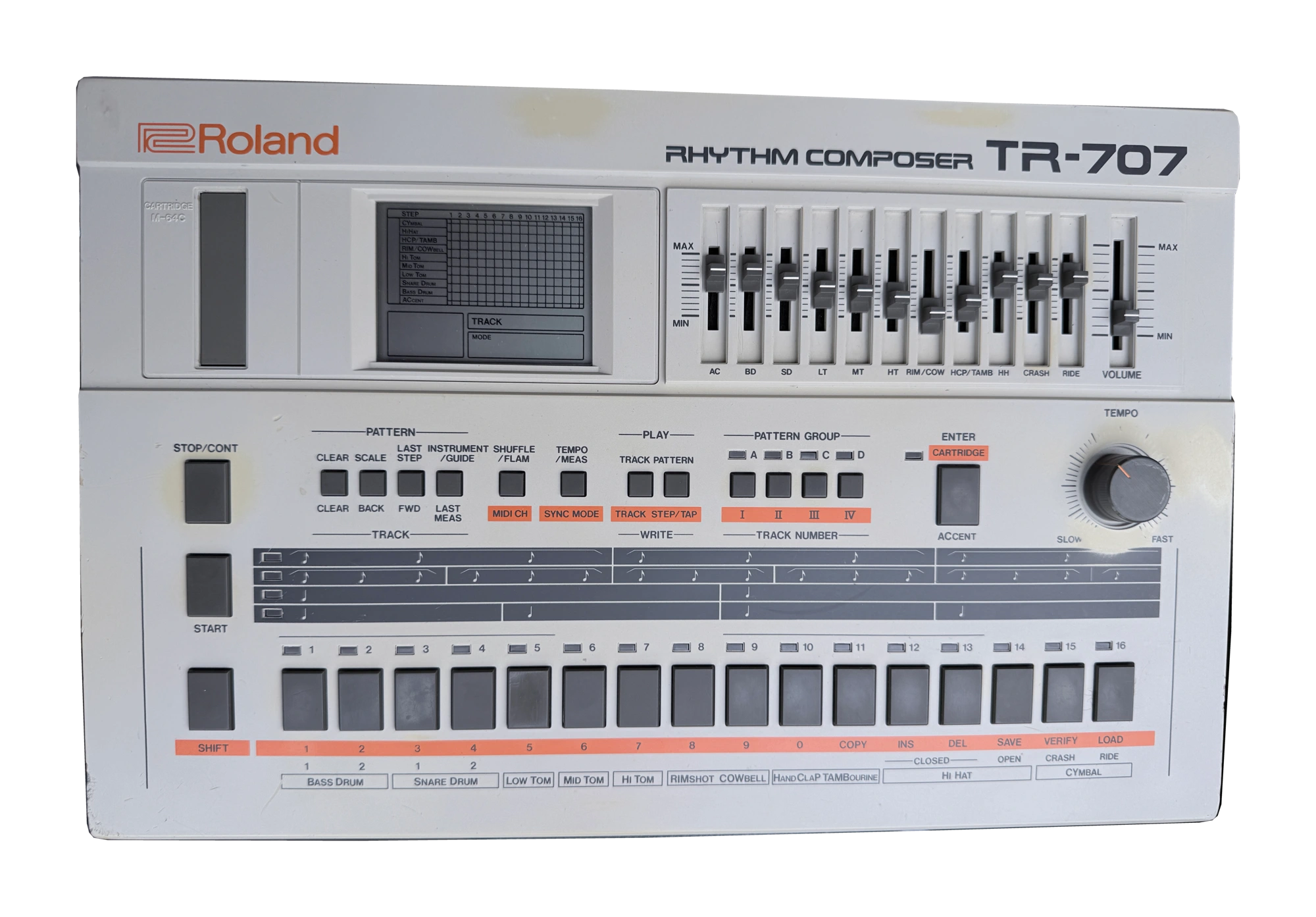
Big Beat Collection Roland TR-707, complete isolated view
Roland TR-707 · Collection photograph

MACHINE EXHIBITIONS

A machine
changes the room.

Look at the whole instrument. Try the controls. Follow the records and the documents back to their time.

01020304050607080910111213141516
THE BEAT IS A DOCUMENT.Machines · memory · circuitry · accidents · records · handsArchive signal live

CURATED DOORS

Four ways into the Museum.

These exhibitions are invitations, not a ranking or the full archive. Every image states its source role.

Sound and sequence

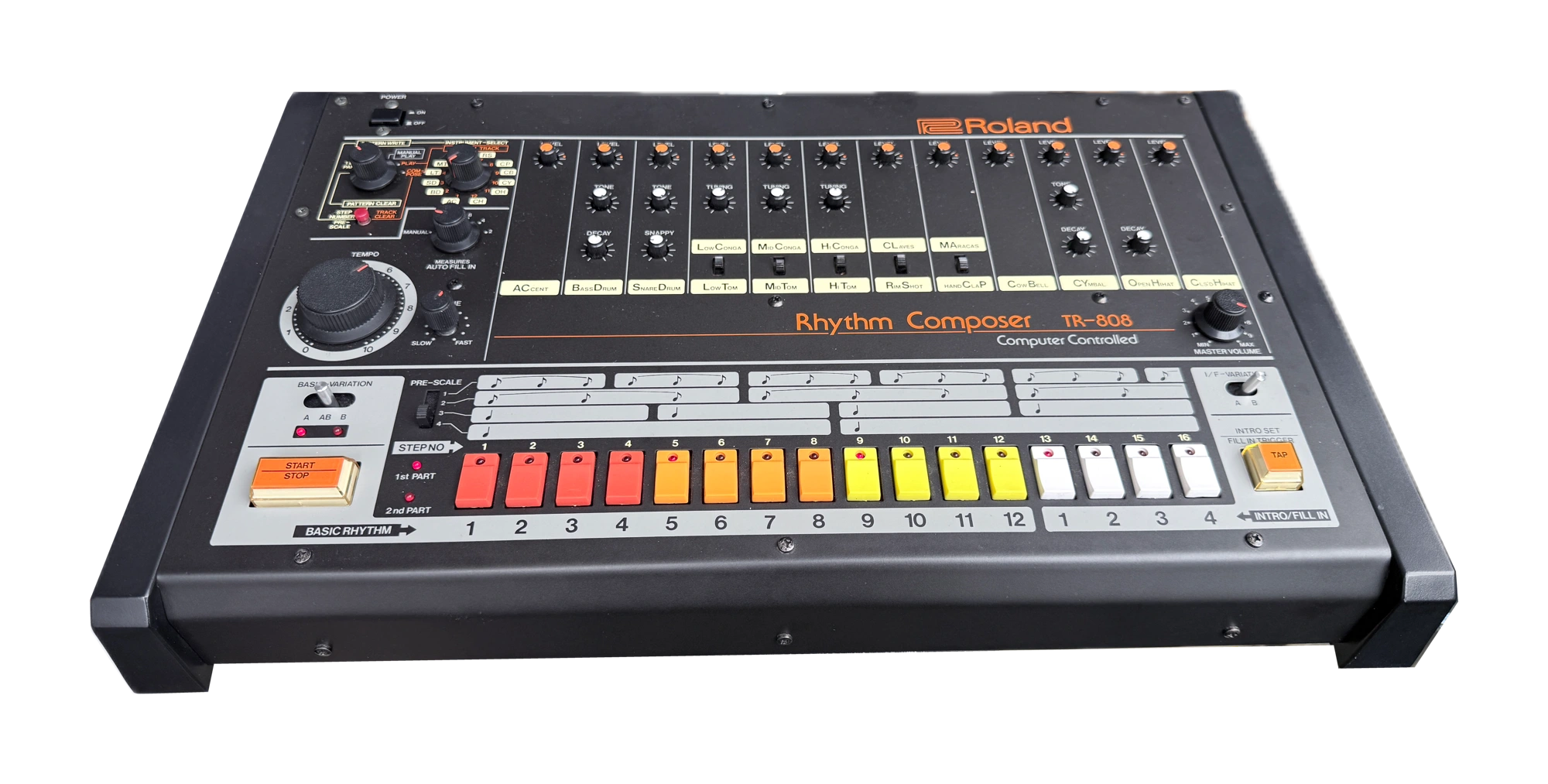
Roland TR-808

A deep exhibition with its governed listening and sequence study.

Enter the TR-808 exhibition →

Sound under the fingers

LinnDrum

A source-led exhibition of the sampler that made drum-machine memory feel playable.

Enter the LinnDrum exhibition →
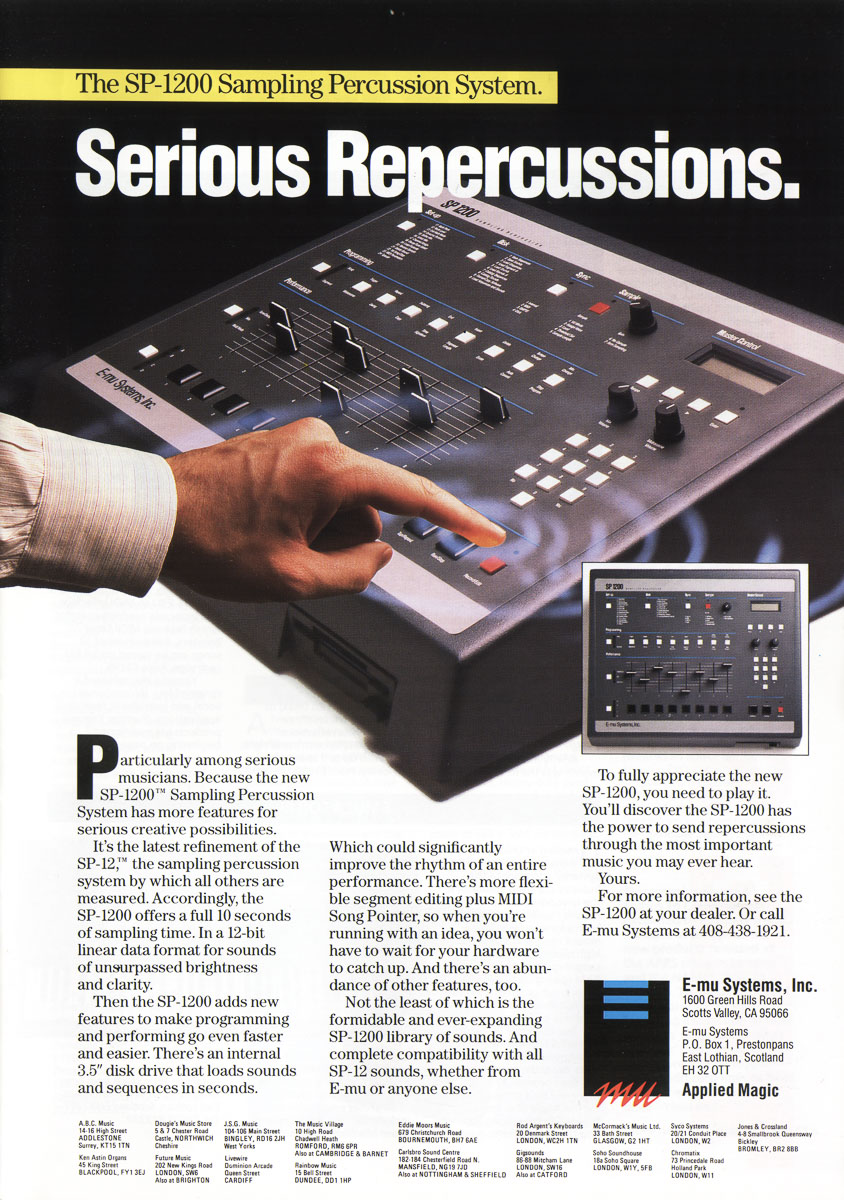
Browse all 234 source-led dossiers →

THE MACHINE MUSEUM

ONE HISTORY.
MANY ROUTES.

NATIVE MACHINE FILES

Deep exhibitions.

Begin here for close inspection, playable controls and the existing machine files.

Explore the exhibitions ↓
ALL MACHINES

The full archive.

Travel through manufacturers, timelines and 234 individual machine dossiers.

Browse all machines →

01 // THE LINE

THE ROLAND LINE.
1972—2025.

Twelve machines through time, including the paired CR-68 and CR-78 of 1978. Each card identifies its image role: a complete instrument where possible, or a clearly labelled collection detail. The images come from collection photography, a period catalogue, an official documentary source or credited third-party photography. Dates follow the strongest available record; where Roland’s own sources disagree, the conflict remains visible.

NATIVE MACHINE FILESTWELVE NATIVE FILES

FEATURED ABOVE: TR-707 & TR-66

TWELVE MODELS // 1972—2025
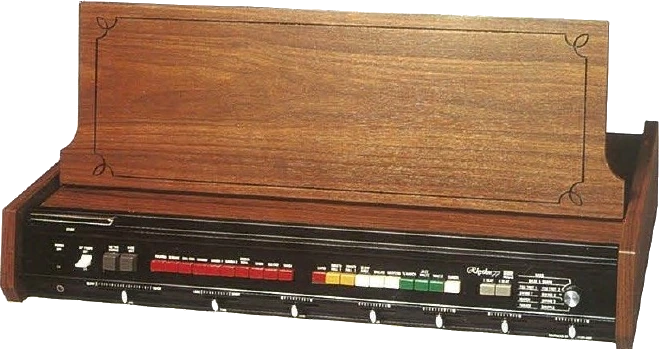
001
Roland TR-77 isolated from its March 1977 Roland Rhythm catalogue photograph
Rhythm arrangerFILE 001

Roland Rhythm 77 (TR-77)

TR-77

Lineage advanceThe cabinet eraPreset rhythm leaves the lounge and begins its long walk toward the stage.
Open machine fileOpen file 001 →
002Roland sources differ
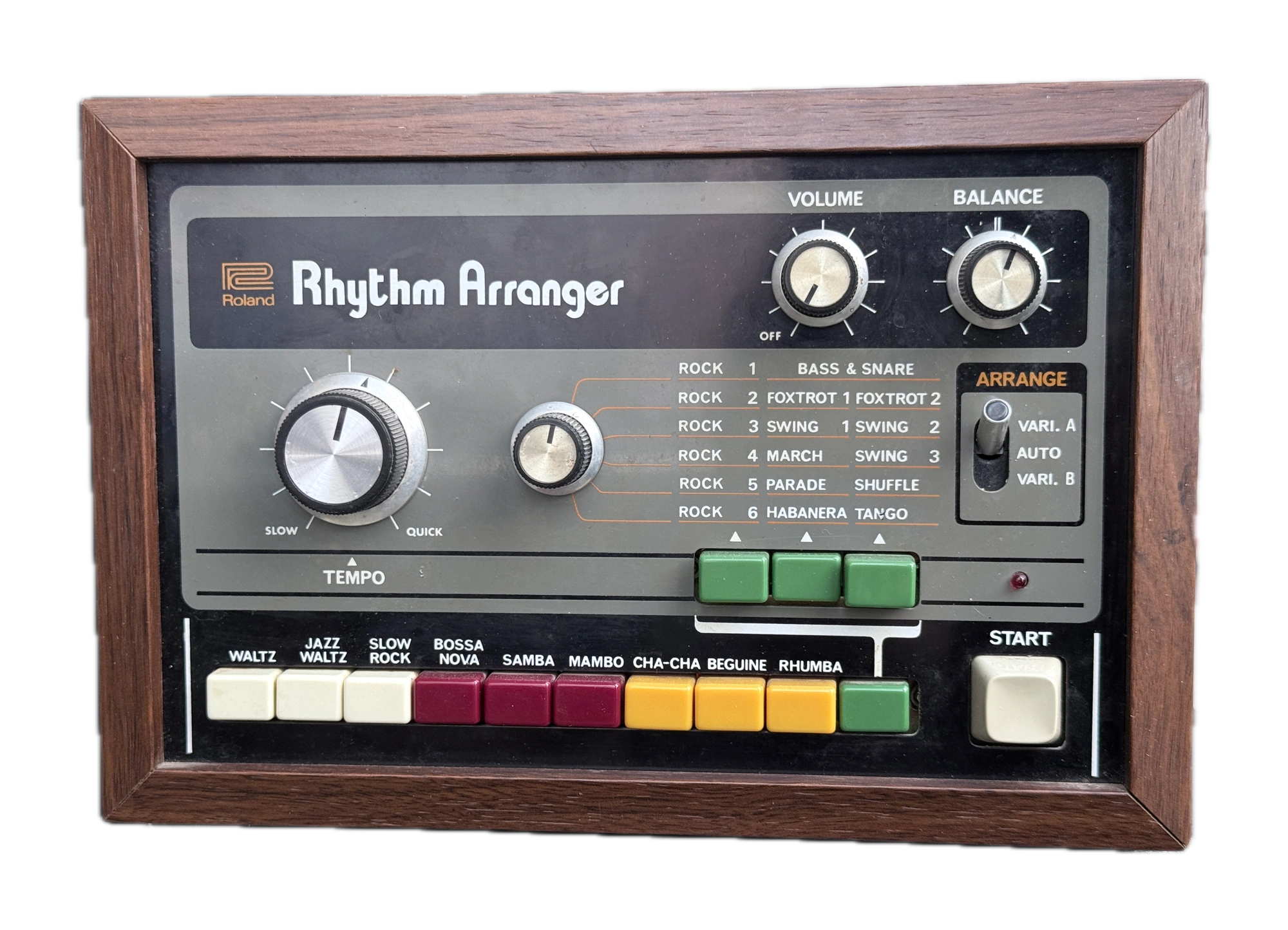
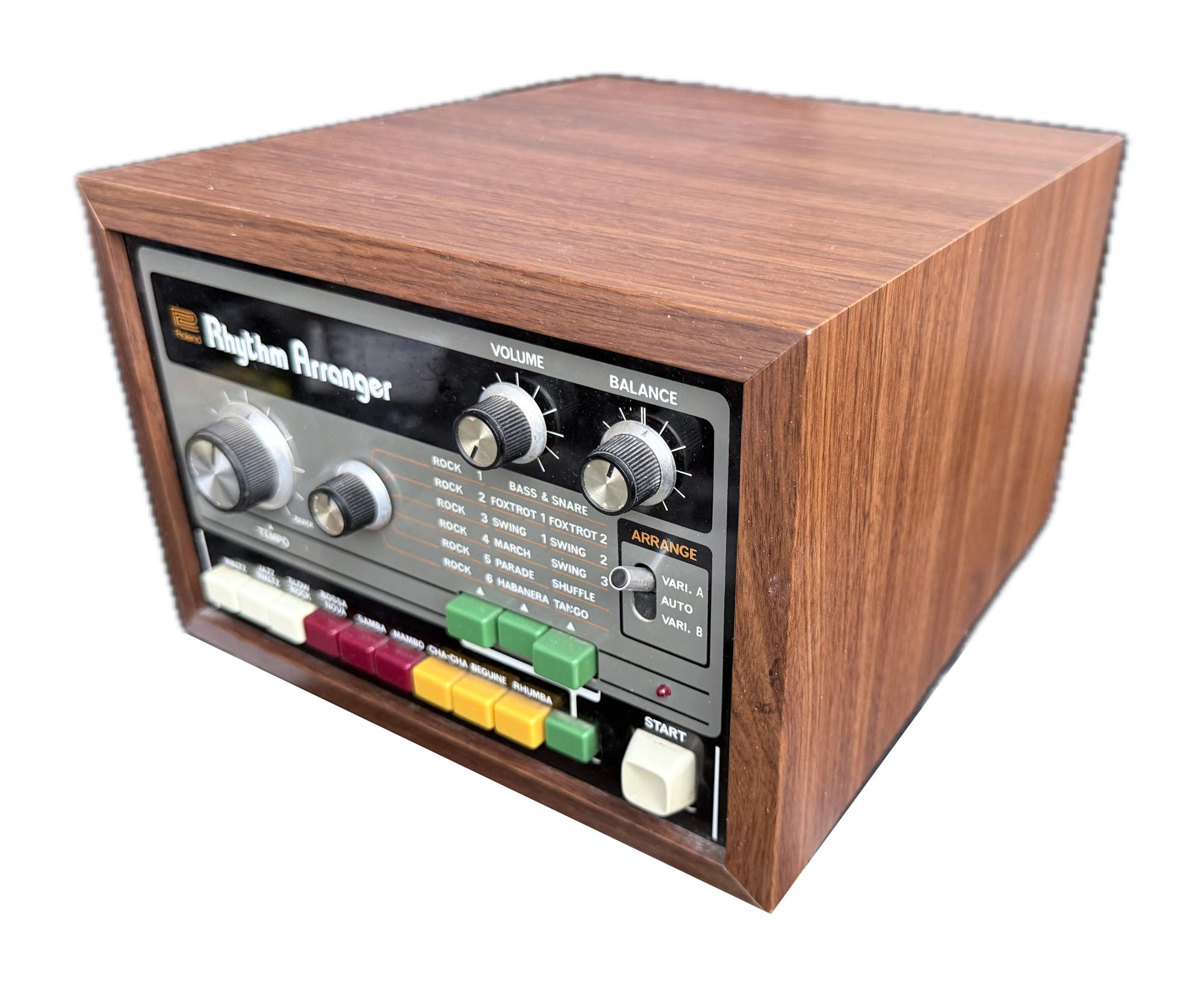
Big Beat Collection Roland TR-66, supporting three-quarter isolated view
Collection photograph · supporting three-quarter viewFILE 002

Roland TR-66 Rhythm Arranger

TR-66

Lineage advanceThe bridgeA substantial tabletop arranger that turns fixed rhythms into live combinations.
Open machine fileOpen file 002 →
003
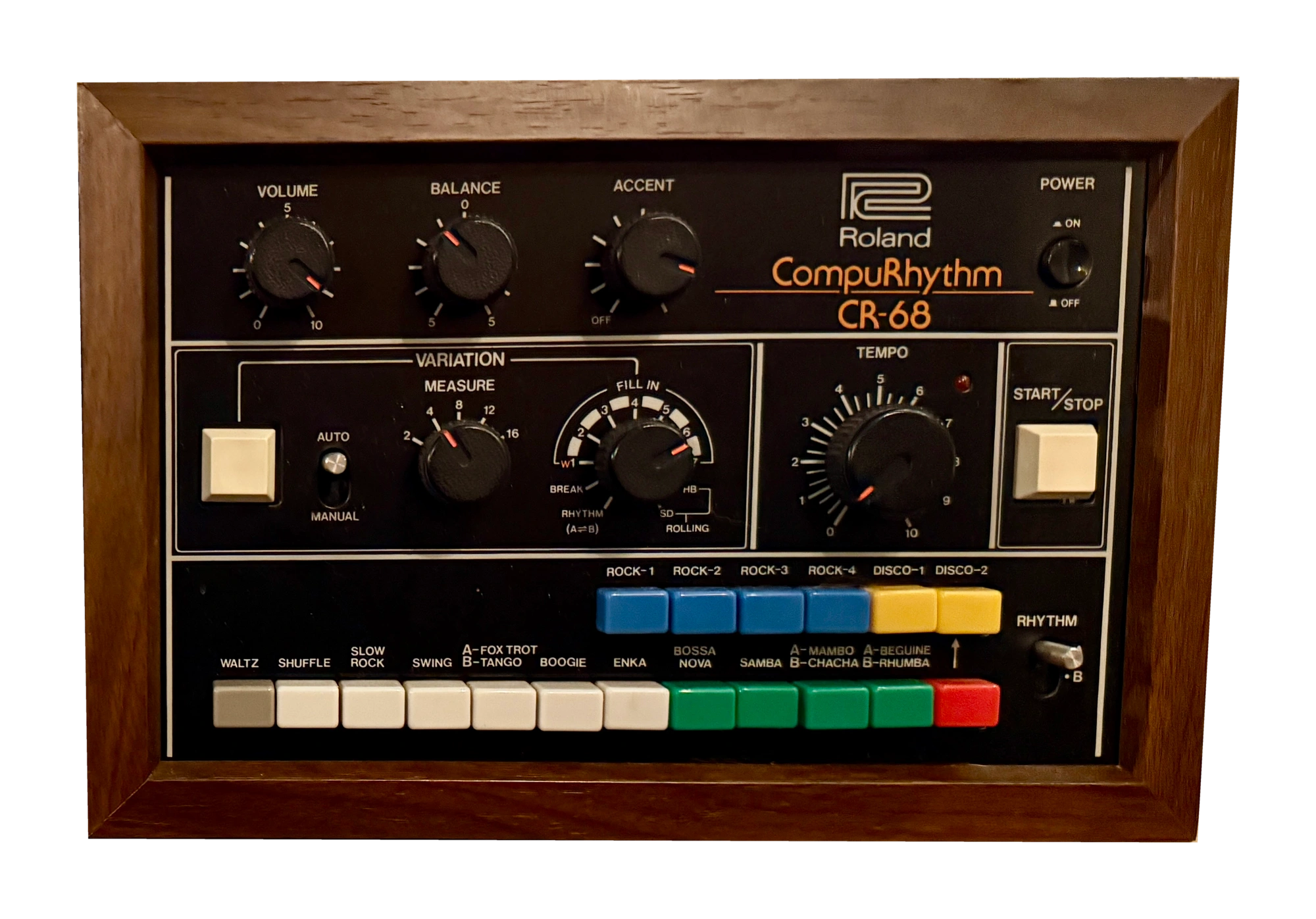
Big Beat Collection Roland CR-68, complete isolated view
CompuRhythmFILE 003

Roland CompuRhythm CR-68

CR-68

Lineage advanceDomestic futurismWarm preset pulse, tactile variation and the sound of tomorrow arriving at home.
Open machine fileOpen file 003 →
004
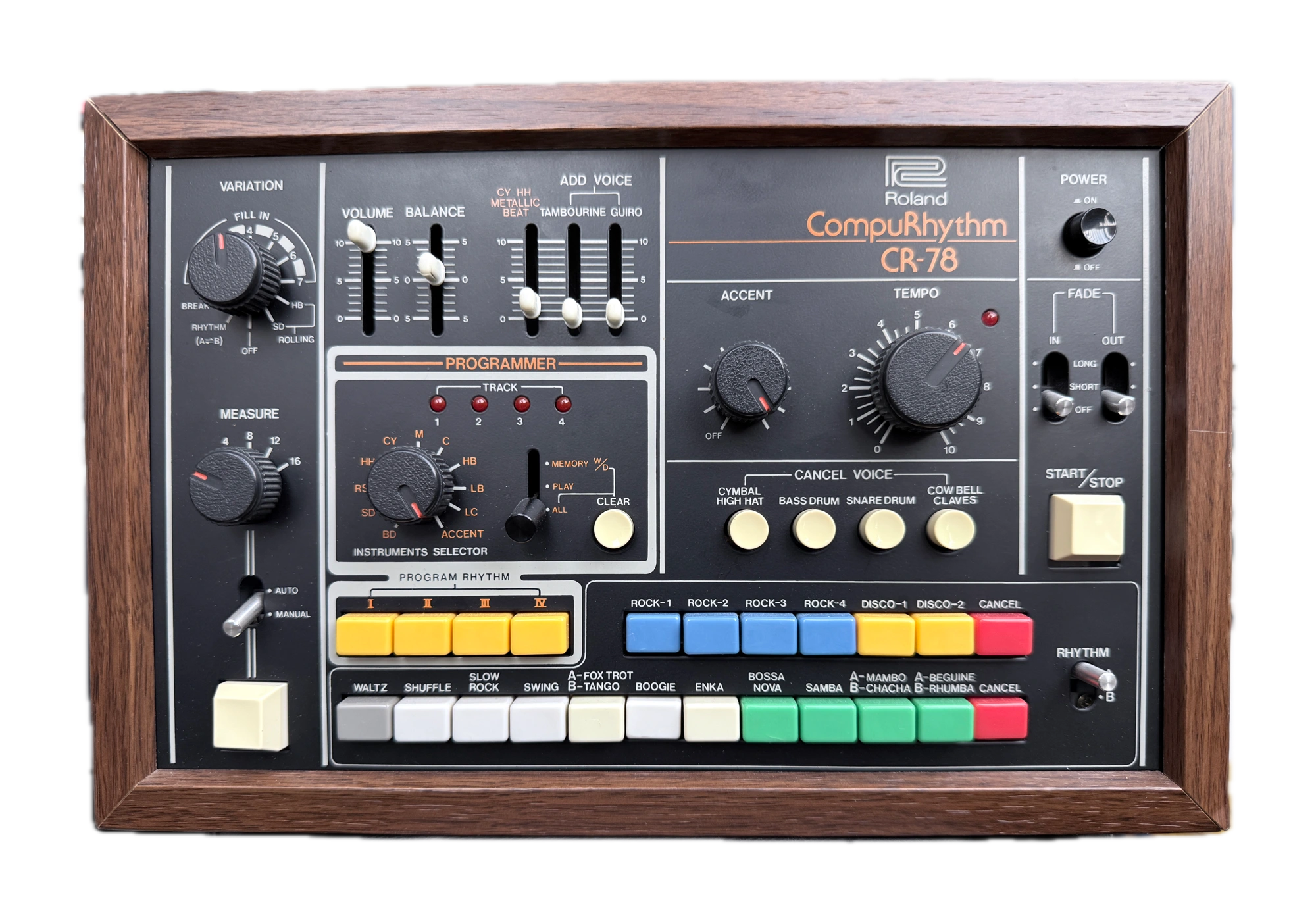
Big Beat Collection Roland CR-78, complete isolated view
CompuRhythmFILE 004

Roland CompuRhythm CR-78

CR-78

Lineage advanceMemory entersThe programmable rhythm box that turned accompaniment into authorship.
Open machine fileOpen file 004 →
005
Big Beat Collection Roland TR-808, complete isolated view
Rhythm composerFILE 005

Roland TR-808 Rhythm Composer

TR-808

Lineage advanceThe new low endSixteen steps, improbable bass and a worldwide change in musical gravity.
Open machine fileOpen file 005 →
006
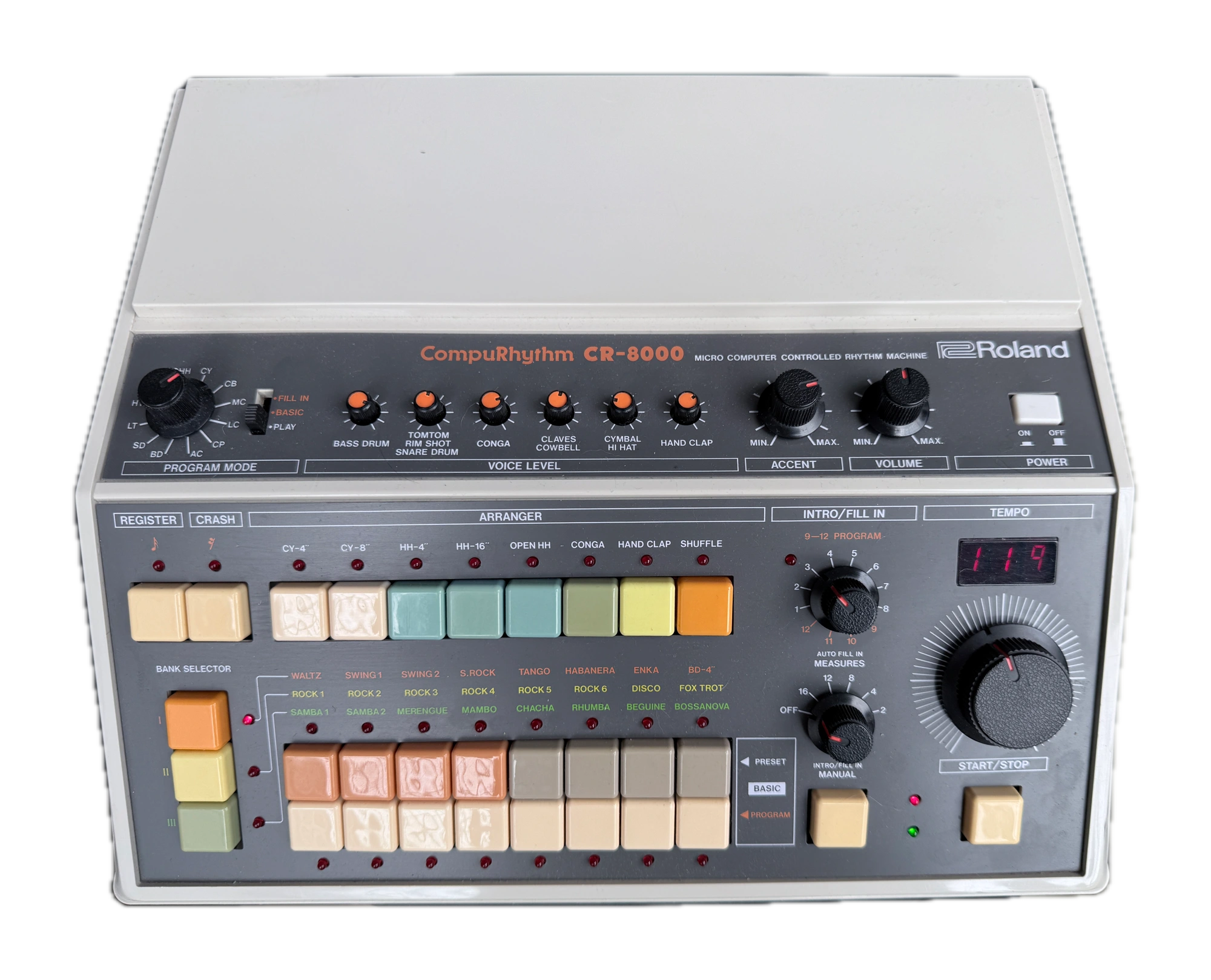
Big Beat Collection Roland CR-8000, complete isolated view
CompuRhythmFILE 006

Roland CompuRhythm CR-8000

CR-8000

Lineage advanceThe last arrangerA dense analogue rhythm orchestra poised on the edge of the step-sequencer age.
Open machine fileOpen file 006 →
007
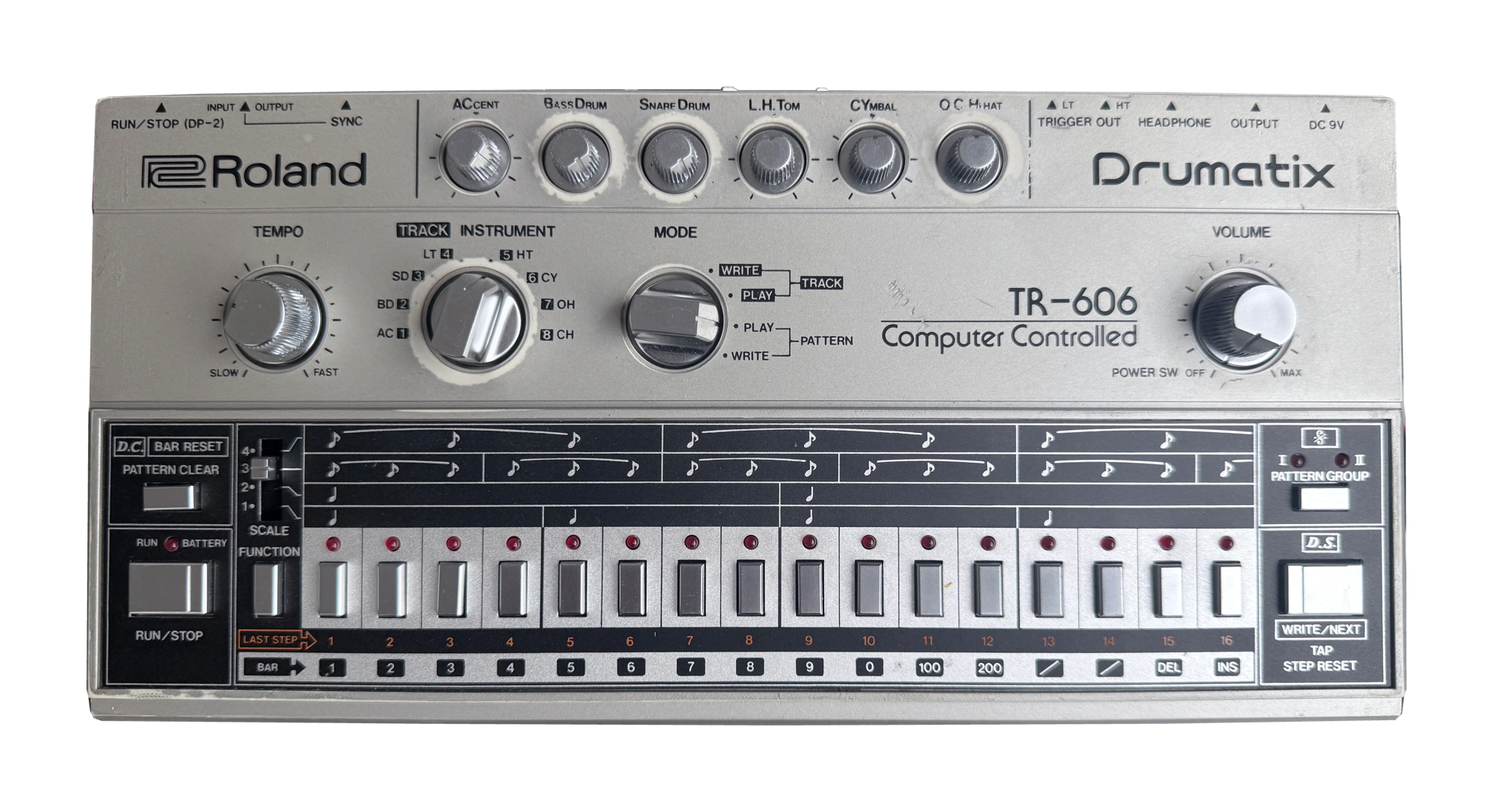
Big Beat Collection Roland TR-606, complete isolated view
DrumatixFILE 007

Roland TR-606 Drumatix

TR-606

Lineage advanceSilver circuitrySmall, sharp and built to travel: a complete rhythm section in a silver case.
Open machine fileOpen file 007 →
008
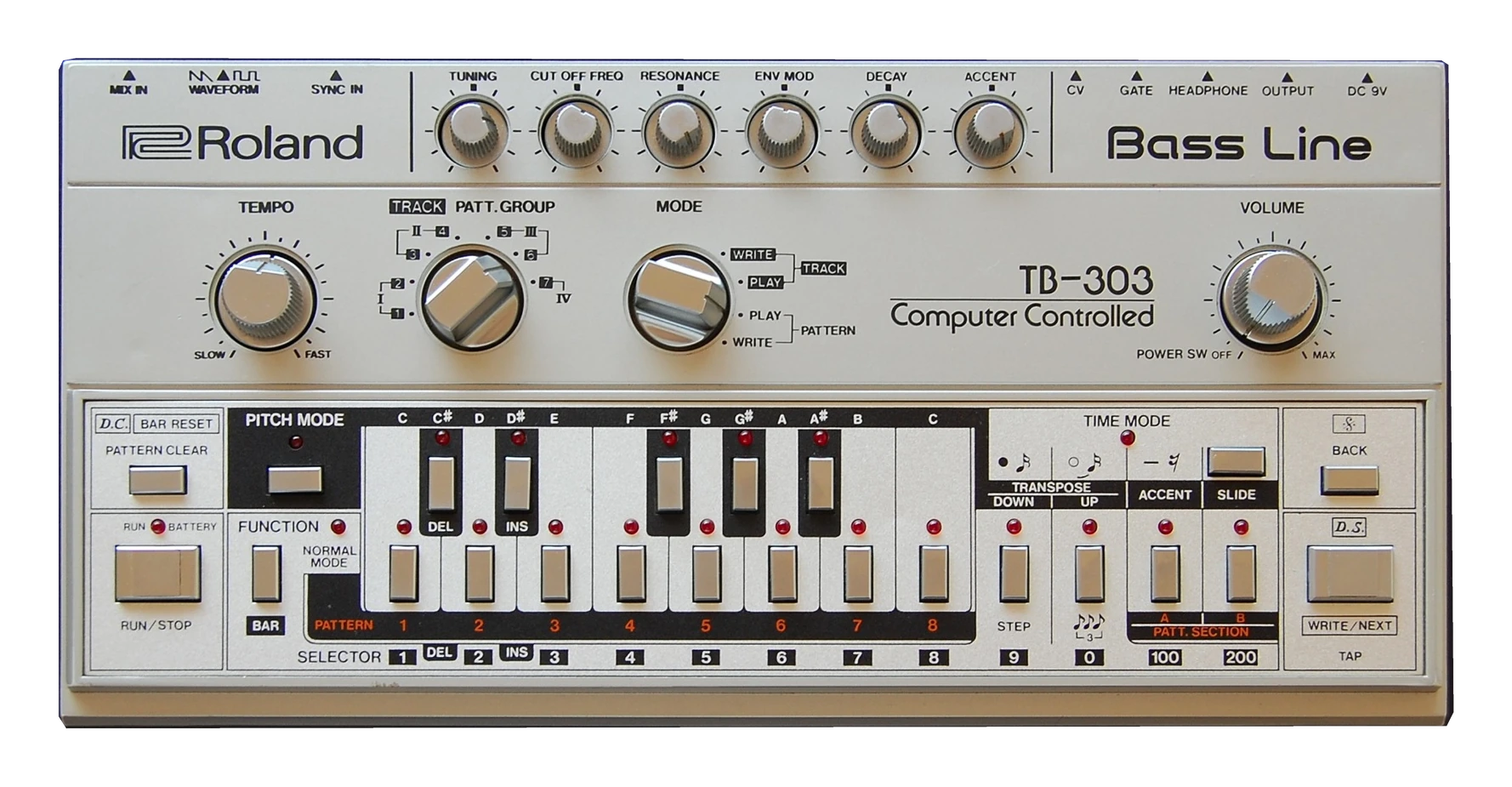
Roland TB-303 Bass Line photographed by Steve Sims, isolated from its background
Bass LineFILE 008

Roland TB-303 Bass Line

TB-303

Lineage advanceThe beautiful errorA synthetic bassist that escaped its brief and learned to speak in acid.
Open machine fileOpen file 008 →
009
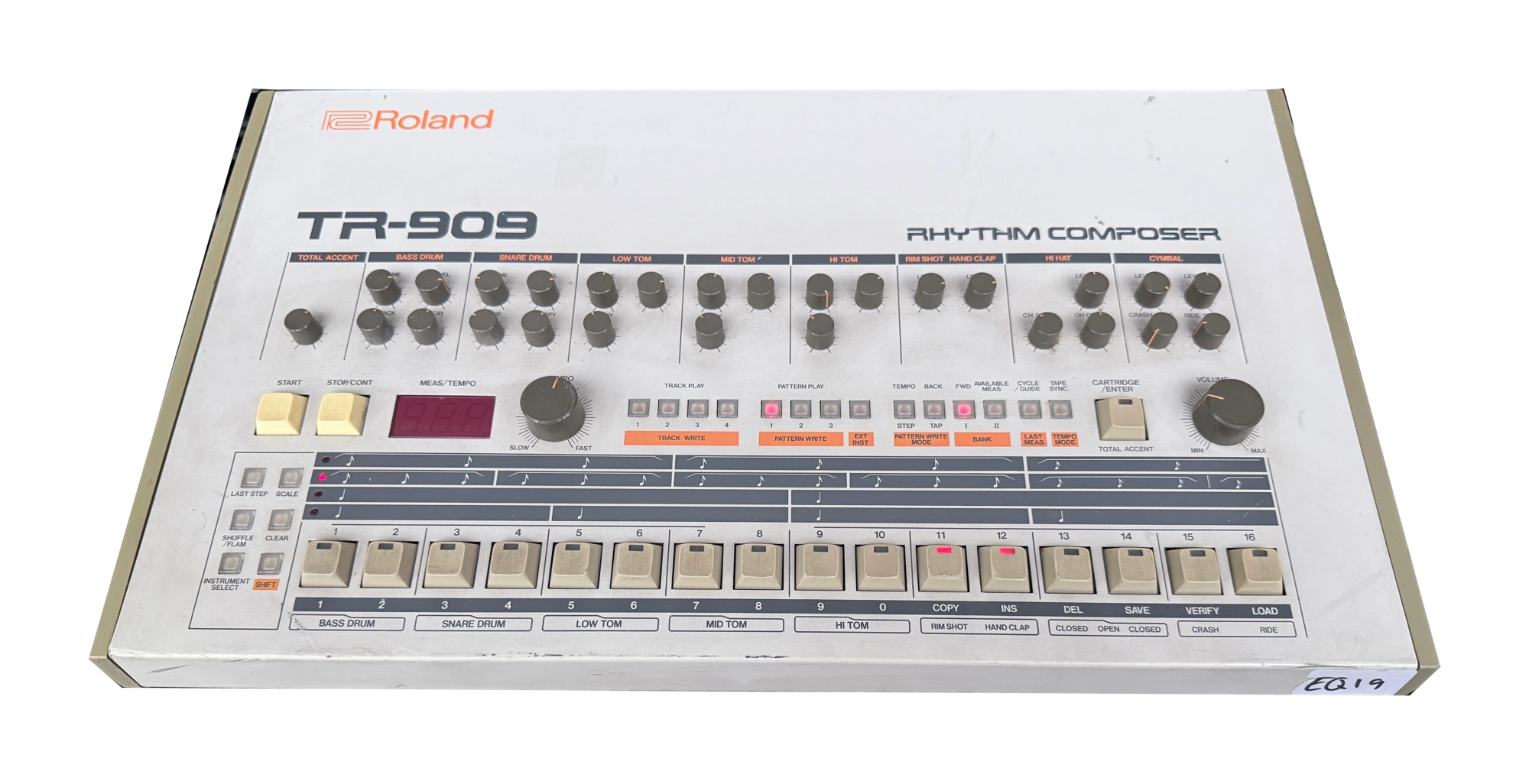
Big Beat Collection Roland TR-909, complete isolated view
Rhythm composerFILE 009

Roland TR-909 Rhythm Composer

TR-909

Lineage advanceHybrid impactAnalogue force, sampled metal and MIDI discipline: the club grid hardens.
Open machine fileOpen file 009 →
010
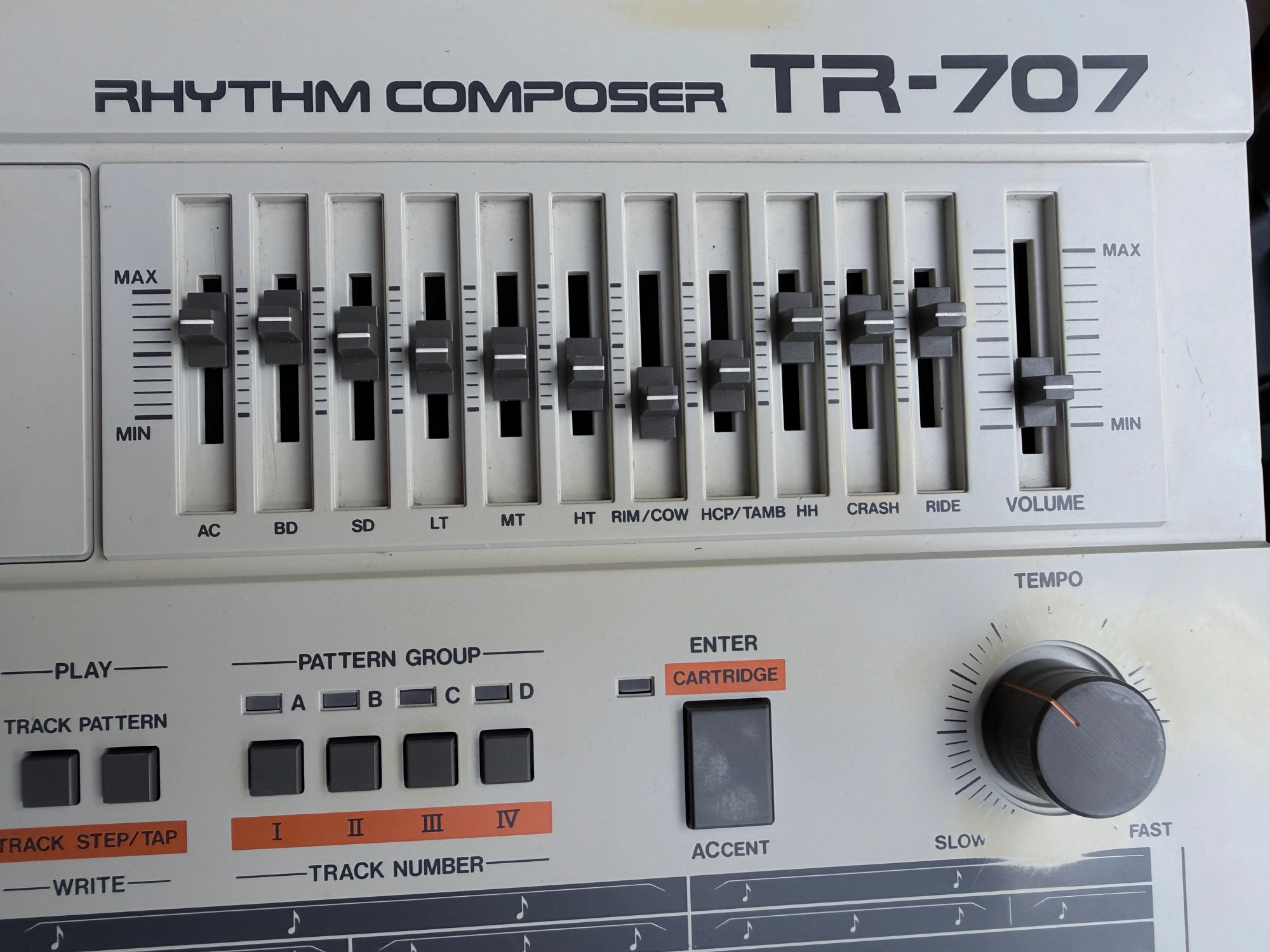
Big Beat Collection Roland TR-707 top-panel detail; not a complete-machine view
Collection photograph · top-panel detailFILE 010

Roland TR-707 Rhythm Composer

TR-707

Lineage advanceThe visible gridFaders, matrix display and sampled clarity make the rhythm readable at a glance.
Open machine fileOpen file 010 →
011
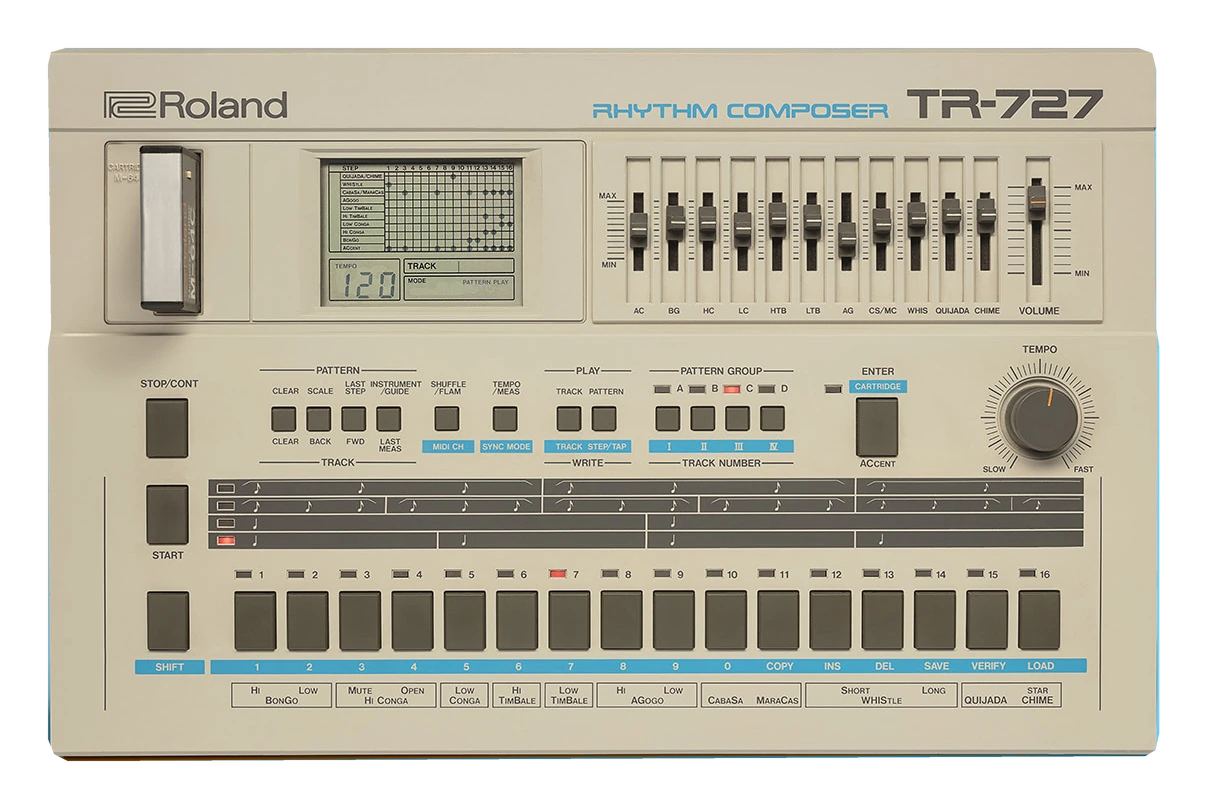
Roland TR-727 in the original manufacturer photograph, background removed
Rhythm composerFILE 011

Roland TR-727 Rhythm Composer

TR-727

Lineage advanceThe second paletteFifteen PCM percussion voices turn the 707's visible grid into a second, synchronised instrument.
Open machine fileOpen file 011 →
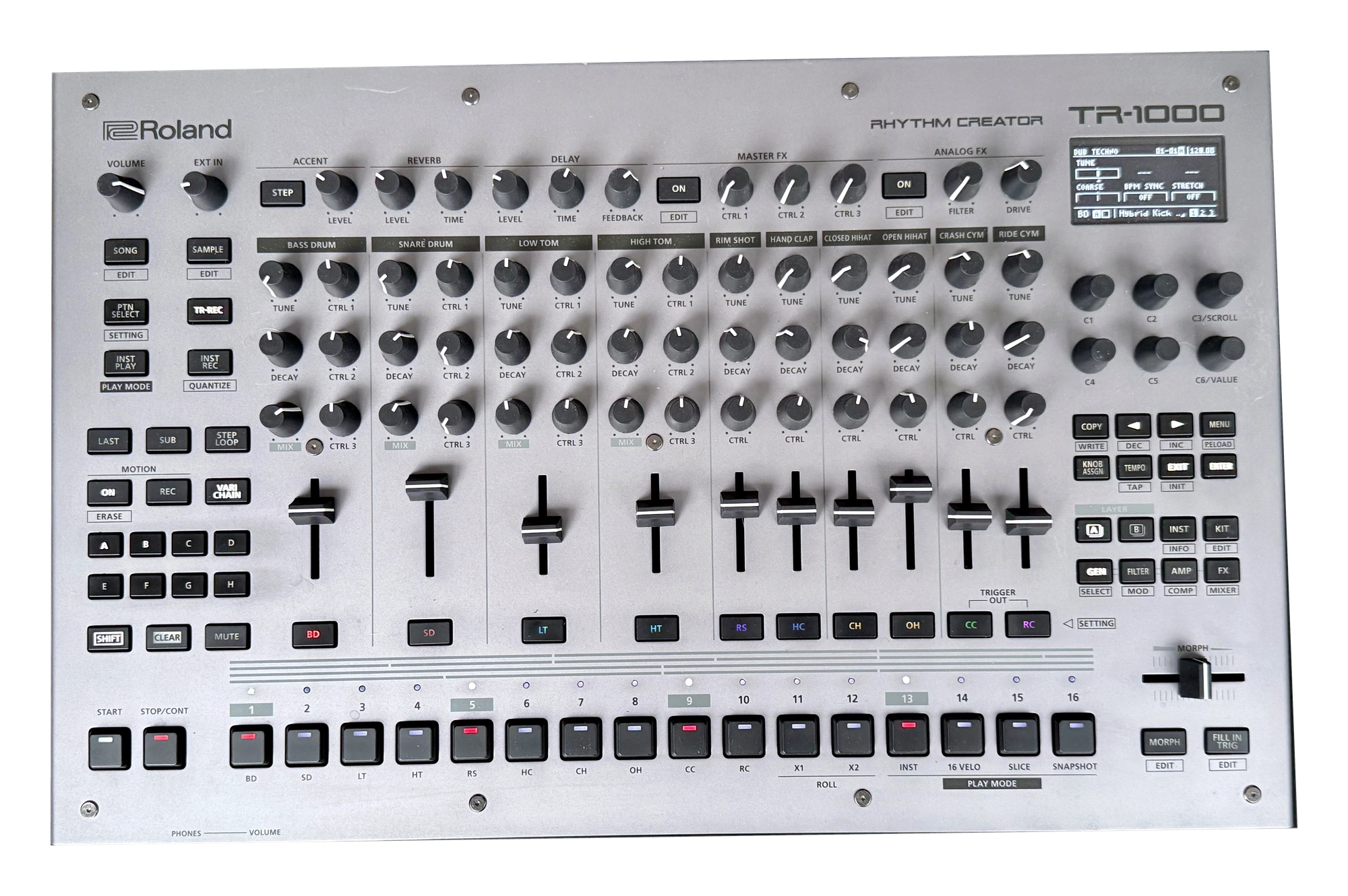
012
Big Beat Collection Roland TR-1000, isolated complete frontal photograph
Rhythm creatorFILE 012

Roland TR-1000 Rhythm Creator

TR-1000

Lineage advanceThe family returnsA contemporary machine built as a conversation with fifty years of electronic rhythm.
Open machine fileOpen file 012 →

02 // HOW WE READ A MACHINE

THE SOUND IS ONLY THE BEGINNING.

Every machine asks for a different route. These four lenses keep the evidence legible without forcing every story into the same shape: the object, its engineering, the way people played it, and the life it found beyond its original brief.

  • 01 Design & historical context
  • 02 Engineering & voice architecture
  • 03 Pattern making & performance
  • 04 Records, scenes & afterlife
OBJECTLook closely.

Controls, materials, industrial form and the physical evidence of use.

CIRCUITFollow the signal.

Voices, clocks, memory, interfaces and the decisions hidden below the panel.

HANDSWatch it change.

Programming, performance, misuse and the working methods musicians invented.

AFTERLIFEHear what followed.

Records, scenes, testimony, contested stories and cultural transmission.

03 // PATTERN BUREAU

DON'T JUST READ IT.
RUN THE SEQUENCE.

A common four-voice reference desk for testing rhythm itself. Choose a voice, place the beats and press run. Machine-file patterns can then show what a particular instrument adds, removes or makes possible.

PATTERN: FOUNDATION / 4 VOICES / 16 STEPS / 118 BPM

A rhythm archive must make rhythm.

Select a voice, switch its steps on or off, then run the sequence. The sounds are generated here in your browser—no sample or external player required.

Practice patterns built to demonstrate the machine’s controls; they are not transcriptions of released recordings.

A plain quarter-note foundation for learning the four voice lanes before changing the pattern.

EDITING: Bass drum

AUDIO STARTS AFTER YOUR FIRST PRESS