BIG BEAT MACHINE FILE // 012

1000

Fifty years of rhythm become one instrument

Roland TR-1000 Rhythm Creator2025Rhythm creator

The Roland TR-1000 Rhythm Creator joins newly built analogue voices, circuit-modelled machines, synthesis, sampling and a performance sequencer in one substantial metal instrument.

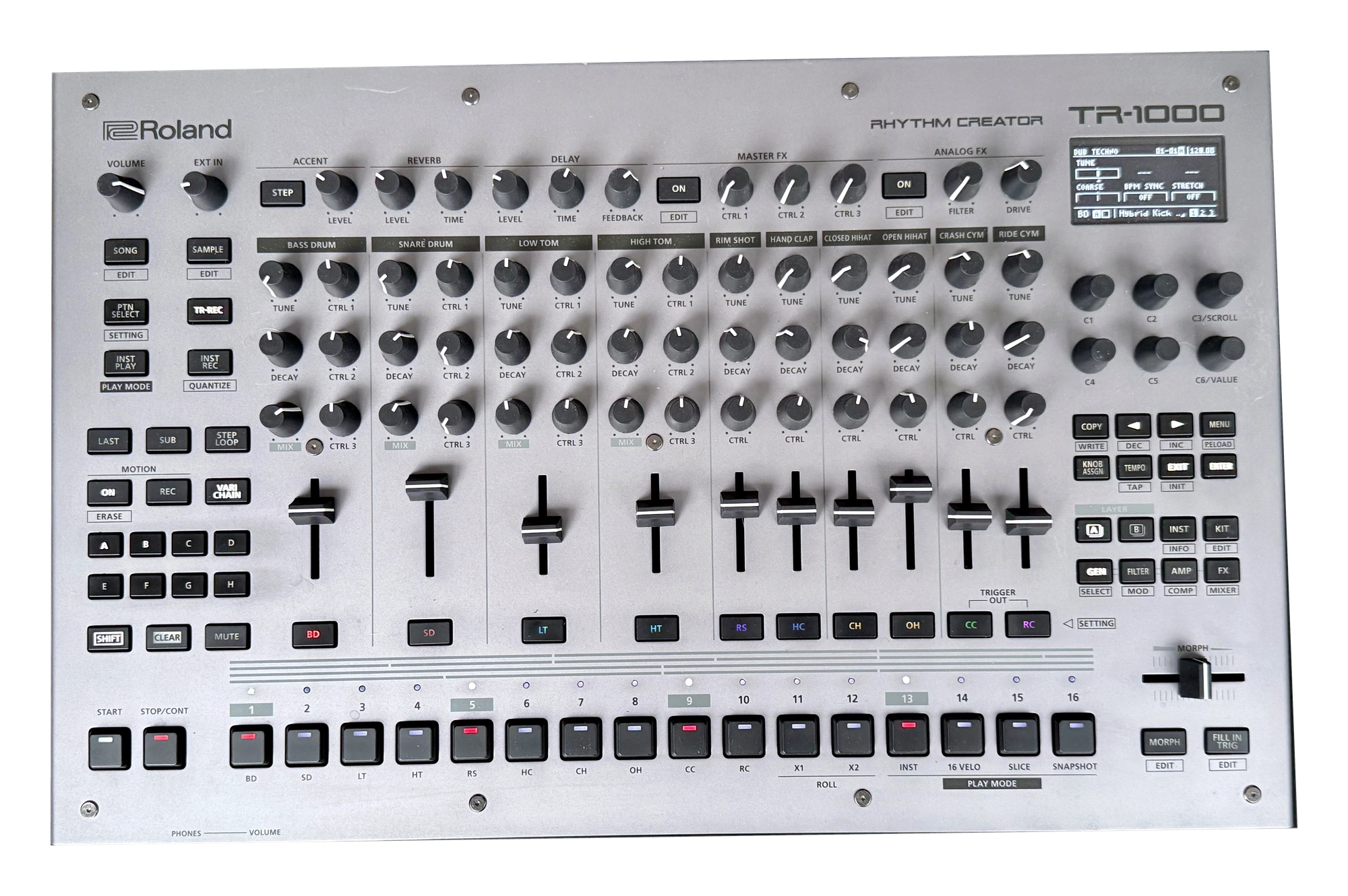
Big Beat Collection Roland TR-1000, isolated complete frontal photograph
PRODUCTIONIntroduced 1 October 2025
SOUND ENGINE16 analogue tones; ACB, FM, VA, PCM and samples
RHYTHM MEMORY128 patterns per project; 8 variations and 4 fills each
More facts, listening references & sources
PERIOD PRICEUS$2,699.99 at launch
LINEAGE ADVANCEThe modern flagship places analogue circuitry, modelled Roland voices, PCM, FM, virtual analogue and user sampling inside one performance instrument.
WHAT THE PLAYER GAINSA pattern can hold variations, fills, motion, probability, sampling and effects, while the Morph control moves several chosen parameters as one playable gesture.
NOTABLE USERSKuniyuki Takahashi · Kaitlyn Aurelia Smith · The Egyptian Lover
START LISTENINGKuniyuki — TR-1000 performance · Kaitlyn Aurelia Smith — TR-1000 performance · The Egyptian Lover — TR-1000 performance
Sources for the artists and listening references

Artist accounts, historical attributions and performance films establish different things. These notes explain the basis for each reference.

PAGE 01 // ORIGIN // 2025

The first new analogue TR in more than forty years

The Roland TR-1000 Rhythm Creator begins with rebuilt 808 and 909 circuits, then places them inside a machine made for sampling, synthesis, detailed sequencing and live transformation.

The analogue section contains ten tones derived from the TR-808 and six from the TR-909. Roland rebuilt the circuits with selected modern components and extended their parameter range and dynamic response. The intention was not to conceal the old machines inside a new case; it was to make their electrical behaviour one source among several.

The division is exact. The 808 side supplies bass drum, snare, low and high tom, rim shot, hand clap, closed and open hi-hat, cymbal and cowbell. The 909 side supplies bass drum, snare, low and high tom, rim shot and hand clap. The 909's hi-hats, crash and ride do not appear in this analogue list: the original 909 generated those metallic voices from sampled waveforms, and the TR-1000 carries them forward as 9X ACB generators instead.

Around those circuits sit component-modelled ACB voices, FM and virtual-analogue synthesis, PCM instruments and a stereo sampler. Four tracks can layer two complete instruments, while six remain single-instrument tracks. The familiar row of sixteen keys survives, but almost everything above it asks the player to design rather than merely select.

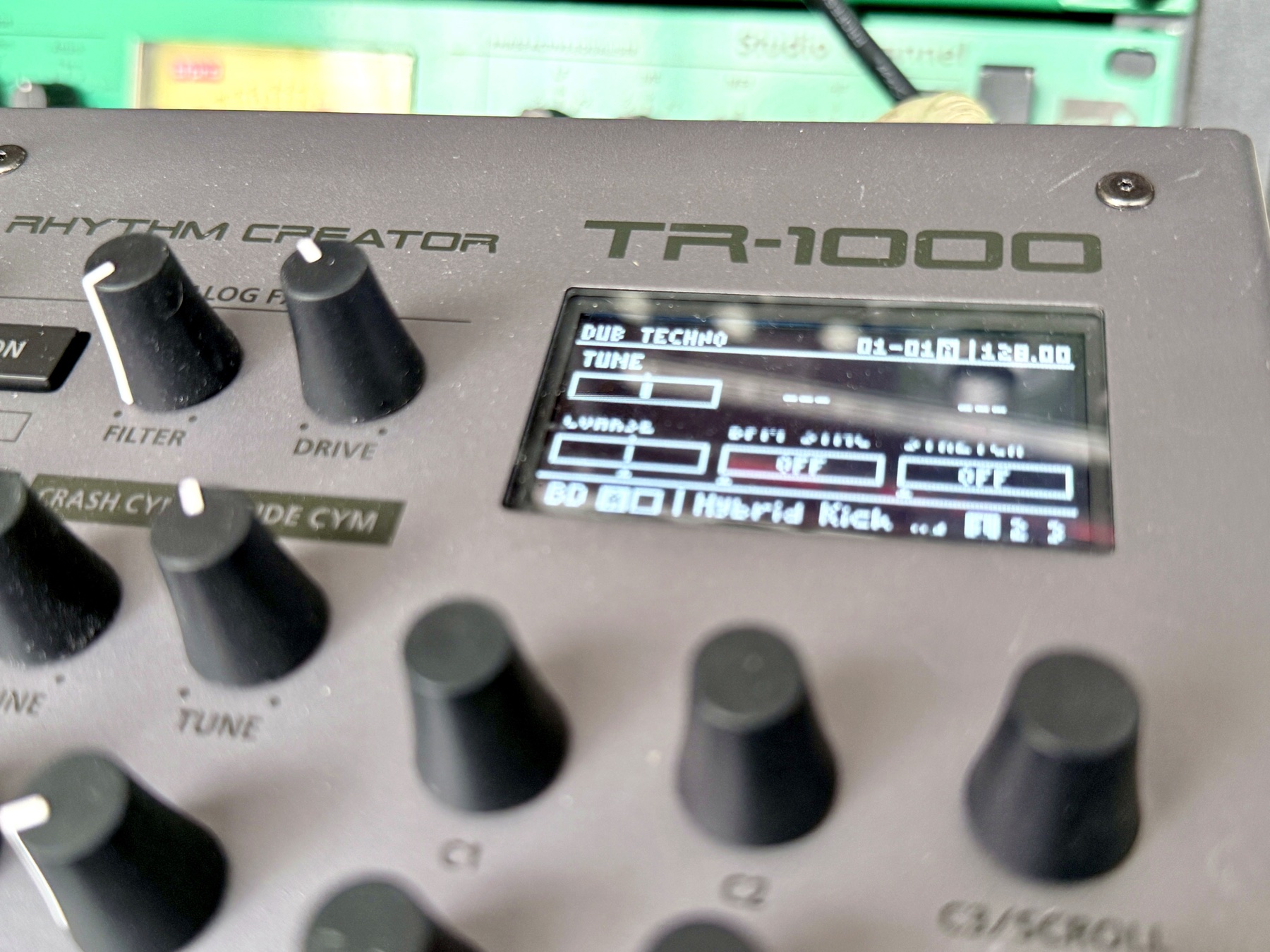
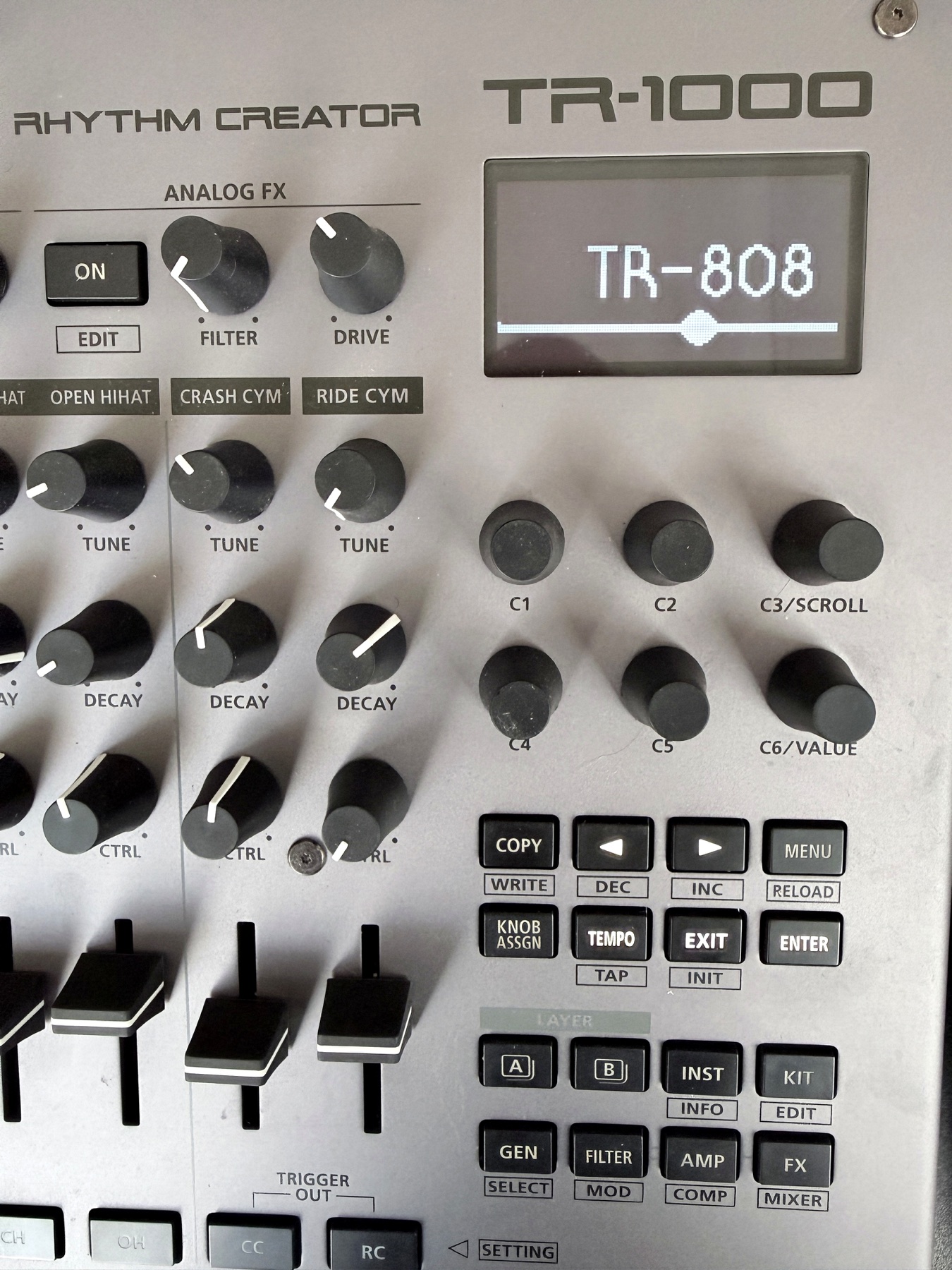
TR-1000 display and generator controls showing a hybrid kick instrument
THE DISPLAY NAMES THE SOURCE; THE CONTROLS BUILD THE INSTRUMENT
Open the deeper story +

Why the analogue voices are not simple replicas

Roland's engineers did not simply copy the service diagrams circulating online. Development lead Daichi Tawara has explained that errors in those documents produce audibly wrong results, so the team compared original instruments and corrected the circuit understanding before rebuilding it with available components.

Original 808s and 909s also vary through component tolerance, production changes and forty years of ageing. Roland compared several machines and worked with musicians to identify a useful centre rather than claiming that one survivor represented the entire population. Wider tuning, longer decay and stronger velocity response were then added for a modern playing context.

The official generator list is the quickest way to understand the claim. Entries 0001–0010 are the ten 808-derived analogue generators; entries 0011–0016 are the six 909-derived circuits. The next entries change category to ACB. That boundary matters because it describes two different forms of inheritance inside the same instrument: rebuilt electronics on one side, component-level behavioural modelling on the other.

That makes each analogue voice a physical circuit under digital control. Project recall can store its parameter settings, but repeated hits still carry the small variations of an electrical instrument. The digital layer recalls the position; the circuit generates the event.

Open Roland's complete TR-1000 generator and instrument list ↗
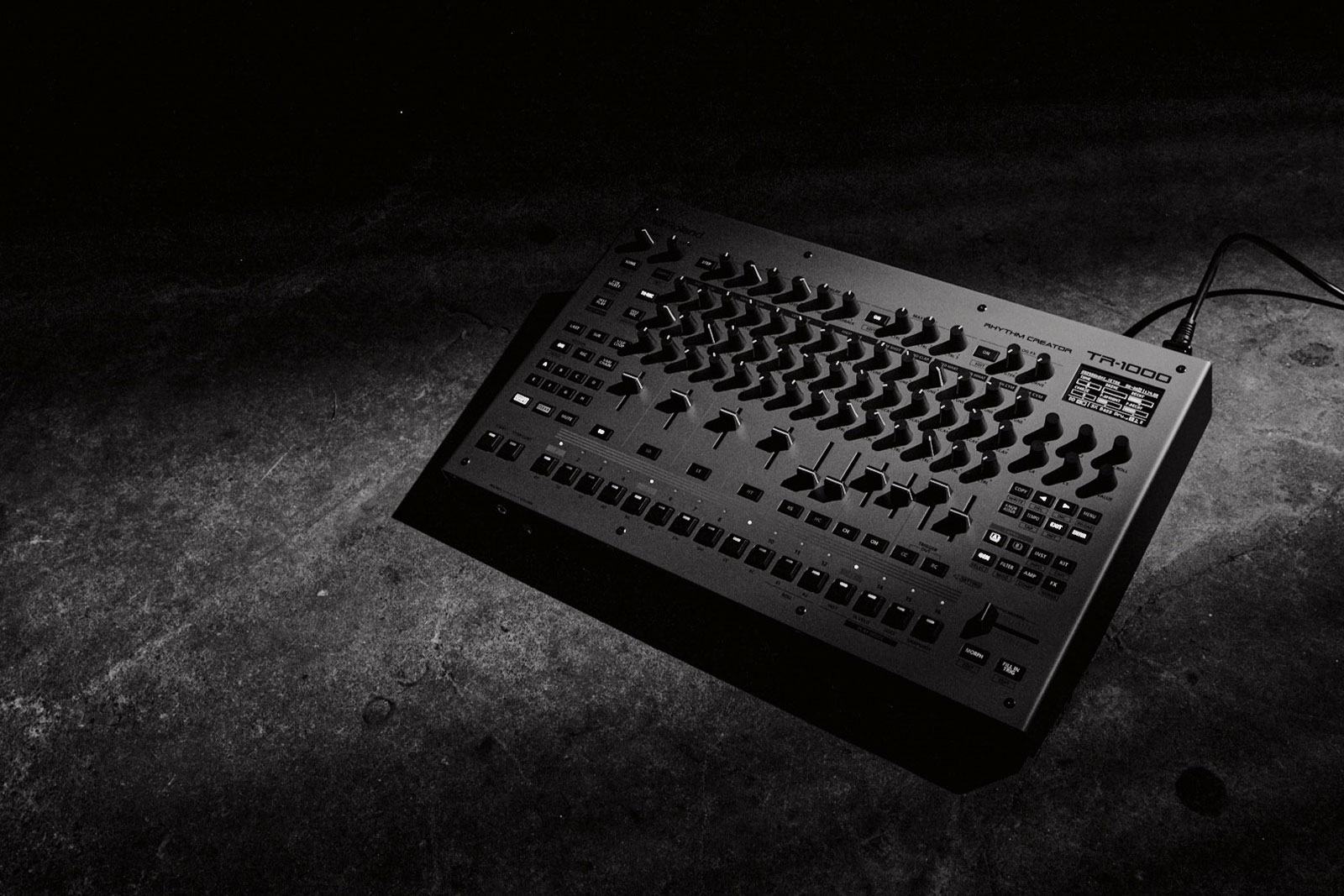
Roland's 2025 launch photograph of the TR-1000 Rhythm Creator
ROLAND TR-1000 LAUNCH IMAGE // 1 OCTOBER 2025DOCUMENTARY SOURCE

THE ARTIST BRIEF

Keep the familiar controls. Remove the guardrails.

Roland tested early versions with artists in Detroit, Japan, Berlin and the UK. Underground Resistance, BMG, Aux 88, Satoshi Tomiie, Kuniyuki Takahashi, Hisashi Saito, Overmono, Floating Points and others pushed the designers toward a machine that could begin with recognisable TR gestures and then travel somewhere less polite.

That input changed physical and musical details. Non-destructive sample slicing was added after repeated requests to combine breaks with analogue and digital tones. The Morph fader was moved away from the step row after Shawn Rudiman pointed out that players could hit it accidentally while dragging a finger across the sequencer.

Continue the story +

Four ways the musicians changed the finished machine

Sound range. In Detroit, musicians connected with Underground Resistance, BMG and Aux 88 kept asking Roland to let the sounds travel beyond a polished imitation of an old drum machine. The answer appears in the extended analogue controls and in digital 8X and 9X generators that can separate familiar voices into editable layers. The new instrument can begin at an 808 or 909 reference point without being required to remain there.

Sampling. Early prototypes did not include non-destructive sample slicing. Artists repeatedly asked for a quick way to chop breaks and combine them with the analogue and digital engines, so slicing became part of the production instrument. That change matters more than a long feature list: it allows recorded rhythm and generated rhythm to occupy the same kit without committing the source file to a destructive edit.

The hand. Shawn Rudiman, a Pittsburgh techno producer and live performer, noticed that an early Morph fader sat directly in line with the sixteen step keys. Players often sweep a finger across that row to enter a run of hits; in that position the fader could be moved accidentally. Roland relocated it. The finished panel therefore contains a physical record of somebody actually programming the prototype at speed.

The look. Underground Resistance argued for a darker, more restrained instrument instead of bright, attention-seeking colour. Satoshi Tomiie, Kuniyuki Takahashi and Hisashi Saito spent extended sessions testing early sound-engine prototypes in Japan, while Overmono and Floating Points were among the artists shown working versions in Europe. These were not celebrity names added after launch: the contrasting studio habits gave Roland different tests for sound, speed and legibility.

The family closes a circle. One of the TR-1000 development leaders, Ishimine, had led the TR-727 project four decades earlier. At Roland's Hamamatsu factory the new team compared four or five surviving machines in listening-room sessions before choosing the direction of the rebuilt analogue voices. The result is not a claim that every old 808 or 909 sounds alike; it is a designed centre with enough range to move away from it.

Read Roland's development interview with Peter Brown ↗Read Daichi Tawara on rebuilding the analogue sound ↗
01UNDERGROUND RESISTANCE02SATOSHI TOMIIE03KUNIYUKI TAKAHASHI04SHAWN RUDIMAN

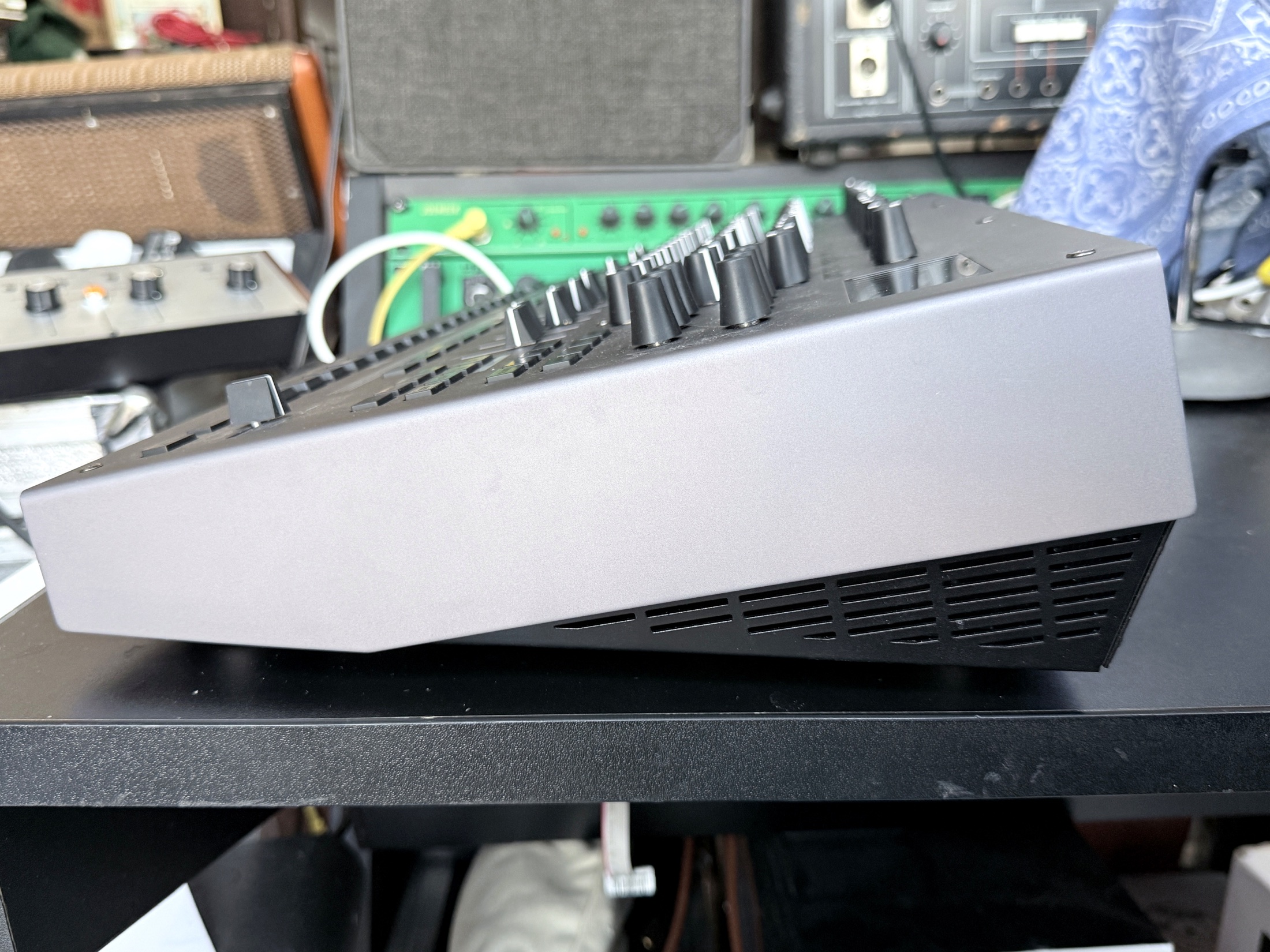
Side profile of the TR-1000 showing its metal chassis and angled control surface
A DEEP CONTROL SURFACE IN A STEEL CHASSIS

PAGE 02 // WORKFLOW // HIERARCHY

Learn the containers and the panel begins to make sense

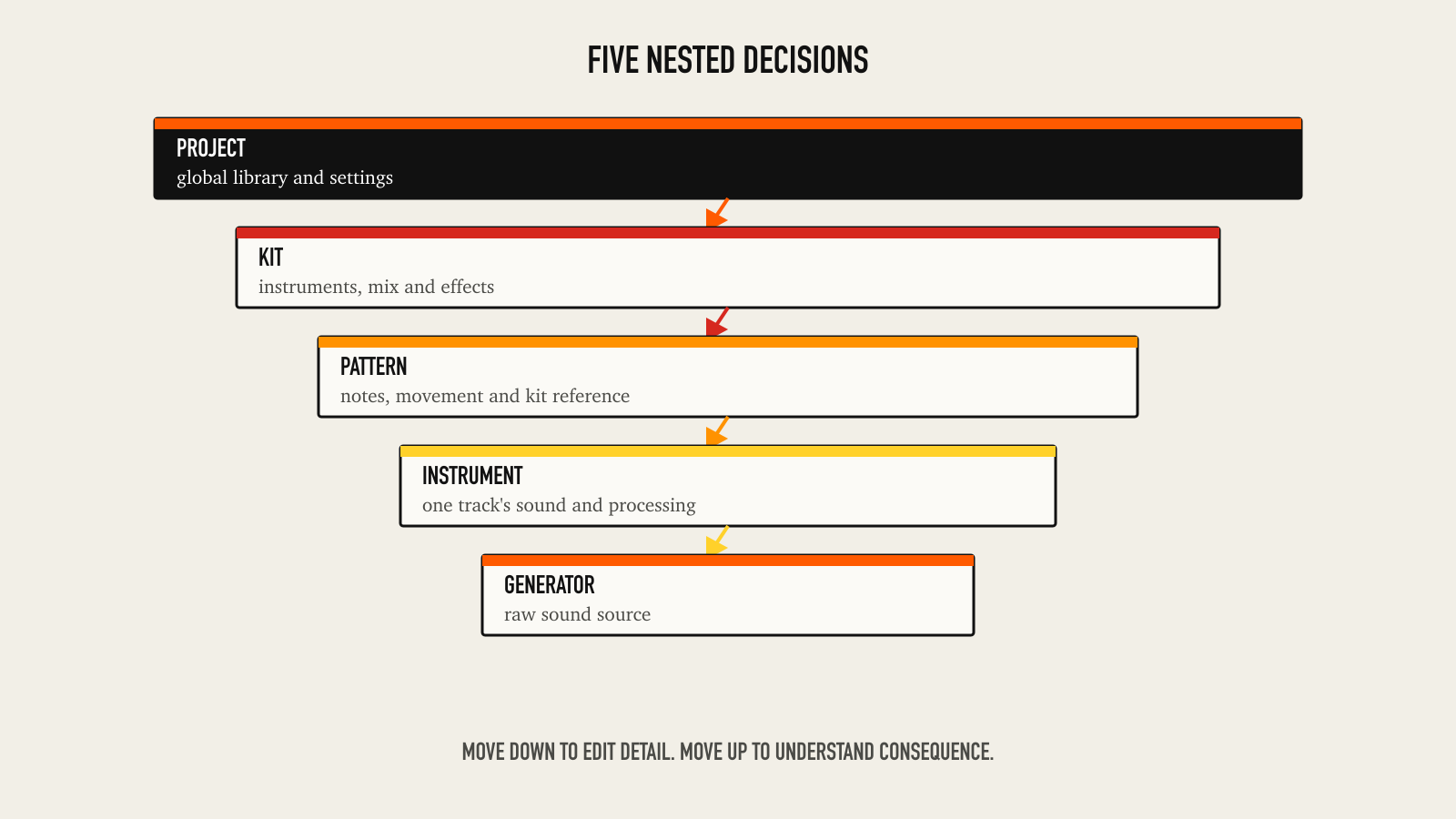
A project contains kits and patterns; a kit contains instruments; an instrument contains a generator and everything that shapes it.

Most early confusion comes from editing the right parameter at the wrong level. A pattern stores notes and motion, but it points to a kit for its sound. The kit contains ten instruments and the shared mix and effects. Each instrument carries its generator, filter, amp, compressor, insert effect and knob map.

The practical consequence is simple: save at the level you changed. Writing a pattern preserves the rhythm, not every alteration made to the kit beneath it. The TR-1000 does not quietly autosave the session, so deliberate writing and project backups are part of using the instrument safely.

Diagram showing the TR-1000 hierarchy from project to generator
PROJECT → KIT → PATTERN → INSTRUMENT → GENERATOR
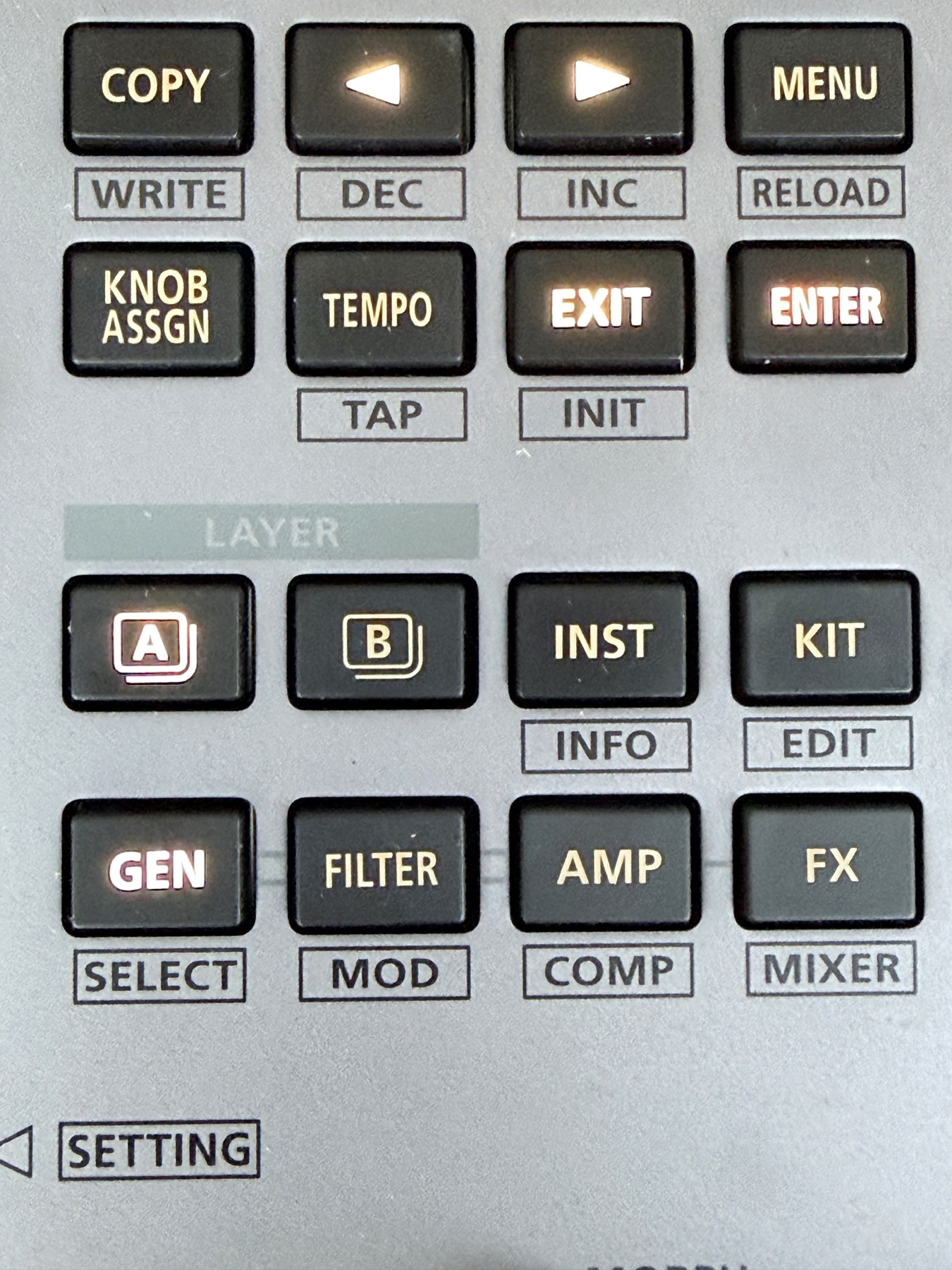
TR-1000 buttons for instrument, kit, generator, filter, amplifier and effects layers
THE PANEL FOLLOWS THE SAME HIERARCHY
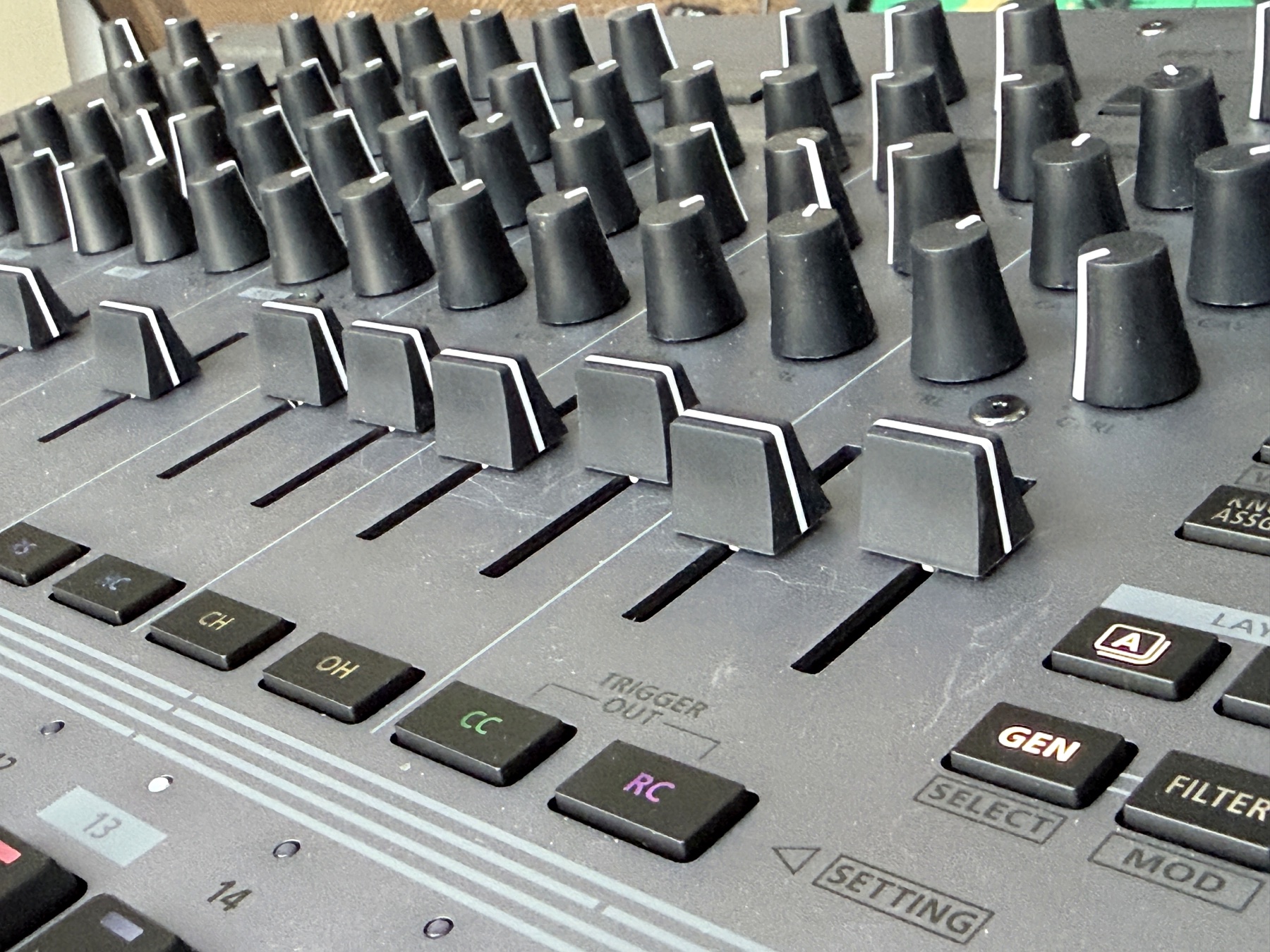
TR-1000 faders and sound controls across the mixer surface
TEN TRACKS REMAIN AVAILABLE TO THE HAND
Open the deeper story +

From power-on to a saved rhythm

Connect the MIX OUT or headphones, press a track key to hear the current instrument, then enter TR-REC. Put bass drum on steps 1, 5, 9 and 13, snare on 5 and 13, and closed hat on the offbeats. That small loop already moves through three levels: pattern notes, kit instruments and generator sound.

Select a track and open GEN to change its raw source. Then use FILTER, AMP and FX to shape that source into an instrument. A layer track can hold A and B instruments independently; use one for the transient and the other for body, or program them as two related voices sharing one lane.

When the pattern and kit are worth keeping, write them explicitly with SHIFT and COPY, then back up the project before a system update. The update procedure performs a factory reset, so backup and restore are not optional housekeeping.

Open the TR-1000 Owner's Manual ↗
01020304050607080910111213141516

PAGE 03 // SOUND // SIX GENERATOR ROUTES

Choose a source for what it does, not what it is called

Analogue circuits, ACB models, FM percussion, virtual-analogue oscillators, PCM instruments and user samples answer different musical problems.

The 16 analogue tones supply physical 808 and 909 behaviour. The 75 ACB tones include other Roland machines and twenty-one circuit-bent 8X and 9X models that expose unfamiliar parts of familiar circuits. Seven FM models and six virtual-analogue oscillators move into tuned percussion, bass and synthetic texture. PCM and sampling provide recorded attacks, breaks and anything brought in from outside the box.

Four layer tracks let two full instruments occupy the same lane. Layering works when each source has a job: one provides the transient, another the low body, noise or room. Align envelopes and polarity before processing, because two strong layers can still cancel or blur one another.

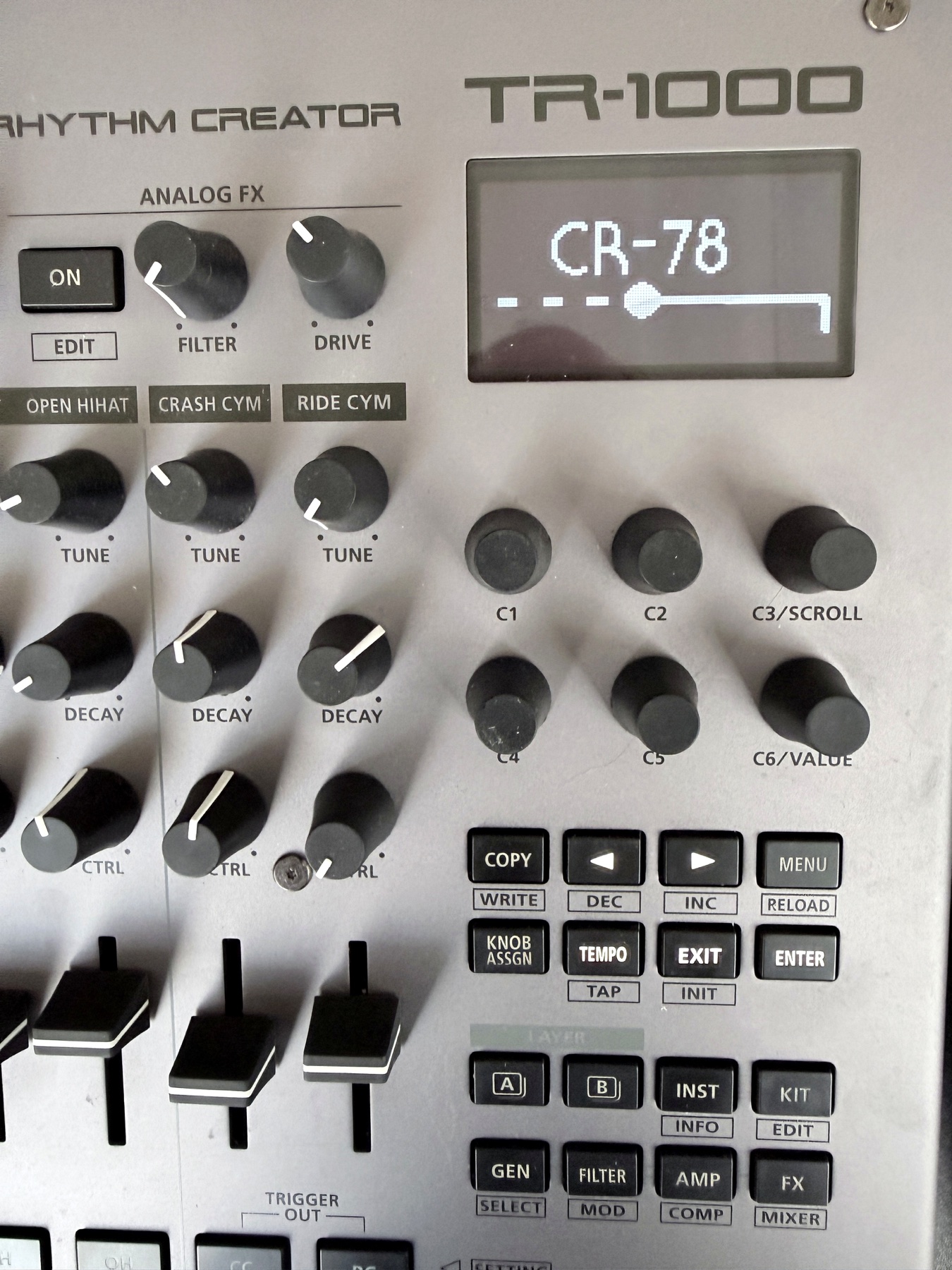
TR-1000 screen showing a CR-78 ACB generator
THE CR-78 RETURNS AS AN ACB GENERATOR
TR-1000 screen showing a TR-808 generator
THE TR-808 RETURNS AS CIRCUIT AND MODEL
Open the deeper story +

A practical guide to the generator families

Start with analogue when hit-to-hit circuit behaviour and direct dynamic response are central. Use ACB when you need several related classic voices in one kit, complete recall or the extreme Reformer, Excite, Body and coarse-tuning controls of the X models. The digital models are not the consolation prize: they reach structures the fixed hardware circuit cannot expose.

FM is strongest when ratio, feedback and pitch-envelope movement create a metallic or tuned sound. Small whole-number relationships produce more harmonic results; less regular ratios become clangorous. Virtual analogue begins with sine, triangle, square, saw, supersaw or noise and then relies on the ordinary filter and amplifier chain to become a bass, stab, riser or percussion voice.

PCM offers a finished recorded sound quickly. The sampler extends that route with stereo recording and resampling, BPM synchronisation, time-stretching and non-destructive slicing. Preserve the source file and treat slice points, direction, envelope and processing as part of the instrument rather than assuming the sample alone explains the result.

Version 1.20 added dedicated 808 and 909 Bass Line generators. They supply pitched monophonic sources whose squelch comes from the instrument's filter stage. Map cutoff and resonance to adjacent controls, sequence pitch changes, and the drum track becomes a playable bass voice through an architecture and programming method distinct from the TB-303.

ENGINEERING // THE INSTRUMENT CHAIN

A generator is only the beginning of the sound.

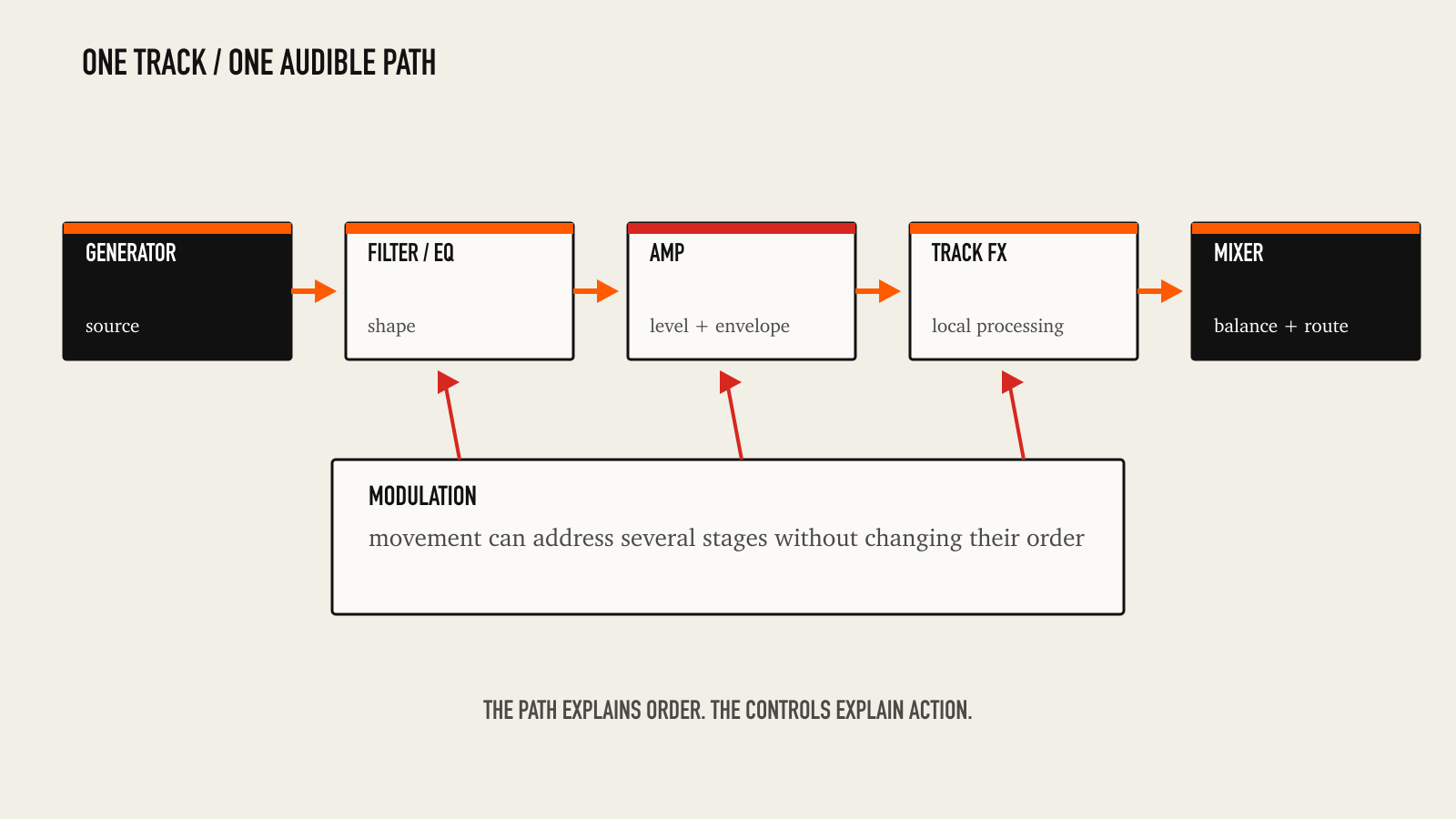
Every track is a small synthesizer: a generator enters a filter or equaliser, an amplifier and envelope, a compressor, a local effect and the mixer. Modulation can move several stages, so the complete instrument—not merely the source tone—is the repeatable object.

TR-1000 signal path from generator through filter, amplifier, track effects and mixer
ONE TRACK // ONE AUDIBLE PATHPRIMARY TECHNICAL EVIDENCE
Read the circuit in depth +

Follow the sound from source to output

The generator supplies the raw event. Analogue, ACB, FM, virtual analogue, PCM and user samples begin differently, but every family then passes through the same instrument architecture. The filter can be a state-variable low-pass, high-pass or band-pass design, or a four-band equaliser. Its envelope can work in milliseconds or in step-related time, allowing a sweep to remain rhythmically locked when tempo changes.

The amplifier offers a conventional envelope or transient shaping. The per-instrument compressor includes wet/dry balance, so parallel compression can be built into a single kick or snare. Seventeen insert effects then provide drive, saturation, crushing, filtering, modulation, widening and delay before the mixer sets level, pan, sends, side-chain depth and output route.

The LFO can run freely, synchronize to musical time or retrigger with each hit. Motion recording captures assigned knob movement; snapshots recall prepared knob states; Morph travels continuously between mapped states. These systems all change a track, but they do different jobs. Reproducing a sound therefore means saving or documenting the whole instrument chain and its assignments, not simply writing down ‘808 kick.’

For diagnosis, follow the same order. Confirm that the generator sounds, neutralise the filter and amplifier, bypass compression and insert effects, then inspect the mixer and output assignment. If the main mix works but an individual output is silent, check routing before assuming that the voice circuit has failed.

Open Roland's TR-1000 Reference Manual ↗

PAGE 04 // SEQUENCER // MOVEMENT

The sixteen-step row now holds several kinds of time

Classic TR-REC remains immediate, but each track can cycle, rotate, change direction, shift timing, record motion and decide whether a step plays at all.

A pattern contains eight variations and four fills across ten tracks. Per-track length and direction allow a percussion cycle to move against a stable kick and snare. Probability, cycle conditions and off-grid timing create variation without requiring the entire pattern to change.

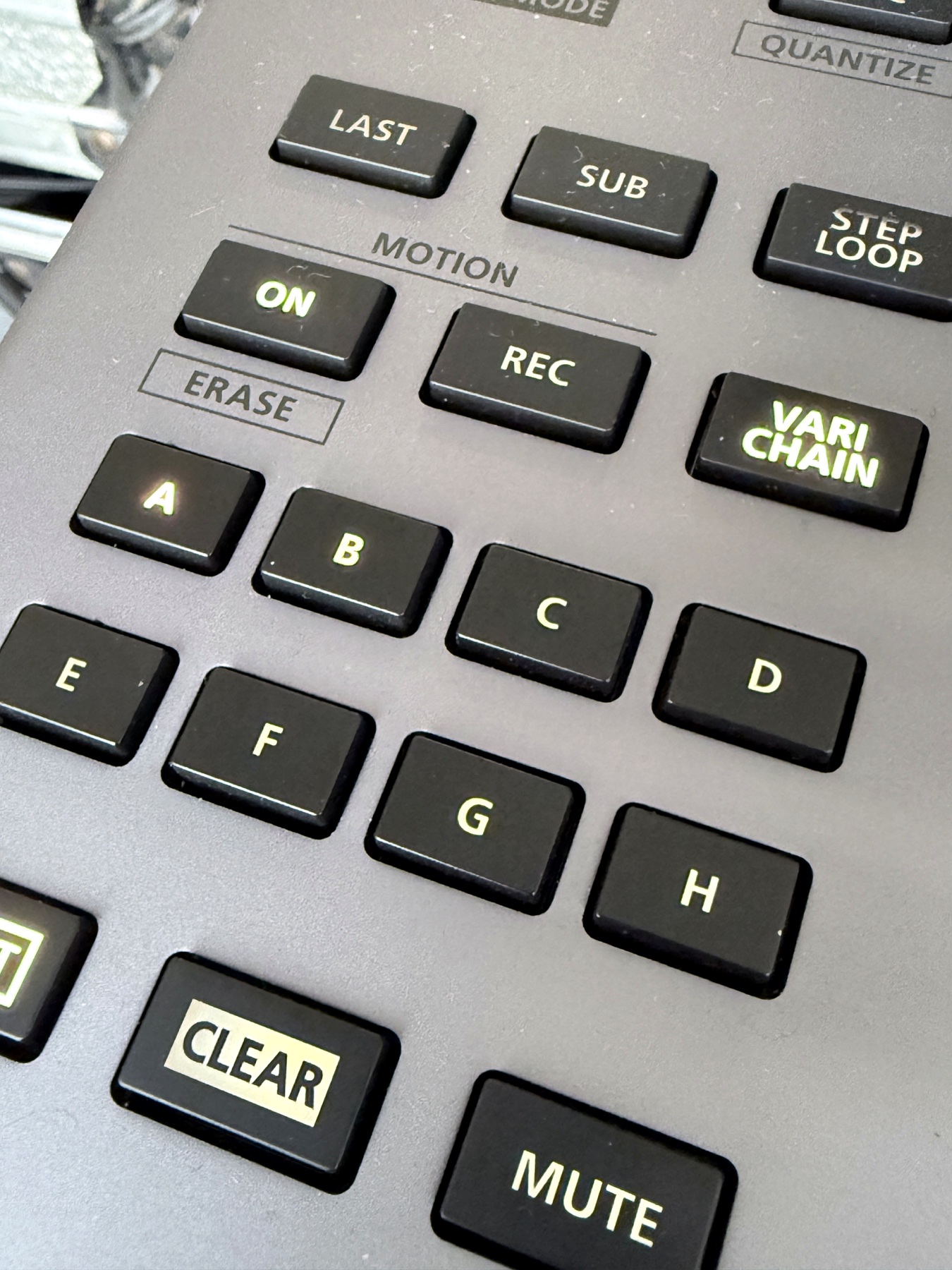
Motion, snapshots and Morph are separate performance systems. Motion records parameter movement through time. A snapshot recalls a prepared set of knob positions instantly. Morph interpolates between assigned states as the fader travels. Used together they give the pattern memory, gesture and continuous change.

TR-1000 variation, motion and step-loop controls
VARIATIONS ORGANISE FORM; MOTION RECORDS CHANGE
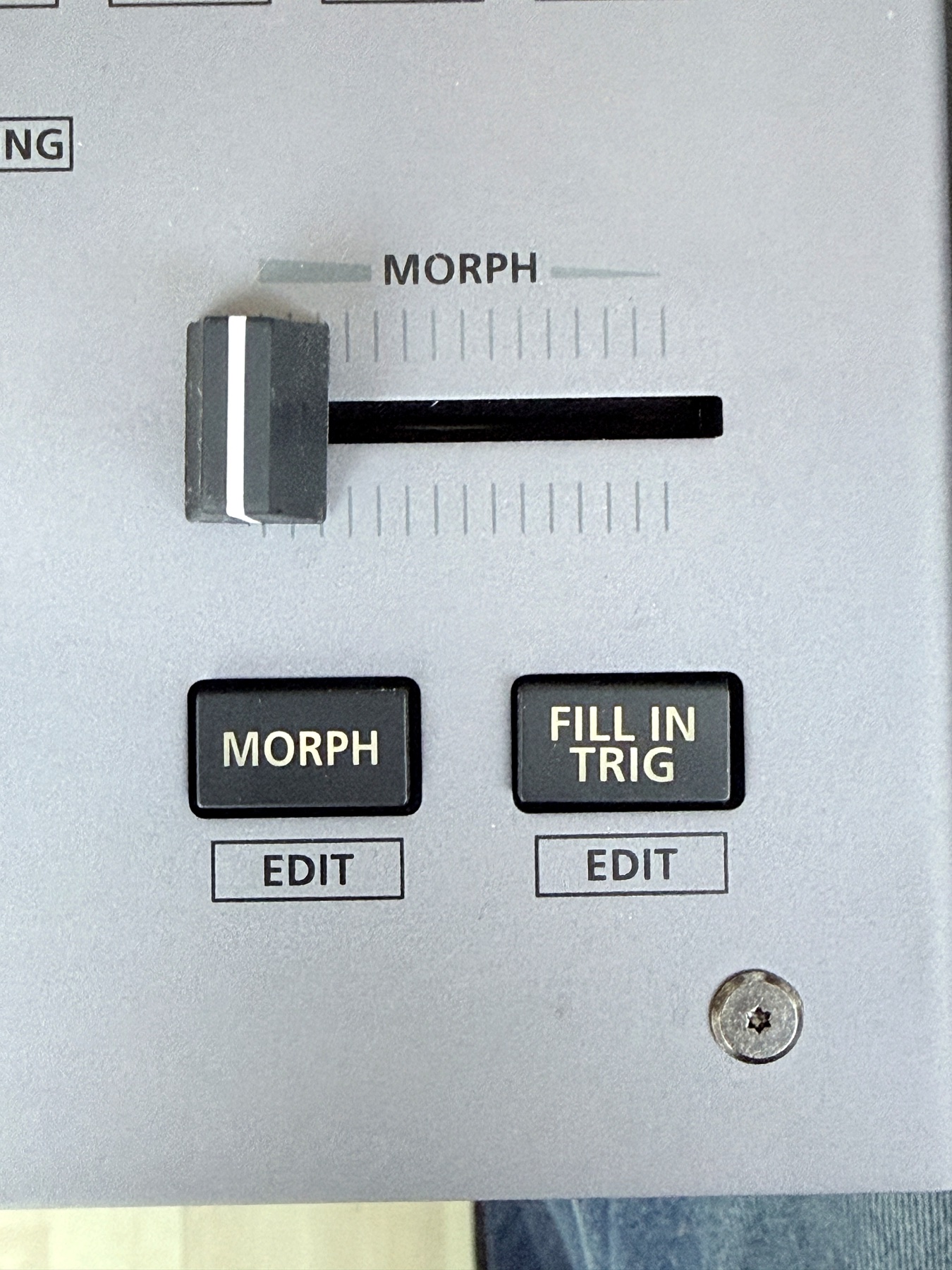
TR-1000 Morph fader and fill trigger controls
MORPH MAKES THE ROUTE BETWEEN STATES PLAYABLE
Open the deeper story +

Build movement at four scales

At the step level, decide whether a hit occurs, how hard it lands and whether it should be nudged away from the grid. At the track level, choose length, start point and direction. At the variation level, write related sections rather than eight disconnected patterns. Song mode can then place patterns and variations into a hands-free arrangement.

For a clear first experiment, keep kick and snare at sixteen steps and shorten one percussion track to twelve. The two cycles meet every forty-eight steps, producing development without added notes. Then use a second variation for an intentional structural change rather than piling more probability onto the first.

Map only the parameters that need to be performed. The same physical knob can address up to four targets, but a smaller map becomes muscle memory more quickly. Audition a Morph slowly from end to end: if an assigned parameter passes through an unusable middle, the transition is not yet composed.

PAGE 05 // STUDIO // CONNECTION

The rear panel is part mixer, part clock hub and part modular bridge

Ten assignable individual outputs, analogue effects returns, DIN sync, MIDI, USB audio, trigger I/O and filter CV make the TR-1000 a centre rather than an island.

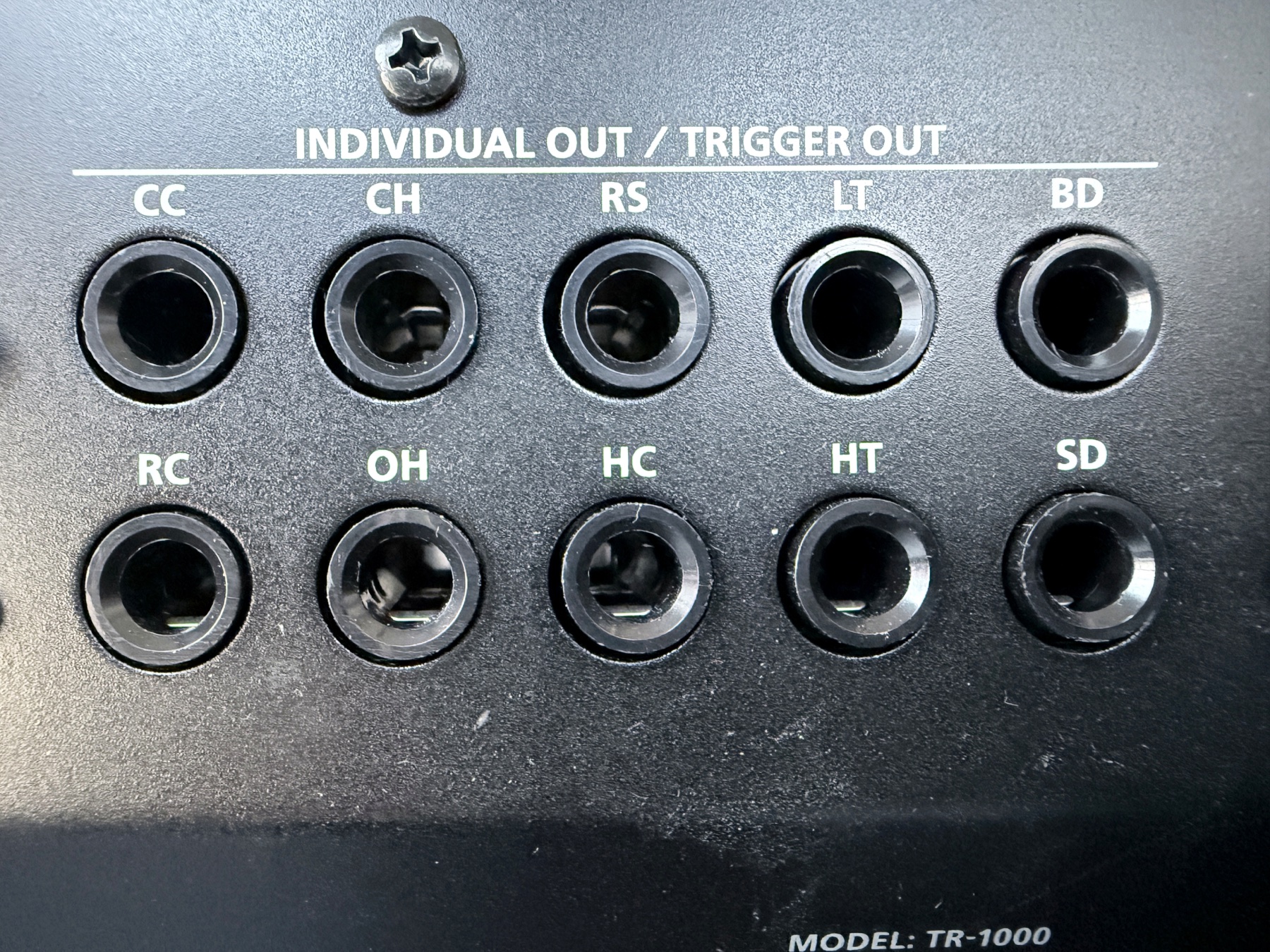
Each of the ten individual jacks can carry a drum voice or act as a trigger output. Separate stereo mix and analogue-effects outputs allow the internal processing paths to reach a desk independently. Dual external inputs can be sampled, mixed or sent through the machine's effects.

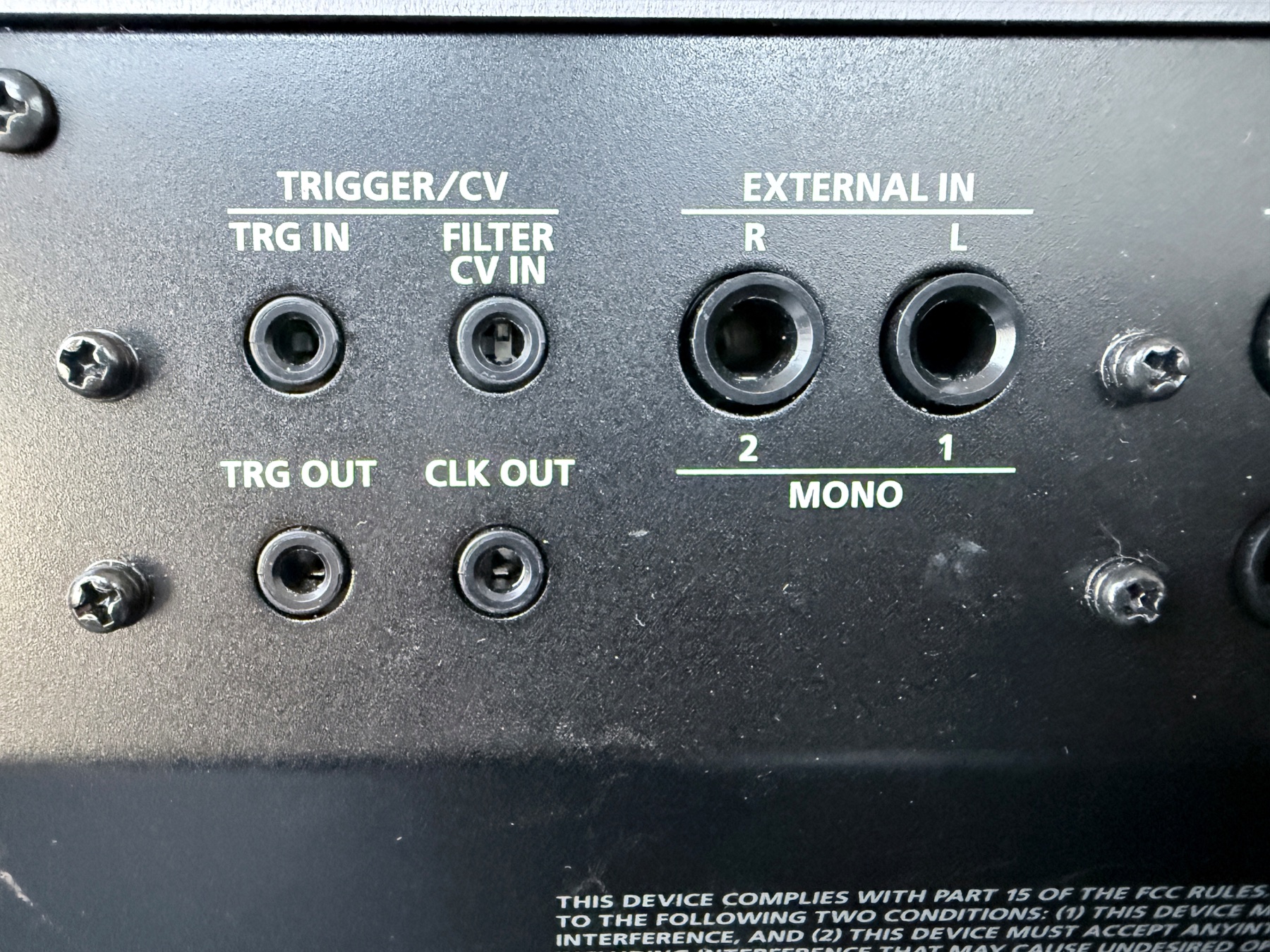
MIDI and two DIN-sync-capable outputs connect modern and pre-MIDI instruments. Trigger in and out, clock out and filter CV bring modular systems into the same timing network. Project-level Sync Delay stores small timing corrections, useful when a stable clock still arrives slightly ahead of or behind another device.

TR-1000 trigger, clock, filter CV and external input connections
TRIGGER, CLOCK, FILTER CV AND EXTERNAL AUDIO
TR-1000 bank of ten individual output and trigger jacks
TEN JACKS CAN LEAVE AS AUDIO OR TRIGGERS
Open the deeper story +

Route the machine before reaching for more processing

Send the complete kit to MIX OUT for the fastest setup. When a voice needs separate desk treatment, assign its individual output and remember that its relationship to internal master processing may change with the route. Keep the analogue-effects output separate if the state-variable filter and drive are being used as a performance bus.

The external inputs are not merely a way to hear another box. They can feed sampling, resampling and effects, allowing a modular voice, synth or record fragment to become part of a TR-1000 instrument. Set gain before adding drive; clipping the input accidentally and saturating it deliberately are not the same decision.

For older Roland equipment, DIN sync preserves the start-and-clock relationship expected by pre-MIDI machines. For modular gear, choose whether the TR-1000 is master clock or follower before connecting triggers. A consistent clock plan is easier to diagnose than a circular network in which several devices are trying to lead.

PAGE 06 // PERFORMANCE // THREE APPROACHES

Three artists reveal three different instruments

Kuniyuki Takahashi, Kaitlyn Aurelia Smith and the Egyptian Lover do not demonstrate one approved workflow; they expose how much the same panel changes with the music placed around it.

Kuniyuki treats the TR-1000 as a fluid performance mixer, balancing movement and timbre. Kaitlyn Aurelia Smith folds custom samples and synthesizer textures into its native rhythm voices. The Egyptian Lover places the new machine inside the direct, body-moving electro language he helped define with the TR-808.

Together the performances make the useful point: the machine's identity does not reside in one factory kit. It appears in the choice of sources, the knob map, the arrangement of variations and the player's willingness to move the system in real time.

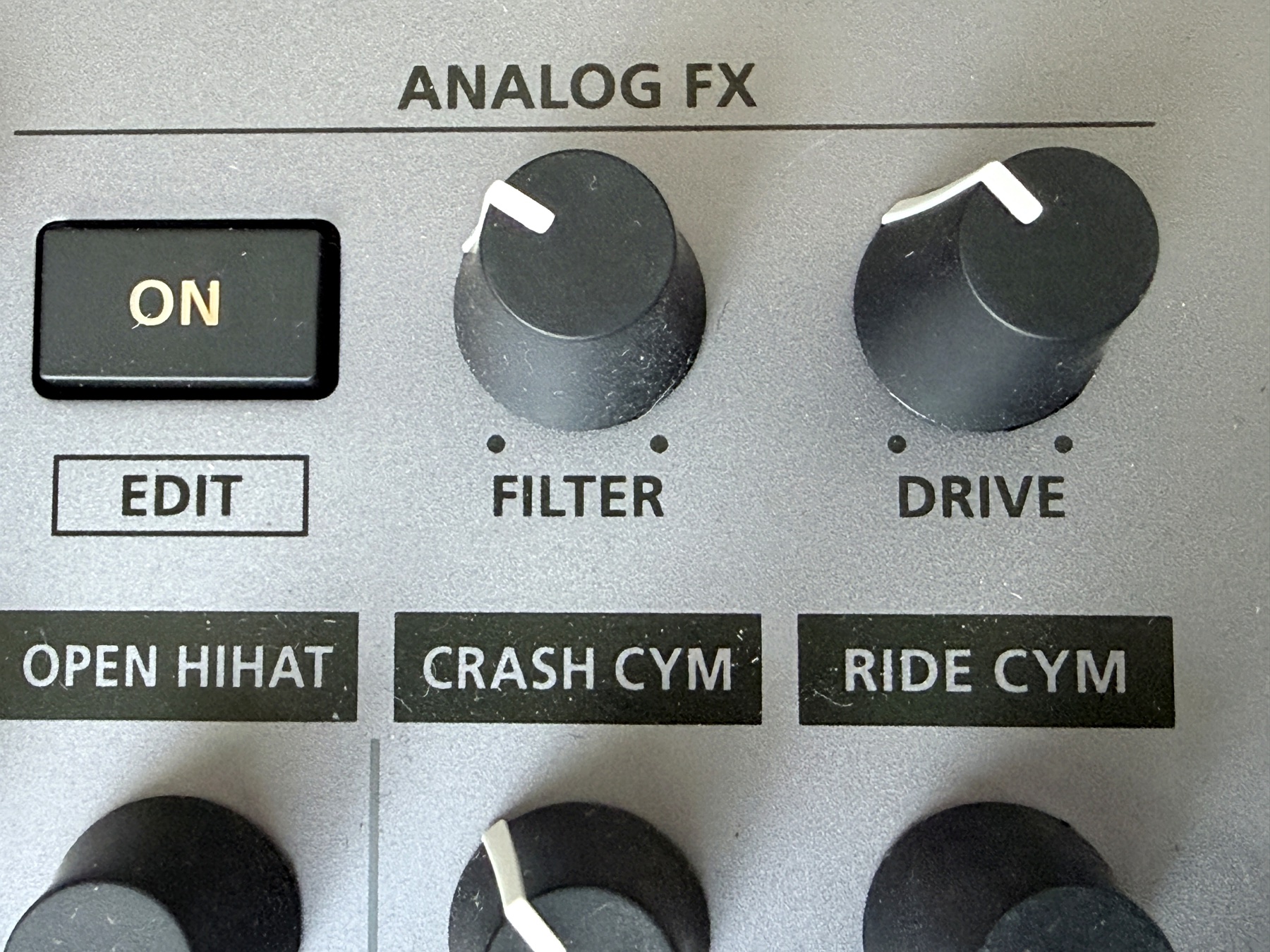
TR-1000 analogue filter and drive controls
THE ANALOGUE EFFECTS BUS IS A PERFORMANCE PATH
ROLAND PERFORMANCE FILM

Kuniyuki Takahashi — TR-1000 performance

Takahashi uses the machine as an expressive mixer and sound-design surface, making small changes accumulate into form.

Watch on YouTube ↗
ROLAND PERFORMANCE FILM

Kaitlyn Aurelia Smith — TR-1000 performance

Smith combines custom samples, spacious synthesis and native TR voices, showing the sampler as part of the instrument rather than a separate utility.

Watch on YouTube ↗
ROLAND PERFORMANCE FILM

The Egyptian Lover — TR-1000 performance

The electro pioneer carries the physical attack and live programming language of the 808 into the new hybrid machine.

Watch on YouTube ↗
Open the deeper story +

Use a performance to test the instrument you built

A performance map should be smaller than the machine's full parameter list. Decide which voices need immediate level control, which two or three timbres will change, which effect send marks a transition and what the Morph fader is meant to accomplish. If every control is important, none is easy to find under pressure.

Set static balance inside the instrument and amplifier stages so the track faders remain available for live moves. Save snapshots as distinct, useful states rather than nearly identical safety copies. Build variations as musical sections, then reserve fills and step loop for interruption and recovery.

PAGE 07 // SYSTEM // VERSION 1.22

The instrument has already changed since launch

Version 1.20 expanded the sound and performance system. Roland's current download is 1.22; versions 1.21 and 1.22 changed the management number without altering the specification.

The May 2026 update added 808 and 909 Bass Line instruments, new modulation modes and sample-and-hold, SP-303 and SP-404 Vinyl Sim, Cassette Sim and DJ FX Delay, additional mute-trigger behaviour, a roll-start option and per-track MIDI-channel assignment.

Roland's support page listed version 1.22 as the current system programme when checked on 7 September 2026. The 1.21 and 1.22 notes state that specifications are unaffected. Before any update, back up the project: Roland's update procedure includes a factory reset and requires a restore afterward.

Open the deeper story +

What version 1.20 added

The modulation section gained Mode and sample-and-hold parameters. Two monophonic Bass Line generators joined the instrument list. Four master effects arrived: 303 Vinyl Sim, 404 Vinyl Sim, Cassette Sim and DJ FX Delay.

Mute Trigger was extended to the 8X crash cymbal and hand clap, Roll 1st Note changed how a roll begins, and MIDI Mode allowed each track to use its own channel while making slices playable over MIDI. Output-gain ranges and Morph response for Scatter and DJFX Looper were also revised.

Because the machine can change through software while its analogue circuits remain physical, always note the system version when exchanging project files or documenting a repeatable technique. A setting that does not exist on an earlier machine may be a firmware difference rather than user error.

Read the official version 1.22 update history ↗

PAGE 08 // FIELD METHOD // REPEATABLE SESSION

A sound is not documented until another player can rebuild it

The TR-1000 can recall an enormous amount, but a useful field report records the few details that determine whether a pattern, performance or fault can be reproduced.

Begin with identity: system programme, project, kit, pattern and variation. Then name the generator on every active track, including both A and B instruments on the four layer tracks. Record motion, snapshots and Morph assignments separately because they describe three different kinds of change.

Finish with the path outside the pattern: output assignment, analogue and master effects, external inputs, clock source, Sync Delay, connected instruments and the recording chain. Export or back up the project, but keep the written report beside it; a project file alone cannot explain the room, mixer, cables or performance moves that completed the sound.

Open the deeper story +

Run a ten-minute repeatability test

Save the pattern and kit, write down the system version, then power-cycle the machine. Reload the project and confirm the selected pattern, kit and variation before pressing play. Check that every active track returns with the expected generator, layer, tuning, filter, amplifier, compressor and insert effect.

Move through each snapshot and sweep the Morph fader from end to end. Confirm that motion plays on the intended tracks and that mute, roll, probability and cycle conditions behave as recorded. A pattern that sounds right only before a reload has not yet been preserved.

Reconnect the documented outputs and clock source, record eight bars, and compare the result with the reference capture. Small analogue hit-to-hit differences are part of the instrument; missing voices, changed routing, different form or lost movement indicate an incomplete report.

For a fault report, strip the path in reverse: bypass master and instrument effects, return mixer routing to the main output, neutralise amplifier and filter stages, and confirm the generator. Record the first stage at which the fault disappears. That observation is more useful to a technician than a general description such as ‘the kick sounds wrong.’

Check Roland's current TR-1000 system programme ↗

SOURCES AND FURTHER READING // TR-1000

Continue through the original documents.

Owner’s manuals, service notes, period catalogues, contemporary press and first-hand accounts are identified by type so readers can follow the machine beyond this dossier.

R01

Roland TR-1000 launch announcement

Primary launch date, price, architecture and specification source.

OPEN SOURCE ↗
R02

Developing the TR-1000 Rhythm Creator

Roland interview with product leader Peter Brown on artist testing, physical design and the sound brief.

OPEN SOURCE ↗
R03

TR-1000 product and specification page

Current first-party generator counts, sequencer, sampling, effects, connections, dimensions and artist performances.

OPEN SOURCE ↗
R04

TR-1000 Reference Manual — Version 1.20

Primary operating reference for instrument structure, generators, sequencing, modulation, routing and effects.

OPEN SOURCE ↗
R05

TR-1000 Owner's Manual

Setup, connection, safety and first-operation documentation.

OPEN SOURCE ↗
R06

TR-1000 system programme 1.22

Official update history through September 2026, including the version 1.20 feature set.

OPEN SOURCE ↗
R07

TR-1000 preset generator and instrument list

First-party index of analogue, ACB, FM, VA, PCM and sample instruments.

OPEN SOURCE ↗
R08

TR-1000 MIDI implementation

Primary reference for MIDI messages, per-track channel behaviour and external control.

OPEN SOURCE ↗
R09

TR-1000 system-program update procedure

First-party instructions for checking the installed version, backing up, updating, factory reset and restoration.

OPEN SOURCE ↗
R10

Daichi Tawara on the TR-1000's analogue design

Long-form interview with the development leader on reconstructing the TR-808 and TR-909 circuits, unit variation and the musical purpose of analogue behaviour.

OPEN SOURCE ↗

PASS THE FILE ON // CANONICAL TRANSMISSION

SHARE THE ROLAND TR-1000 RHYTHM CREATOR.

Send readers directly to this machine file on Drum Machines Have No Soul.

drummachineshavenosoul.com/machines/tr-1000

THE MACHINE LINE // 12 OF 12

FOLLOW THE CHANGE.

Each machine inherits a working idea and moves one musical decision. Continue through the family by what the player can do—not by model number alone.