
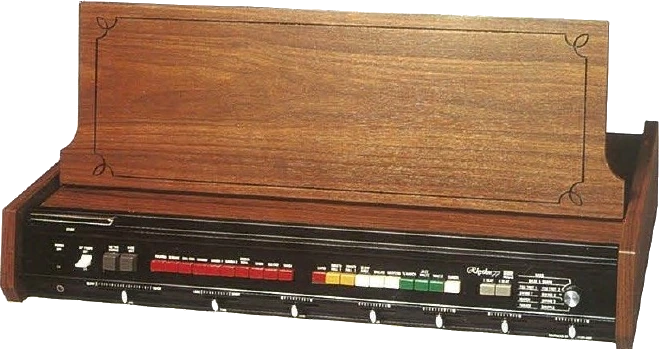
Roland’s company history dates the TR-77 to 1972 and identifies the furniture-finished Ace Tone FR-8L as its direct product precursor.
The machine in the record
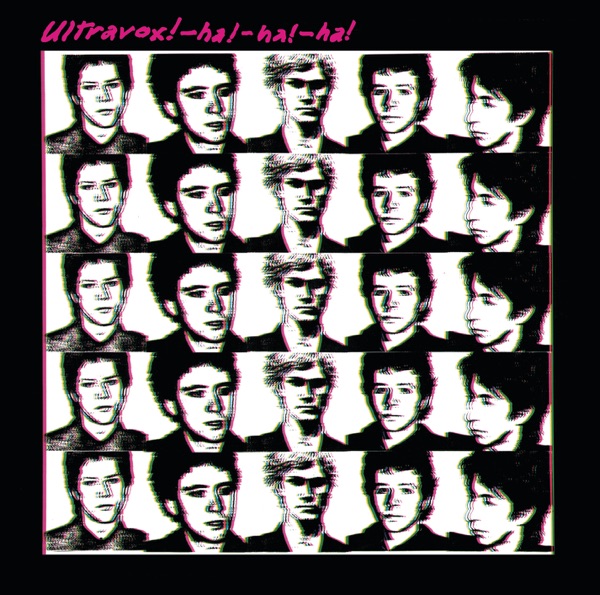
Ultravox / “Hiroshima Mon Amour”.
John Foxx identifies the TR-77 in the early Ultravox work that includes “Hiroshima Mon Amour”. Its accompaniment logic did not disappear in that context; it was repurposed into the colder, more theatrical shape of the band’s early sound.
Read The Arts Desk Q&A: musician John Foxx ↗More records in the archive
The machine keeps turning up.
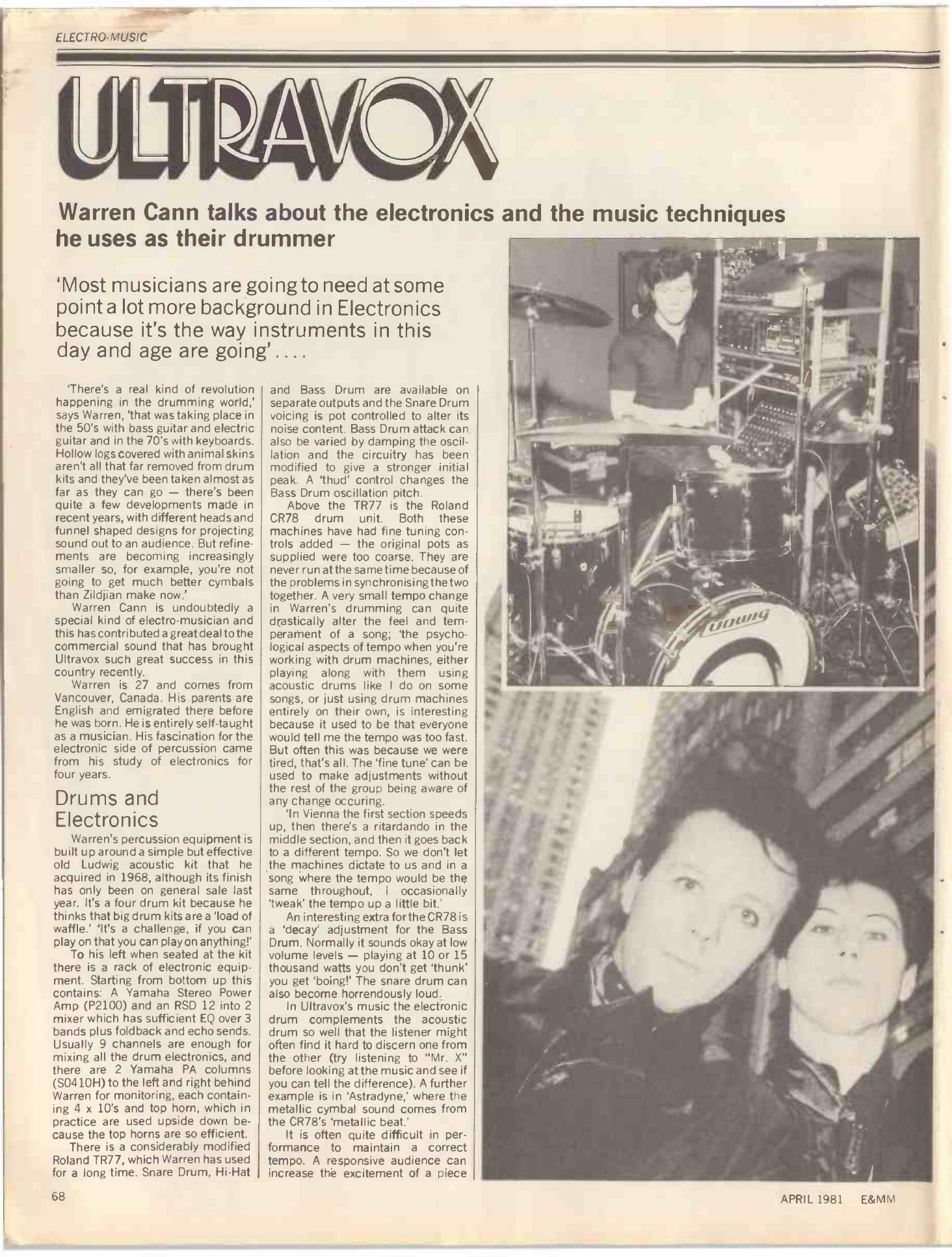
Warren Cann / Ultravox / Vienna-era stage and studio work
A 1981 Ultravox profile documents Warren Cann’s heavily modified TR-77, including separate outputs and altered bass-drum and snare controls.
Read Ultravox ↗Reported association

Andy Weatherall / Studio production and remix equipment
A Roland TR-77 appeared in the auction of Andy Weatherall’s studio gear, part of a wider collection associated with his productions and remixes. The link is one of studio possession and working environment, not a claim that the preset box can be heard on a particular Weatherall record.
Read Andy Weatherall studio gear auction ↗John Foxx / Ultravox / Hiroshima Mon Amour
Foxx identifies a Roland TR-77 in early Ultravox work, including Hiroshima Mon Amour.
Read The Arts Desk Q&A: musician John Foxx ↗Warren Cann / Ultravox / Ultravox work
A 1981 profile documents Cann’s extensively modified Roland TR-77, including separate voice outputs and altered snare and bass-drum response.
Read Ultravox ↗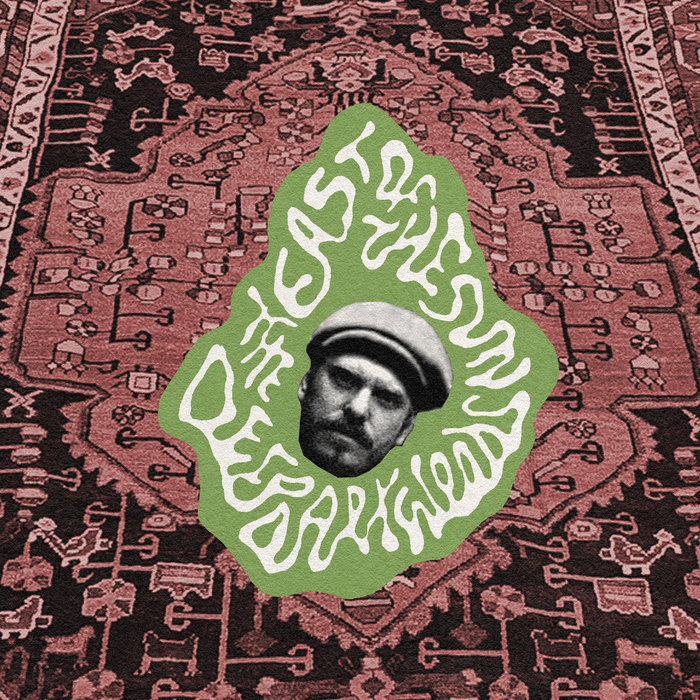
The Deep Dark Woods / East Of The Sun
Ryan Boldt says he recorded “East Of The Sun” in a rumba style with a Roland TR-77 passing through a Korg tape echo.
Read The Deep Dark Woods / East Of The Sun ↗
Analytica / Strategy Of Tension
The label’s note lists a TR-77 among the rhythm machines used while recording the album to a six-track cassette Portastudio.
Read Ice Machine Records release page ↗
Alex Ball / Coalescent Apparatus
Alex Ball’s release notes identify a Roland TR-77 on tracks 7 and 11 of Coalescent Apparatus.
Read Coalescent Apparatus ↗
The Tara Experiment / Michael Vallone / Sensory Deprivation and Mind Control
Michael Vallone’s credit lists a Roland TR-77 among the instruments used for the 2009 sessions.
Read The Tara Experiment — Sensory Deprivation and Mind Control ↗The rhythm box that brought furniture onto the stage
The TR-77 belongs to Roland’s first year under its new name, carrying forward the domestic, wood-cased language of the Ace Tone FR-8L. It is a preset rhythm instrument built for accompaniment, but its high, organ-like cabinet and handle make it read as an object intended to travel between a home organ, rehearsal room and stage.Sources (2)
A machine with a longer story
The Big Beat Machine Archive follows the TR-77 beyond its surface: its controls and preset architecture, surviving circuit documents, collection examples and the unusual modified instrument associated with Warren Cann. This Museum entry is a doorway into that fuller object history—the small Roland box behind a much wider family of rhythm machines.Source (1)
Ultravox takes the TR-77 out of the lounge
John Foxx identifies the TR-77 in early Ultravox work, including “Hiroshima Mon Amour”. Warren Cann’s 1981 profile then shows a player modifying his own machine for a more personal performance role. Together, the two accounts give Roland’s early preset box a life beyond accompaniment: a rhythm source pushed into art rock’s darker rooms.Sources (2)
On record
- Ultravox / John Foxx — Hiroshima Mon Amour. John Foxx identifies the TR-77 in early Ultravox work, including “Hiroshima Mon Amour.” Source ↗
- John Foxx / Ultravox — Hiroshima Mon Amour. Foxx identifies a Roland TR-77 in early Ultravox work, including Hiroshima Mon Amour. Source ↗
- Warren Cann / Ultravox — Ultravox work; individual recording not named. A 1981 profile documents Cann’s extensively modified Roland TR-77, including separate voice outputs and altered snare and bass-drum response. Source ↗
- Analytica — Strategy Of Tension. The label’s note lists a TR-77 among the rhythm machines used while recording the album to a six-track cassette Portastudio. Source ↗
- The Deep Dark Woods — East Of The Sun. Ryan Boldt says he recorded “East Of The Sun” in a rumba style with a Roland TR-77 passing through a Korg tape echo. Source ↗
- Alex Ball — Coalescent Apparatus. Alex Ball’s release notes identify a Roland TR-77 on tracks 7 and 11 of Coalescent Apparatus. Source ↗
- The Tara Experiment / Michael Vallone — Sensory Deprivation and Mind Control. Michael Vallone’s credit lists a Roland TR-77 among the instruments used for the 2009 sessions. Source ↗
In the studio and on stage
- Andy Weatherall — Studio production and remix equipment. A Roland TR-77 appeared in the auction of Andy Weatherall’s studio gear, part of a wider collection associated with his productions and remixes. The link is one of studio possession and working environment, not a claim that the preset box can be heard on a particular Weatherall record. Source ↗
- Warren Cann / Ultravox — Vienna-era stage and studio work. A 1981 Ultravox profile documents Warren Cann’s heavily modified TR-77, including separate outputs and altered bass-drum and snare controls. Source ↗
Sources
The visual archive
Further visual evidence.
Sources for images shown earlier (7)
- Ultravox — Warren Cann on drums and electronics ↗
- Andy Weatherall / MusicRadar auction report photograph ↗
- The Deep Dark Woods — East Of The Sun ↗
Release date not stated on source page · The Deep Dark Woods / release artwork via Bandcamp · Official Bandcamp release-page artwork (Open Graph image) - Alex Ball — Coalescent Apparatus ↗
2019-10-04 · Alex Ball / release artwork via Bandcamp · Official Bandcamp release-page artwork (Open Graph image) - The Tara Experiment / Michael Vallone — Sensory Deprivation and Mind Control ↗
2010-01-12 · The Tara Experiment / Michael Vallone / release artwork via Bandcamp · Official Bandcamp release-page artwork (Open Graph image) - Analytica — Strategy of Tension ↗
2024-03-22T07:00:00Z · Analytica / release artwork via Apple Music catalog artwork · Release catalogue and retained front artwork - Ultravox — Ha! Ha! Ha! ↗
1977-10-14 · Ultravox / release artwork via Apple Music catalogue · Release catalogue and retained front artwork
Additional visual sources (1)
Original publications and related image sources.
- Roland TR-77 catalogue detail ↗
October 1977 · Roland Corporation · TR-77 detail in the TR-55/TR-66/TR-77/TR-700 catalogue