
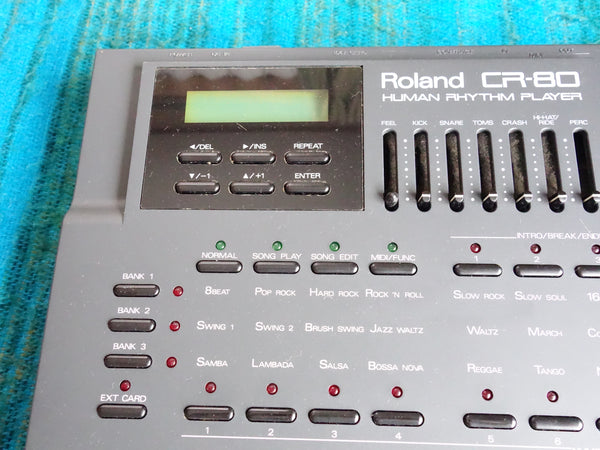
Roland’s CR-80 service notes carry a first-edition date of April 1991. Tony Scherman reviewed the machine in Musician that July at a US list price of $750.
Surviving instrument
Roland’s human rhythm player, in the room.
A clear product photograph lets the CR-80 speak in its own graphic language: a late preset machine whose panel was designed for immediate selection rather than programming theatre.
See the CR-80 photograph ↗The machine in the record
Juan Pimentel / “Cómo Han Pasado los Años”.
Juan Pimentel names the Roland CR-80 Human Rhythm Player in the setup for a performance of “Cómo Han Pasado los Años”. The late preset box appears here in a living bolero context, playing beside a performer rather than remaining on a collector’s shelf.
Read “Cómo Han Pasado los Años” equipment list ↗More records in the archive
The machine keeps turning up.
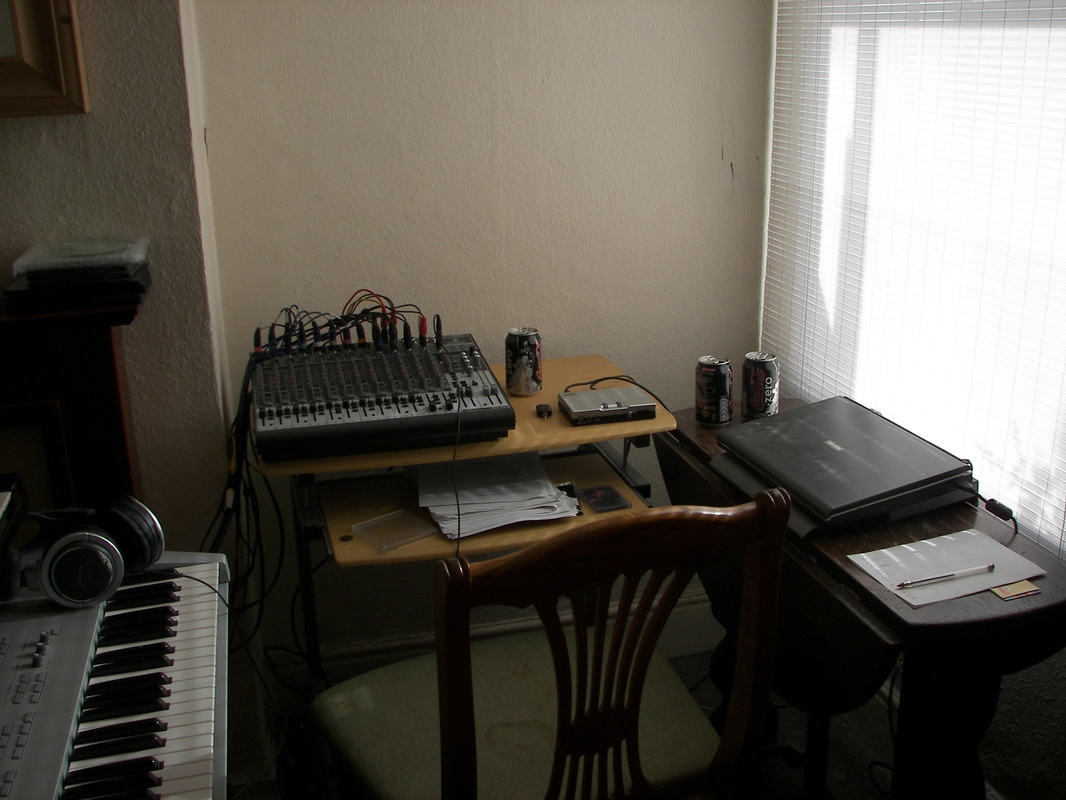
DJ GK / Dragon Studios working setup
Dragon Studios’ history places a Roland CR-80 in DJ GK’s 2005 working setup alongside a Roland Fantom Xa and Yamaha DX-7 Mk.I.
Read Dragon Studios / history ↗A rhythm player built from scenes
The CR-80 gave a player 36 Rhythm Styles to move through, with variations, fills, breaks, introductions and endings ready to be chained. Its 69 percussion sounds and eight effects supplied the colours; the panel supplied the arrangement. It was a rhythm machine for taking a prepared accompaniment apart and reassembling it while the music was running.Source (1)
The sound module behind the styles
MIDI let the CR-80 run in time with other equipment and use its sounds as a module. Roland’s service documentation lists 12-note polyphony and 16-bit dynamic range, placing it firmly in the sampled digital rhythm machines of the early 1990s. The mix of preset construction and external control gave it a role between an accompaniment box and a MIDI sound source.Sources (2)
What the reviewer wanted next
Tony Scherman praised the sound and the freedom to chain the machine’s prepared sections. His reservation was equally revealing: a player who wanted to create wholly original patterns needed an external MIDI sequencer. The CR-80 was generous with musical transitions, but it assumed that its own library of styles was the starting point.Source (1)
On record
- Juan Pimentel — “Cómo Han Pasado los Años” performance video. Juan Pimentel’s equipment list for a performance of “Cómo Han Pasado los Años” names the Roland CR-80 Human Rhythm Player as the drum machine, placing the late preset box in a working bolero setup rather than a collector’s shelf. Source ↗
In the studio and on stage
- DJ GK — Dragon Studios working setup. Dragon Studios’ history places a Roland CR-80 in DJ GK’s 2005 working setup alongside a Roland Fantom Xa and Yamaha DX-7 Mk.I. Source ↗
Sources
The visual archive
Further visual evidence.
These displayed records are labelled by their documented role, date and source; source-only records are listed separately below.