
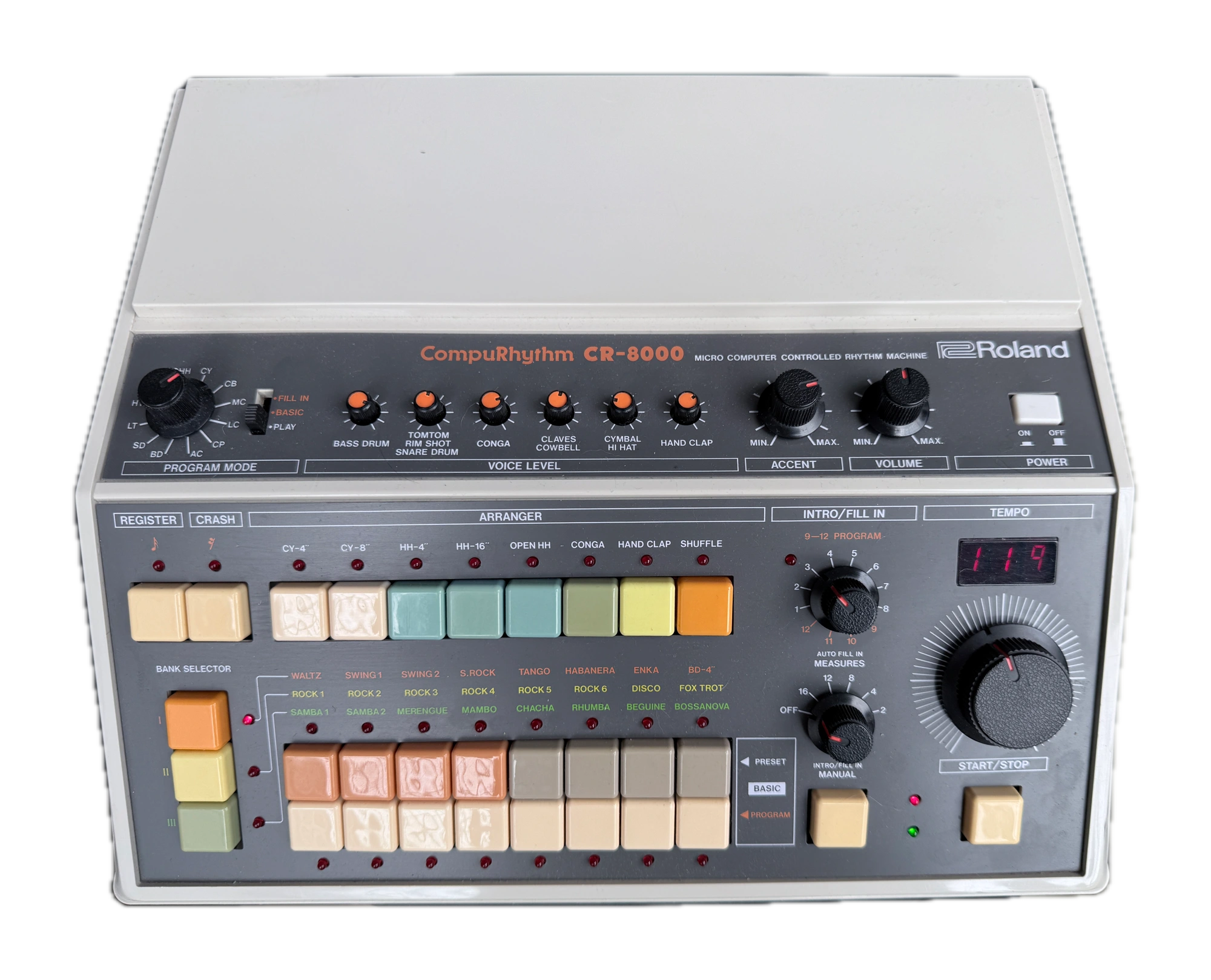
Dave Crombie’s December 1981 Electronics & Music Maker review reports the CR-8000’s unveiling at that year’s UK Music Trade Show and a £399 price, beside the £299 CR-5000. It does not establish the first retail sale or a worldwide launch date.
Arrange twenty-four rhythms into a performance
Choose a rhythm, change its percussion, then bring in a fill: the CR-8000 put arrangement beside pattern selection. Register let a player alternate between two prepared settings. Reviewing the white, sloping-panel machine in December 1981, Dave Crombie placed its £399 price beside the simpler £299 CR-5000 and described rhythm units as a practical centre for home recording.
Roland CR 5000 and CR 8000 Rhythm Units ↗ CR-8000 Owner’s Manual ↗
Twenty-four rhythms, then a way through them
Three banks of eight buttons offered waltz, swing, rock, disco, foxtrot and Latin rhythms, plus the plain BD-4 bass-drum pulse. Two presets within a bank could be combined; a user pattern could join a preset. Eight programmable basic locations supplied somewhere to keep a player’s own writing, rather than merely another selection of factory accompaniments.
The arranger is where the hands go
Arranger supplied cymbal, hi-hat, conga and clap figures alongside Shuffle, which excluded waltz, swing, slow rock and twelve-step programmed rhythms. Automatic fills returned every two, four, eight, twelve or sixteen bars. Manual fill timing mattered: pressing late in the bar inserted only the remaining portion. Crash could mark the return to the basic rhythm.
Programming at the pulse
Writing meant selecting a memory and instrument, then advancing with the hit and rest buttons—Register and Crash doing a second job. A basic pattern occupied two bars: thirty-two steps, or twenty-four for the twelve-step subdivision. Four programmable fills held one bar each. Crombie found entry straightforward and noted the battery backup that retained patterns when mains power was disconnected.
Roland CR 5000 and CR 8000 Rhythm Units ↗ CR-8000 Owner’s Manual ↗
A carefully balanced little kit
Crombie heard fourteen analogue percussion voices, balanced through six shared-group level knobs and a separate Accent control. He particularly liked the clap and cymbal/hi-hat sounds and praised the construction. His reservation was concrete: one mono audio output, rather than stereo or individual voice connections. The rear-panel trigger and DIN synchronisation sockets served control, not separate drum audio.
The machine in the record
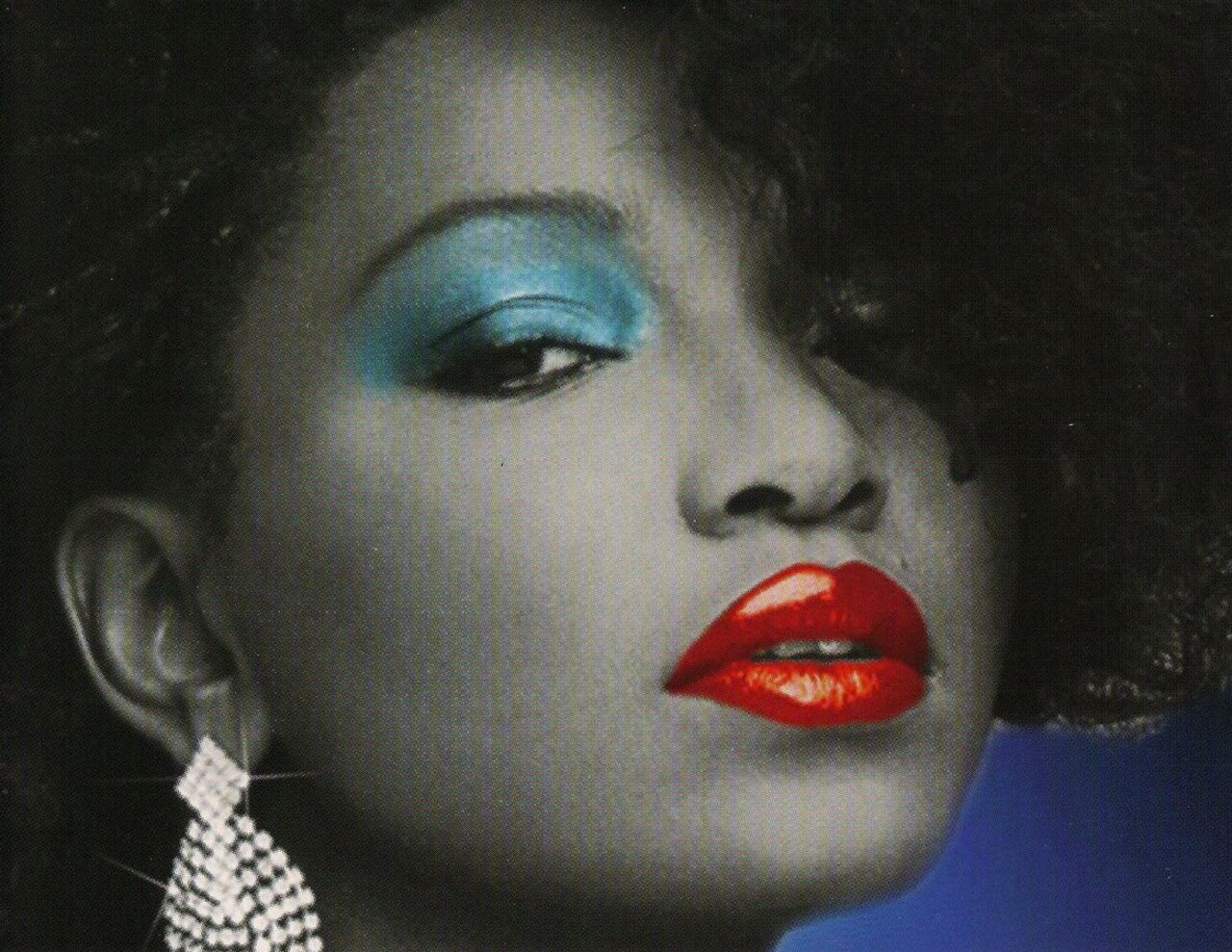
Chris Barbosa / Fire and Ice.
Chris Barbosa identifies the CR-8000, JX-3P, TB-303 and MC-202 as his bedroom system for the Fire and Ice demo that led toward “Let the Music Play”. The preset machine belongs to a small, purposeful setup that helped point freestyle into the room.
Read Key Tracks: Shannon’s “Let the Music Play” ↗Chris Barbosa’s bedroom blueprint
In Vivian Host’s 2015 oral history, Chris Barbosa recalls a bedroom setup of CR-8000, JX-3P, TB-303 and MC-202. While home sick, he developed “Fire and Ice,” the original version of “Let the Music Play.” He connects its kick-drum syncopation to his Puerto Rican upbringing and salsa rhythms. This is his account of writing the demo, not a track sheet for Shannon’s master.
The demo is not the master
Barbosa separately describes Mark Liggett and engineer Rod Hui using an 808 with plate reverb, then gating the ambience for “Let the Music Play.” Shannon dates the release to July 1983; that is not a release date for “Fire and Ice.” The CR-8000 belongs to the remembered home system. Its individual demo parts and settings remain undocumented here.
Crypts makes the CR-8000 its own
Bryce Brown’s equipment list in Ryann Donnelly’s November 2012 Crypts interview names a CR-8000 modified with MIDI-to-trigger boards, alongside an Alesis HR16 and Akai XR-20. The modification belongs to this artist’s setup, not the factory specification. Brown names the machine among several tools without identifying its part on an individual recording.
Alongside the 808
Mike Mind’s 2013 studio account calls the CR-8000 a secondary machine beside his 808: a similar palette with different envelopes, useful on faster tracks. He names no CR-8000 recording.
A groove to start from
Sasse’s January 2016 MusicRadar interview names the CR-8000 among his beat-making tools while an Eko Masala follow-up was still in progress. In 2019 he recalls the one-night jam behind “II,” cautiously identifying most drums as CR-8000 mixed with SP-12 samples. Neither account separates the machine’s voices from the rest of the setup.
Home recordings, later releases
Almost Unknown’s Park Road account places Skeet’s demo in a Coventry front room in 1981 and names Gary Meffen on guitar and CR-8000 programming. The EP appeared in October 2023. Gystere’s A Little Story credits CR-8000 and drum-machine work to Adrien Gystere Peskine on tracks 3, 6, 7, 9 and 10; it leaves the patterns and individual parts unspecified.
Skeet — Park Road ↗ Gystere — A Little Story ↗ Gystere — A Little Story ↗
Credits across an album
Release-wide instrument lists name the CR-8000 for Ed Mount’s Close To Your Heart, Pertti Grönholm’s work with E-Musikgruppe Luxohr, and Gifted & Blessed’s 3 Aspects of ONE. These credits do not allocate particular drum parts.
Close To Your Heart ↗ E-Musikgruppe Luxohr — Der Planet der Melancholie ↗ Gifted & Blessed — 3 Aspects of ONE ↗
Later attributions and sample libraries
Community attributions
Audiofanzine contributors suggest Ludwig von 88 and Alien Sex Fiend’s Who’s Sleeping in My Brain? These community attributions remain listening leads without participant-confirmed session credits.
The sounds in later libraries
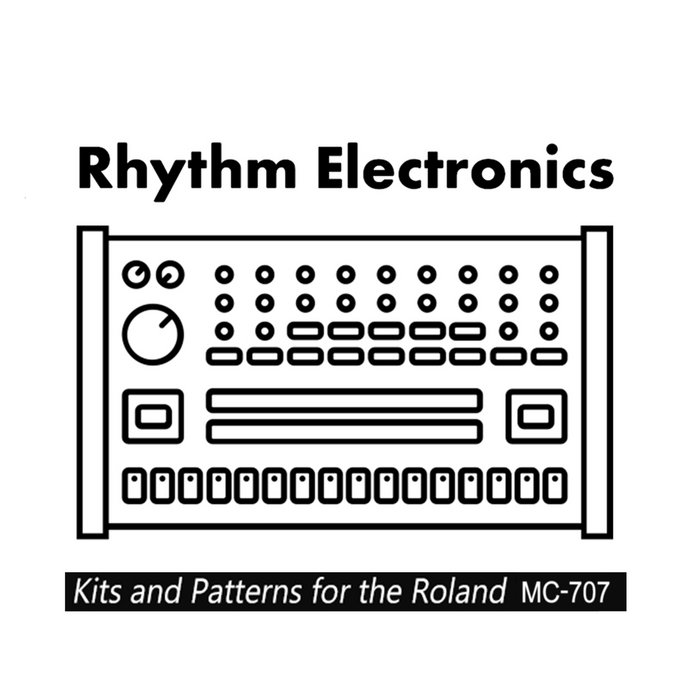
Rhythm Electronics and SysEx Emporium list CR-8000 material in contemporary sample products. Their inventories describe the sampled machine, without establishing historic session use or factory-pattern fidelity.
Rhythm Electronics / Vintage Drum Machines for Roland MC-707 & MC-101 ↗ SysEx Emporium / 2,081 Ultimate Vintage Drum Samples ↗
Recording and working accounts
Explore 14 source accounts
- Chris Barbosa — Fire and Ice (demo precursor to “Let the Music Play”)
Chris Barbosa recalls buying a Roland JX-3P, TB-303, MC-202 and CR-8000 when the new beat machines appeared, then programming at home. While he was ill, that bedroom system produced “Fire and Ice,” the original version of Shannon’s “Let the Music Play.”
- Crypts / Bryce Brown — Crypts equipment account; no named CR-8000 recording
- Mike Mind — Studio practice; no named recording
- Alien Sex Fiend — Who’s Sleeping in My Brain?
- Sasse / Rough Trade — “II”
- Sasse — Eko Masala follow-up and ongoing beat-making
- Skeet — Park Road
- Gystere — A Little Story
- Ed Mount — Close To Your Heart
- Pertti Grönholm / E-Musikgruppe Luxohr — Der Planet der Melancholie
- Gifted & Blessed — 3 Aspects of ONE
- Rhythm Electronics — Vintage Drum Machines for Roland MC-707 & MC-101
Read this account in the story ↑
Rhythm Electronics / Vintage Drum Machines for Roland MC-707 & MC-101 ↗
- SysEx Emporium — 2,081 Ultimate Vintage Drum Samples
- Gystere — A Little Story
Browse records and studio photographs
Musical archive
Records, studios and sampled sounds.
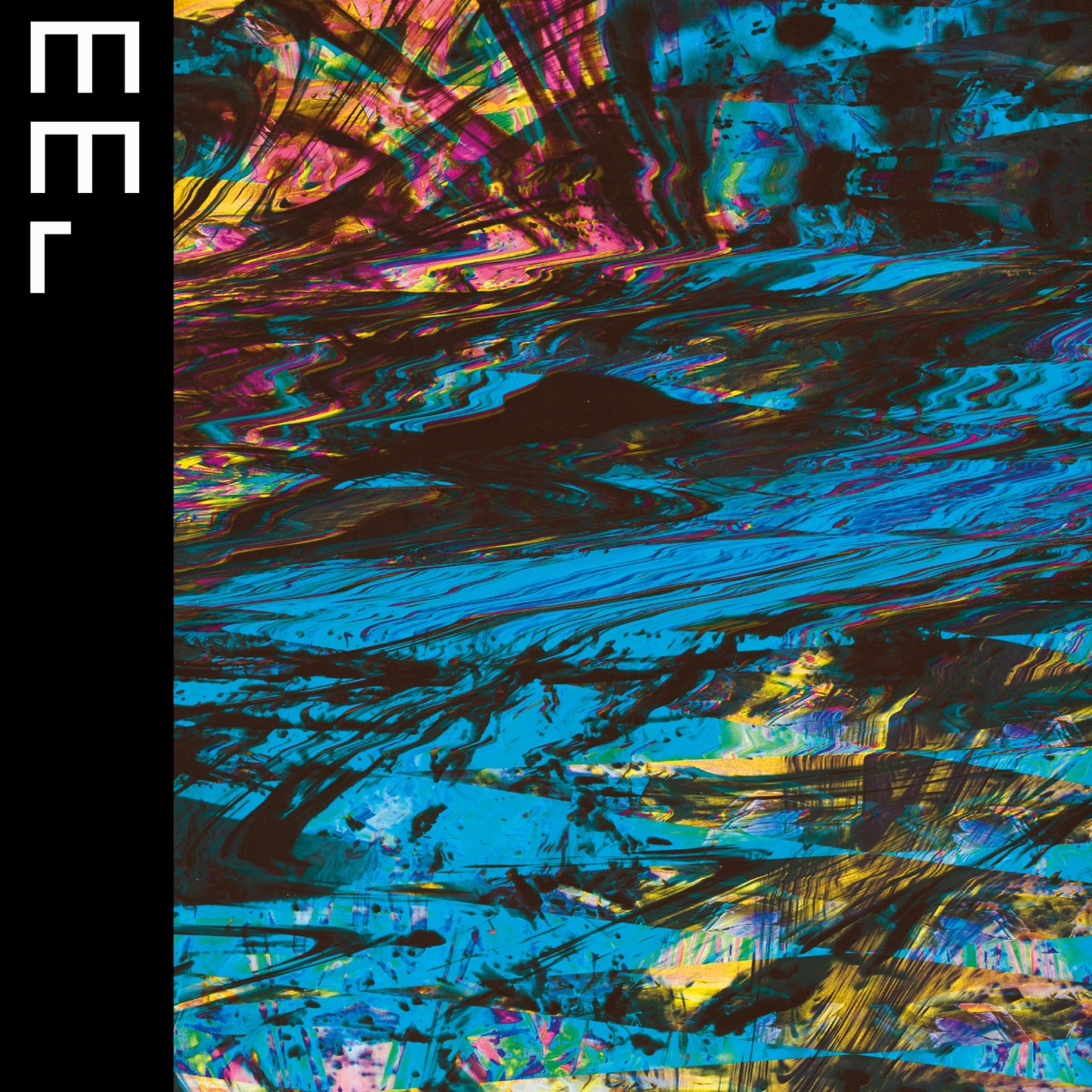
Sasse / Rough Trade / “II”
Sasse tentatively recalls most drums in the one-take “II” jam as Roland CR-8000 mixed with E-mu SP-12 samples.
Read Sasse on the CR-8000 in “II” ↗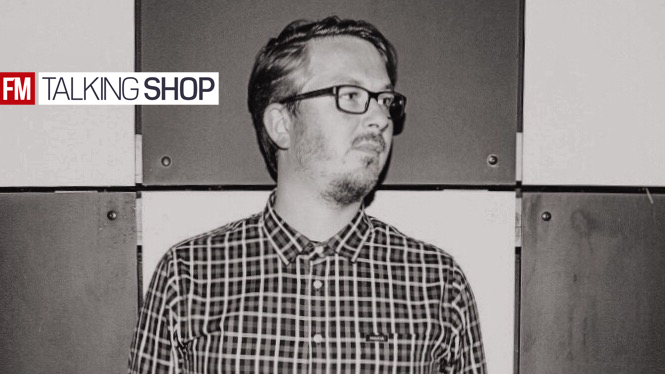
Sasse / Eko Masala follow-up and ongoing beat-making
Sasse names the CR-8000 among his main beat-making machines for finding a groove; the interview also describes an Eko Masala follow-up in progress.
Read Talking Shop: Sasse ↗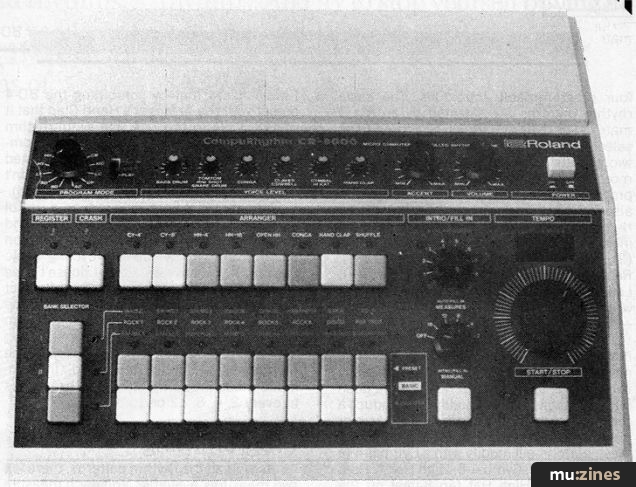
Crypts / Bryce Brown / Crypts equipment account; no named CR-8000 recording
Bryce Brown names a Roland CR-8000 modified with MIDI-to-trigger boards among Crypts’ equipment.
Read Discovery: Crypts ↗Mike Mind / Studio practice; no named recording
Mike Mind says he uses the CR-8000 as a secondary drum machine beside an 808, valuing its different envelopes and usefulness on faster tracks.
Read Mike Mind — My Studio ↗Reported association
Alien Sex Fiend / Who’s Sleeping in My Brain?
A community contributor reports that Alien Sex Fiend used a CR-8000 on Who’s Sleeping in My Brain?.
Read Roland CR-8000: artist-use discussion ↗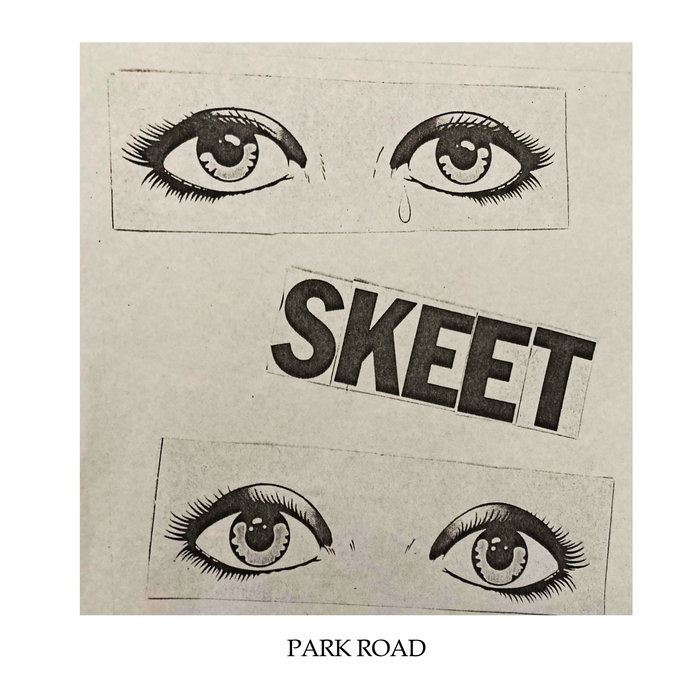
Skeet / Park Road
The archival account for Skeet’s Park Road identifies Gary Meffen as the group’s Roland CR-8000 CompuRhythm programmer on its 1981 home demos.
Read Skeet — Park Road ↗
Gystere / A Little Story
Sodasound credits Gystere Peskine with CR-8000 and drum-machine work on tracks 3, 6, 7, 9 and 10 of A Little Story.
Read Gystere — A Little Story ↗
Ed Mount / Close To Your Heart
Ed Mount lists a Roland CR-8000 among the instruments played on Close To Your Heart.
Read Close To Your Heart ↗
Pertti Grönholm / E-Musikgruppe Luxohr / Der Planet der Melancholie
Release credits list a Roland CR-8000 among Pertti Grönholm’s instruments on Der Planet der Melancholie.
Read E-Musikgruppe Luxohr — Der Planet der Melancholie ↗
Gifted & Blessed / 3 Aspects of ONE
Gifted & Blessed list a Roland CR-8000 among the instruments used for 3 Aspects of ONE.
Read Gifted & Blessed — 3 Aspects of ONE ↗Archive source
Rhythm Electronics / Vintage Drum Machines for Roland MC-707 & MC-101
Rhythm Electronics includes a Roland CR-8000 kit and pattern set in Vintage Drum Machines for Roland MC-707 & MC-101, describing the source samples as recorded from mint-state machines.
Read Rhythm Electronics / Vintage Drum Machines for Roland MC-707 & MC-101 ↗Archive source
SysEx Emporium / 2,081 Ultimate Vintage Drum Samples
SysEx Emporium lists Roland CompuRhythm 8000 samples in 2,081 Ultimate Vintage Drum Samples.
Read SysEx Emporium / 2,081 Ultimate Vintage Drum Samples ↗
Gystere / A Little Story
Sodasound credits Gystere Peskine with CR-8000 and drum-machine work on tracks 3, 6, 7, 9 and 10 of A Little Story.
Read Gystere — A Little Story ↗Sources
- Roland CR 5000 and CR 8000 Rhythm Units
- Key Tracks: Shannon’s “Let the Music Play”
- Mike Mind — My Studio
- Roland CR-8000: artist-use discussion
- CR-8000 Owner’s Manual
- Discovery: Crypts
- Sasse on the CR-8000 in “II”
- Talking Shop: Sasse
- Skeet — Park Road
- Gystere — A Little Story
- Close To Your Heart
- E-Musikgruppe Luxohr — Der Planet der Melancholie
- Gifted & Blessed — 3 Aspects of ONE
- Rhythm Electronics / Vintage Drum Machines for Roland MC-707 & MC-101
- SysEx Emporium / 2,081 Ultimate Vintage Drum Samples
- Gystere — A Little Story
The visual archive
Further visual evidence.
These displayed records are labelled by their documented role, date and source; source-only records are listed separately below.
Sources for images shown earlier (11)
- Roland CR 5000 and CR 8000 Rhythm Units — visually reviewed image ↗
- Shannon — Let the Music Play ↗
- Sasse — MusicRadar Talking Shop ↗
- Skeet — Park Road ↗
Release date not stated on source page · Skeet / release artwork via Bandcamp · Official Bandcamp release-page artwork (Open Graph image) - Gystere — A Little Story ↗
Release date not stated on source page · Gystere / release artwork via Bandcamp · Official Bandcamp release-page artwork (Open Graph image) - Ed Mount — Close To Your Heart ↗
2022-03-03 · Ed Mount / release artwork via Bandcamp · Official Bandcamp release-page artwork (Open Graph image) - Pertti Grönholm / E-Musikgruppe Luxohr — Der Planet der Melancholie ↗
2014-11-21 · Pertti Grönholm / E-Musikgruppe Luxohr / release artwork via Bandcamp · Official Bandcamp release-page artwork (Open Graph image) - Gifted & Blessed — 3 Aspects of ONE ↗
2013-06-14 · Gifted & Blessed / release artwork via Bandcamp · Official Bandcamp release-page artwork (Open Graph image) - Rhythm Electronics — Vintage Drum Machines for Roland MC-707 & MC-101 ↗
2021-02-07 · Rhythm Electronics / release artwork via Bandcamp · Official Bandcamp release-page artwork (Open Graph image) - SysEx Emporium — 2,081 Ultimate Vintage Drum Samples ↗
2023-02-20 · SysEx Emporium / release artwork via Bandcamp · Official Bandcamp release-page artwork (Open Graph image) - Sasse — Rough Trade (Sandrino, Sasse, Langenberg pres. M K S) ↗
2019-01-18T12:00:00Z · Sasse / release artwork via Apple Music catalog artwork · Release catalogue and retained front artwork
Additional visual sources (1)
Original publications and related image sources.
- Roland CR 5000 and CR 8000 Rhythm Units — visually reviewed image ↗
Dec 1981 · Electronics & Music Maker · Shared product photograph explicitly captioned as the Roland CR-8000 and CR-5000 rhythm units. — The Roland CR 8000 and CR 5000 rhythm units. — article: