
A factory schematic labelled R64 is dated July 1984, and British dealer advertisements place the Viscount R64 on sale by October 1985.Sources (6)
Inside the R64
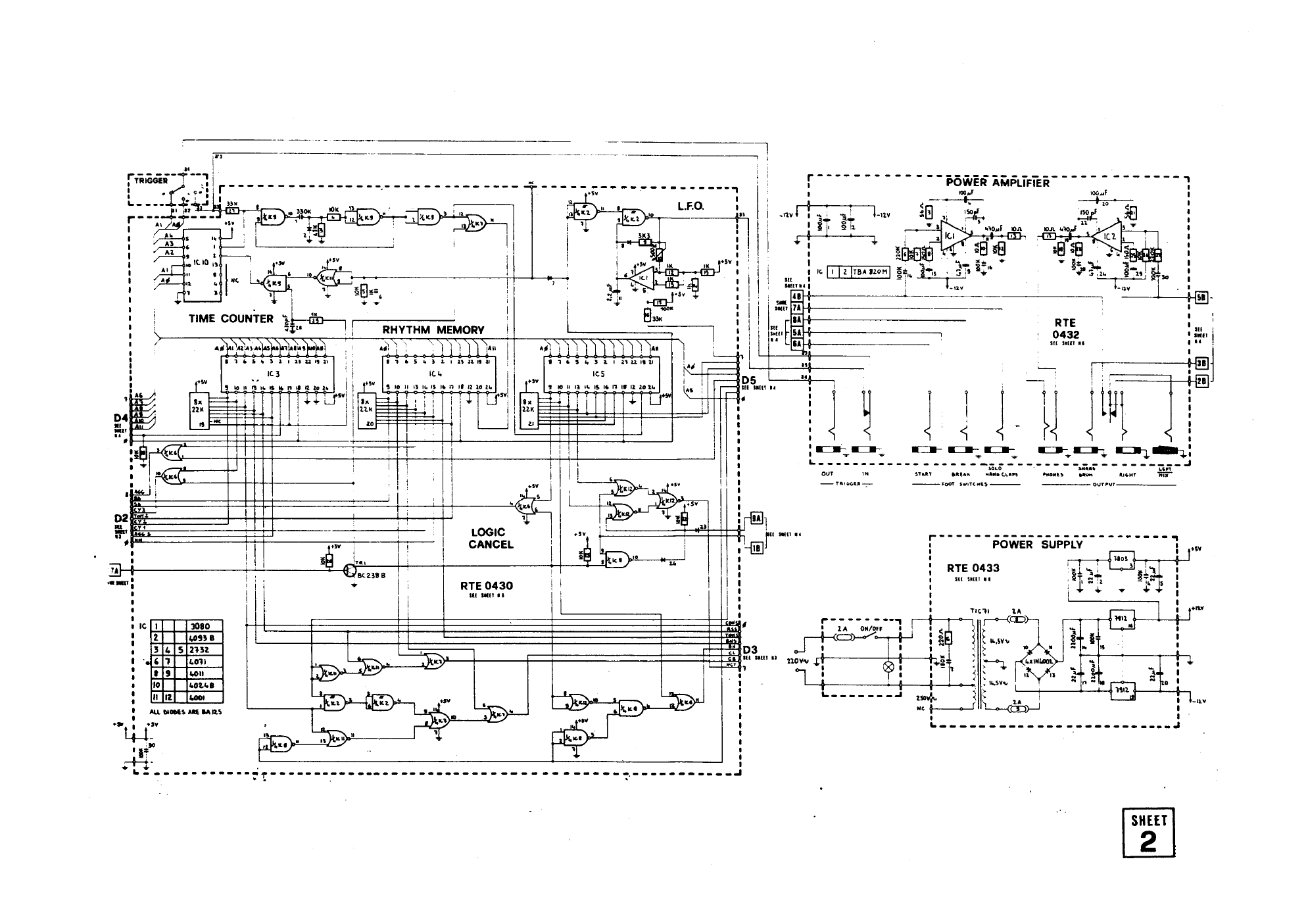
The factory drawing follows rhythm memory, timing, cancellation and outputs.
 View full scan ↗
The machine in the record
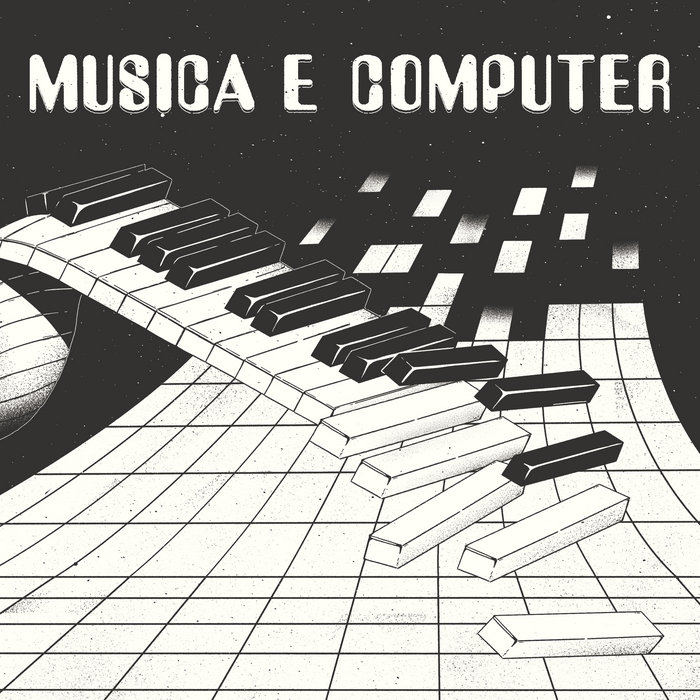
Rodion & Mammarella / Musica E Computer.
A Viscount R64 PCM is named among the drum machines used on Musica E Computer. There is no track or part allocation, so this is a precise catalogue trace rather than a sonic claim—one obscure digital box retained in the record’s official equipment list.
Read Musica E Computer release credits ↗More records in the archive
The machine keeps turning up.
Rodion & Mammarella / Musica E Computer
Official credits list the Viscount R64 PCM among the rhythm machines used for Musica E Computer.
Read Musica E Computer release credits ↗Sixty-four rhythms for the organ player
The R64 belongs to the mid-1980s accompaniment market, when organ players were looking for a broader rhythmic palette than the earlier analogue boxes. Factory documents show 64 rhythms in A–D banks, with start, break, handclap and percussion-cancel controls ready on the panel.
PCM under the panel
The schematic separates rhythm memory, timing and cancellation logic from amplification, and labels a PCM board alongside cymbal and noise circuitry. It catches preset accompaniment at the point where digital percussion colour was becoming part of the musical promise.
Built around changes
Tempo and balance, cancellations, a break, handclap and footswitch options let a player shape a preset as it runs. Trigger connections, separate snare and stereo/mix outputs point toward a machine made to join other instruments and a mixer.
An Italian voice in shop and studio
Arthur Lords advertised the R64 for £275 in 1985 and again in 1986. Sampling projects have carried its sounds forward, and Slow Motion Records credits Viscount R64 PCM on Musica E Computer. The attraction is the meeting of organ-world practicality and unusually coloured digital percussion.
A schematic as a portrait
The factory diagram names the R64, dates the document to July 1984, and lays out rhythm memory, time counter, cancellation logic, triggers and outputs in one field. It lets a visitor see how Viscount organised the machine as a set of musical interventions.
Sources
The visual archive
Further visual evidence.
Sources for images shown earlier (2)
- Viscount R64 code 803080 — rhythm-memory and control diagram ↗
- Rodion & Mammarella — Musica E Computer ↗
Release date not stated on source page · Rodion & Mammarella / release artwork via Bandcamp · Official Bandcamp release-page artwork (Open Graph image)
Additional visual sources (1)
Original publications and related image sources.
- Arthur Lords R64 £275 offer ↗
October 1985 · Arthur Lords / Electronics & Music Maker · Printed p.89 / PDF91; dated cover PDF1