
The R-8 received UK reviews in February and March 1989; Derek Johnson’s March review described a £665 including-VAT price.
Silent control study
One beat, three kinds of change.
This illustrative layout explains documented velocity/pressure input and Feel Patch playback. It is neither an R-8 audio emulator nor a recovered factory pattern.
Played pressure: the illustrated hits respond to a player's changing pressure. No audio is played.
The machine in the record
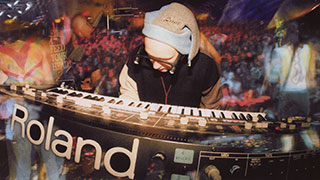
Orbital / The Blue Album.
Orbital name an old Roland R-8 among the instruments used for The Blue Album, describing it as a source of many early rhythms. No individual track or pattern is claimed, but the account gives this unusually expressive late-Eighties machine a place in the group’s long-running, hands-on studio language.
Read Orbital on the Blue Album ↗More records in the archive
The machine keeps turning up.
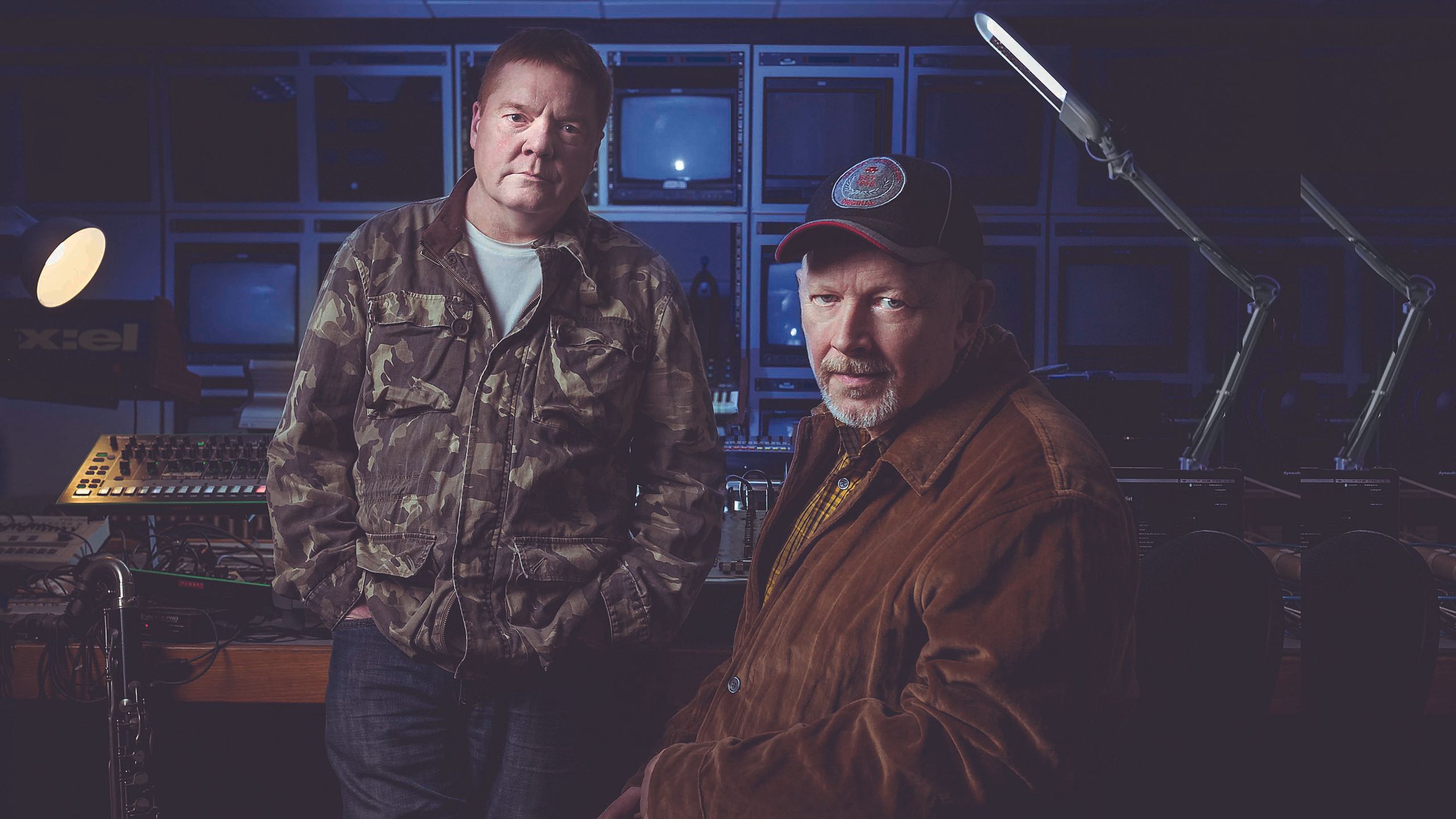
808 State / Graham Massey / Transmission Suite
Graham Massey says 808 State brought a Roland R-8 back for Transmission Suite, using its distinctive 808 character and ethnic sound cards in the album’s drum palette.
Read 808 State on Transmission Suite drum machines ↗

The Cure / Robert Smith / Wild Mood Swings demo practice
For his Wild Mood Swings home demos, Robert Smith described using a Roland R-8 on its presets—or Casio keyboard drum sounds—as a simple timing guide while he worked out melodies.
Read The Cure: Recording Wild Mood Swings ↗Tim Simenon / Bomb the Bass / Digiland studio, no individual track allocation
Sound On Sound’s 1995 Digiland studio profile lists a Roland R-8 among Tim Simenon’s drum machines.
Read Tim Simenon / Bomb the Bass — Digiland studio inventory ↗Orbital / The Blue Album
Orbital named the old Roland R-8 among the instruments used on The Blue Album, and described it as a source of many early rhythms.
Read Orbital on the Blue Album ↗
Session Victim / Needledrop
Session Victim say the Roland R-8 and LinnDrum were the only drum machines used for Needledrop.
Read Session Victim on Needledrop ↗
Anthony Manning / Islets in Pink Polypropylene
Manning says the record was composed and realised wholly on the R-8.
Read Anthony Manning / Islets in Pink Polypropylene ↗
Anthony Manning / Islets in Pink Polypropylene
Anthony Manning says the whole of Islets in Pink Polypropylene was composed and realised on a Roland R-8, using unequal-length patterns, Dance ROM sounds and pitch-slider melodies.
Read Anthony Manning / Islets in Pink Polypropylene ↗
Burning Rome / The Waiting Room
Burning Rome’s recovered 1997–98 home recordings list the Roland R-8 beside an Amiga, E-mu sampler and 16x2 mixers: a working electronic setup rather than a posed collection.
Read Burning Rome — The Waiting Room ↗
Jimmy Tamborello / Dntel / Typical
Jimmy Tamborello recalls making the 1989 “Typical” with his father’s eight-track, a Roland R-8, D-50 and sequencer.
Read Jimmy Tamborello / Dntel / Typical ↗
Provision / Breye Kiser / Visualize
Breye Kiser’s track note for Provision identifies a Roland R-8 among the synths and drum machines used on “Visualize”.
Read Provision — Visualize ↗Math the Band / Stupid and Weird
Math the Band’s album credits list a Roland R-8 among the machines used for Stupid and Weird.
Read Math the Band — Stupid and Weird ↗
Julian Juno / Julian Juno
Julian Juno’s release credits list a Roland R-8 among the drum machines used.
Read Julian Juno ↗
Anton Barbeau / “Black Lemon Sauce”
Anton Barbeau credits himself with Roland R-8 on “Black Lemon Sauce”, alongside voice, guitars and a BOSS DR-110.
Read Anton Barbeau — Black Lemon Sauce ↗
The Dead Broken Heart / Kareem Jacobs / Evil Secrets EP
Kareem Jacobs’ hardware list for Evil Secrets EP names a Roland R-8.
Read The Dead Broken Heart — Evil Secrets EP ↗
Sally Seltmann / Early Moon
Sally Seltmann’s “Don’t Look Back” credit names the Roland R-8 drum machine.
Read Sally Seltmann / Early Moon ↗
Tyrone Warner / Streetlights and Stars
Tyrone Warner says he used a Roland R-8 drum machine to provide the album’s drum beats.
Read Tyrone Warner — Streetlights and Stars ↗
Aleksi Perälä / GRACE 11
Perälä’s release gear list names a Roland R-8 MkI with Waverex.
Read Aleksi Perälä — GRACE 11 ↗
Ronald Langestraat / Apollo
Apollo’s notes identify Roland R-8 additions made at home, including “Space Train.”
Read Ronald Langestraat — Apollo ↗
The Cure / Roger O’Donnell / Disintegration
Roger O’Donnell says that The Cure used the Roland R-8 on Disintegration.
Read Roger O’Donnell of The Cure interview ↗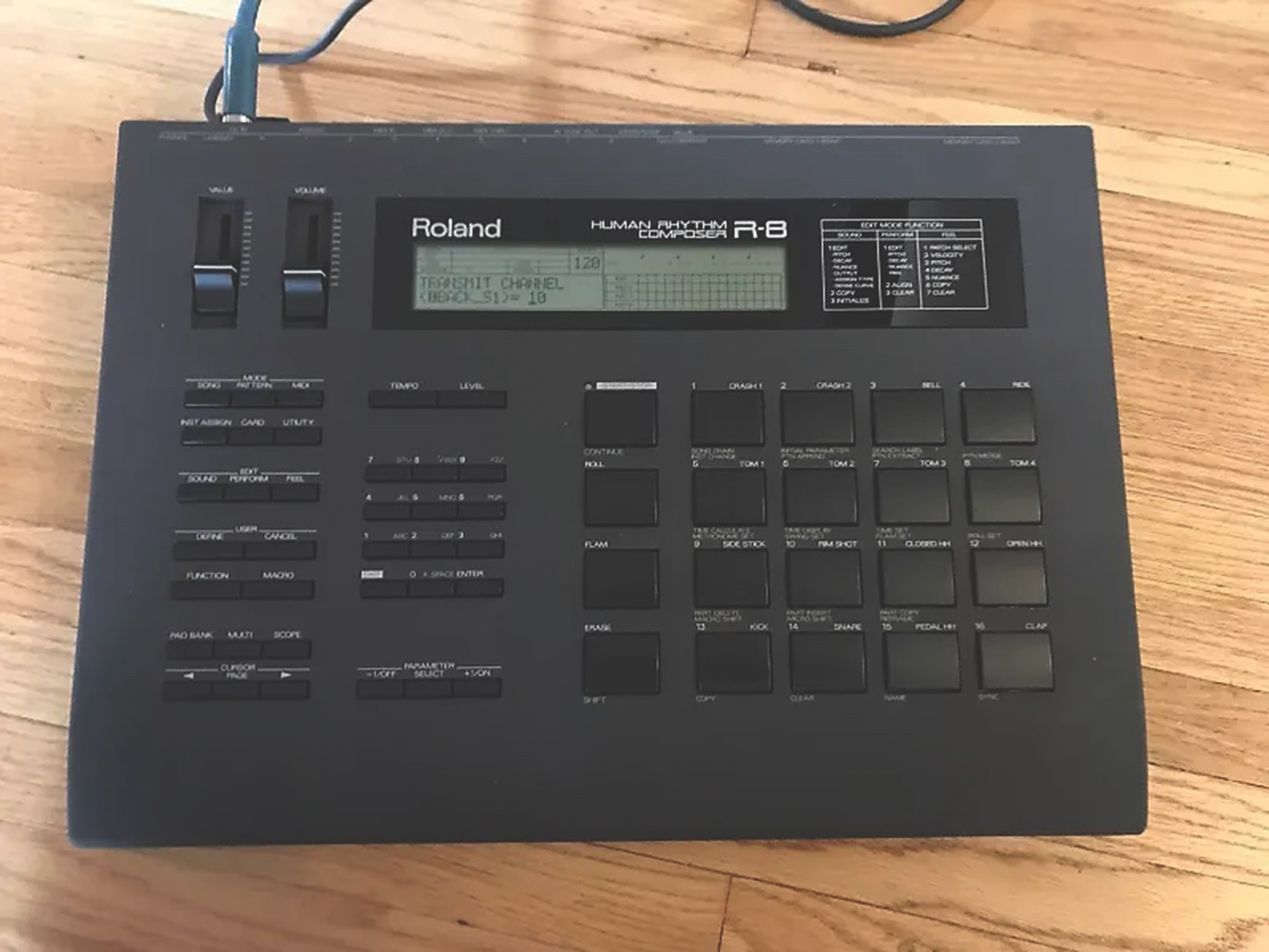
Autechre / Sean Booth / Amber-era workflow
Booth calls the Roland R-8 “completely our machine” and says the group used it as a sequencer while learning Emagic Creator.
Read Autechre on its Roland R-8 workflow ↗Rhythm under the fingers
The R-8’s large pads were velocity- and pressure-sensitive, so a roll could change as a player pressed into it and that movement could be captured in a pattern. Derek Johnson’s 1989 review saw the R-8 as more than another sampled drum box: an instrument built around how rhythm is played, not only how many sounds it stores.Sources (2)
A deep sampled kit
Its 68 internal 16-bit sounds ranged from dry and ambient kit pieces to Latin percussion, reverse sounds and effects; 26 editable copy instruments extended the palette. Sounds could be moved dramatically in pitch, and the two card slots opened separate paths for additional sound ROMs and memory. Johnson admired the clean decay of its cymbals and the breadth of the library, while noting that the 230-page manual and layered panel rewarded patience rather than a quick glance.Source (1)
The composer in the name
Eight individual outputs, stereo and headphones placed the R-8 firmly beside a mixer, while MIDI, tape sync and footswitch connections gave it a role in a broader studio. Its extensive programming could produce subtle, changing drum parts, but the period reviews did not pretend that a button automatically made a drummer. The R-8’s achievement was to offer a player unusually fine control over a sampled rhythm and make that control playable.Sources (2)
Autechre and the working machine
Amber was released on 7 November 1994. In the group’s interview from that period, later reproduced by MusicRadar, Sean Booth calls the Roland R-8 “completely our machine” and describes using it as a sequencer while Autechre learned Emagic Creator. It is a useful, human-sized account of a formidable box: a drum machine becoming part of the way two musicians learned to organise music together. Booth is describing their workflow, not assigning the R-8 to individual Amber tracks.Sources (2)
Three very different records
The R-8 travelled widely because its sampled sounds and pressure-sensitive pads could play several roles. Orbital name it among the tools on the Blue Album and call it responsible for many early rhythms. Roger O’Donnell says The Cure used one on Disintegration. Session Victim place the R-8 beside a LinnDrum as the only drum machines on Needledrop. The details differ, but the common thread is a machine musicians kept when they wanted a kit they could shape and perform.
On record
- Orbital — The Blue Album. Orbital named the old Roland R-8 among the instruments used on The Blue Album, and described it as a source of many early rhythms. Source ↗
- The Cure / Roger O’Donnell — Disintegration. Roger O’Donnell says that The Cure used the Roland R-8 on Disintegration. Source ↗
- Session Victim — Needledrop. Session Victim say the Roland R-8 and LinnDrum were the only drum machines used for Needledrop. Source ↗
- Anthony Manning — Islets in Pink Polypropylene. Manning says the record was composed and realised wholly on the R-8. Source ↗
- Anthony Manning — Islets in Pink Polypropylene. Anthony Manning says the whole of Islets in Pink Polypropylene was composed and realised on a Roland R-8, using unequal-length patterns, Dance ROM sounds and pitch-slider melodies. Source ↗
- Burning Rome — The Waiting Room. Burning Rome’s recovered 1997–98 home recordings list the Roland R-8 beside an Amiga, E-mu sampler and 16x2 mixers: a working electronic setup rather than a posed collection. Source ↗
- Jimmy Tamborello / Dntel — Typical. Jimmy Tamborello recalls making the 1989 “Typical” with his father’s eight-track, a Roland R-8, D-50 and sequencer. Source ↗
- Provision / Breye Kiser — Visualize. Breye Kiser’s track note for Provision identifies a Roland R-8 among the synths and drum machines used on “Visualize”. Source ↗
- Math the Band — Stupid and Weird. Math the Band’s album credits list a Roland R-8 among the machines used for Stupid and Weird. Source ↗
- Julian Juno — Julian Juno. Julian Juno’s release credits list a Roland R-8 among the drum machines used. Source ↗
- Anton Barbeau — “Black Lemon Sauce”. Anton Barbeau credits himself with Roland R-8 on “Black Lemon Sauce”, alongside voice, guitars and a BOSS DR-110. Source ↗
- The Dead Broken Heart / Kareem Jacobs — Evil Secrets EP. Kareem Jacobs’ hardware list for Evil Secrets EP names a Roland R-8. Source ↗
- Sally Seltmann — Early Moon. Sally Seltmann’s “Don’t Look Back” credit names the Roland R-8 drum machine. Source ↗
- Tyrone Warner — Streetlights and Stars. Tyrone Warner says he used a Roland R-8 drum machine to provide the album’s drum beats. Source ↗
- Aleksi Perälä — GRACE 11. Perälä’s release gear list names a Roland R-8 MkI with Waverex. Source ↗
- Ronald Langestraat — Apollo. Apollo’s notes identify Roland R-8 additions made at home, including “Space Train.” Source ↗
Sources
The visual archive
Further visual evidence.
These displayed records are labelled by their documented role, date and source; source-only records are listed separately below.
Sources for images shown earlier (19)
- Roland R8M; Roland R8 Rhythm Composer; Roland R8 ↗
- Roland R-8 in the Autechre interview ↗
- The Cure — Wild Mood Swings ↗
- Orbital — Roland Users Group feature ↗
- 808 State — MusicRadar interview ↗
- Anthony Manning — Islets in Pink Polypropylene ↗
Release date not stated on source page · Anthony Manning / release artwork via Bandcamp · Official Bandcamp release-page artwork (Open Graph image) - Burning Rome — The Waiting Room ↗
Release date not stated on source page · Burning Rome / release artwork via Bandcamp · Official Bandcamp release-page artwork (Open Graph image) - Jimmy Tamborello / Dntel — Typical ↗
Release date not stated on source page · Jimmy Tamborello / Dntel / release artwork via Bandcamp · Official Bandcamp release-page artwork (Open Graph image) - Math the Band — Stupid and Weird ↗
Release date not stated on source page · Math the Band / release artwork via Bandcamp · Official Bandcamp release-page artwork (Open Graph image) - Julian Juno — Julian Juno ↗
2018-05-20 · Julian Juno / release artwork via Bandcamp · Official Bandcamp release-page artwork (Open Graph image) - Anton Barbeau — “Black Lemon Sauce” ↗
2016-03-04 · Anton Barbeau / release artwork via Bandcamp · Official Bandcamp release-page artwork (Open Graph image) - The Dead Broken Heart / Kareem Jacobs — Evil Secrets EP ↗
2026-08-25 · The Dead Broken Heart / Kareem Jacobs / release artwork via Bandcamp · Official Bandcamp release-page artwork (Open Graph image) - Sally Seltmann — Early Moon ↗
2022-08-02 · Sally Seltmann / release artwork via Bandcamp · Official Bandcamp release-page artwork (Open Graph image) - Tyrone Warner — Streetlights and Stars ↗
2008-12-31 · Tyrone Warner / release artwork via Bandcamp · Official Bandcamp release-page artwork (Open Graph image) - Aleksi Perälä — GRACE 11 ↗
2025-04-10 · Aleksi Perälä / release artwork via Bandcamp · Official Bandcamp release-page artwork (Open Graph image) - Ronald Langestraat — Apollo ↗
2019-05-20 · Ronald Langestraat / release artwork via Bandcamp · Official Bandcamp release-page artwork (Open Graph image) - The Cure — Disintegration (2010 Remaster) ↗
1989-05-02T07:00:00Z · The Cure / release artwork via Apple Music catalog artwork · Release catalogue and retained front artwork - Session Victim — Needledrop ↗
2020-03-06T08:00:00Z · Session Victim / release artwork via Apple Music catalog artwork · Release catalogue and retained front artwork - Robert Smith / Singapore ↗
1 August 2007 · Jeffcampion · Smith performing with the Cure in Singapore.
Additional visual sources (2)
Original publications and related image sources.
- Roland R8M; Roland R8 Rhythm Composer; Roland R8 ↗
Apr 1990 · Sound On Sound · Colour three-quarter product photograph with Roland Human Rhythm Composer R-8 marking legible. - Roland R8 ↗
Mar 1989 · Home & Studio Recording · Rear panel of the Roland R-8 Human Rhythm Composer with Roland and model marking visible.