
David Brenton reviewed the R-8M in Sound On Sound in April 1990 at £599 including VAT.Source (1)
Silent rack-routing study
Notes in, sound out.
External MIDI supplies notes; the R-8M supplies the sound engine and stereo or six individual outputs. This diagram explains the documented workflow without emulating the module.
One card: the tabletop R-8 could access one sound card at a time. No audio is played.
The machine in the record
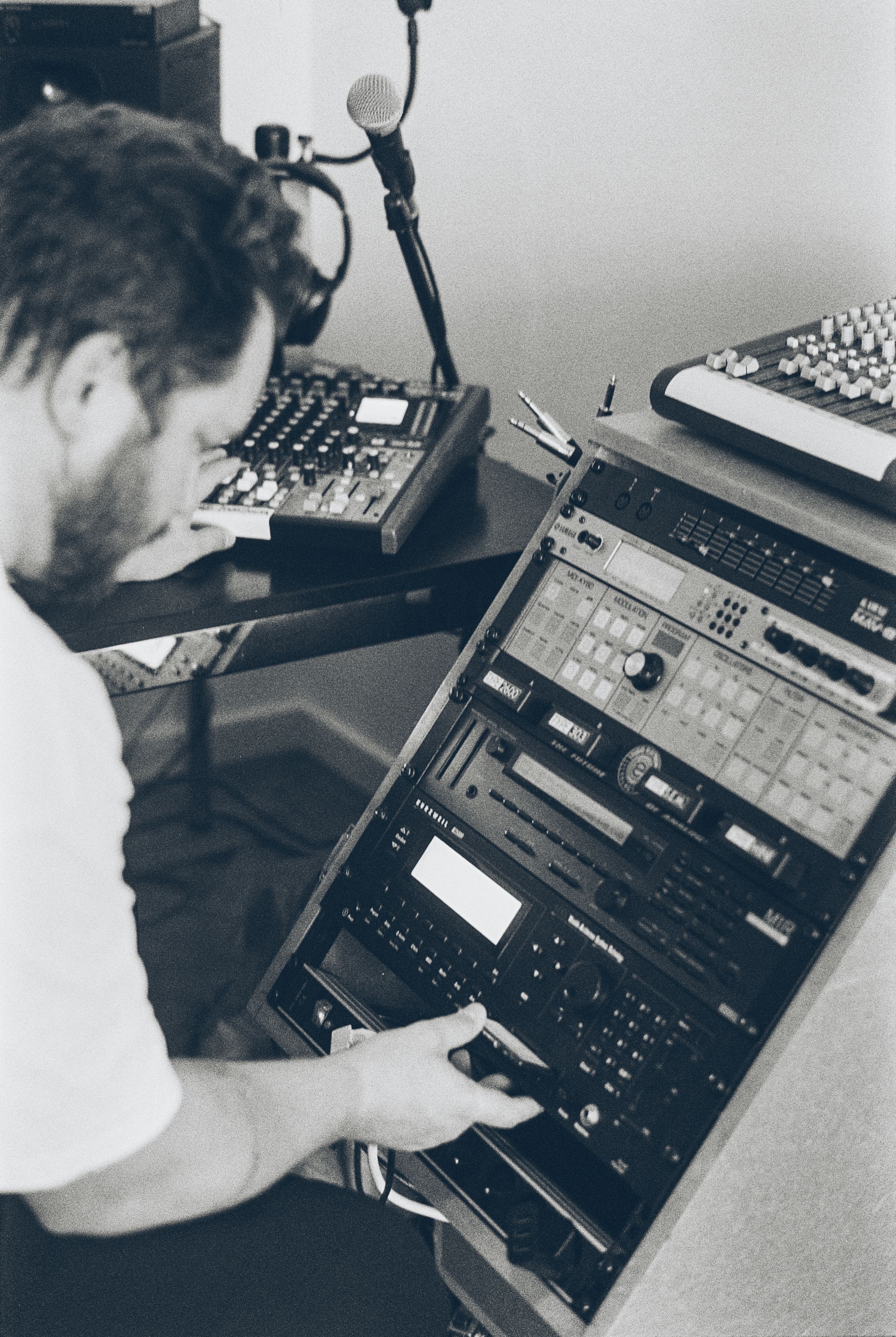
Romain FX / a working R-8M.
Romain FX identifies the rackmount R-8M as a source of heavy, classic drum sounds in his working setup. No individual record is claimed, so the story stays where the evidence is strongest: a neglected rack machine still earning a place in a current producer’s room.
Read Romain FX interview ↗More records in the archive
The machine keeps turning up.
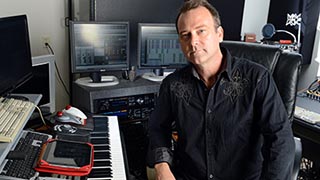
Sean Murray / soundtrack and production work
Sean Murray says he used the Roland R-8M rackmount drum module in his projects.
Read Sean Murray and the Roland R-8M ↗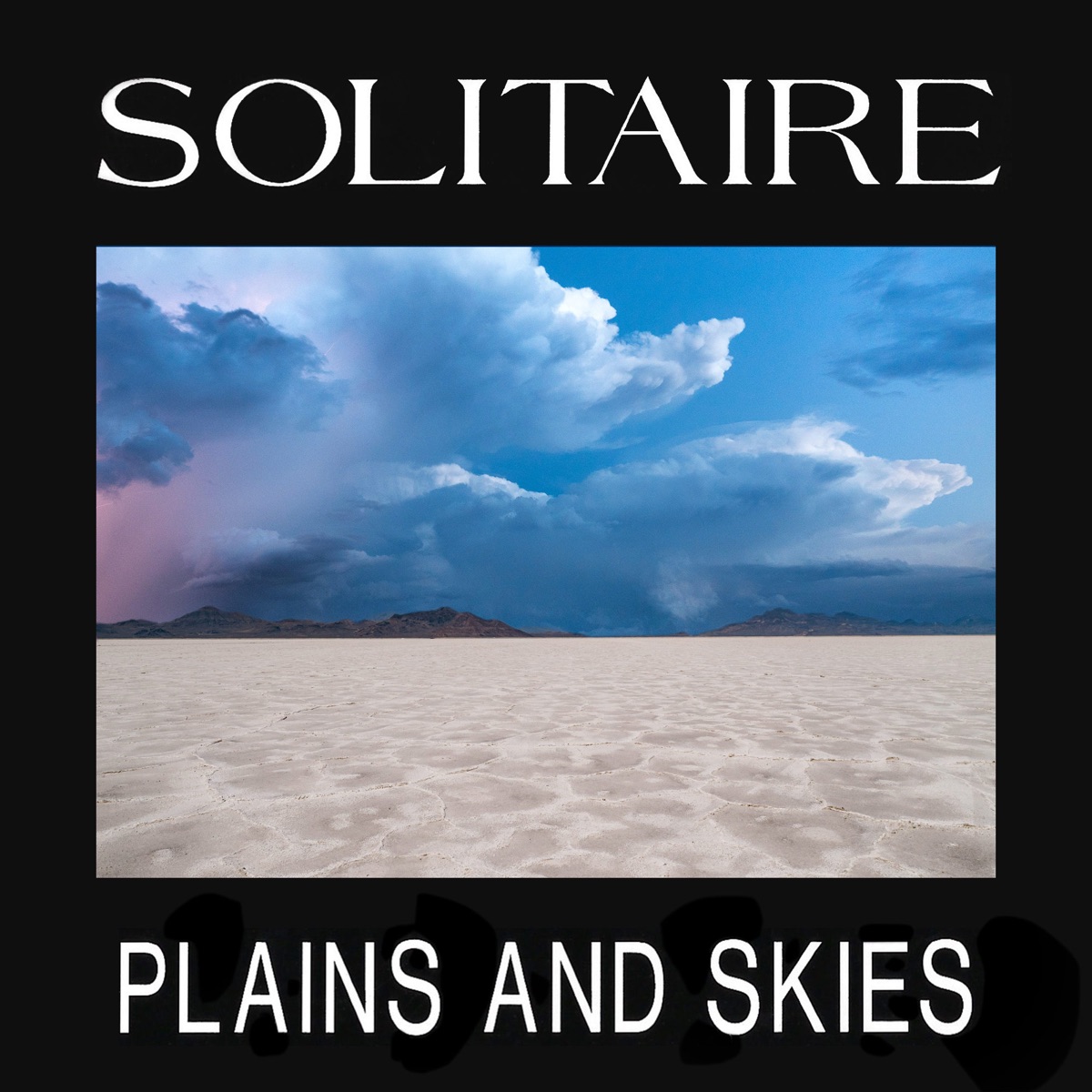
Solitaire / Elmar Schulte / Plains And Skies
The release credits name electronic drums played from an Octapad with a Roland R-8M.
Read Shop Projekt reissue credits ↗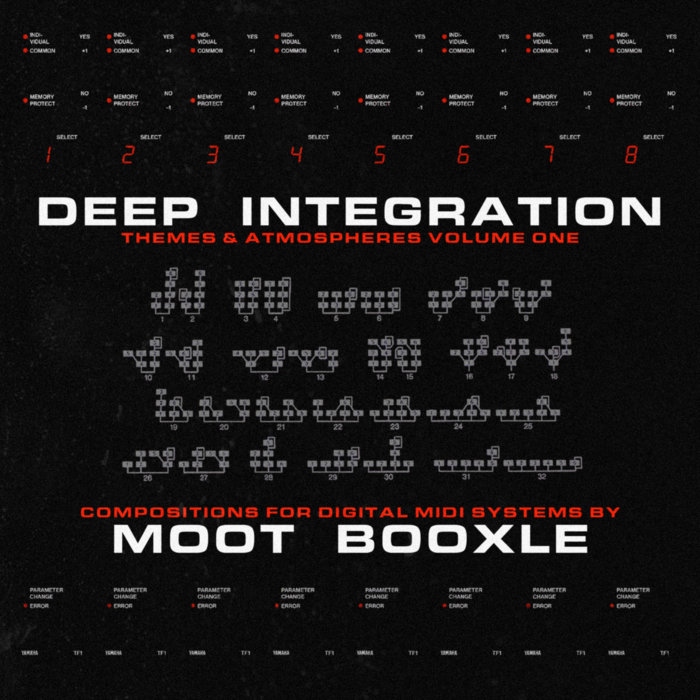
Moot Booxlé / Deep Integration
Moot Booxlé’s track notes credit a Roland R-8M for drums on “Crystalline” and the Bandcamp-exclusive “Amethyst Caverns”.
Read Moot Booxlé — Deep Integration ↗The R-8 moves into the rack
The R-8M put Roland’s R-8 sound engine into a single rack unit for studios already sequencing elsewhere. David Brenton’s 1990 review counted 68 internal 16-bit, 44.1kHz PCM samples, 12-note polyphony, stereo output and six discrete outputs, with MIDI In, Out and Thru. It was an instrument for a programmed setup rather than a rhythm machine asking to be played from its own pads.Source (1)
A sound library with room to grow
Three ROM-card slots allowed 26 additional sounds per card, while an optional RAM card expanded the patch count from 32 to 64. The arrangement made the R-8M a practical studio source: retain the core palette, then add a more specialised set of sounds when a project asked for them. Brenton welcomed the module format and the breadth of its sound options.Source (1)
Feel from the sequencer outward
The R-8M retained the R-8’s Feel function, which Brenton found useful for loosening a rhythm track that had become too regular. That function is best understood as a performance and programming tool: a way to shape the material sent from a sequencer, while the rack unit supplied the samples and outputs.Source (1)
On record
- Sean Murray — soundtrack and production work. Sean Murray says he used the Roland R-8M rackmount drum module in his projects. Source ↗
- Solitaire / Elmar Schulte — Plains And Skies. The release credits name electronic drums played from an Octapad with a Roland R-8M. Source ↗
- Moot Booxlé — Deep Integration. Moot Booxlé’s track notes credit a Roland R-8M for drums on “Crystalline” and the Bandcamp-exclusive “Amethyst Caverns”. Source ↗
In the studio and on stage
- Romain FX — Current working setup. Romain FX identifies the Roland R-8M as providing heavy, classic drum sounds in his working setup. Source ↗
Sources
The visual archive
Further visual evidence.
These displayed records are labelled by their documented role, date and source; source-only records are listed separately below.
Sources for images shown earlier (5)
- Roland R8M; Roland R8 Rhythm Composer; Roland R8 ↗
- Sean Murray — Roland Users Group profile ↗
- Romain FX — 15 Questions interview photograph ↗
- Moot Booxlé — Deep Integration ↗
Release date not stated on source page · Moot Booxlé / release artwork via Bandcamp · Official Bandcamp release-page artwork (Open Graph image) - Solitaire — Plains and Skies ↗
1992-04-06T07:00:00Z · Solitaire / release artwork via Apple Music catalog artwork · Release catalogue and retained front artwork
Additional visual sources (1)
Original publications and related image sources.
- Roland R8M ↗
Apr 1990 · Sound On Sound · Roland R-8M Total Percussion Sound Module front-panel photograph with Roland and R-8M markings visible.