
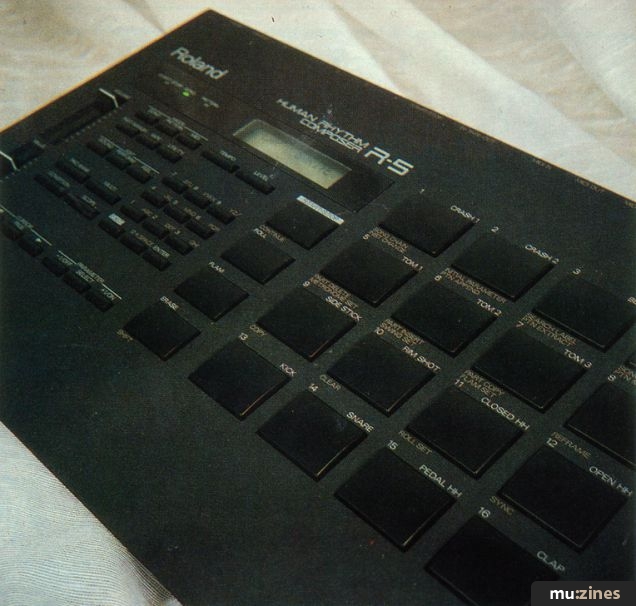
Nigel Lord reviewed the R-5 in Music Technology in July 1989, anticipating a UK price below £500.
The machine in the record
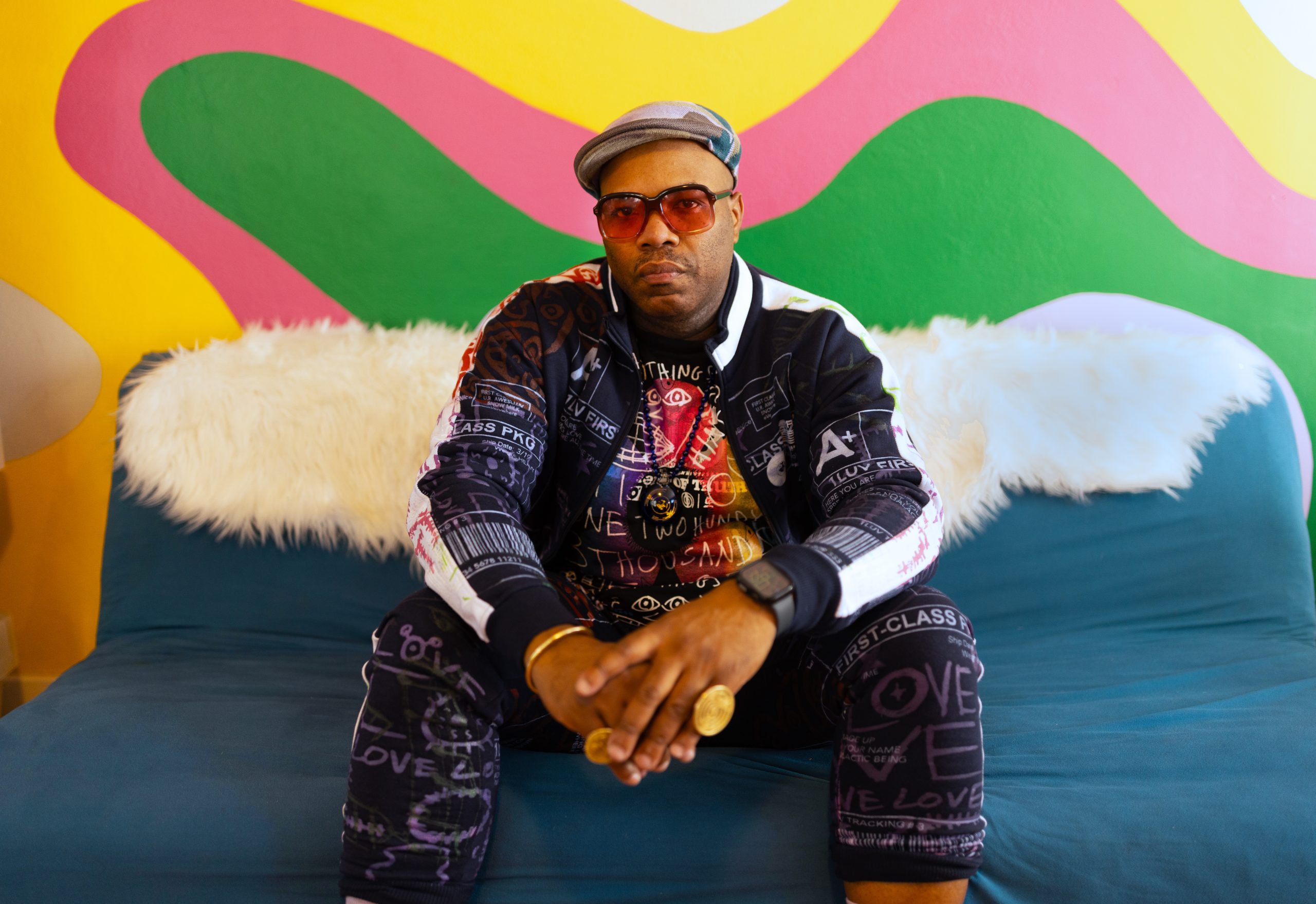
Daru Jones / learning New Jack Swing.
Daru Jones remembers getting an R-5 and studying Teddy Riley’s New Jack Swing programming. It is a learning story rather than a record credit, but it gives the machine a real place in the education of a drummer with a famously individual sense of time.
Read Daru Jones on the Roland R-5 ↗More records in the archive
The machine keeps turning up.
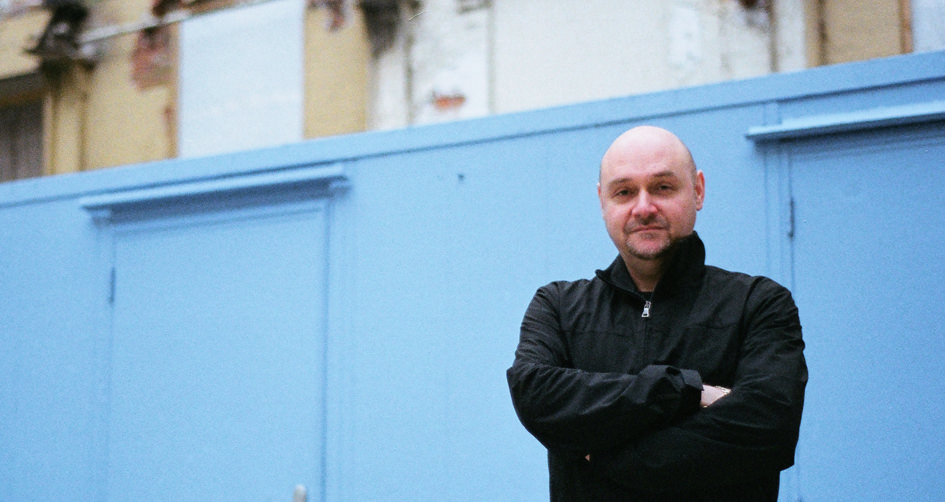
Kirk Degiorgio / As One / Early studio work after 1990 Detroit visit; no named recording established
Degiorgio recalls buying a Roland R-5, then locking himself away for six months to learn the studio setup.
Read Kirk Degiorgio interview ↗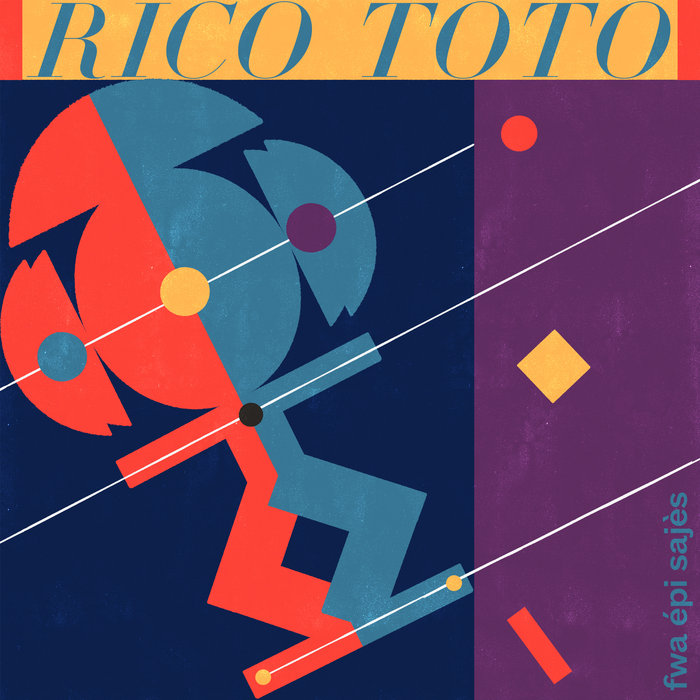
Rico Toto / Fwa Épi Sajès
The credited reissue notes for Rico Toto’s Fwa Épi Sajès identify a Roland R-5 as the drum machine on the 1993 electro-ka recording.
Read Rico Toto / Fwa Épi Sajès ↗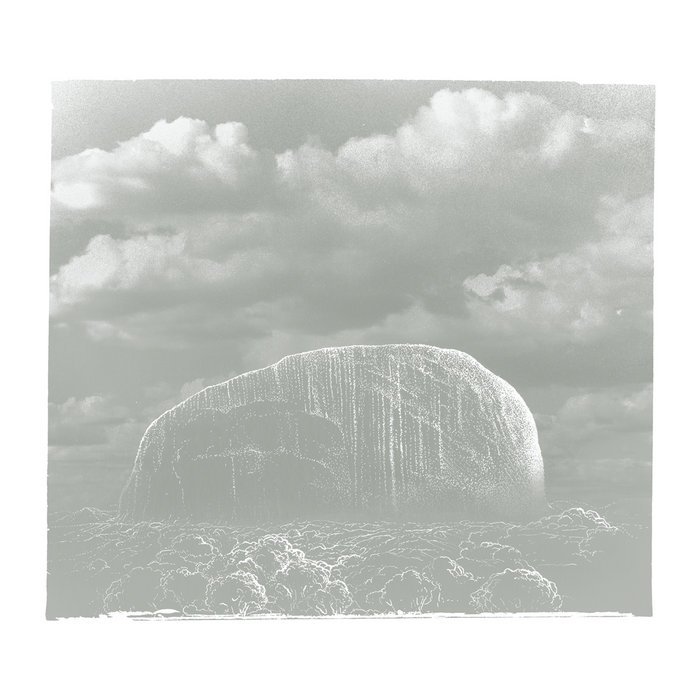
Jay U Xperience / Abuja
Jay U Xperience’s release account says Nigerian musician Justus Nkwane used a Roland R-5 and U-20 to bring electronic production into the project’s rhythmic ideas.
Read Jay U Xperience / Abuja ↗On record
- Daru Jones — Early programming study; no named recording. Jones recalls getting a Roland R-5 and studying Teddy Riley’s New Jack Swing beats while learning its programming. Source ↗
- Rico Toto — Fwa Épi Sajès. The credited reissue notes for Rico Toto’s Fwa Épi Sajès identify a Roland R-5 as the drum machine on the 1993 electro-ka recording. Source ↗
- Jay U Xperience — Abuja. Jay U Xperience’s release account says Nigerian musician Justus Nkwane used a Roland R-5 and U-20 to bring electronic production into the project’s rhythmic ideas. Source ↗
In the studio and on stage
- Kirk Degiorgio / As One — Early studio work after 1990 Detroit visit; no named recording established. Degiorgio recalls buying a Roland R-5, then locking himself away for six months to learn the studio setup. Source ↗
A compact R-8 workflow
Start with a preset or write a user pattern, then shape it with a Feel patch. The R-5 held 32 preset patterns, 100 user patterns and eight Feel patches. Its Condition key changed what the compact display showed for the current mode. Nigel Lord's 1989 review counted 68 internal sounds and 26 Copy instruments, with twenty voice changes from the R-8. Four individual outputs, six-song memory and cassette storage distinguished the smaller composer from the R-8's connections and card system.
A played hit, an edited sound
Sixteen touch-sensitive pads gave the player a way to enter a part, while pitch, decay and Nuance settings shaped the instruments. Pattern data could retain velocity, pitch, decay, Nuance and pan changes. The hundred programmable pattern slots shared a total capacity of 2,600 notes. To separate a sound at the mixer, the player selected its pad in sound editing, found OUTPUT and chose one of four Multi outs. MONO and POLY assignments controlled whether subsequent notes cut off or overlapped. These decisions let the written rhythm include changes in sound and articulation as well as placement.
R-5: Technical Specifications ↗ R-5: Assigning Sounds to the Individual Outs ↗ R-5, R-8, R-8MKII: Instrument Assign Type ↗
A drum machine that could carry bass lines
Finger, slap and acoustic bass voices let a pattern carry a melodic part alongside its drums. Jazz, electronic and Latin percussion expanded the palette. Lord particularly valued the bass voices, and noted that the Feel parameters could act on melodic sounds as well as percussion.
Human feel, deliberately made
Feel meant working deliberately with timing and dynamics. Lord admired the possibilities but questioned the calculation involved in making programmed variation sound human. His account also places a limit on that work: the R-5's step and real-time quantisation stopped at 1/96th notes.
Kirk Degiorgio’s first studio
After visiting Detroit in 1990, Kirk Degiorgio sold his record collection to assemble a studio: R-5, D-5 master keyboard, S950 sampler, DAT and Atari. He recalls spending six months reading manuals and teaching himself. The R-5 belongs to that account of learning to make music; the interview does not allocate it to a named As One recording.
Daru Jones learns the programmed beat
Daru Jones first encountered a DR-550 through an organ teacher who used it to keep time. His mother later helped him get an R-5, and he began studying Teddy Riley's New Jack Swing beats. In his 2025 recollection, drum-machine programming is part of a drummer's education—not a credit assigning the R-5 to Riley's records or Jones's later performances.
Rico Toto's Electro-ka
The reissue credits for Fwa Épi Sajès name the R-5 among Rico Toto's instruments. The release brings electronic production into the musical setting of Guadeloupe's Gwo-ka rhythms and the Moundjahka ensemble. Its equipment list supports an album-level association, without identifying which R-5 sound appears on each track. The retained cover belongs to the reissue, not a photograph of those sessions.
Jay U Xperience's electronic rhythm section
The Abuja release account places an R-5 and U-20 in Justus Nkwane's work as Jay U Xperience. It describes a 2019 EP drawn from his 1993 Ancestral Call album, made while he lived in New York. The account connects electronic instruments with his rhythmic ideas; it does not isolate an R-5 part for each of the four selected tracks.
Sources
The visual archive
Further visual evidence.
Sources for images shown earlier (5)
- Roland R5 — visually reviewed image ↗
- Daru Jones — Roland interview portrait ↗
- Kirk Degiorgio — Attack Magazine interview ↗
- Rico Toto — Fwa Épi Sajès ↗
Release date not stated on source page · Rico Toto / release artwork via Bandcamp · Official Bandcamp release-page artwork (Open Graph image) - Jay U Xperience — Abuja ↗
Release date not stated on source page · Jay U Xperience / release artwork via Bandcamp · Official Bandcamp release-page artwork (Open Graph image)