
The Eko Ritmo 20 reached British readers in November 1982 as a twenty-preset Italian rhythm machine with introductions, fills, a dual footswitch and a £189 price including VAT.Sources (7)
The machine in the record
Thomas P. Heckmann / Cold Wave.
Thomas P. Heckmann explicitly names a modified Eko Ritmo 20 among the machines used for Cold Wave. The modification and track allocation remain unknown, but the credit gives the overlooked Italian box a direct, contemporary electronic afterlife.
Read Cold Wave artist release page ↗More records in the archive
The machine keeps turning up.
Rodion & Mammarella / Musica E Computer
Label lists Eko Ritmo20 in equipment used for the release recorded at Museo Del Synth Marchigiano.
Read Musica E Computer release credits ↗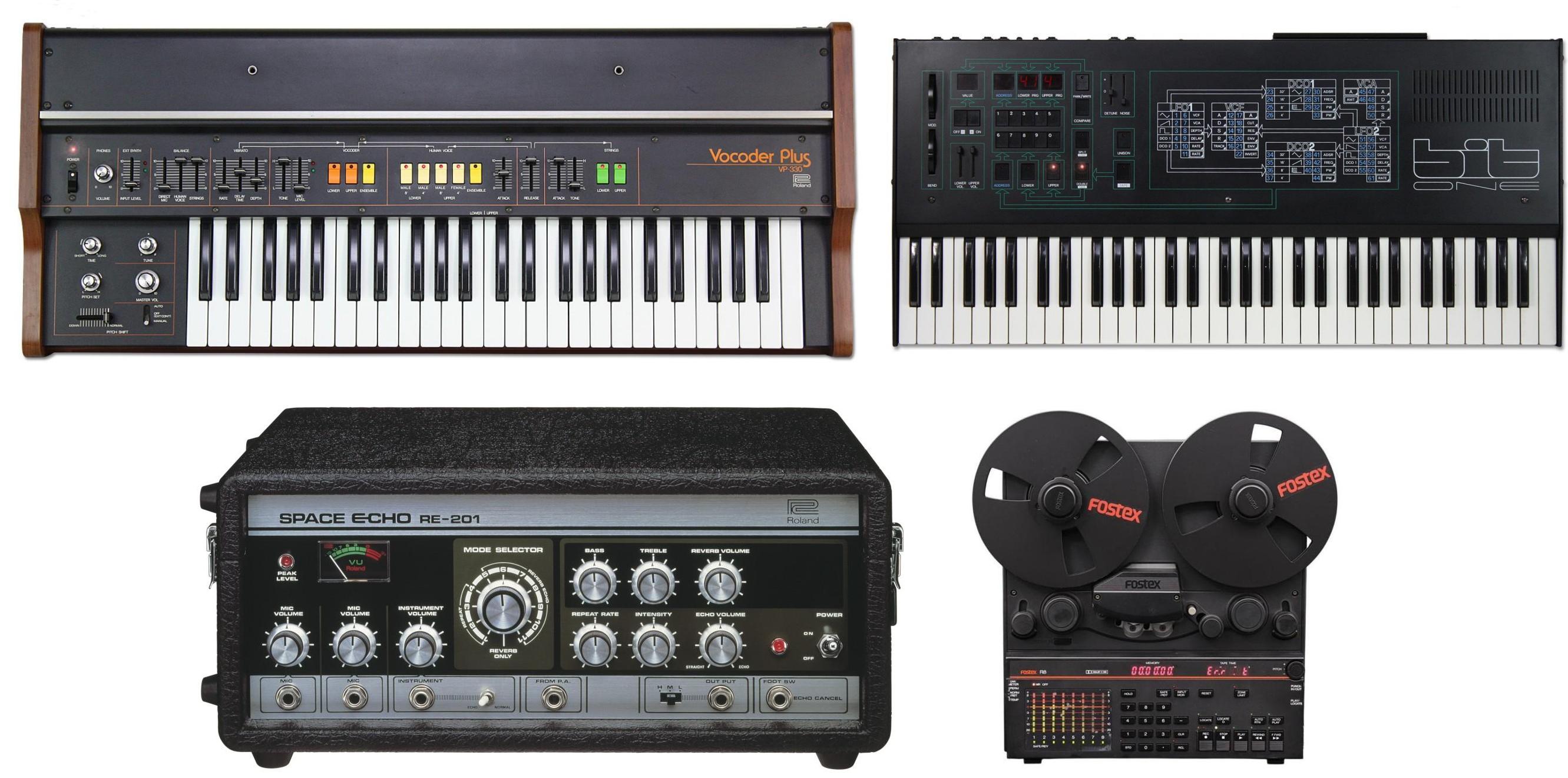
Gay Cat Park / I’m a Vocoder
Duo names modified Eko Ritmo20 in the studio recording account.
Read Ritorno alle origini dell’italo disco: l’avventura dei Gay Cat Park ↗Davide Gatti and Graziano Ravizza / Gay Cat Park / Gay Cat Park’s early electronic practice
Gatti and Ravizza recall modifying an EKO Ritmo 20 to make a disco rhythm.
Read Gay Cat Park and the EKO Ritmo 20 ↗
Wasted Pido / homesick songs
Wasted Pido’s credits name an Eko Ritmo 20 among the drum machines used on homesick songs.
Read Wasted Pido — homesick songs ↗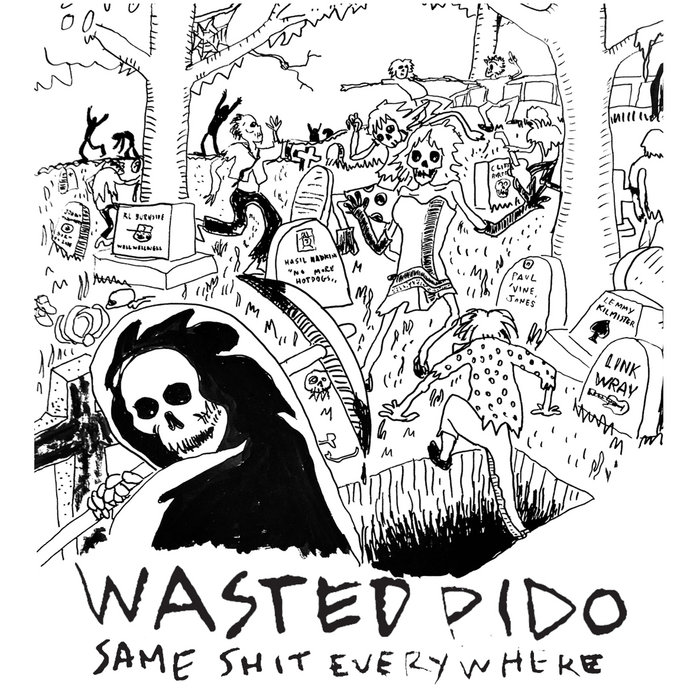
Wasted Pido / Same Shit Everywhere
Wasted Pido credits an Eko Ritmo 20 and Korg Volca Beats as the drum machines on Same Shit Everywhere.
Read Wasted Pido / Same Shit Everywhere ↗Twenty rhythms, waiting for a player
The Ritmo 20 arrived with twenty preset rhythms, each with introductions and fills. Kenneth McAlpine met it at the hinge between two worlds: a substantial Italian accompaniment machine with a panel made for selection and variation, as programmable drum machines were beginning to reshape expectations.
Nine voices through six hands
Nine percussion generators feed six mixer channels, giving the player a way to rebalance the rhythm without putting every sound on its own fader. McAlpine heard oscillator and ring-modulator designs in the metallic percussion, and appreciated the timbres and the solidity of the build.
Fills at the player’s feet
A dual footswitch operates transport and breaks, while rhythm selections can change during playback. The Ritmo 20 makes its music through choosing, pushing into a fill and changing a passage in motion: a preset instrument with a musician very much in the loop.
A second life in electronic music
Thomas P. Heckmann names a modified Ritmo 20 among the instruments used on Cold Wave, and Slow Motion Records credits the machine in the equipment used for Rodion & Mammarella’s Musica E Computer. Its old rhythm vocabulary has proved inviting to musicians who know how to tilt a familiar pattern into another world.
An Eko rhythm box in Gay Cat Park’s “I’m a Vocoder”
Gay Cat Park identifies the Eko Ritmo 20 in “I’m a Vocoder”. The account does not give a track sheet or dissect the pattern; its strength is simpler. A domestic Italian rhythm box is named as part of a new electronic recording, decades after its original market disappeared.
In the market
- 1982-11: GBP 189 — UK contemporary review retail price. Ritmo20 with dual footswitch and signal lead Source ↗
On record
- Thomas P. Heckmann — Cold Wave EP. Thomas P. Heckmann names a modified Eko Ritmo20 among the instruments used for the Cold Wave EP. Source ↗
- Rodion & Mammarella — Musica E Computer. Label lists Eko Ritmo20 in equipment used for the release recorded at Museo Del Synth Marchigiano. Source ↗
- Gay Cat Park — I’m a Vocoder. Duo names modified Eko Ritmo20 in the studio recording account. Source ↗
- Davide Gatti and Graziano Ravizza / Gay Cat Park — Gay Cat Park’s early electronic practice. Gatti and Ravizza recall modifying an EKO Ritmo 20 to make a disco rhythm. Source ↗
- Wasted Pido — homesick songs. Wasted Pido’s credits name an Eko Ritmo 20 among the drum machines used on homesick songs. Source ↗
- Wasted Pido — Same Shit Everywhere. Wasted Pido credits an Eko Ritmo 20 and Korg Volca Beats as the drum machines on Same Shit Everywhere. Source ↗
Sources
The visual archive
Further visual evidence.
These displayed records are labelled by their documented role, date and source; source-only records are listed separately below.
Sources for images shown earlier (5)
- Gay Cat Park early instruments: Eko Ritmo 20, Jen SX 1000 and Eko Panda 61 ↗
- Rodion & Mammarella — Musica E Computer ↗
2024-04-18 · Rodion & Mammarella / release artwork via Bandcamp · Official Bandcamp release-page artwork (Open Graph image) - Wasted Pido — homesick songs ↗
Release date not stated on source page · Wasted Pido / release artwork via Bandcamp · Official Bandcamp release-page artwork (Open Graph image) - Wasted Pido — Same Shit Everywhere ↗
2025-12-08 · Wasted Pido / release artwork via Bandcamp · Official Bandcamp release-page artwork (Open Graph image) - Thomas P. Heckmann — Heckmann - Cold Wave ↗
2016-08-04 · Thomas P. Heckmann / release artwork via Bandcamp · Official Bandcamp release-page artwork (Open Graph image)
Additional visual sources (4)
Original publications and related image sources.
- EKO Ritmo20, Electronics & Music Maker p38 ↗
November1982 · Electronics & Music Maker · Printed p38/PDF p40 - Gay Cat Park early-instrument illustration ↗
2026 article · Decadance · Illustration caption immediately before TRA SPINTE CREATIVE E LIMITI TECNOLOGICI - Eko Ritmo20 schematic and PCB-layout listing ↗
Undated listing · Third-party service-document archive · Ritmo20 row, schematic diagrams and PCB layouts, double-sided folding sheet - EKO Ritmo 20 ↗
Nov 1982 · Electronics & Music Maker · Ritmo 20 circuitry with the top board removed; dedicated review and caption resolve the otherwise unmarked internal view.