
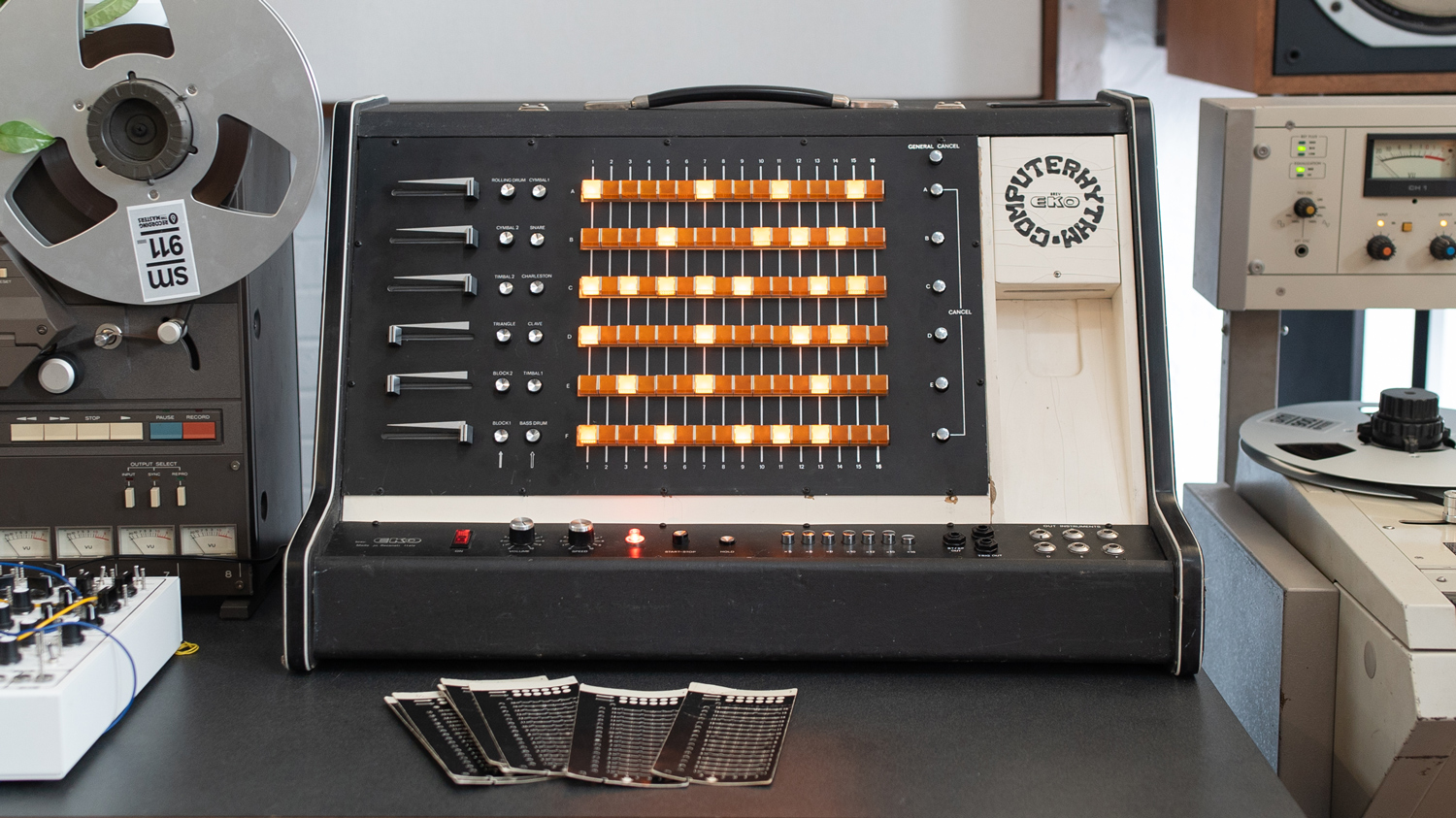
Retrospective histories place Eko’s Italian ComputeRhythm in the early 1970s. Its illuminated sixteen-step matrix and punch-card system document an early approach to writing rhythms, although an original dated launch announcement remains to be found.
The machine in the record
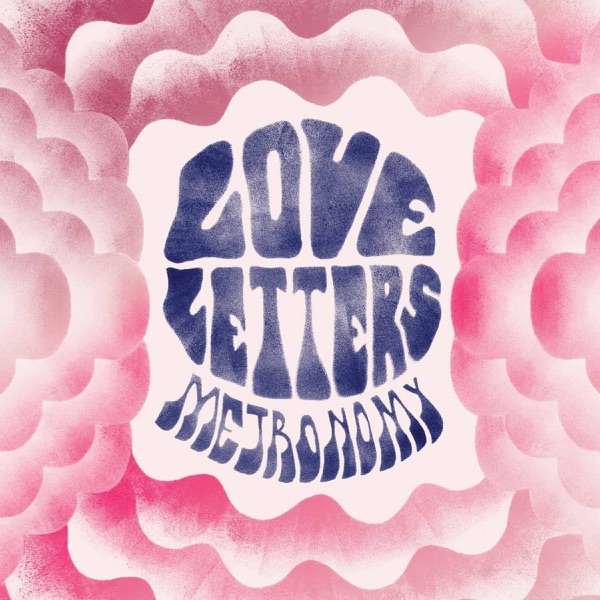
Metronomy / Love Letters.
Joseph Mount names the Eko ComputeRhythm among the machines behind Love Letters, and points to “The Upsetter” and “Monstrous” as places to hear it. The old Italian box becomes part of an album that made limitations feel like a writing method.
Read Metronomy: Joseph Mount & Ash Workman — Recording Love Letters ↗More records in the archive
The machine keeps turning up.
Reported association
Joseph Mount / Metronomy / Unspecified production setup
An equipment index quotes a Sound On Sound feature naming Joseph Mount’s Eko ComputeRhythm among the drum machines used in his working setup.
Read Joseph Mount and the Eko ComputeRhythm ↗Tangerine Dream / Chris Franke / Early electronic-music practice
Chris Franke recalled an EKO-made Italian rhythm controller in Tangerine Dream’s early setup, with a lit pattern he could alter while it ran and trigger outputs he later added.
Read Tangerine Dream: Changing Use of Technology, Part 1: 1967–1977 ↗A rhythm laid out in lights
Six rows of sixteen illuminated buttons put the rhythm in front of the player. The surviving specimen’s panel numbers the steps across the top and bottom, with percussion selectors and faders beside the rows. Rather than selecting only a named preset, a player can see the positions that make up the written pattern.
Eko ComputeRhythm surviving specimen — Samples From Mars / KVR Audio ↗ An Eko of Future Past: Rare Drum Machine Still Fascinates, 50 Years On ↗ Akai MPC60 Revisited ↗
Cards beside the console
The specimen photograph shows patterned cards beside the ComputeRhythm’s console. Retrospective accounts describe punch cards feeding stored rhythms into the machine, alongside its twelve analogue percussion sounds. The cards make pattern storage a physical part of the instrument’s story, separate from the circuits producing the sounds. The surviving image does not establish when this particular unit was made.
An Eko of Future Past: Rare Drum Machine Still Fascinates, 50 Years On ↗ Akai MPC60 Revisited ↗
Franke’s running rhythm
Chris Franke’s 1994 recollection describes an EKO-made Italian rhythm controller around Tangerine Dream’s Green Desert sessions. He could delete, skip and change its lit-step rhythm while it ran, and later added trigger outputs. He did not print the ComputeRhythm product name, and his remembered eight rows differ from the six-row specimen. His account preserves a working method without settling exact model or revision.
Tangerine Dream: Changing Use of Technology, Part 1: 1967–1977 ↗
Two songs on Love Letters
Joseph Mount identifies an Eko ComputeRhythm among the drum machines used on Metronomy’s Love Letters. He names ‘The Upsetter’ and ‘Monstrous’ as places where it can be heard. That is model-specific participant testimony for two songs, not a claim about every album track or a reconstruction of each voice and pattern.
Metronomy: Joseph Mount & Ash Workman — Recording Love Letters ↗
Recording and working accounts
Explore 3 source accounts
- Joseph Mount / Metronomy — Love Letters — “The Upsetter” and “Monstrous”
Mount identifies an Eko ComputeRhythm among the machines used for Love Letters and names “The Upsetter” and “Monstrous” as audible examples.
Metronomy: Joseph Mount & Ash Workman — Recording Love Letters ↗
- Joseph Mount / Metronomy — Unspecified production setup
- Tangerine Dream / Chris Franke — Early electronic-music practice
Read this account in the story ↑
Tangerine Dream: Changing Use of Technology, Part 1: 1967–1977 ↗
Sources
- Eko ComputeRhythm surviving specimen — Samples From Mars / KVR Audio
- An Eko of Future Past: Rare Drum Machine Still Fascinates, 50 Years On
- Akai MPC60 Revisited
- Eko ComputeRhythm service manual index
- Tangerine Dream: Changing Use of Technology, Part 1: 1967–1977
- Metronomy: Joseph Mount & Ash Workman — Recording Love Letters
The visual archive
Further visual evidence.
Sources for images shown earlier (2)
- Samples From Mars — Eko Computerhythm ↗
- Metronomy — Love Letters ↗
2014-03-10 · Metronomy / release artwork via Apple Music catalogue · Release catalogue and retained front artwork
Additional visual sources (1)
Original publications and related image sources.
- Reverb News — An Eko of Future Past: Rare Drum Machine Still Fascinates, 50 Years On ↗
27 June 2024 · Dan LeRoy / Reverb News · Article’s Museo specimen context and exact-model imagery