
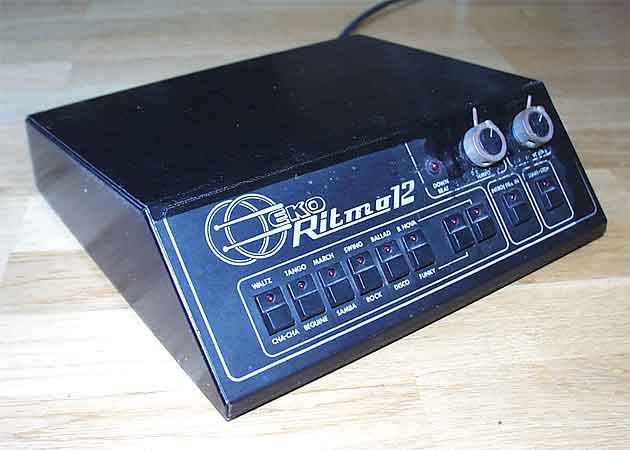
The Eko Ritmo 12 was a compact preset accompaniment machine available to British musicians by July 1982. Twelve ready rhythms and immediate controls made it a small partner for the player who wanted a pulse close at hand.
The machine in the record
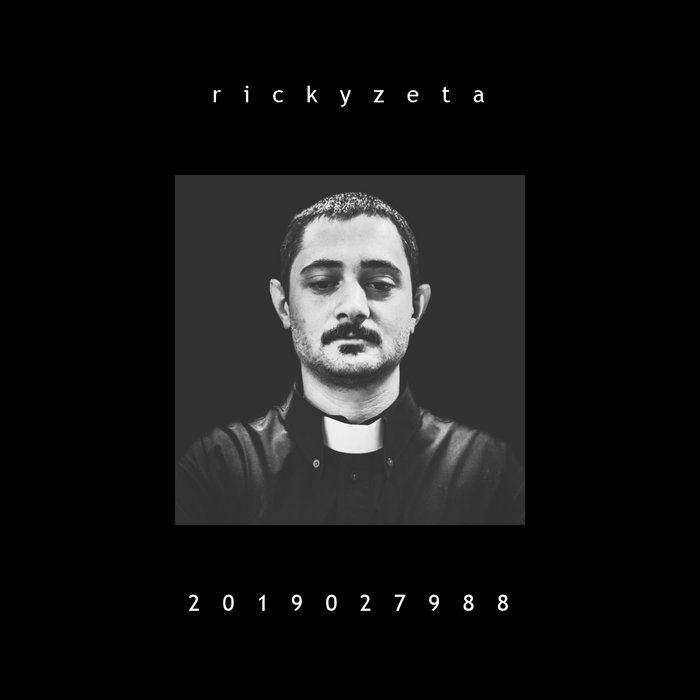
Ricky Zeta / 2 0 1 9 0 2 7 9 8 8.
Ricky Zeta’s release page lists an Eko Ritmo 12 among the machines used for 2 0 1 9 0 2 7 9 8 8. The credit is album-wide rather than track-specific, but it gives a small Italian preset box a clear place in a modern electronic record.
Read Ricky Zeta — 2 0 1 9 0 2 7 9 8 8 ↗More records in the archive
The machine keeps turning up.
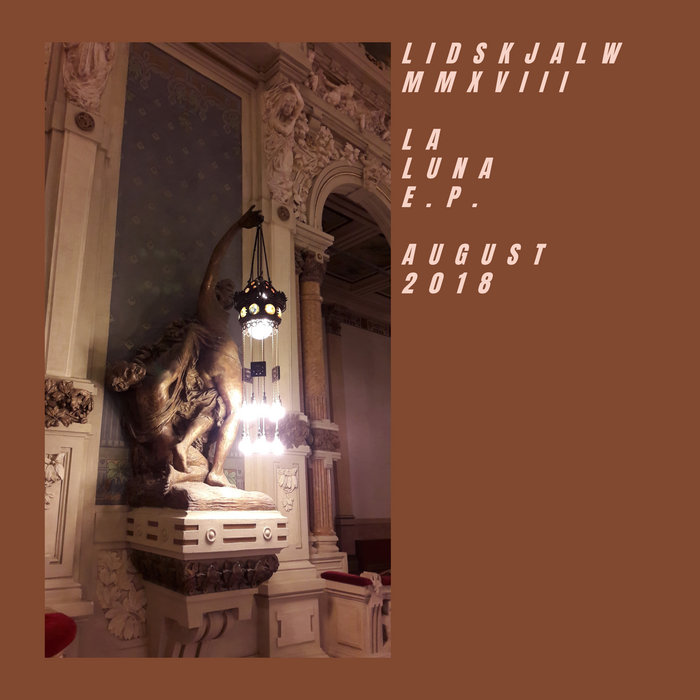
Lidskjalw MMXVIII / La Luna E.p. August 2018
Lidskjalw MMXVIII’s release page lists an Eko Ritmo 12 among the instruments used for La Luna.
Read Lidskjalw MMXVIII — La Luna E.p. August 2018 ↗Twelve rhythms in a compact case
The Ritmo 12 belongs to Eko’s long line of accompaniment instruments, but it has the scale of a close companion: a finite pattern set, direct controls and a clear invitation to play along. A contemporary buyer’s guide places the model in the 1982 British market.Sources (2)
A model with its own identity
The Ritmo 12 needs to be read as its own machine, rather than folded into the better-documented Ritmo 20. The surviving owner account and service-document index preserve its name, cabinet and separate technical trail, allowing its history to remain precise while research continues.Sources (2)
A later source of rhythm
Rhythmic Robot’s sampling account records the Ritmo 12 as a distinct source instrument, showing how a compact preset box could keep speaking to later musicians through the sound and behaviour of its original patterns.Source (1)
Ricky Zeta’s Ritmo 12
Ricky Zeta lists an Eko Ritmo 12 in the gear for the 2019 album *2 0 1 9 0 2 7 9 8 8*. The credit does not pretend to separate every rhythm in the mix; it records the modest Italian preset box as part of an experimental, industrial and acid-house palette.Source (1)
Sources
The visual archive
Further visual evidence.
These displayed records are labelled by their documented role, date and source; source-only records are listed separately below.
Sources for images shown earlier (3)
- Eko Ritmo 12 front panel ↗
- Ricky Zeta — 2 0 1 9 0 2 7 9 8 8 ↗
- Lidskjalw MMXVIII — La Luna E.p. August 2018 ↗
Release date not stated on source page · Lidskjalw MMXVIII / release artwork via Bandcamp · Official Bandcamp release-page artwork (Open Graph image)