
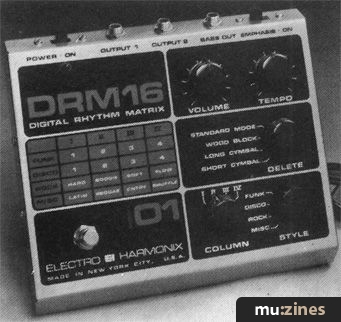
The DRM-16 was demonstrated during Electro-Harmonix’s July 1979 Soviet visit, according to the company-hosted reprint of Faye Levine’s report. This dates a public demonstration, not an established worldwide launch.
The machine in the record
Bérurier Noir / the first Dédé.
Archive material identifies Bérurier Noir’s Electro-Harmonix DRM-16 as central to its early drummerless sound before it was stolen ahead of an April 1984 concert. The replacement DRM15 has its own story. These accounts describe the band’s live setup; they do not establish individual recording credits.
Read Bazar pop — Bérurier Noir archive-object discussion ↗More records in the archive
The machine keeps turning up.
Reported association
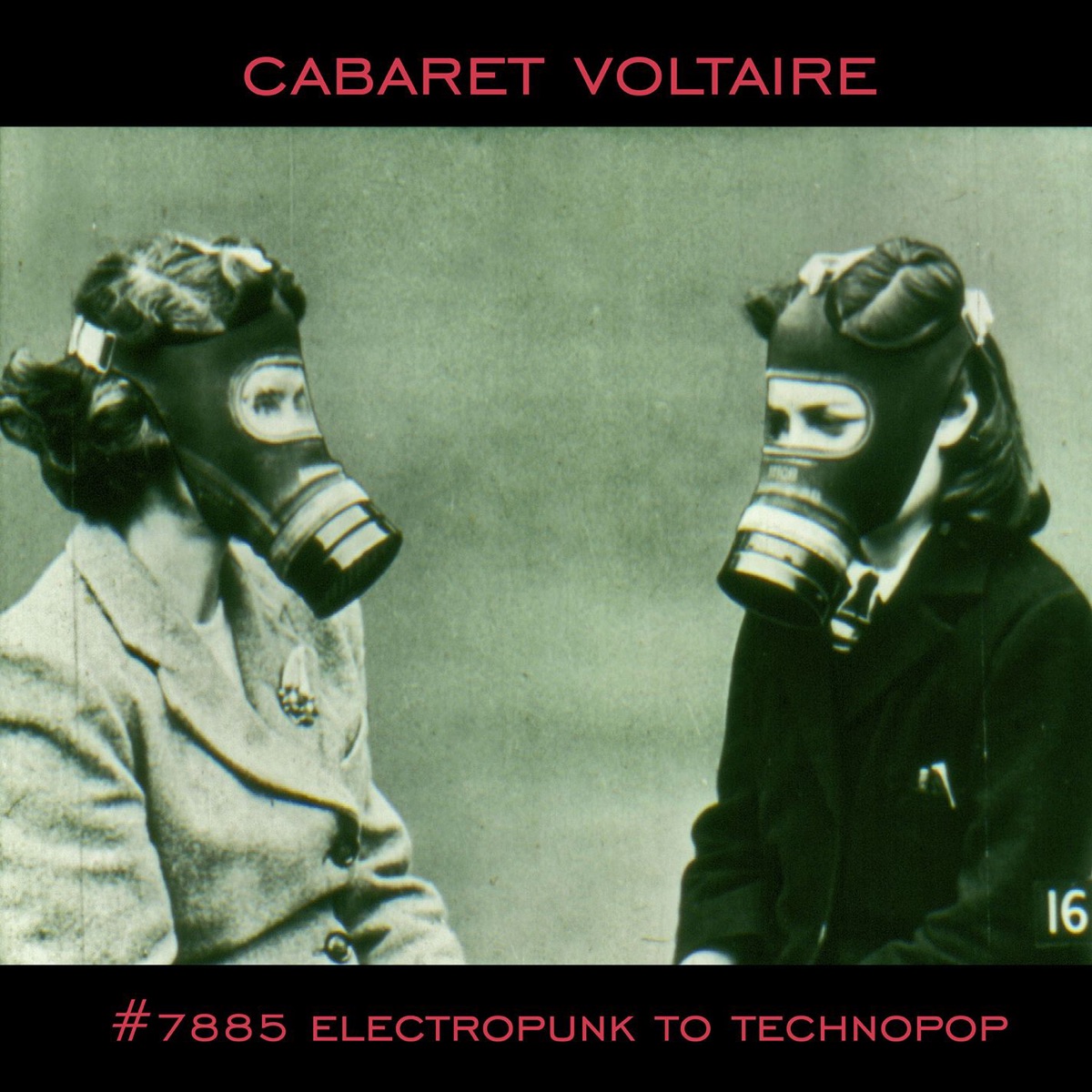
Cabaret Voltaire / “Seconds Too Late” / “Control Addict”
The account says the group chose the DRM-16 for the pulse of the 1980 single and its flipside. This attribution rests on a reproduced retrospective account, rather than a verified session document.
Read Dancing to the Drum Machine account ↗Choose the beat from the chart
Turn the Column and Style selectors to choose a rhythm from the chart, then set its pace and level with the tempo and volume knobs. The DRM-16 puts preset accompaniment in a small metal case shaped like Electro-Harmonix’s effects units. The front panel offers selection rather than a step-writing surface.
Digital name, analogue sounds
Electro-Harmonix called it the Digital Rhythm Matrix, but International Musician’s October 1985 guide classified the DRM-16 as seven analogue sounds and sixteen preset patterns. The same table lists three outputs and bass-drum triggering. The product name should not be mistaken for a claim that its drum voices are digital samples.
A demonstration in July 1979
Faye Levine’s report of Electro-Harmonix’s Soviet visit describes the DRM-16 being demonstrated frequently alongside the company’s effects and musicians. Drummer Charles ‘Cookie’ Cook praised its sixteen presets. The company-hosted reprint dates the visit to July 1979: evidence of a public appearance, not a worldwide launch or first sale.
The first Dédé and its replacement
Bazar pop identifies Bérurier Noir’s early Dédé as a DRM-16. It recounts the box’s theft before an April 1984 concert at the Forum des Halles, with Lucrate Milk’s Raoul Gaboni taking its place on drums that night. The BnF’s later archive photograph instead shows a DRM15, bought by Fanfan after the theft. These are successive instruments in the band’s live history, not interchangeable model names or individual recording credits.
Bazar pop — Bérurier Noir archive-object discussion ↗ Dans les archives de FanXoa et mastO de Bérurier Noir — Dossier de presse ↗
In the market
Explore 1 period price record
- 1979-12/1980-01 · GBP 120.5
UK advertised price in contemporary product listing. DRM 16; package and accessories unspecified
Recording and working accounts
Explore 2 source accounts
- Bérurier Noir — Early drummerless live period
Archive material identifies Dédé’s Electro-Harmonix DRM-16 as central to Bérurier Noir’s drummerless sound before it was stolen ahead of an April 1984 concert.
- Cabaret Voltaire — “Seconds Too Late” / “Control Addict”
Sources
- Electro-Harmonix DRM 16 product listing
- Electro-Harmonix DRM-16 Digital Rhythm Matrix product news
- Electro-Harmonix electronic drums advertisement
- Electro-Harmonix goes to Russia
- Bazar pop — Bérurier Noir archive-object discussion
- Dans les archives de FanXoa et mastO de Bérurier Noir — Dossier de presse
- Machines up to £200
The visual archive
Further visual evidence.
Sources for images shown earlier (2)
- Machines up to £200 ↗
- Cabaret Voltaire — Seconds Too Late ↗
1990-05-29T12:00:00Z · Cabaret Voltaire / release artwork via Apple Music catalog artwork · Release catalogue and retained front artwork
Additional visual sources (3)
Original publications and related image sources.
- Sounds introduces the Electro-Harmonix DRM-16 ↗
1980-01-19 · Sounds · Printed p.34 / PDF search result page 34 - Electro-Harmonix DRM-16 in Space Drums advertisement ↗
1980-09 · Electro-Harmonix · Advertisement headed SPACE DRUMS - Machines up to £200 ↗
Oct 1985 · International Musician & Recording World · Electro-Harmonix DRM16 Digital Rhythm Matrix product photograph; the DRM16 and Electro Harmonix markings are visible.