
Studio Sound’s July 1981 advertisement publicly offered the original MCS at £1,799 before VAT. January 1982’s review documents the separate-monitor configuration; February 1983’s review describes the updated MCS II with an integrated monitor. Neither advertisement nor review proves the date of a first fulfilled order.
The machine in the record
Eurythmics / “Sweet Dreams (Are Made of This)”.
Dave Stewart says he and Annie Lennox used a newly invented Movement MCS Percussion Computer while developing the music that became Sweet Dreams, including the bridge textures of “Sweet Dreams (Are Made of This)”. It is a rare direct route from a peculiar British hybrid machine into one of pop’s most recognisable records.
Read Technical GRAMMY Award: Ikutaro Kakehashi And Dave Smith ↗More records in the archive
The machine keeps turning up.
Eurythmics / Dave Stewart and Annie Lennox / Sweet Dreams sessions; “Sweet Dreams (Are Made of This)”
Dave Stewart says he and Annie Lennox used a newly invented Movement MCS Percussion Computer while developing the music that became Sweet Dreams, including the bridge textures of “Sweet Dreams (Are Made of This)”.
Read Technical GRAMMY Award: Ikutaro Kakehashi And Dave Smith ↗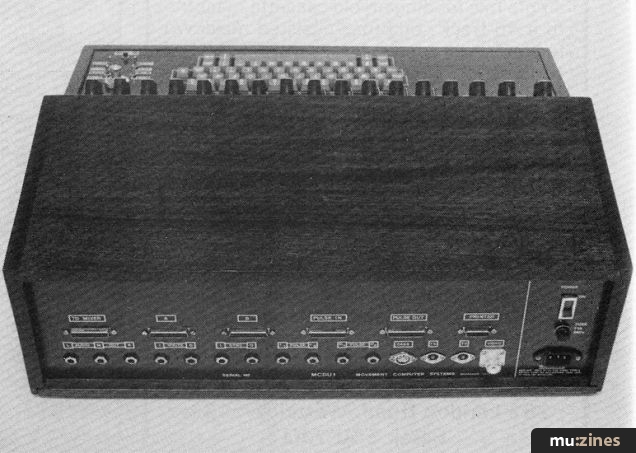
Tom Bailey / Thompson Twins / “In the Name of Love”
Tom Bailey recalls programming a Movement MCS Percussion Computer for Thompson Twins’ “In the Name of Love”.
Read The Most Influential Drum Machine That Nobody Knows ↗Reported association
Depeche Mode, Gary Numan and Jimmy Page / Contemporary reported use
A 1982 Electronics & Music Maker review reports MCS Percussion Computers appearing on Top of the Pops behind Depeche Mode and in the possession of Gary Numan and Jimmy Page, a striking set of early public associations for the British hybrid machine.
Read The Movement Computer Systems Percussion Computer ↗On record
- Eurythmics / Dave Stewart and Annie Lennox — Sweet Dreams sessions; “Sweet Dreams (Are Made of This)”. Dave Stewart says he and Annie Lennox used a newly invented Movement MCS Percussion Computer while developing the music that became Sweet Dreams, including the bridge textures of “Sweet Dreams (Are Made of This)”. Source ↗
- Tom Bailey / Thompson Twins — “In the Name of Love”. Tom Bailey recalls programming a Movement MCS Percussion Computer for Thompson Twins’ “In the Name of Love”. Source ↗
- Depeche Mode, Gary Numan and Jimmy Page — Contemporary reported use. A 1982 Electronics & Music Maker review reports MCS Percussion Computers appearing on Top of the Pops behind Depeche Mode and in the possession of Gary Numan and Jimmy Page, a striking set of early public associations for the British hybrid machine. Source ↗
Compose a rhythm on the screen
To begin a rhythm, the original MCS asked for beats per bar and a bar count, then sounded claves while the player entered voices from its keyboard. The screen belonged to that composing process. July 1981’s advertisement showed a separate monitor above the unit and offered nineteen real and synthesised sounds, on-screen assembly and cassette saving. The £1,799 price excluded VAT and television; purchases before 26 July came with a cassette player, monitor and games cassette. This is a documented offer, not proof of delivered orders.
The M.C.S. Percussion Computer ↗ The Movement Computer Systems Percussion Computer ↗
Voices and rhythms in the original system
Dave Crombie’s January 1982 review describes fourteen simultaneous percussion channels: five could select recorded or synthesised voices, while nine were synthetic. This is not nineteen independently playable channels. He records ten rhythm memories, expandable into multi-bar parts and chains. Per-channel controls changed level and decay, or the playback rate of recorded sounds. Behind the keyboard were individual audio and trigger connections, cassette storage and video outputs. Crombie credited Dave Goodway and John Dickenson with the design, but found the conventional keyboard awkward for live playing.
The M.C.S. Percussion Computer ↗ APRS 1981: MCS Percussion Computer at Turnkey ↗ The Movement Computer Systems Percussion Computer ↗
MCS II: a different cabinet and composing desk
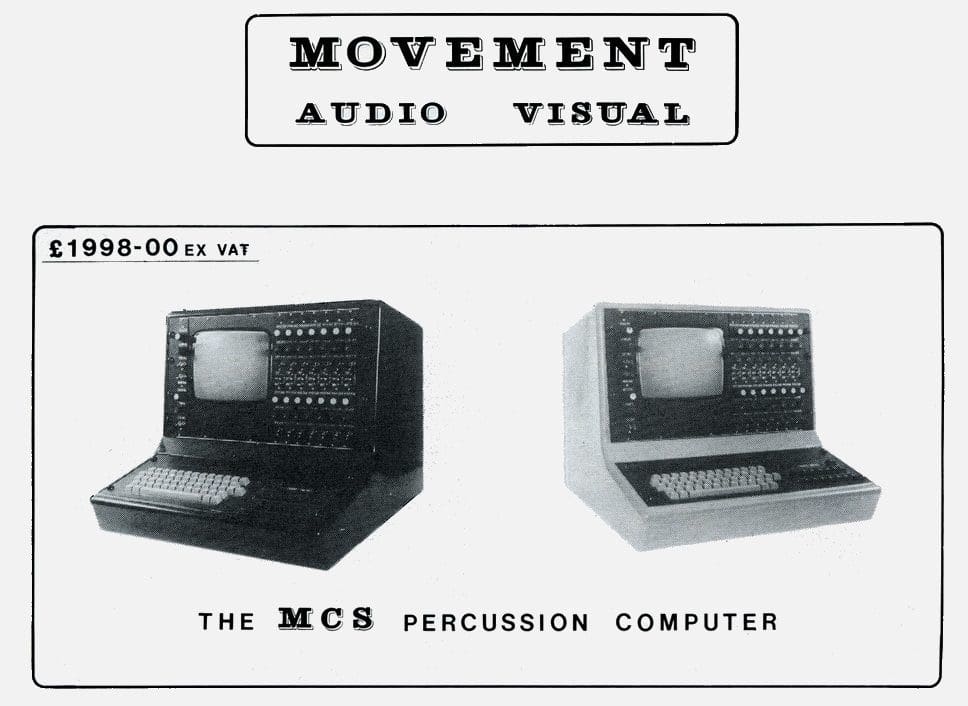
The February 1983 review describes the MCS II’s fibreglass cabinet, integrated monitor and seven dual-part voice modules. It lists twenty-eight available sounds but fourteen voices triggered on a step; those counts describe different things. Compose, Play/Modify and Assemble commands let the player enter a rhythm, edit it and connect pages into a sequence. Off-beat options accommodated rolls and flams, and work could be saved to cassette. The review quoted £2,300 including VAT. User sampling and dynamic drum-pad programming were proposed developments, not established shipped features. The retained undated advert’s integrated cabinets and £1,998 ex-VAT price must not illustrate the July 1981 offer as if they were the same document.
Two accounts of making records
Dave Stewart recalls using the Movement with Annie Lennox in 1982 and struggling to keep their instruments in time. He separately names bottle hits for the ‘Sweet Dreams’ bridge; his account does not allocate that texture to an MCS voice. Tom Bailey’s later interview distinguishes the CR-78 demo of ‘In the Name of Love’ from the Movement-based recording, with live tom overdubs added by the drummer. These participant accounts are stronger than a photograph in a promotional video. Crombie’s reported Depeche Mode, Gary Numan and Jimmy Page associations remain a separate evidence category, not named-record credits.
Technical GRAMMY Award: Ikutaro Kakehashi And Dave Smith ↗ The Most Influential Drum Machine That Nobody Knows ↗ The Movement Computer Systems Percussion Computer ↗
Sources
The visual archive
Further visual evidence.
These displayed records are labelled by their documented role, date and source; source-only records are listed separately below.
Sources for images shown earlier (2)
Additional visual sources (2)
Original publications and related image sources.
- MCS Percussion Computer — visually reviewed image ↗
Feb 1983 · Electronics & Music Maker · Monitor-screen photograph visibly headed MOVEMENT COMPUTER SYSTEMS II and listing percussion-machine options. — Percussion Machine options. — article: - MCS Percussion Computer — visually reviewed image ↗
Feb 1983 · Electronics & Music Maker · Internal-construction photograph explicitly captioned as the MCS II. — Internal construction of the MCS II. — article: