
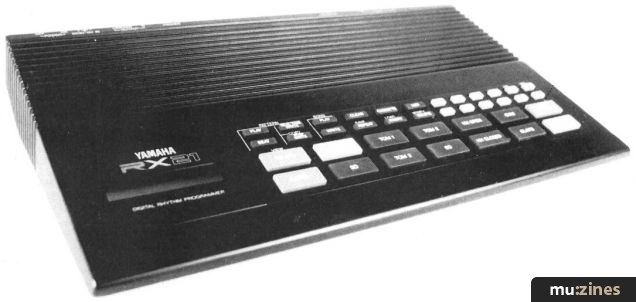
The Yamaha RX21 was reviewed in Britain in autumn 1985 at £249. It brought sampled percussion, MIDI and programmable patterns into a remarkably small and approachable machine.
The machine in the record
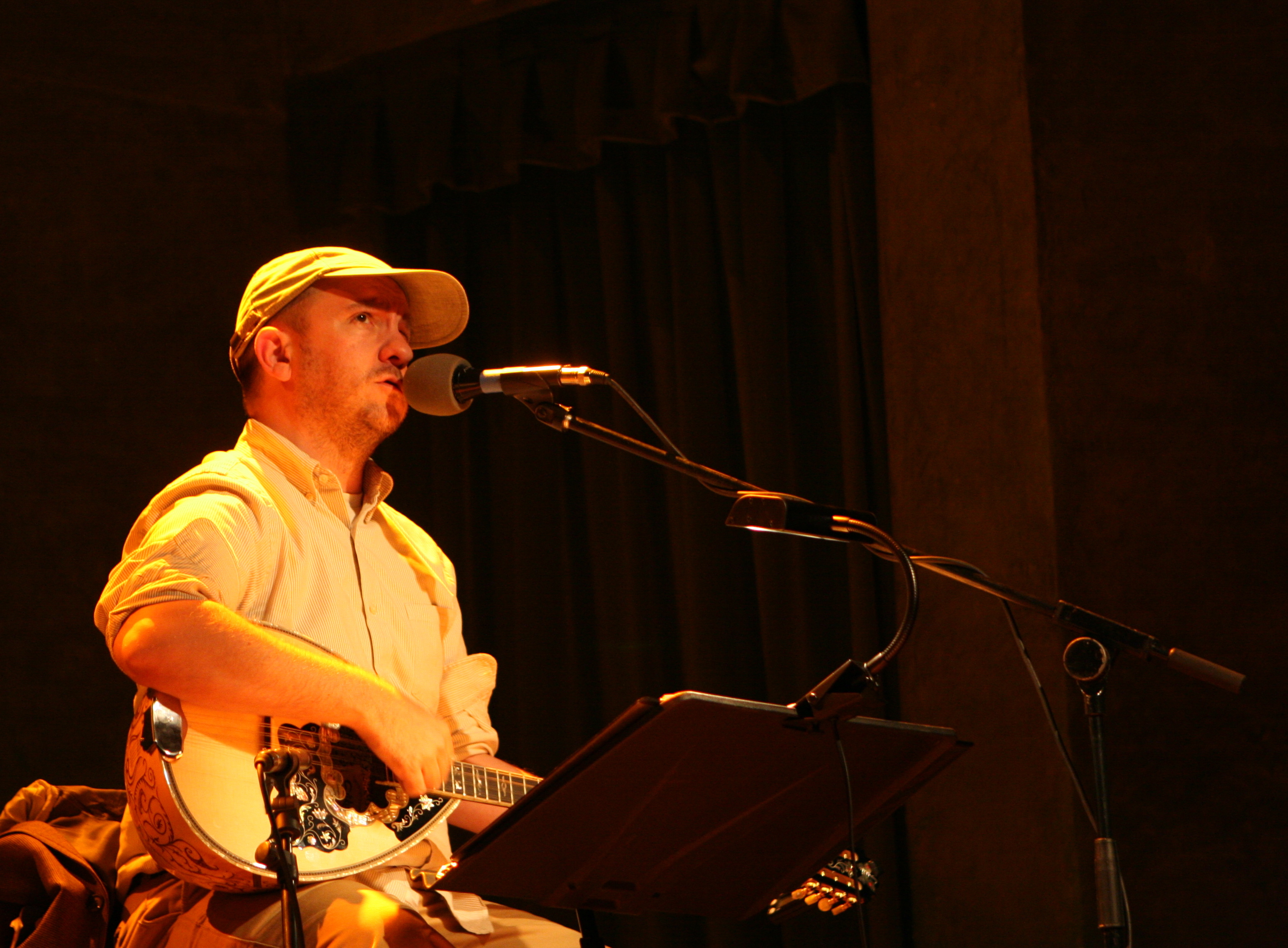

The Magnetic Fields / Distant Plastic Trees.
Stephin Merritt says Distant Plastic Trees was made entirely with a Roland S-50, Yamaha RX21 and Korg Poly-800. The little Yamaha is not merely a period detail; it belongs to the record’s complete, deliberately limited palette.
Read Stephin Merritt’s studio ↗More records in the archive
The machine keeps turning up.
Posthuman / Early four-track recordings
Posthuman says his teenage setup used an RX21 with unused voices muted and repurposed as MIDI triggers, recorded to a Fostex four-track.
Read Posthuman on the Yamaha RX21 ↗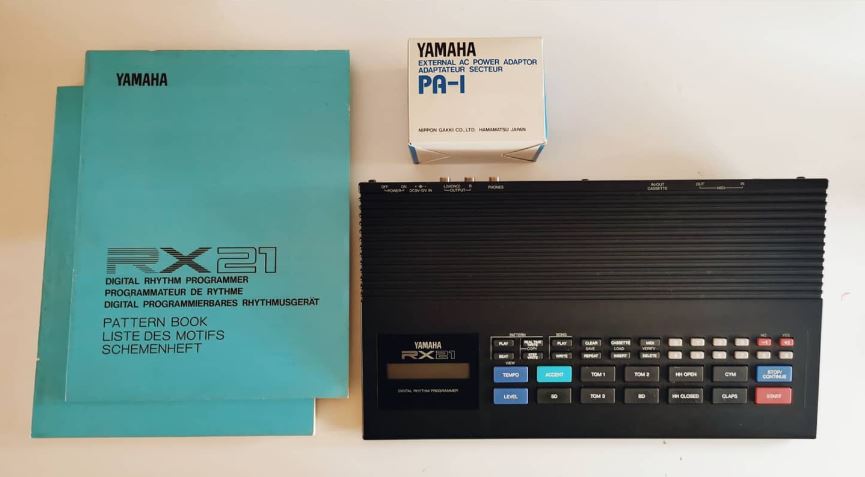
Adam de Paor-Evans / Early home-recording and hip-hop practice
De Paor-Evans describes buying an RX21, programming it before hearing the machine, and using it in the home-recording world discussed in his memoir.
Read Adam de Paor-Evans, “To Jam Like This” ↗Moira Muñoz / Superbooth17 performance
Modified RX21 appears in the documented performance setup.
Read Moira Muñoz Performance at Superbooth17 ↗Ken Ishii / Early home experiments; no named release
Ishii recalls RX21 in his setup around 1986.
Read Marc Romboy en Ken Ishii: Japans-Duits techno-offensief ↗
Mac of BIOnighT / Robotica original cassette
Mac recalls the RX21 in the original 1991 cassette arrangement.
Read Mac of BIOnighT / Robotica original cassette ↗
Alan Shoesmith / Rewind One (1987–1995)
Alan Shoesmith names a Yamaha RX-21 in the compact four-track home studio behind the late-1980s and early-1990s recordings collected on Rewind One.
Read Alan Shoesmith / Rewind One (1987–1995) ↗
In The Nursery / Twins
In The Nursery say Nigel and Klive bought a Yamaha RX21 and cassette multitrack to write the songs that became their 1986 debut Twins.
Read In The Nursery / Twins ↗Archive source
SysEx Emporium / 2,081 Ultimate Vintage Drum Samples
SysEx Emporium lists Yamaha RX-21 samples in 2,081 Ultimate Vintage Drum Samples.
Read SysEx Emporium / 2,081 Ultimate Vintage Drum Samples ↗Stephin Merritt / The Magnetic Fields / Distant Plastic Trees
Stephin Merritt says The Magnetic Fields’ Distant Plastic Trees was made entirely with a Roland S-50, Yamaha RX21 rhythm unit and Korg Poly-800. The small Yamaha is not just a period prop here: it belongs to the record’s complete constrained palette.
Read Stephin Merritt’s studio ↗A small digital rhythm machine with a pattern book
Tap a rhythm in real time or enter it step by step, then check a single drum’s pattern on the LCD. The RX21 puts both writing methods in a small nine-voice machine, with presets that can also supply a starting point. Jon Lewin’s October 1985 review praised its clear operating guide and separate pattern book, which explained the supplied rhythms and offered more parts to enter by hand.
A pattern book beside the box
The factory layout gives 56 user-pattern locations and 44 presets, with four songs that can each hold up to 512 parts. Yamaha supplied an RX21 Pattern Book with notation for the presets, further examples and blank charts. A player could follow a written rhythm, copy a preset into user memory and alter it, or start from an empty location. Song editing also supports repeats of a part or group of parts, avoiding a long chain of separately entered copies.
Balancing a fixed kit
The nine voices have adjustable levels, but Simon Trask’s February 1986 review says those settings are not stored per pattern. Stereo positions are fixed and there are no separate voice outputs for processing a drum alone. Programmed accent is shared by the voices on a beat, though Yamaha’s manual gives each instrument its own accent amount: setting that amount to zero excludes it. Trask liked the sounds’ presence while treating the mixing and accent restrictions as compromises.
Connecting the rhythm
The RX21 can lead another sequencer with MIDI clock or follow an external clock. A keyboard or sequencer can also play its nine sounds through the manual’s key-number receive mode; that is separate from sending timing messages or transferring the machine’s stored patterns. For a cassette multitrack setup, Yamaha illustrates a YMC10 converter between the tape-sync signal and MIDI. The cassette socket itself is a data-storage connection, not an audio output or a built-in tape-sync input.
Keeping the patterns on tape
A cassette backup stores the user patterns and songs together, leaving the fixed presets out of the transfer. Yamaha provides a verify operation to compare the saved data with memory before trusting the tape. Reloading replaces the machine’s user contents rather than adding another song alongside them. Two RX21s can also exchange their pattern and song memories over MIDI, again replacing the receiving unit’s user data.
Ken Ishii’s first setup
Ken Ishii recalls beginning to make music around 1986, aged sixteen, with guitar, Boss effects, an RX21 and a Tascam or Fostex cassette multitracker. He was trying Robert Fripp-style guitar arpeggios over repeating beats, before turning towards electronic music later in the decade. It is an account of his early experiments, not an RX21 credit for the later Taiyo album discussed in the same interview.
Writing Twins
In The Nursery’s account places an RX21 beside a Yamaha MT44D cassette multitracker when Nigel and Klive Humberstone began writing new songs after Anthony Bennett’s departure. Those songs led to their first full-length album, Twins, released in 1986. The band’s 2020 remaster page also distinguishes the album sessions from the earlier Temper material included in later editions. It establishes a songwriting setup, not an RX21 assignment for every track on the expanded release.
Home recordings, heard later
Mac of BIOnighT recalls making the original Robotica cassette with Casio SK-1 and SK-8 samplers and an RX21. The pieces were composed in 1991; his 2015 release re-arranged and re-recorded them, so that later edition is not automatically a recording of the original Yamaha setup. Alan Shoesmith’s Rewind One takes a different route: the 2019 compilation transfers, remixes and remasters his 1987–95 four-track tapes. Its equipment list names the RX21, without allocating particular drum parts to individual tracks.
Mac of BIOnighT / Robotica original cassette ↗ Alan Shoesmith / Rewind One (1987–1995) ↗
The Magnetic Fields’ first-album setup
Stephin Merritt identifies the RX21 as one of three instruments used to make Distant Plastic Trees, alongside a Roland S-50 sampler and Korg Poly-800. His interview places the Yamaha in a named album’s equipment palette, not just a later collection. He also describes varying sampled sounds by sending simultaneous notes to the S-50; that is a sampler technique, not documented RX21 processing. The account does not allocate the rhythm unit’s parts track by track.
A second life on stage
Moira Muñoz later performed with modified RX21 and RX17 machines at Superbooth17. The appearance shows how the small Yamaha could return in a new context, carried into a live electronic setup decades after its first life as a compact home-studio rhythm writer.
Sources
The visual archive
Further visual evidence.
These displayed records are labelled by their documented role, date and source; source-only records are listed separately below.
Sources for images shown earlier (8)
- Compromising Position — visually reviewed image ↗
- Mac of BIOnighT — Robotica original cassette ↗
Release date not stated on source page · Mac of BIOnighT / release artwork via Bandcamp · Official Bandcamp release-page artwork (Open Graph image) - Alan Shoesmith — Rewind One (1987–1995) ↗
Release date not stated on source page · Alan Shoesmith / release artwork via Bandcamp · Official Bandcamp release-page artwork (Open Graph image) - In The Nursery — Twins ↗
Release date not stated on source page · In The Nursery / release artwork via Bandcamp · Official Bandcamp release-page artwork (Open Graph image) - SysEx Emporium — 2,081 Ultimate Vintage Drum Samples ↗
2023-02-20 · SysEx Emporium / release artwork via Bandcamp · Official Bandcamp release-page artwork (Open Graph image) - The Magnetic Fields — The Wayward Bus / Distant Plastic Trees (Remastered) ↗
1995-01-23T08:00:00Z · The Magnetic Fields / release artwork via Apple Music catalog artwork · Release catalogue and retained front artwork - Stephin Merritt / The Magnetic Fields, Barcelona ↗
22 June 2008 · Alterna2 · The Magnetic Fields at Auditori Axa, Barcelona; Stephin Merritt pictured. - Yamaha RX-21 — Adam de Paor-Evans ↗
2023 · Dr Adam de Paor-Evans / Rhythm Obscura · Second photograph in “To Jam Like This”.
Additional visual sources (3)
Original publications and related image sources.
- RX21 Owner’s Manual ↗
Undated edition · Yamaha · Printed pp. 1, 2, 55 - Moira Muñoz at Superbooth17 ↗
2017 event · YamahaSynth / Moira Muñoz · Embedded performance and linked modification interview - Yamaha RX21L Drum Machine; Yamaha RX21 ↗
Jun 1986 · Electronics & Music Maker · Graphic montage built from repeated Yamaha RX21 product photographs; RX21 marking is legible.