
Dave Crombie covered the MR10 in March 1983. Yamaha’s *Sounds* advertisement of 17 September 1983 quoted £89 RRP, followed by February and March 1984 reviews.
A practical rhythm companion for the home studio
Start a preset rhythm, then tap bass drum, snare, high tom, low tom and cymbal over it. The MR10 brings twelve automatic rhythms and five finger-played sounds into one small box, with an optional KP-10 kick pedal for the bass drum. Yamaha presented it beside the MT-44 cassette recorder, MM-30 mixer and MS-10 monitor, but it could also feed an ordinary amplifier or mixer on its own.
Preset rhythms that welcome a drummer
Rhythm Select chooses the upper or lower row; two or more buttons in that row can mix preset rhythms. The 4 and 8 variation buttons bring in a break at those intervals, or every sixteen bars when pressed together. Normal cancels the variations. Bass drum and cymbal have independent volume controls, while Tune changes drum pitch. The KP-10 pedal and bass-drum finger pad remain available together, so the player can add hand-and-foot hits over the automatic pattern.
MR10 Owner’s Manual, printed pp4–5 and11; document code OMD-57 ↗
Portable, but built to meet the mixer
Six AA batteries power the MR10 away from a wall socket, but there is no built-in speaker. Its quarter-inch output feeds an amplifier, mixer or suitable cassette-deck input; it cannot drive a passive speaker directly. Yamaha’s connection drawing also shows the powered MS10 monitor and optional PA-1 adaptor. A portable rhythm source still needed a way to be heard or recorded.
MR10 Owner’s Manual ↗ MR10 Owner’s Manual, printed pp4–5 and11; document code OMD-57 ↗
Yamaha’s £89 invitation
Yamaha’s 17 September 1983 Sounds advertisement quoted £89 RRP and showed the MR10 with its optional bass-drum pedal and connections. The March 1984 Electronics & Music Maker review also put the machine at around £89 in the UK. These are dated UK offers, not proof of its first sale or a worldwide launch price; the advertisement’s tax treatment remains unstated.
A drum kit at your fingertips for £89 — Yamaha advertisement, Sounds p56 ↗
What the reviewers heard
The March 1984 Electronics & Music Maker review liked the bass drum and snare, found the toms less successful, and reported that light pad pressure allowed fast rolls and fills. February’s Electronic Soundmaker comparison was less persuaded by the tightly packed pads and criticised the absence of sequencer outputs, though it appreciated the bass-drum and cymbal level controls. Those are differing contemporary playing and listening verdicts, not a single consensus about the sounds.
Learning the preset patterns
The owner’s manual prints the rhythms as notation, pairing normal patterns with their variations. Its Samba and Mambo examples include conga and cowbell parts; Bossa Nova includes guiro. The automatic accompaniment therefore extends beyond the five sounds available under the fingers. The pages are a guide to playing with the presets, not a facility for writing those notated patterns into memory.
MR10 Owner’s Manual, printed pp4–5 and11; document code OMD-57 ↗
Learning by cassette overdubs
Robin Johnson recalls a first home-recording rig built from a twin-deck cassette recorder, a Y cable, an MR10 and a secondhand DX27. He recorded bass and drum machine first, then moved the tape between decks while adding keyboards, backing vocals, guitar and lead vocals. Repeated copying left the original bass and drums barely audible, he recalls, but taught him how to record. His account names the equipment and process, not a commercial release or an exact session date.
Half of I’m The King
Arvid Wretman’s Your Planet Is Next album I’m The King was released on 24 February 2023. Its notes describe a cassette Portastudio setup: half the ten tracks used a Yamaha CS-01 and MR-10, while the other half used a CS-10 and Boss DR-55. That is a specific division of the album’s equipment, but the notes do not identify which five tracks belong to the MR10 pairing or allocate individual sounds.
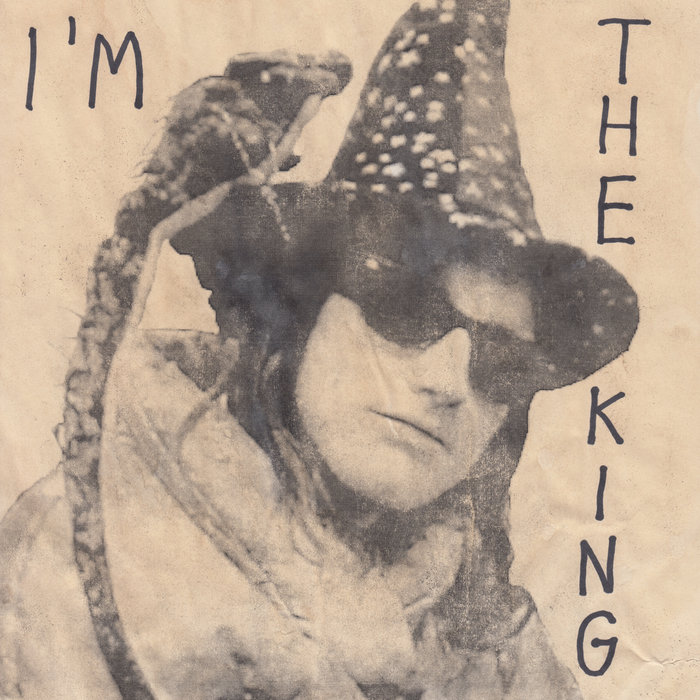
A sampled kick beside the river
For Coppice Halifax’s By a River, Brian Grainger credits a sampled MR-10 kick alongside Euclidean sequencers, self-oscillating filters, granular synthesis and a digital tape organ. The release notes date both recording at White Pillar and release to 13 January 2022. Here the documented MR10 contribution is one sampled drum sound; the credit does not place the original box in control of the track’s sequencing.
Winterplanet across several recording periods
Pertti Grönholm lists MR-10 among the equipment for Winterplanet’s original recordings and later additions and remixing. His notes distinguish tapes made in Hollola during 1984–1989, editing and additions in 1997–2003, a 2013 CD, and the 2020 re-edited release. The equipment list spans those stages: it does not date an individual MR10 part or assign it to a particular track.
In the market
Explore 2 period price records
- 1984-03 · GBP 89
Approximate UK review price. Base unit; pedal optional
- 1983-09-17 · GBP 89
UK manufacturer advertised RRP. MR10; bass-drum pedal explicitly optional; adapter inclusion unstated
A drum kit at your fingertips for £89 — Yamaha advertisement, Sounds p56 ↗
Recording and working accounts
Explore 7 source accounts
- Robin Johnson — Early cassette home-recording rig
Johnson recalls making early cassette multitracks with bass guitar, a Yamaha MR10 and a DX27.
- Depeche Mode — studio equipment, reported
- Your Planet Is Next / Arvid Wretman — I’m The King
- Your Planet Is Next — I’m The King
- Coppice Halifax — By a River
- JC Peña — Pasiones en diferido
- Pertti Grönholm — Winterplanet
Explore more records and cassette accounts
Musical archive
Records and cassette accounts.
Reported association
Depeche Mode / studio equipment, reported
A third-party Depeche Mode equipment index lists a Yamaha MR-10.
Read Depeche Mode / Yamaha MR-10, reported studio inventory ↗Your Planet Is Next / Arvid Wretman / I’m The King
Half of the record was produced with the MR-10 and a CS-01.
Read Your Planet Is Next / Arvid Wretman / I’m The King ↗Your Planet Is Next / I’m The King
The label notes pair Yamaha MR10 and CS-01 on half of I’m The King; the other half uses CS-10 and Boss DR-55.
Read Your Planet Is Next / I’m The King ↗
Coppice Halifax / By a River
Brian Grainger credits a sampled Yamaha MR-10 kick in Coppice Halifax’s specifically dated January 2022 “By a River” session.
Read Coppice Halifax / By a River ↗
JC Peña / Pasiones en diferido
JC Peña lists a Yamaha MR-10 among the instruments used for Pasiones en diferido.
Read JC Peña — Pasiones en diferido ↗
Pertti Grönholm / Winterplanet
Pertti Grönholm’s Winterplanet equipment list names a Yamaha MR-10.
Read Pertti Grönholm / Winterplanet ↗Sources
- Music Maker Equipment Scene
- Yamaha MR10 Finger Pad Drum Machine
- MR10 Owner’s Manual
- A drum kit at your fingertips for £89 — Yamaha advertisement, Sounds p56
- Beat On The Cheap
- MR10 Owner’s Manual, printed pp4–5 and11; document code OMD-57
- Digital vs Analogue: A Life Changing Experience
- Your Planet Is Next / Arvid Wretman / I’m The King
- Coppice Halifax / By a River
- Pertti Grönholm / Winterplanet
The visual archive
Further visual evidence.
These displayed records are labelled by their documented role, date and source; source-only records are listed separately below.
Sources for images shown earlier (5)
- MR10 illustration in Music Maker Equipment Scene ↗
- Your Planet Is Next / Arvid Wretman — I’m The King ↗
Release date not stated on source page · Your Planet Is Next / Arvid Wretman / release artwork via Bandcamp · Official Bandcamp release-page artwork (Open Graph image) - Coppice Halifax — By a River ↗
Release date not stated on source page · Coppice Halifax / release artwork via Bandcamp · Official Bandcamp release-page artwork (Open Graph image) - JC Peña — Pasiones en diferido ↗
2026-02-26 · JC Peña / release artwork via Bandcamp · Official Bandcamp release-page artwork (Open Graph image) - Pertti Grönholm — Winterplanet ↗
2020-03-01 · Pertti Grönholm / release artwork via Bandcamp · Official Bandcamp release-page artwork (Open Graph image)
Additional visual sources (3)
Original publications and related image sources.
- Yamaha MR10 Owner’s Manual ↗
Undated document · Yamaha · Printed pp4–5 controls/connections; p11 block diagram/specifications (PDF pages5–6,12) - A drum kit at your fingertips for £89 ↗
17 September 1983 · Yamaha Musical Instruments · Sounds printed p56 / PDF page56, lower-left advertisement - Machines up to £200 ↗
Oct 1985 · International Musician & Recording World · Yamaha MR10 with its finger-playable pads, identified by the image caption and adjacent article section;