Sampling drum workstation

Sequential Studio 440

Sample a sound, put it under a pad, then build the arrangement. The Studio 440 gathered a sampler, drum interface and MIDI sequencer into one portable workstation.

The digital drum boom →
Sequential Studio 440: pads, sampler and sequencer on one panel.February 1987 · Music Technology / mu:zinesSource & credit ↗

Sequential’s 1986 Studio 440 story moves from an August introduction date in the company’s November Mix guide, through a September British trade glimpse of a prototype, to a February 1987 UK production review at £3,495 including VAT.

Sources (11)
  1. Digital Machines for TR-8S (16 kits) ↗
  2. Sequential Studio 440 ↗
  3. Sequential Studio 440 ↗
  4. About Dave Smith — Studio 440 ↗
  5. Sequential Studio 440 product listing ↗
  6. Studio 440 Operation Manual ↗
  7. The News — Sequential Studio 440 ↗
  8. Industry Stories #5: Dave & Me ↗
  9. An Interview With Kurtis Mantronik, Hip-Hop's Most Fearless Experimenter ↗
  10. Apollo Four Forty: Ad Astra ↗
  11. Sequential Studio 440 Parts ↗

Source-led exhibition chapter

Sequential Studio 440

## The studio that fitted under one arm

The name was a promise: Studio 440. A whole working room, reduced to a black case with a row of pads, a disk drive and enough connections to become the centre of somebody else's room. On its face, the machine printed its roles together: drum, sampler, sequencer. Those were not three disconnected features. A sound could enter through the sampler, be placed beneath a pad, recorded into a sequence and sent to tape with the other instruments following its clock. The remarkable idea was the continuity between those actions. [1][2]

Sequential introduced the 440 in 1986. A British report that September had seen a prototype; by February 1987, Music Technology was reviewing a first production machine and listing a UK price of £3,495 including VAT. The dates show a machine emerging into use, not a single universal release day. Its ambitions were professional, and so was its price. [3][4][5]

Silent studio workflow

Sound → pad → sequence → studio.

Sound to pad

A 12-bit sound is edited, then assigned to one of four banks of eight positions. The waveform is illustrative, not recovered machine audio.

Pad to sequence

An eight-pad event joins an eight-track sequence alongside an external MIDI line. Loop and linear arrangement are distinct explanatory views.

Sequence to room

Eight individual outputs plus stereo, MIDI, clock and SMPTE are separate documented paths—not a claim about one studio’s wiring.

Storage, dated

Factory manual: SCSI planned. July 1987 review: version 1.7 works with DataFrame disks. Later ROM support is a separate later state.

No exact-model original-to-processed audio custody is established, so this study remains silent.

Follow a sound

Start with the input. The Studio 440 recorded sound at 12-bit resolution, with selectable sample rates and 512K of sound memory. That gave a musician room to capture a drum hit, the long tail of a cymbal, or material that was not percussion at all. Its editing went far beyond trimming an impact: start and end points, alternate versions, looping, envelopes and filtering turned a recording into something to be played and shaped. Paul Wiffen, reviewing the instrument in 1987, described loading sounds from Sequential's Prophet 2000 and then putting them immediately to work on the 440. The earlier sampler was part of the 440's practical ancestry, not just a marketing comparison. [1][2]

The eight large pads were the next stop. Four banks gave access to 32 sound positions. A kit could place a chosen sound on each pad and store its pitch, level and position in the stereo field. A performer could spread one sound over several pads at different pitches or assemble a conventional drum set. The physical interface mattered: rather than treating samples as names buried in memory, the machine placed them under the fingers. It could still take a MIDI keyboard for longer pitched parts. [1][2]

The record is the sequence

On the 440, drum patterns and MIDI parts shared a sequencer rather than living in separate compartments. The machine could hold eight tracks and an advertised 50,000 notes, and could address external instruments through MIDI while playing its own samples. It offered short cycling passages and much longer linear recordings, along with swing, timing shifts, track mute and editing. A passage could be built with pads, layered with a keyboard, sent out to a synthesizer, and arranged into a song from the same front panel. [1][2][5]

That freedom came with consequences. In February 1987 Wiffen admired the sequencer's breadth but objected to edits that could not simply be undone. He also found the machine's sound and sequence memory volatile: disks carried the work from one powered session to the next. The operating system lived in ROM, but a musician still had to load sounds and save changes with care. This is part of the 440's history, not an embarrassing footnote. An all-in-one studio brought more of the session into one place; it also put more of the session at risk when the process failed. [1]

The clock in the middle of the room

Turn the instrument around and the title Studio becomes more literal. Individual audio outputs let an engineer separate sounds at the mixing desk. MIDI, clock and SMPTE connections linked the sequencer to other electronic instruments and to tape. MIDI Time Code was part of Sequential's attempt to make that timing information useful across a mixed studio. The back panel belongs in the main story: it shows how a musician's pad performance could become a timed production, with other machines joining it. [1][2]

The capabilities changed during the 440's early life. The 1987 factory manual described SCSI storage as a future implementation. In a July 1987 hands-on review, Wiffen reported that version 1.7 software already worked with DataFrame hard disks of 20 or 40 MB. Later support listings describe further ROM and MIDI Sample Dump options. Those are three different evidence states, not one timeless specification. [2][6][7]

People inside the black box

Project lead Chris Meyer later recalled replacing an early proposal built around two Tom modules with a design drawing on the Prophet 2000 sampler. His account gives a human route into the instrument's unusual combination: the team were trying to bring capture, play and control together. It remains his retrospective testimony about the project, not a substitute for a complete engineering history. [8]

The records supply another perspective. Kurtis Mantronik remembers making “King Of The Beats” on the Studio 440. That is a valuable named-recording account; in the same interview he is less certain about the machine behind other tracks. Noko of Apollo 440 later recalled that the group used two Studio 440s on its first record, but that testimony does not identify each sound or permit us to reconstruct a session. The machine was a tool in these musicians' hands, not a stencil that stamped one identifiable sound on every record. [9][10]

The 440 is often pictured as a dense rectangle of controls. Those controls tell a more absorbing story when the path between them is visible: sound in, pad under a hand, sequence accumulating, the room taking its time from one box. The black case is not the entire studio. It was a way of bringing one into motion.

Sources

1. Paul Wiffen, Music Technology, February 1987 ↗, first production review. 2. Paul Wiffen, Sound On Sound, July 1987 ↗, later hands-on review. 3. Making Music, September 1986, “The News,” source key `studio440mmsep86`. 4. Mix, November 1986 product guide, source key `studio440mix86`; full page still to be directly checked. 5. Sequential retrospective on Dave Smith ↗, maker account. 6. Studio 440 Operation Manual, printed code 870118; source key `studio440manual87`. 7. Wine Country Sequential later parts listing, source key `studio440roms`. 8. Chris Meyer, “Industry Stories #5: Dave & Me,” 2022, source key `studio440meyer22`. 9. Kurtis Mantronik interview ↗, Reverb, 2024. 10. Noko interview, Sound On Sound, source key `studio440apollo440sos`.

The machine in the record

Kurtis Mantronik in a 2024 Reverb interview photograph.
Kurtis Mantronik in 2024. His album credit names the Sequential Studio 440 on King Of The Beats; the portrait is not a period Studio 440 photograph.

Mantronix / “King Of The Beats”.

Kurtis Mantronik explicitly says he made “King Of The Beats” on the Sequential Circuits Studio 440. The testimony does not parse every sample or sequence, but it places the formidable sampler at the centre of a named record, where it belongs.

Read An Interview With Kurtis Mantronik, Hip-Hop's Most Fearless Experimenter ↗

More records in the archive

The machine keeps turning up.
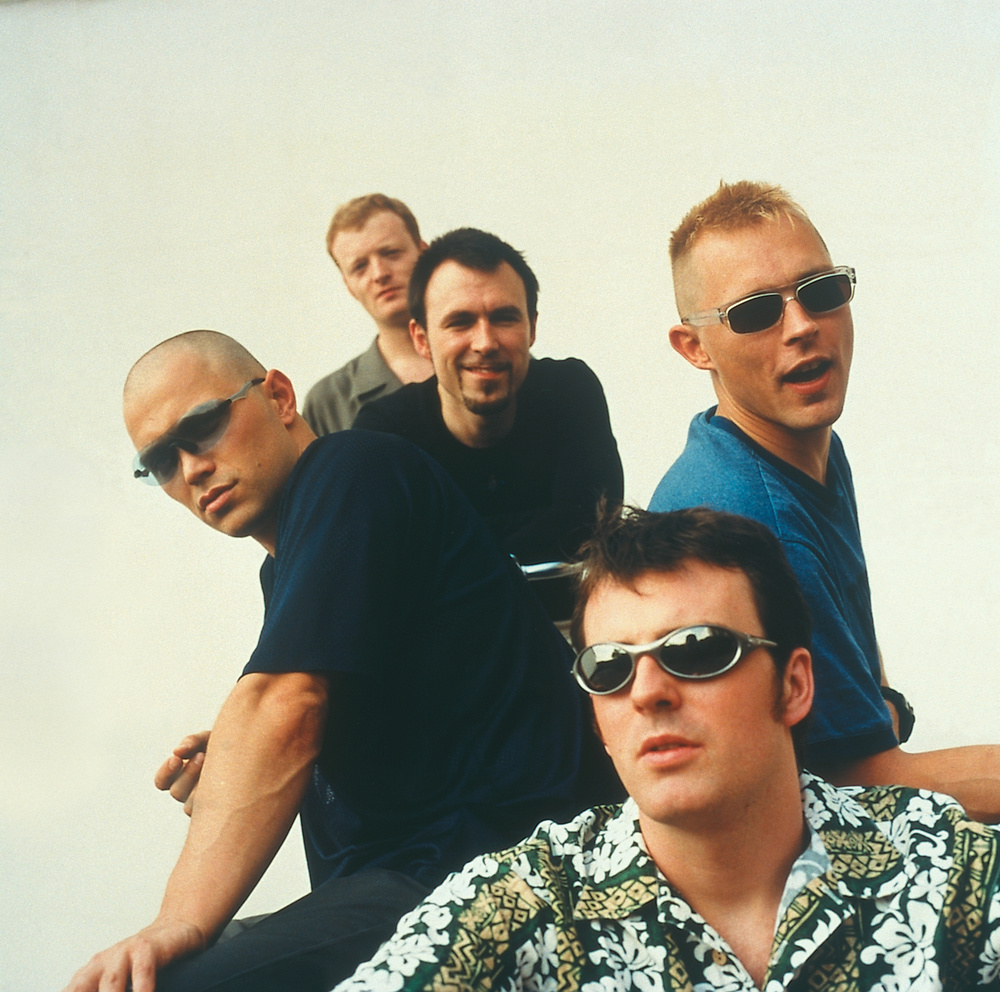
Apollo 440 in Sound On Sound’s 1999 studio feature.
Apollo 440 in Sound On Sound’s 1999 studio feature. The photograph identifies the group in its working environment; it does not assign every visible device or a named track.

Apollo 440 / Studio production practice

Apollo 440 discuss the Sequential Studio 440 as part of their production toolkit.

Read Apollo Four Forty: Ad Astra ↗

Archive source

Cover artwork for Rhythm Electronics — Vintage Drum Machines for Roland MC-707 & MC-101.
Record artwork for Rhythm Electronics — Vintage Drum Machines for Roland MC-707 & MC-101; it identifies the release, not the machine or a recording session.

Rhythm Electronics / Vintage Drum Machines for Roland MC-707 & MC-101

Rhythm Electronics includes a Sequential Circuits Studio 440 kit and pattern set in Vintage Drum Machines for Roland MC-707 & MC-101, describing the source samples as recorded from mint-state machines.

Read Rhythm Electronics / Vintage Drum Machines for Roland MC-707 & MC-101 ↗
01 // Deep research draft

The studio in one travelling case

Sequential’s Studio 440 gathered a drum interface, 12-bit sampler and MIDI sequencer into one portable workstation. It arrived when many musicians were linking separate boxes together; the 440 offered a way to make the rhythm, capture the sound and run the arrangement from the same machine.

Sources (3)
  1. About Dave Smith — Studio 440 ↗
  2. Sequential Studio 440 ↗
  3. Studio 440 Operation Manual ↗

02 // Deep research draft

A design built around the sampler

Project lead Chris Meyer has recalled steering the project away from a pair of Tom drum modules and toward a design based on the Prophet 2000 sampler. His account gives the 440’s unusual mixture of pads, sampling, sequencing and timecode a human origin: it was conceived as a practical answer to the growing complexity of an electronic setup.

Sources (2)
  1. Industry Stories #5: Dave & Me ↗
  2. About Dave Smith — Studio 440 ↗

03 // Deep research draft

A serious proposition in 1986

Sequential introduced the 440 in 1986. British trade coverage saw an early prototype at $3,999, and by February 1987 a production review listed it in the UK at £3,495 including VAT. Those numbers place it among the ambitious professional machines of its day, built for musicians who needed more than a preset beat.

Sources (3)
  1. Sequential Studio 440 product listing ↗
  2. The News — Sequential Studio 440 ↗
  3. Sequential Studio 440 ↗

04 // Deep research draft

Pads, disks and timecode

The operation manual describes 16, 31 and 42 kHz sampling, 3.5-inch disks, a 50,000-note sequencer and a hybrid digital-sampler/analogue-synthesizer design. Eight individual outputs plus stereo and unusually broad timing connections made it a genuine centrepiece: pads and samples on one side, MIDI, clock and timecode on the other.

Sources (3)
  1. Studio 440 Operation Manual ↗
  2. Sequential Studio 440 ↗
  3. Sequential Studio 440 ↗

05 // Deep research draft

An instrument that kept growing

The early manual anticipated SCSI as a future capability. Later operating-ROM sets added hard-disk support and MIDI Sample Dump, a reminder that the Studio 440 was refined as its users found new ways to make it work.

Sources (2)
  1. Studio 440 Operation Manual ↗
  2. Sequential Studio 440 Parts ↗

06 // Deep research draft

On records and in rooms

Kurtis Mantronik has recalled making “King Of The Beats” on a Studio 440. Apollo 440’s Noko has also described making the group’s first record with two of them and little else. Those accounts fit the machine’s character: a concentrated production room that could be carried to the next session.

Sources (2)
  1. An Interview With Kurtis Mantronik, Hip-Hop's Most Fearless Experimenter ↗
  2. Apollo Four Forty: Ad Astra ↗

07 // Deep research draft

What the reviewers heard

Contemporary reviewers admired the sample quality, pad assignment and open-ended sequencing, while also finding that a complicated working machine could be unforgiving when a piece of work went astray. The 440 rewarded preparation and imagination; it was never pretending to be simple.

Sources (2)
  1. Sequential Studio 440 ↗
  2. Sequential Studio 440 ↗

MUSIC HISTORY

On record

  • Kurtis Mantronik / Mantronix — King Of The Beats. Kurtis Mantronik says plainly that he made “King Of The Beats” on the Sequential Studio 440. Source ↗
  • Rhythm Electronics — Vintage Drum Machines for Roland MC-707 & MC-101. Rhythm Electronics includes a Sequential Circuits Studio 440 kit and pattern set in Vintage Drum Machines for Roland MC-707 & MC-101, describing the source samples as recorded from mint-state machines. Source ↗

In the studio and on stage

  • Apollo 440 — Studio production practice. Apollo 440 discuss the Sequential Studio 440 as part of their production toolkit. Source ↗

Sources

  1. Digital Machines for TR-8S (16 kits)
  2. Sequential Studio 440
  3. Sequential Studio 440
  4. About Dave Smith — Studio 440
  5. Sequential Studio 440 product listing
  6. Studio 440 Operation Manual
  7. The News — Sequential Studio 440
  8. Industry Stories #5: Dave & Me
  9. An Interview With Kurtis Mantronik, Hip-Hop's Most Fearless Experimenter
  10. Apollo Four Forty: Ad Astra
  11. Sequential Studio 440 Parts

The visual archive

Further visual evidence.

Sources for images shown earlier (3)
Additional visual sources (5)

Original publications and related image sources.

  • Sequential Studio 440 ↗
    Jan 1987 · Music Technology · Sequential Studio 440 sampling drum machine/sequencer with Studio 440 marking visible, restored to its originating January 1987 Music Technology article.
  • Sequential Studio 440 ↗
    Jul 1987 · Sound On Sound · Studio 440 sample-memory and loop-point diagram from the dedicated contemporary review; exact machine-specific technical documentation rather than object photography.
  • Sequential Studio 440 ↗
    Jul 1987 · Sound On Sound · Studio 440 sampler/sequencer control-surface diagram from the dedicated contemporary review.
  • Sequential Studio 440 ↗
    Jul 1987 · Sound On Sound · Sequential Studio 440 rear-panel diagram with Studio 440 and Sequential markings visible.
  • Sequential Studio 440 ↗
    Jul 1987 · Sound On Sound · Sequential Studio 440 product photograph with the model marking clearly visible.

Machine Museum image viewer

Period image shown in the dossier.