
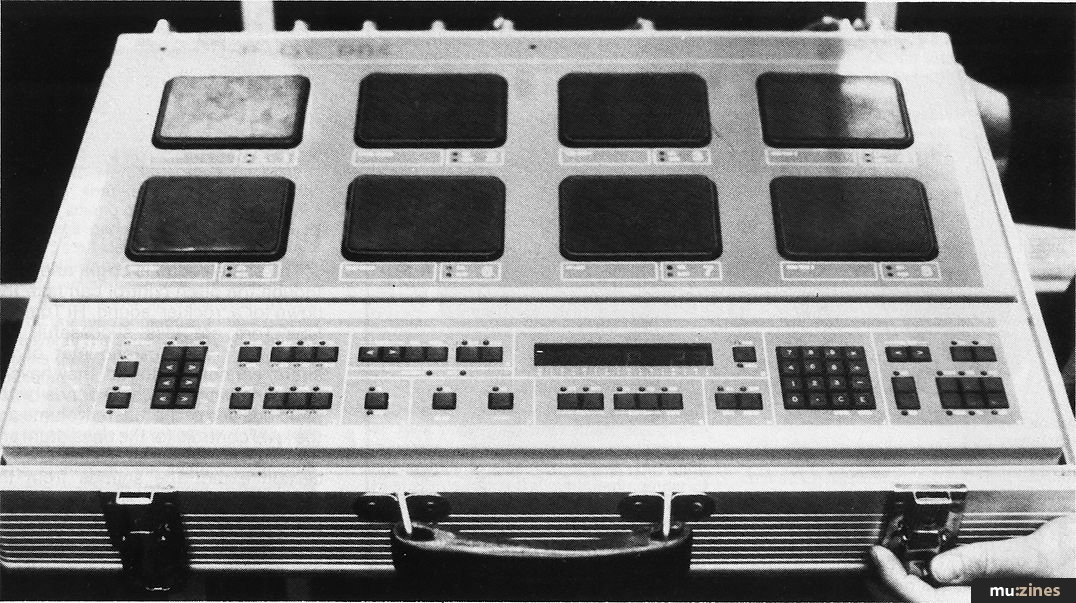
The Inpulse One appeared publicly at AES Paris in 1984. A March 1984 Electronics & Music Maker review examined a pre-production unit; Allen & Heath Brenell’s owner handbook was in circulation by January 1985. A July 1986 interview records Bill Nelson using an early, MIDI-fitted machine on Getting the Holy Ghost Across.
The evidence, in view
A document from the machine’s moment.
A dated period image belongs beside the history it helps to tell.
The machine in the record
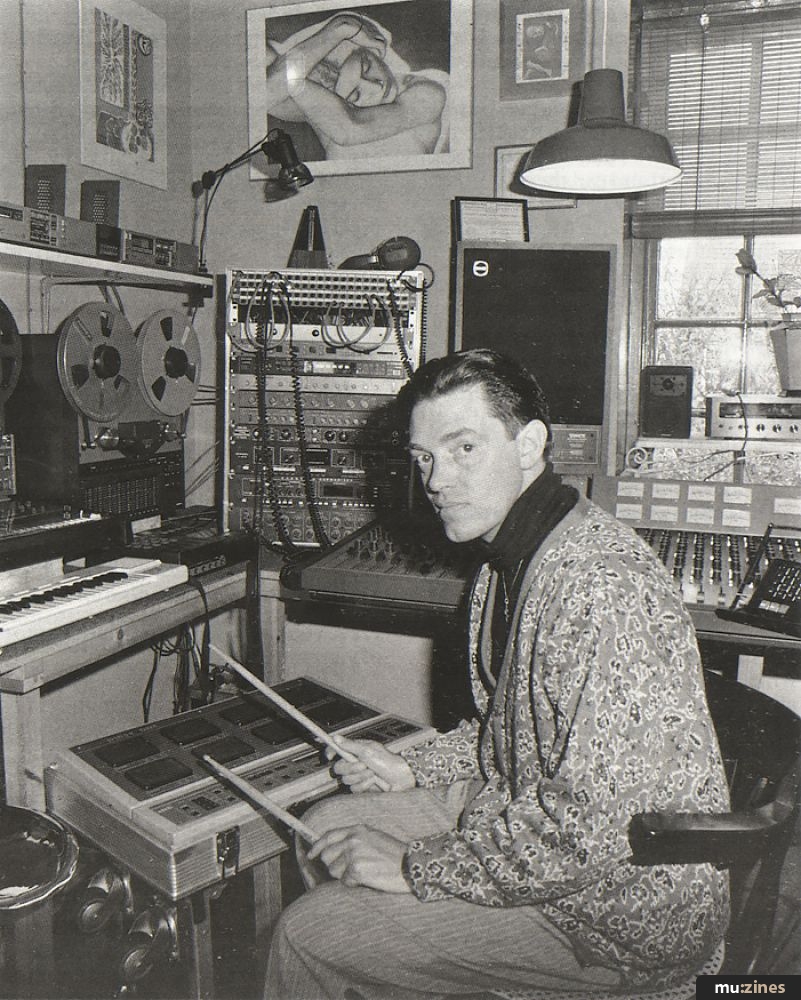
Bill Nelson / Getting the Holy Ghost Across.
Bill Nelson says the AHB Inpulse One provided all drum parts for Getting the Holy Ghost Across: short bass-and-snare sequences were replayed, then embellished with fills. It is an unusually rich production account, showing a specialised British machine becoming an entire record’s rhythmic engine.
Read Getting The Holy Ghost Across ↗More records in the archive
The machine keeps turning up.
TastyOther / working studio setup
The UK music artist TastyOther lists an Allen & Heath Brenell Inpulse One among the instruments in a personal production setup.
Read TastyOther / SoundClick profile ↗On record
- Bill Nelson — Getting the Holy Ghost Across. Bill Nelson says the Inpulse One supplied the drum parts for Getting the Holy Ghost Across: short stored patterns replayed and then embellished with fills. Source ↗
In the studio and on stage
- TastyOther — working studio setup. The UK music artist TastyOther lists an Allen & Heath Brenell Inpulse One among the instruments in a personal production setup. Source ↗
Pads, tapes and a flightcase
Eight touch-sensitive pads sit inside a shock-mounted flightcase, with digital percussion ready to play and further sounds supplied on cassette. The Inpulse One joins pad performance to stored rhythms: a player can build a foundation, replay it and add fills. Allen & Heath Brenell showed it at AES Paris in 1984. Dan Goldstein’s March review examined a pre-production machine priced just under £2,000; later trade coverage gave £1,995 plus VAT.
AHB Inpulse One Drum Computer ↗ AES Paris debut: AHB Inpulse One ↗ Inpulse Outpost ↗
Pads, tapes and a wide-open rhythm
Eight touch-sensitive pads were joined by eight factory sounds and a further eight sounds on cassette. The early review describes real-time and step entry, patterns from one to thirty-two beats, songs of up to 199 patterns, and control over pitch, decay and level. Accent, Shift and Scatter offered a way to disturb the grid, while trigger inputs, pulse sync and SMPTE opened the machine toward a larger studio.
A developing instrument
The Inpulse One changed as it moved from prototype to customer product. The 1985 handbook and period advertising describe a 16-sound, 99-pattern, 15-song machine, and the handbook includes cassette data, alternative RAM sounds and synchronisation. Its price also moved sharply: an October 1985 checklist listed £1,095 and called it difficult to obtain. The machine’s short, complicated commercial life is inseparable from that changing specification and price.
AHB Inpulse One Owner Handbook ↗ Drum-machine checklist: AHB Inpulse One ↗ AHB Inpulse One feature advertisement ↗ AHB Inpulse One Drum Computer ↗
A machine made by a small circle
A later Sound On Sound investigation traces the Inpulse One through an external original designer, Allen & Heath’s final development work, engineer Alan Robinson, percussion consultant Bob Henrit, industrial designer Martin Appleby and Livingston Studios. The account gives the machine a human scale: a specialist piece of British studio engineering, shaped by people who knew recording rooms and working drummers as well as circuits.
Allen & Heath Inpulse One (Retrozone) ↗ Allen & Heath Brenell Inpulse One Resources ↗
Bill Nelson’s complete drum track
Bill Nelson named the Inpulse One as the source of the drum parts on Getting the Holy Ghost Across. In a 1986 interview, he described building short bass-and-snare foundations, replaying them and performing fills over the top. Preston Heyman later added acoustic percussion and Simmons. Nelson’s early machine was unreliable, he said, but had been fitted with MIDI. The account follows the pad-and-pattern method into a completed record.
The surviving tapes
Richard Kilpatrick’s Inpulse One archive preserves recovered sound data, an owner registry and notes on the Apple IIe and AMS DMX 15-80 process used at Livingston. The cassette library forms part of the instrument’s history: sounds travelled as data on tape before returning to the pads. The surviving sets are incomplete, with the archive recording what has been recovered and what remains missing.
Sources
- AHB Inpulse One Drum Computer
- Getting The Holy Ghost Across
- AES Paris debut: AHB Inpulse One
- Inpulse One drum computer
- AHB Inpulse One Owner Handbook
- Drum-machine checklist: AHB Inpulse One
- Inpulse Outpost
- AHB Inpulse One feature advertisement
- Allen & Heath Brenell Inpulse One Resources
- Allen & Heath Inpulse One (Retrozone)
The visual archive
Further visual evidence.
Sources for images shown earlier (2)
Additional visual sources (6)
Original publications and related image sources.
- GEE-Xtreme — Allen & Heath Brenell Inpulse One Resources ↗
Undated · Richard Kilpatrick / GEE-Xtreme · Resource desk header, archive sections, owner registry and original-hardware/media photographs - AHB Inpulse One Drum Computer ↗
Mar 1984 · Electronics & Music Maker · AHB Inpulse One pad, keypad and transport/control detail from the dedicated contemporary review; exact through the bounded article context and matching full-unit image set. - AHB Inpulse One Drum Computer ↗
Mar 1984 · Electronics & Music Maker · AHB Inpulse One sequencer display and control detail from the dedicated contemporary review; exact through the bounded article context and matching full-unit image set. - AHB Inpulse One Drum Computer ↗
Mar 1984 · Electronics & Music Maker · Complete AHB Inpulse One drum computer with eight pads and the matching control layout visible in its dedicated review. - New Products ↗
Jul 1984 · Electronic Soundmaker & Computer Music · AHB Inpulse One drum computer with Inpulse One and AHB markings clearly visible. - Getting The Holy Ghost Across ↗
Jul 1986 · Sound On Sound · Contemporary Bill Nelson studio photograph with the distinctive eight-pad AHB Inpulse One partially visible in the foreground; the direct participant article identifies it as the album’s drum machine.