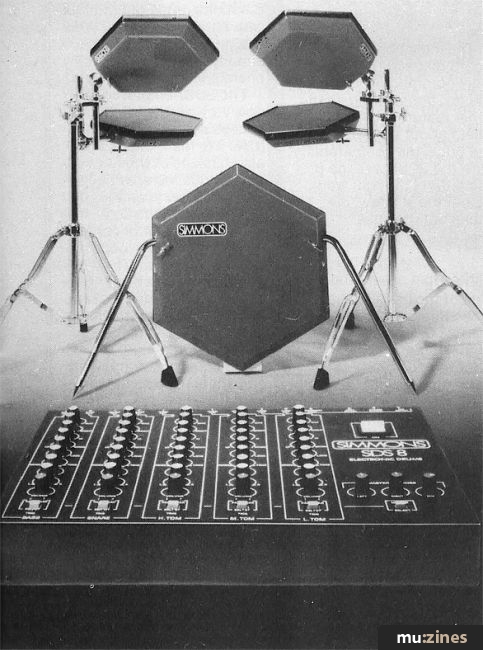
Electronic drum kit

Simmons SDS8

Bass, snare, high, mid and low tom channels gave the SDS8 the shape of a practical performed kit.

The digital drum boom →
Simmons SDS8 electronic kit and brainView full scan ↗
Simmons SDS8 electronic kit and brainJun 1984 · Electronic Soundmaker & Computer MusicSource & credit ↗

Simmons showed the SDS8 alongside the SDS7 at Frankfurt in 1984 as a fixed five-channel analogue electronic drum kit.

Source-led exhibition chapter

Simmons SDS8 — the kit under the sticks

1984 / PERIOD REVIEWFIVE CHANNELS UNDER THE STICKS

Five channels under the sticks, seen through the 1984 reviews.

Five analogue voices, five hexagonal pads and a controller within reach of the drummer: the SDS8 made electronic percussion a physical instrument. Its factory sounds offered a starting point; its knobs and switches invited the player to change what happened beneath the sticks.

A kit built around the drummer

In April 1984, Warren Cann reported on two new Simmons systems he had sought out at Frankfurt. The SDS7 offered a modular mixture of analogue and digital sound. The SDS8 put five analogue channels into one fixed controller: bass, snare and three toms. It gave a drummer a complete electronic kit with a much smaller claim on the budget. Cann listed the basic package at £675 before VAT. His account places the SDS8 in public view that spring, with the pads and controller treated as one performing instrument.

Warren Cann, April 1984 — SDS8 report ↗

Two sounds beneath each stick

The factory manual gives each channel two states: a prepared sound and a sound set by the player. The channel switch moves between them; the master switch or footswitch changes all five together. Everard found that a mixed selection reverses when the pedal is pressed. Two factory voices and three user voices become two user voices and three factory voices.

That is a useful performance gesture. A drummer can prepare a contrast, then bring it into a phrase without putting down the sticks. The five pads remain in the same places while the selected sounds change.

Operating instructions, PDF page 7 — Presets ↗ · Chris Everard, June 1984 — In Control ↗

Silent selector map

Five channels, factory or user.

Each reviewed channel can begin in either state; the footswitch reverses a mixed selection across all five. This explains control logic only—no settings, hardware response or audio are reproduced.

A different surface under the sticks

Chris Everard paid close attention to the new rubber-covered pads in his June review. For a player combining Simmons toms with acoustic drums, he thought the softer surface made the transition between the two easier. His account makes the kit more than a set of electronic voices: the response beneath a stick was part of the instrument.

He also described changing a tom's pitch control while playing it, extending the apparent size of the kit in an overdub. The controller could be another performing surface, within reach of the drummer.

Chris Everard, June 1984 — Pad It Out and In Control ↗

Shape the voice, place it in the room

The manual explains sound design through pitch, noise brightness, tone/noise balance, bend, attack click and decay. It encourages players to make sounds they like rather than reproduce acoustic drums.

Its recording chapter offers individual channel outputs, a stereo connection and a mono mix. The stereo signal uses one stereo jack; the individual outputs have preset levels independent of the channel volume controls. Those details matter at a mixing desk: the controls used to balance the kit are not necessarily controlling the separate feeds.

Operating instructions, PDF pages 6 and 8 — Programming Sounds; Amplifying and Recording ↗

Long after the first kit photograph

The later records give the SDS8 several different lives. The credits accompanying Munch's Tree reissue place both an SDS7 and an SDS8 in the equipment used at T23 studio in Kristiansand for recordings from 1986 to 1991. That is a studio inventory, with two Simmons systems in the room; it leaves their individual parts unidentified.

In 2017, Jeremy Greenspan and Ryan Smith, working as Taraval, included an SDS8 in the hardware list for their joint release. They describe long real-time performances with sequencers, edited into the five released pieces, with no overdubs. The kit's name sits beside an ARP Odyssey, Roland synthesizers and a DSI Tempest. Here the attraction is the session as a whole: instruments running together, and a finished record shaped from what happened between the players. The listening links and retained recording accounts open those later rooms beyond the original sales photograph.

Munch — Tree, recording credits ↗ · Greenspan and Taraval — release notes ↗

Beyond the pads

Cann also described connecting the SDS8 to the separate SDS6 sequencer. The five-channel controller could therefore belong to a sequenced system as well as a drummer’s kit. That distinction matters: the SDS8 itself was not an onboard pattern programmer. Everard’s June review quoted approximately £776 including VAT for the kit, alongside Cann’s earlier £675 before VAT. Those prices describe the British reports, rather than every market.

Warren Cann — SDS8 system and price ↗ · Chris Everard — June price ↗

The complete original dossier, source register, visual archive, recording evidence and related routes remain below.

The machine in the record

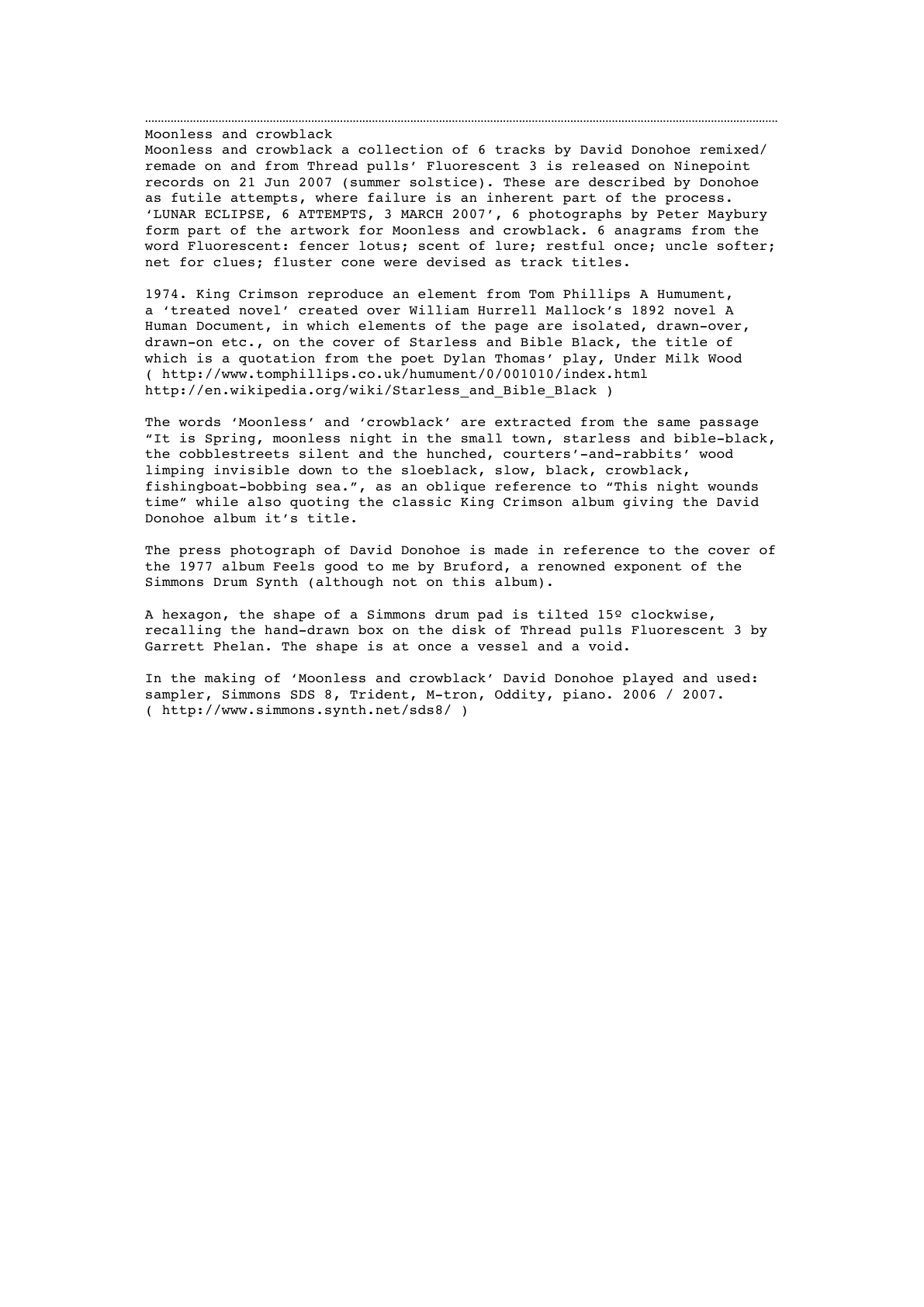
David Donohoe’s Moonless and crowblack press-release page naming the Simmons SDS 8.
David Donohoe’s release-information page for Moonless and crowblack. It names the Simmons SDS 8 among the instruments used in making the album and identifies its 21 June 2007 release; it does not allocate the machine to an individual track.

David Donohoe / Moonless and crowblack.

David Donohoe’s release information lists a Simmons SDS 8 among the instruments used for Moonless and crowblack. The album-level source does not isolate its module sounds, but it gives the Simmons a documented place in a personal electronic release.

Read Moonless and crowblack release information ↗

More records in the archive

The machine keeps turning up.

Cover artwork for Weird Al Yankovic — Dare to Be Stupid.
Jon Schwartz / “Weird Al” Yankovic — Dare to Be Stupid: retained artwork identifies the release context, not a machine, session or sound allocation.

Jon Schwartz / “Weird Al” Yankovic / Dare to Be Stupid

Schwartz recalls programming four songs on Dare to Be Stupid and bringing his SDS8 in for tom accents.

Read Jon Schwartz first-person account ↗
Cover artwork for Greenspan and Taraval / Jeremy Greenspan and Ryan Smith — Greenspan and Taraval.
Greenspan and Taraval / Jeremy Greenspan and Ryan Smith — Greenspan and Taraval: retained artwork identifies the release or source-recording context, not a machine, session or sound allocation.

Greenspan and Taraval / Jeremy Greenspan and Ryan Smith / Greenspan and Taraval

Greenspan and Taraval list a Simmons SDS8 among the hardware used in their live, no-overdub recording sessions.

Read Greenspan and Taraval / Greenspan and Taraval ↗

Cover artwork for Geir Sundstøl — St.hanshaugen Steel.
Geir Sundstøl — St.hanshaugen Steel: retained artwork identifies the release or source-recording context, not a machine, session or sound allocation.

Geir Sundstøl / St.hanshaugen Steel

Geir Sundstøl’s St.hanshaugen Steel credits name a Simmons SDS8 among the instruments used.

Read Geir Sundstøl / St.hanshaugen Steel ↗
Cover artwork for Munch — Tree.
Munch — Tree: retained release artwork gives the documented machine story a record-world context; it does not depict the hardware, a session, or an individual track allocation.

Munch / Tree

The reissue’s original studio-equipment inventory names a Simmons SDS8 used in Munch’s 1986–91 recordings.

Read Munch — Tree ↗
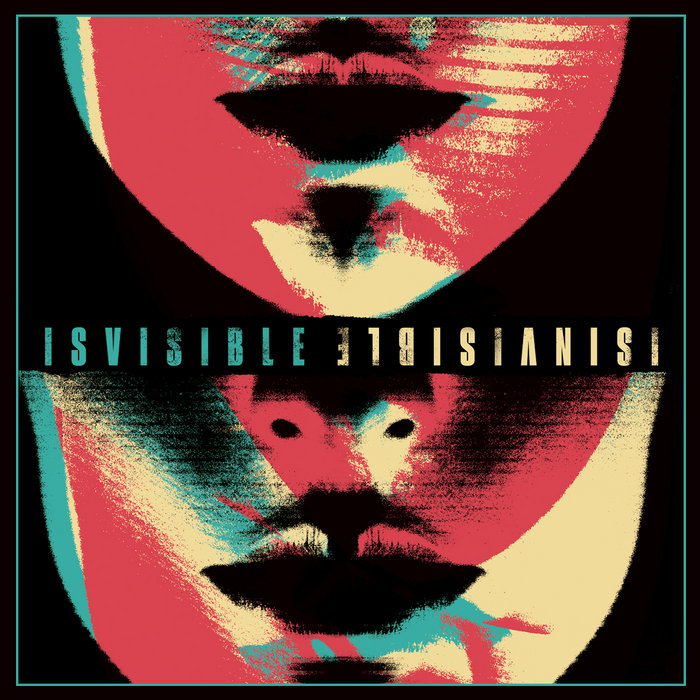
Cover artwork for Simon Pott / isvisible isinvisible — Isvisible Isinvisible.
Record artwork for Simon Pott / isvisible isinvisible — Isvisible Isinvisible; it identifies the release, not the machine or a recording session.

Simon Pott / isvisible isinvisible / Isvisible Isinvisible

Simon Pott lists a Simmons SDS8 among the sound sources for Isvisible Isinvisible.

Read isvisible isinvisible — Isvisible Isinvisible ↗
01 // Fixed five-channel analogue kit

A playable electronic kit

Bass, snare, high, mid and low tom channels gave the SDS8 the shape of a practical performed kit. Each voice could be adjusted for sensitivity, pitch, decay, bend, resonance, noise and click.

The New Simmons Kits ↗ Simmons Sounds ↗ SDS 8 Operating Instructions ↗

02 // Fixed five-channel analogue kit

Performance controls at the surface

Individual outputs, stereo mixing, preset selection and footswitch control made the SDS8 a direct, physical electronic instrument. It belongs to the moment drummers were asked to play sound design as well as rhythm.

The New Simmons Kits ↗ Simmons Sounds ↗ Simmons Electronic Drums Virtual Museum — manuals index ↗

Recording and working accounts

Explore 6 source accounts

Sources

  1. The New Simmons Kits
  2. Simmons Sounds
  3. SDS 8 Operating Instructions
  4. Simmons Electronic Drums Virtual Museum — manuals index

The visual archive

Further visual evidence.

Sources for images shown earlier (7)
Additional visual sources (1)

Original publications and related image sources.

Machine Museum image viewer

Period image shown in the dossier.