
The SDS1000 was in the British music press by April 1986. Geoff Nicholls quoted £650 for five pads, the rack unit and leads, without stands; Bob Henrit’s July review gave £649, also without stands. These are review-era UK offers, not a verified first-sale date.
A mixed-voice kit under the player’s control
A kick pad and four hexagonal pads connected to a slim rack unit: bass drum, snare and three toms, with a different sound-generating method for each role. The bass drum was generated in software, the snare offered four selectable samples and the toms used analogue circuitry. A drummer played those sounds through the pads and shaped their response with individual sensitivity controls. The SDS1000 was a played kit, not a pattern-writing drum machine.
Programming compressed from the SDS9
Select a drum, then use the shared sound controls to edit it. Pitch worked on every voice; Bend and Decay affected snare and toms, while Filter, Noise and Second Skin shaped the toms. One knob selected a snare sample or adjusted Second Skin, according to the selected voice. Five level controls and paired masters handled the mix, with individual outputs available for separate treatment. Simmons retained sound editing but left out the SDS9’s Copy Tom, programmable echo and auto-trigger facilities.
Ten kits, one cycle
Five factory kits sat alongside five writable kit locations. Edited sounds could be stored in the user bank without changing the factory originals. A button or optional footswitch stepped through the factory kits, then the user kits; a dot in the display marked the user bank. Nigel Lord found this simple arrangement awkward for fast changes between personal kits, because returning to the user bank meant passing through the presets again.
A Thousand Sounds — Simmons SDS1000 ↗ Simmons SDS1000 — DrumCheck ↗
A smaller route into Simmons
Geoff Nicholls placed the SDS1000 between the SDS800 and the more elaborate SDS9: a lower-cost kit borrowing some of the latter’s facilities. Nigel Lord and Bob Henrit likewise compared it with the SDS9, particularly its simpler programming. The rack format put the controls alongside effects equipment rather than on a tabletop box. The £650 kit Nicholls reviewed excluded stands, so buying the electronics and pads was only part of assembling a playable setup.
Simmons SDS1000 ↗ A Thousand Sounds — Simmons SDS1000 ↗ Simmons SDS1000 — DrumCheck ↗
No built-in MIDI, but a documented add-on path
The base SDS1000 had no built-in MIDI. Nicholls described the separate Trigger MIDI Interface as a £250 route to connecting the pads and kit with MIDI equipment, and Lord also treated it as an optional later addition. A drummer could begin with the rack-and-pad kit and expand the setup separately. The interface was not part of the original unit’s specification or the quoted kit price.
Simmons SDS1000 ↗ A Thousand Sounds — Simmons SDS1000 ↗ Simmons Drums History ↗
A hardware kit on Celexa Dreams
In Grace Hayhurst’s 2020 interview, Kyros singer and synthesist Shelby Warne describes the percussion on Celexa Dreams as a mixture of a real drum kit, hardware drum machines and samples. She names a hardware Simmons SDS1000 as appearing across the album. That places the module inside a much later production alongside other percussion sources, without assigning it to an individual track or drum part.
Recording and working accounts
Explore 2 source accounts
- Jimmy Edgar — Unspecified EP
An equipment index reports that Jimmy Edgar mentioned using a Simmons SDS1000 on an EP.
- Kyros / Shelby Warne — Celexa Dreams
Shelby says a hardware SDS1000 appears across Celexa Dreams.
See the record and further equipment accounts
A later musical life
Album artwork and equipment accounts.
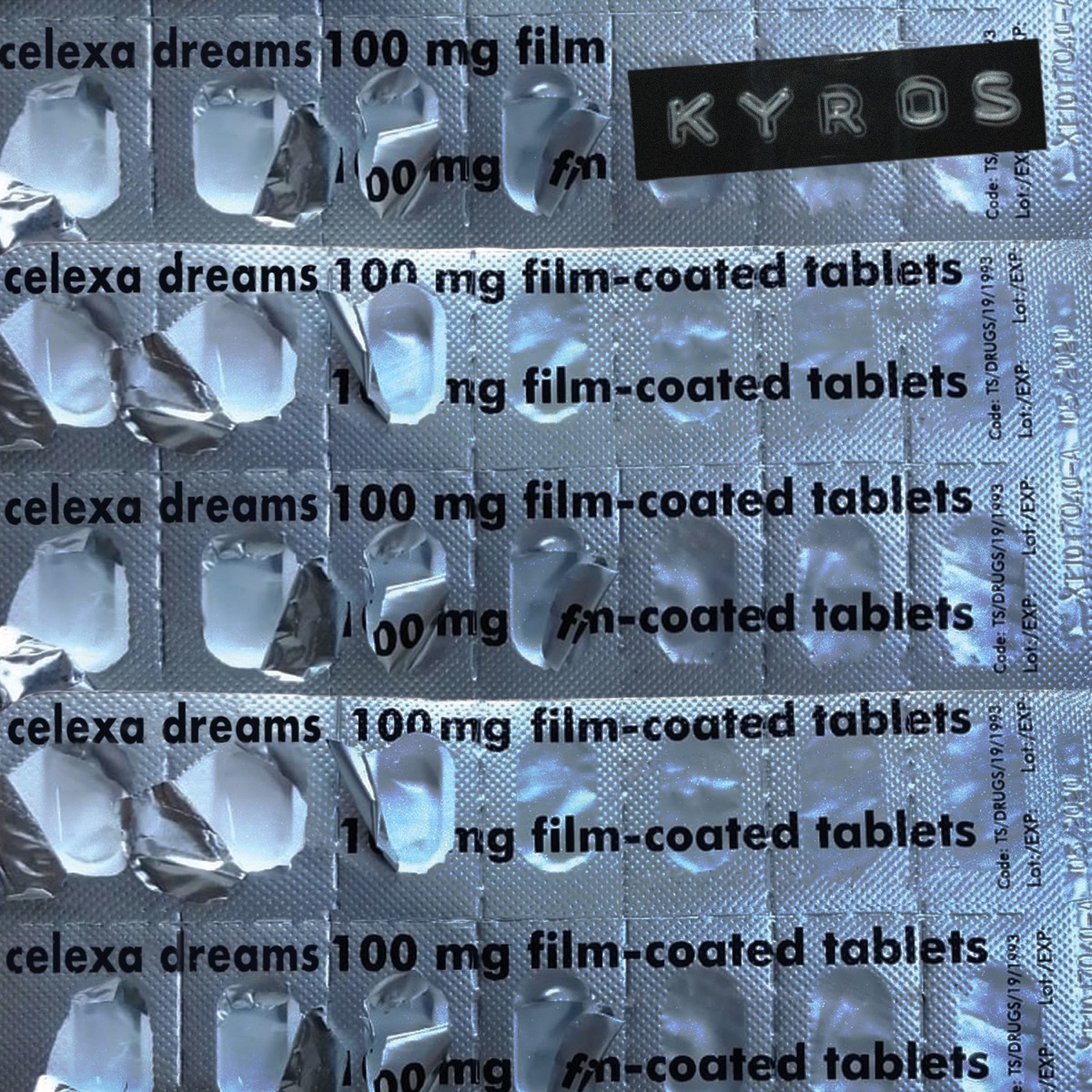
Kyros / Shelby Warne / Celexa Dreams
Shelby says a hardware SDS1000 appears across Celexa Dreams.
Read Kyros: Celexa Dreams — review and interview ↗Sources
The visual archive
Further visual evidence.
These displayed records are labelled by their documented role, date and source; source-only records are listed separately below.
Sources for images shown earlier (2)
- Simmons SDS1000 rack module — July 1986 front panel ↗
- Kyros — Celexa Dreams artwork (In Vantablack catalogue listing) ↗
2020-06-19T12:00:00Z · Kyros / release artwork via Apple Music catalog artwork · Release catalogue and retained front artwork
Additional visual sources (5)
Original publications and related image sources.
- Making Music — Simmons SDS1000 review ↗
April 1986 · Geoff Nicholls / Making Music · Simmons SDS1000 review, p. 38 - International Musician — Simmons SDS1000 DrumCheck ↗
July 1986 · Bob Henrit / International Musician & Recording World · Simmons SDS1000 DrumCheck - Simmons SDS1000; A Thousand Sounds ↗
Apr 1986 · Making Music · Simmons SDS1000 electronic drum kit photographed as a complete rack from its dedicated A Thousand Sounds review. - Simmons SDS1000 ↗
Apr 1986 · Making Music · Simmons SDS1000 five-pad electronic drum kit and rack brain shown in the dedicated contemporary review; the SDS1000 marking is visible on the central controller. - Simmons SDS1000; A Thousand Sounds ↗
Apr 1986 · Making Music · Simmons SDS1000 rack-mount control unit front panel with SDS1000 marking clearly visible.