
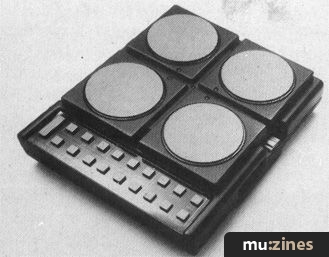
Mattel’s January 1982 CES price sheet lists stock number 5281, Synsonics Drums. By February 1983, *Electronics & Music Maker* had reviewed the instrument in the UK.
The machine in the record
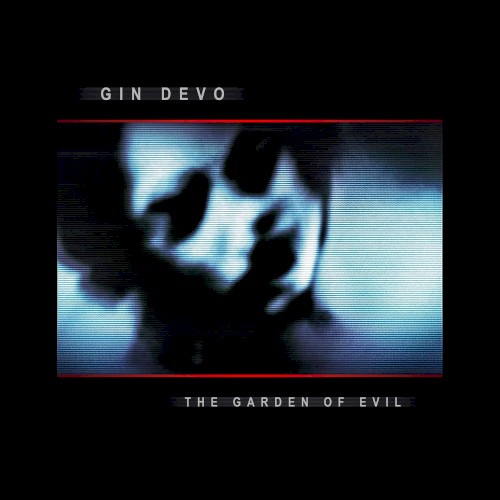
Gin Devo / The Garden of Evil.
The album credits name Mattel Synsonics Drums among the equipment used for The Garden of Evil. A toy-store machine becomes part of a serious, deliberately strange record-making palette.
Read The Garden of Evil ↗More records in the archive
The machine keeps turning up.

Andrew Liles / 1980s working setup
Andrew Liles places Mattel Synsonics Drums in his 1980s working equipment timeline.
Read Andrew Liles — Fifteen Questions interview, equipment timeline (artist-hosted republication) ↗
Cyrnai / Early recordings
Cyrnai names Mattel Synsonics Drums among the instruments used for her early recordings.
Read Electronic musician Carolyn Fok discusses her career and new archival releases ↗
Madlib / Early home sampling experiments
Madlib recalls buying a Mattel Synsonics drum unit during his earliest sampling experiments and keeping tapes from those sessions.
Read Wax Poetics / Madlib on crate digging, samples and early equipment ↗Gin Devo / The Garden of Evil (album)
Label names Mattel Synsonics Drums among the equipment used for the album.
Read The Garden of Evil ↗
Quarkspace / Paul Williams / “Johnny Mattel” and “Asteroid Belt”
Quarkspace’s archive release credits place Mattel Synsonics on “Johnny Mattel” and, buried in the mix, on “Asteroid Belt,” from a February 1985 basement recording.
Read Quarkspace — Tales of Ancient Quark! ↗In the market
- 1982-01: USD 80 — Manufacturer trade cost; not consumer retail. Model 5281; pack quantity two; factory freight terms Source ↗
- 1983-02: GBP 99 — UK retailer offer quoted in review. Synsonics Drums at London Rock Shop Source ↗
On record
- Gin Devo — The Garden of Evil (album). Label names Mattel Synsonics Drums among the equipment used for the album. Source ↗
- Cyrnai — Early recordings. Cyrnai names Mattel Synsonics Drums among the instruments used for her early recordings. Source ↗
- Madlib — Early home sampling experiments. Madlib recalls buying a Mattel Synsonics drum unit during his earliest sampling experiments and keeping tapes from those sessions. Source ↗
In the studio and on stage
- Andrew Liles — 1980s working setup. Andrew Liles places Mattel Synsonics Drums in his 1980s working equipment timeline. Source ↗
A Mattel drum instrument with pads
Four grey pads filled most of the Synsonics’ black plastic case; nineteen buttons occupied the strip below them. Mattel listed it beside electronic games in its January 1982 CES paperwork. The February 1983 *Electronics & Music Maker* review addressed the toy comparison directly, reporting that Patrick Moraz had demonstrated vigorous stick playing at the Hands On Show without marking the pads. The useful question was what a player could do with that small surface.
Portable Electronic Products CES Line: Pricing ↗ Mattel Synsonics ↗
Build the rhythm while it runs
The pads played snare, cymbal and two toms; a separate bass pulse supplied the beat. Three repeat buttons per pad offered slow, medium and fast rolls. To record, hold Record and choose a memory using one of the cymbal buttons. Each of the three memories ran for sixteen beats, adding new strokes on successive loops. Stopping ended that recording pass: starting Record again erased the selected pattern. Switching off erased all three. Accent shortened the cymbal into a hi-hat sound, while Tom Tom 1’s tuning control covered a stated five-octave range.
Where the repeat buttons helped
The 1983 reviewer found too little pad rebound for rapid rolls or repeated flams, making the repeat buttons useful rather than merely convenient. The same review criticised the long cymbal and absence of a sequencer clock output. February 1984’s *Beat On The Cheap* added complaints about hiss, hum and the limited fastest tempo. It also explained a practical alternative to the automatic bass: switch it off and tune a tom low. These are contemporary observations, not a claim that every surviving unit behaves identically.
A price in the music shop
The February 1983 review quoted £99 including VAT at the London Rock Shop. Mattel’s January 1982 CES sheet placed stock number 5281 in its portable-electronics line, with $80 in the cost column and two units in the standard pack. Its factory-freight terms make this trade paperwork, not proof of an $80 consumer launch price. The two documents establish different things: a manufacturer listing and a later British shop offer.
Mattel Synsonics ↗ Portable Electronic Products CES Line: Pricing ↗
Home tapes, archive credits and a later album
Andrew Liles places Synsonics in his 1980s equipment timeline; Carolyn Fok names it among the tools of her early recordings. Neither account assigns it to a particular track. Madlib recalls buying one alongside a short-memory sampler around 1985–86, learning by experiment and keeping early tapes. Quarkspace’s *Tales of Ancient Quark!* offers narrower credits: Paul Williams plays Synsonics on ‘Johnny Mattel’, while the performer on ‘Asteroid Belt’ is unnamed. The release dates those basement recordings to 6 February 1985, though the archive album appeared in December 2025. Scanner’s page for Gin Devo’s 2022 *The Garden of Evil* names Synsonics in an album equipment list, without allocating it track by track.
The Garden of Evil ↗ Andrew Liles — Fifteen Questions interview, equipment timeline (artist-hosted republication) ↗ Electronic musician Carolyn Fok discusses her career and new archival releases ↗ Wax Poetics / Madlib on crate digging, samples and early equipment ↗ Quarkspace — Tales of Ancient Quark! ↗
The workshop under the plastic shell
Mattel’s model 5281 service manual connects those playing gestures to the electronics. Piezoelectric transducers beneath the pads turn strikes into voltages; recording requires a hit strong enough to light the corresponding LED. The technical description separates the microprocessor and pattern RAM from the sound generator’s oscillators and amplifiers. A noise generator supplies the snare and cymbal, and the Accent circuit shortens the cymbal’s decay. That is a more useful account of the instrument than treating its plastic shell as a verdict on its musical worth.
Sources
- Portable Electronic Products CES Line: Pricing
- Mattel Synsonics
- Synsonics Drums Model 5281 Service Manual
- The Garden of Evil
- Andrew Liles — Fifteen Questions interview, equipment timeline (artist-hosted republication)
- Electronic musician Carolyn Fok discusses her career and new archival releases
- Beat On The Cheap
- Wax Poetics / Madlib on crate digging, samples and early equipment
- Quarkspace — Tales of Ancient Quark!
The visual archive
Further visual evidence.
Sources for images shown earlier (6)
- Machines up to £200 ↗
- Madlib — Wax Poetics Astral Traveler ↗
- Quarkspace — Tales of Ancient Quark! ↗
- Andrew Liles — MISCELLANY: LUSSUOSO (ELECTRONICS: 1990 TO 2015) ↗
- Gin Devo — The Garden of Evil (album) ↗
2022-09-23 · Gin Devo / release artwork via Cover Art Archive · MusicBrainz release record and Cover Art Archive front artwork - Cyrnai — NTS Radio context image, 2021 ↗
2021 · Cyrnai.com / NTS Radio context image · Source-site image surfaced in Cyrnai interview index metadata.
Additional visual sources (2)
Original publications and related image sources.
- Portable Electronic Products CES Line: Pricing ↗
CES edition January 1982 · Mattel Electronics · PDF p. 1 - Synsonics Drums Model 5281 Service Manual ↗
Undated · Mattel Electronics · Cover and contents; schematic listed at printed p. 15