
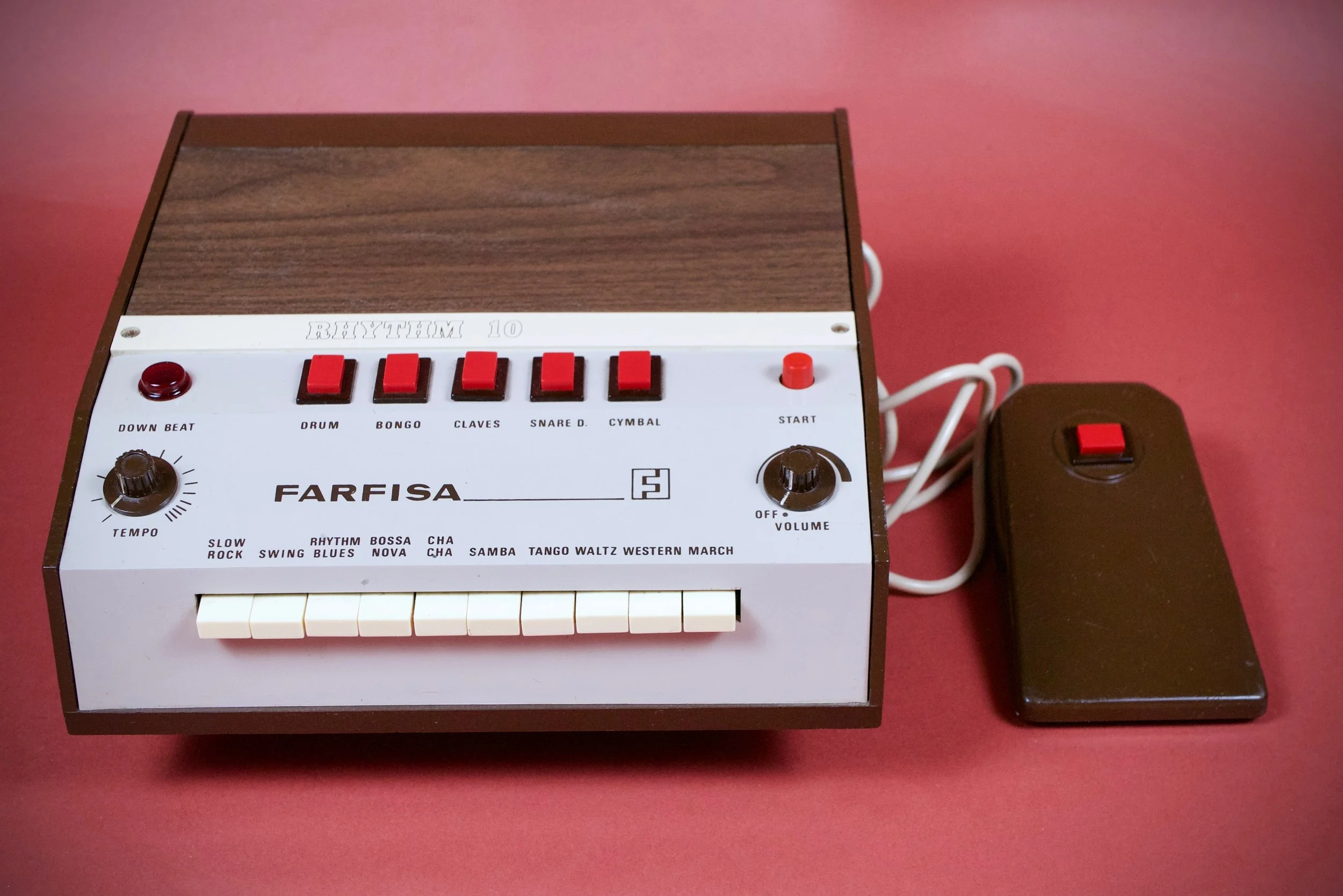
Surviving-unit accounts document the Rhythm 10’s panel and sound; later musician accounts connect it to Kraftwerk and other electronic-music use.
The machine in the record

Kraftwerk / Autobahn.
The Farfisa Rhythm Unit 10 is repeatedly associated with Kraftwerk’s Autobahn-era rhythm work. Wolfgang Flür’s own account makes the more interesting point: its separate sounds were pushed through amplification and effects until a preset source behaved like something played.
Read Kraftwerk and the Farfisa Rhythm Unit 10 on Autobahn ↗More records in the archive
The machine keeps turning up.
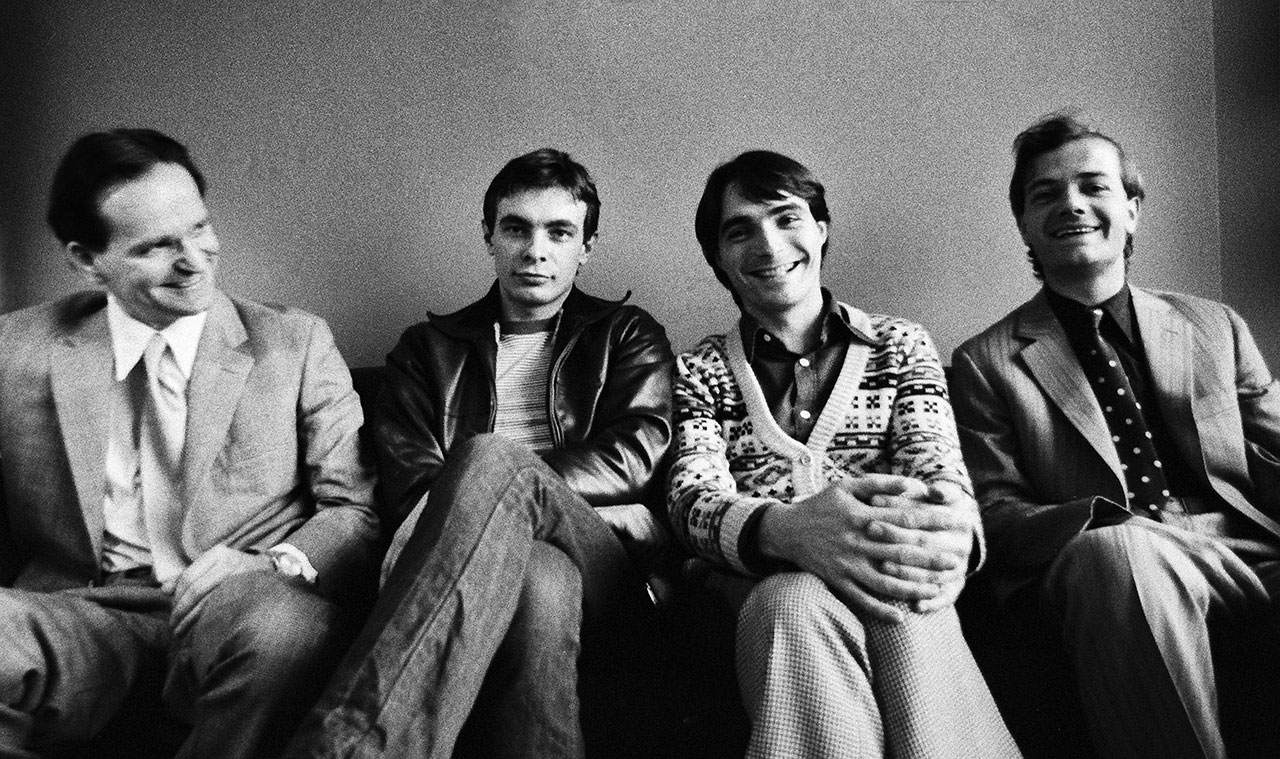
Wolfgang Flür / Kraftwerk / Named early television performance
Flür identifies a Farfisa Rhythm 10 in Kraftwerk’s early performing setup and connects it to a named television appearance.
Read Wolfgang Flür on life at the cutting edge of modern music ↗Reported association
Wolfgang Flür / Early electronic-rhythm practice
An equipment index reproduces Flür’s recollection of using a Farfisa Rhythm Unit 10 through amplification and effects.
Read Wolfgang Flür and the Farfisa Rhythm 10 ↗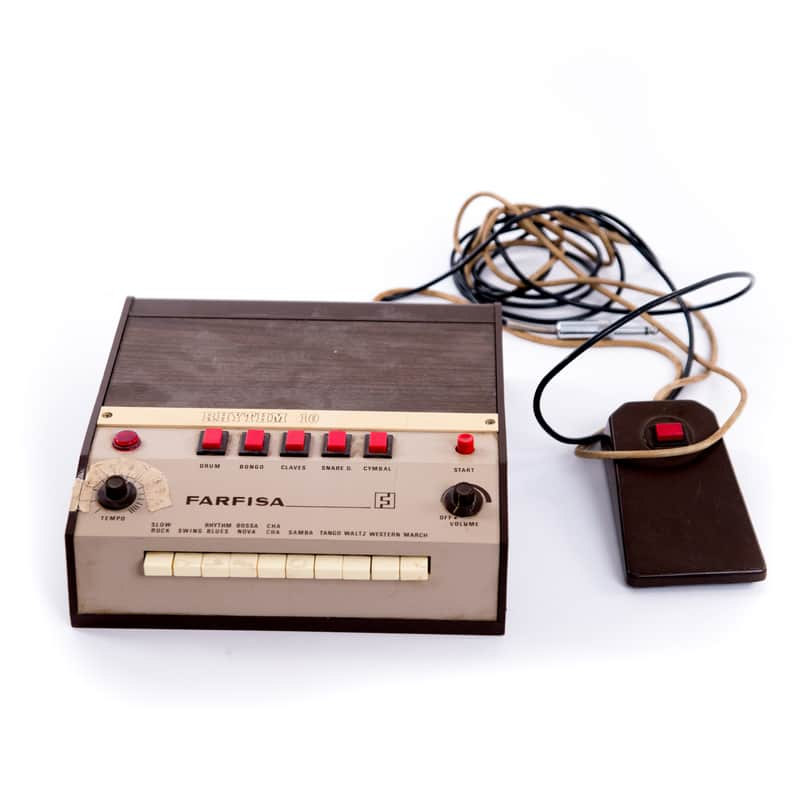
Moby / Farfisa Rhythm 10 collection sale
The Official Moby Reverb Shop listed a Farfisa Rhythm 10 as part of Moby’s private drum-machine collection, with a stated signed and embossed certificate of authenticity.
Read Farfisa Rhythm 10 owned by Moby ↗Reported association
Kraftwerk / Autobahn
A MusicRadar historical account lists the Farfisa Rhythm Unit 10 among Kraftwerk’s rhythm machines for Autobahn.
Read Kraftwerk and the Farfisa Rhythm Unit 10 on Autobahn ↗A rhythm section in a small Italian box
Farfisa’s Rhythm 10 is a preset accompaniment unit with its own compact panel and unmistakable home-organ character. Its sounds are fixed, but its personality comes from the way those patterns, tempos and balances can settle into a room beside an organ or amplifier.Source (1)
The pattern becomes an instrument
A surviving-unit account describes the control layout and its rhythm choices, while later preservation projects recorded both whole patterns and individual hits. This is the right way to meet the Rhythm 10: not as a list of specifications, but as a machine whose recognisable pulse can be placed, muted and sampled in many different contexts.Sources (2)
From accompaniment to electronic record
Accounts of Kraftwerk’s early equipment identify a Farfisa Rhythm 10 in their working sound-world. Later artist and preservation references keep the same machine alive in electronic practice. The Rhythm 10’s legacy lies in that portability: a domestic accompaniment box that could sound unexpectedly futuristic once it left the lounge.
A source worth looking at
Vintage Audio Institute’s photography and hands-on account make the machine’s cabinet, panel and use visible. They also preserve the Rhythm 10 as an object in its own right, not merely an origin for a familiar electronic beat.Source (1)
On record
- Wolfgang Flür / Kraftwerk — Named early television performance. Flür identifies a Farfisa Rhythm 10 in Kraftwerk’s early performing setup and connects it to a named television appearance. Source ↗
- Wolfgang Flür — Early electronic-rhythm practice. An equipment index reproduces Flür’s recollection of using a Farfisa Rhythm Unit 10 through amplification and effects. Source ↗
- Kraftwerk — Autobahn. A MusicRadar historical account lists the Farfisa Rhythm Unit 10 among Kraftwerk’s rhythm machines for Autobahn. Source ↗
Sources
The visual archive
Further visual evidence.
Sources for images shown earlier (4)
- Farfisa Rhythm 10 with cabled pedal ↗
- Farfisa Rhythm 10 owned by Moby ↗
- Kraftwerk — Autobahn ↗
1974-11-01T08:00:00Z · Kraftwerk / release artwork via Apple Music catalog artwork · Release catalogue and retained front artwork - Kraftwerk — 1976 ↗
1976 · Gijsbert Hanekroot · Kraftwerk 1976 group photograph embedded in Wolfgang Flür’s Louder interview.