
A 2019 report from the Elektrovymiriuvach site in Zhytomyr documents preserved Pulsar units and the factory’s 1980s electronic-instrument work. Surviving demonstrations and sales archives attach a 1991 date to the model.Sources (7)
The machine in the record
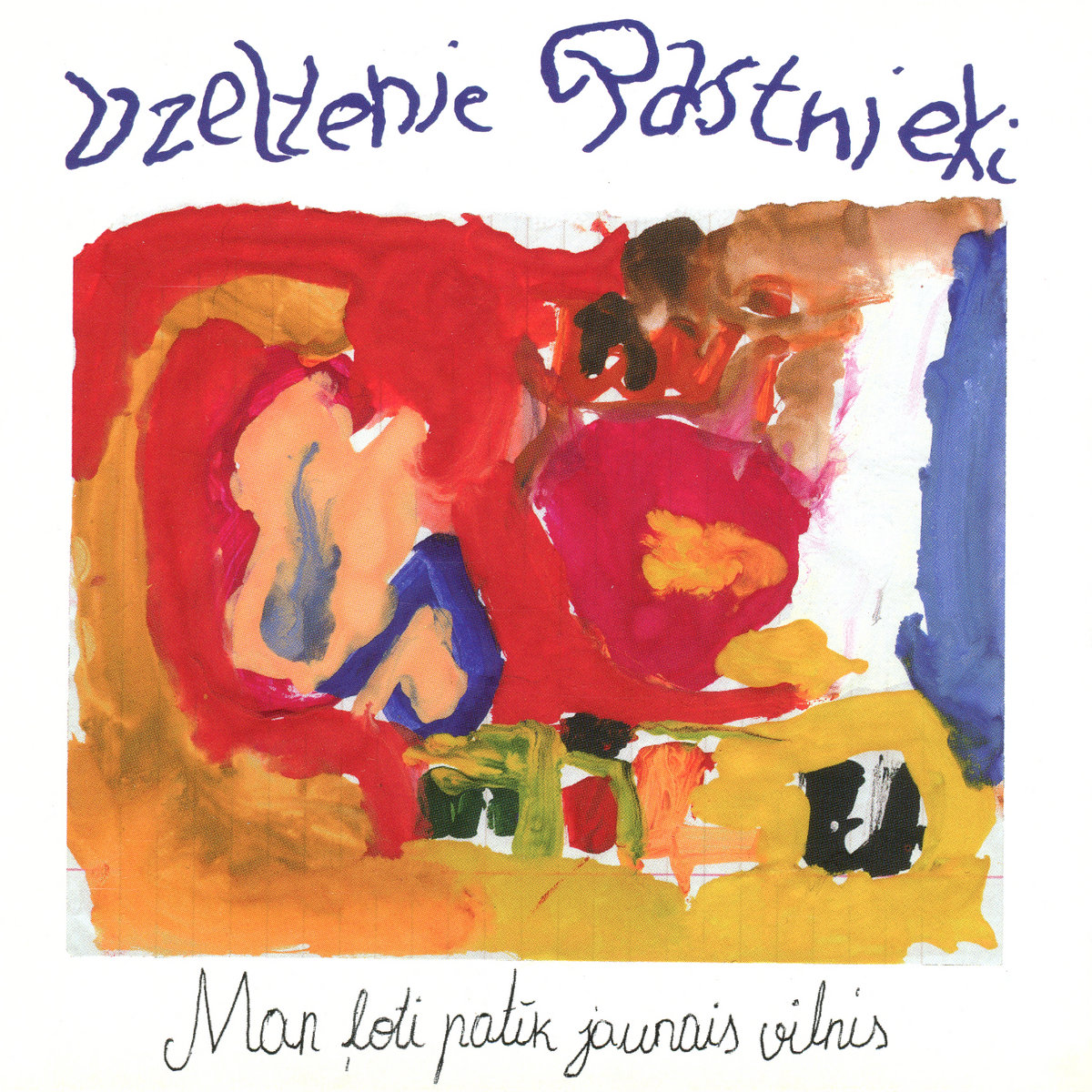
Dzeltenie Pastnieki / Man ļoti patīk jaunais vilnis.
Release notes name an Estradin Pulsar among the instruments used on Dzeltenie Pastnieki’s 1982 Man ļoti patīk jaunais vilnis. They do not identify a specific song, but the credit gives the Soviet rhythm box a firm place in an adventurous Latvian electronic record.
Read Dzeltenie Pastnieki, Lentu Gabalini release notes ↗A pulse from Zhytomyr
The Estradin Pulsar is a compact preset rhythm machine from the Soviet-era musical-instrument world, with a name that survives in demonstrations, factory photographs and the machines themselves. Its plain, purpose-built panel belongs to the era when an automatic beat was still a distinct instrument rather than a feature hidden inside another keyboard.
Sixty-four rhythms and a pair of hands
Surviving Pulsars and period-style demonstrations show 64 preset rhythms, tempo and accent controls, start/stop operation and eight manual percussion voices. The experience is direct: select the rhythm, set it moving, then play the extra voices into the room yourself.
A factory memory
A 2019 report from Elektrovymiriuvach in Zhytomyr photographed several preserved Pulsars in a sound-laboratory collection and recalled the plant’s work on electronic musical instruments in the 1980s. Those photographs make the machine feel less like an isolated curiosity and more like part of a local industrial culture with its own musical ambitions.
A place in Latvian new wave
Release notes for Dzeltenie Pastnieki’s *Man ļoti patīk jaunais vilnis* name an Estradin Pulsar among the instruments used on the group’s 1982 album. It is a fitting association: a clipped automatic pulse threaded through music made at the edge of the available technology.
A small cabinet with a long echo
The surviving-unit record includes a footswitch connection, line and headphone outputs, reminders that the Pulsar was intended to leave the living room and join an amplifier, a rehearsal or a recording setup. Its scarcity today only sharpens the appeal of the original design: a self-contained rhythm world with no need for a screen.
On record
- Dzeltenie Pastnieki — Man ļoti patīk jaunais vilnis. Release notes name an Estradin Pulsar among the instruments used on the group’s 1982 album Man ļoti patīk jaunais vilnis. Source ↗
Sources
- Estradin Pulsar demonstration and research note
- Estradin Pulsar rhythms demonstration
- Estradin Pulsar surviving-unit record
- Dzeltenie Pastnieki, Lentu Gabalini release notes
- Pulsar-ES historical product description
- At Elektrovymiriuvach in Zhytomyr, a sound laboratory is being built
- Estradin Pulsar analogue preset drum machine — surviving-unit record
The visual archive
Further visual evidence.
Sources for images shown earlier (1)
Additional visual sources (1)
Original publications and related image sources.
- Reverb — Estradin Pulsar analog drum machine ↗
Current dealer listing · Seller listing on Reverb · Exact-model exterior record and photographs