
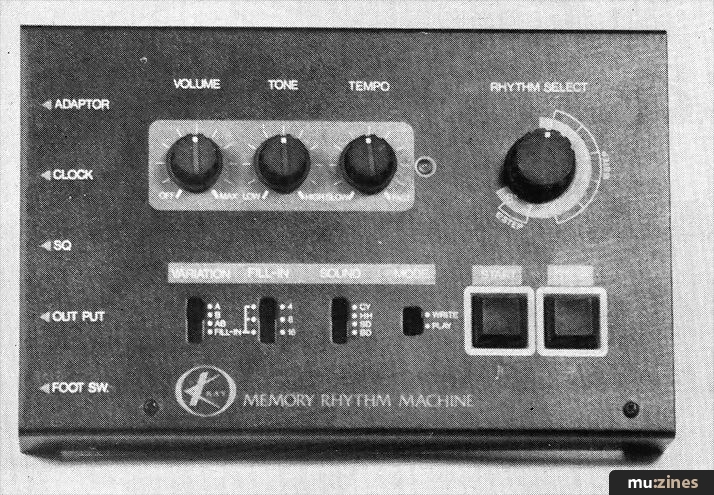
Kay’s DRM-1 Memory Rhythm Machine brought programmable rhythm into the early 1980s in a compact, practical box. It gave a player a way to build and recall patterns instead of relying only on a row of fixed dance presets.
Period press
A prototype before the myth.
The Kay Memory Rhythm Machine photograph is a rare moment of the instrument still becoming itself. It lets the Museum show the physical proposition before later collectors supplied the legend.
View the Kay prototype ↗The machine in the record
o[rlawren] / a KAY catalogue find.
o[rlawren] remembers getting a KAY DRM-1 from KAY’S catalogue alongside a Casiotone VL1 during an early instrument-collecting period. No release is attached. It is a small, direct ownership story: the kind of machine that arrives by post and alters what seems possible at home.
Read o[rlawren]: When The Landscape Becomes Sound ↗More records in the archive
The machine keeps turning up.
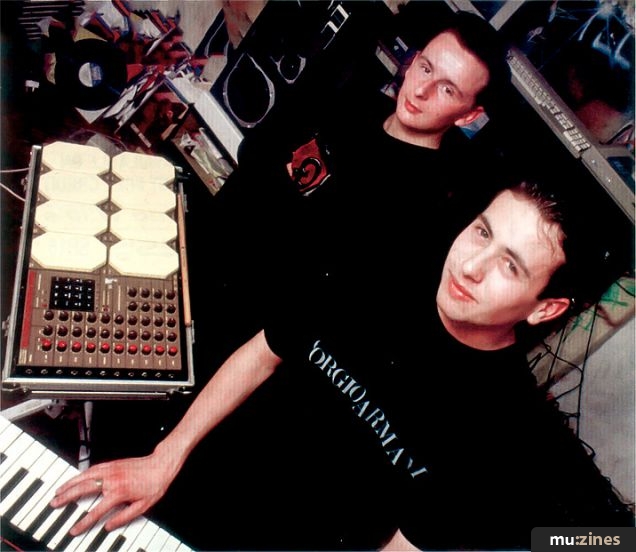
LFO / Frequencies-era studio
Music Technology’s 1991 LFO studio interview lists a Kay DRM1 Drum Machine among the group’s instruments, alongside the Korg DDD1 and KPR77, MPC Electronics Music Percussion Computer, Roland TR727 and TR808.
Read LFO — “Deep Vibrations” studio interview ↗A memory machine at the trade show
Kenneth McAlpine encountered a DRM-1 engineering prototype after its London trade-show appearance in 1982. Its key idea was simple and significant: a musician could create rhythms, keep them in memory and call them back as part of a song.Sources (2)
A bridge toward the drum computer
The DRM-1 retained the immediate feel of an accompaniment machine while giving the player more responsibility for the rhythm itself. That makes it a useful hinge in the history of the form: tactile and compact, yet intended to carry the musician’s own patterns.
An affordable commercial presence
Electronics & Music Maker offered the Kay Memory Rhythm Machine at £45 including VAT and postage in February 1984, and reported a new unit at £54 the following year. Those records show the machine circulating as an accessible alternative for players who wanted programmable rhythm without a larger studio investment.Sources (2)
In the market
- 1982-10: GBP 75 — UK review price for engineering-prototype coverage. Machine; adaptor described as optional Source ↗
In the studio and on stage
- o[rlawren] / Tui — Early instrument collection. o[rlawren] recalls getting a KAY DRM-1 from KAY’S catalogue alongside a Casiotone VL1 as part of an early instrument collection. Source ↗
Sources
The visual archive
Further visual evidence.
These displayed records are labelled by their documented role, date and source; source-only records are listed separately below.