
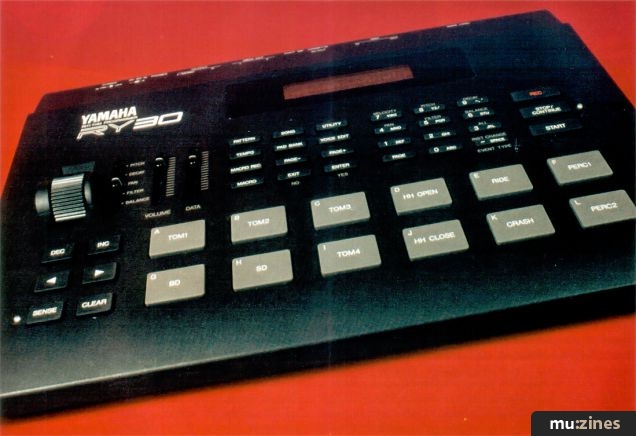
Yamaha introduced the RY30 in 1991 as a rhythm programmer for musicians who wanted to shape a drum part while they played it. Its wheel, pads and deep voice editing gave sampled percussion the working feel of a compact synthesizer.
The machine in the record
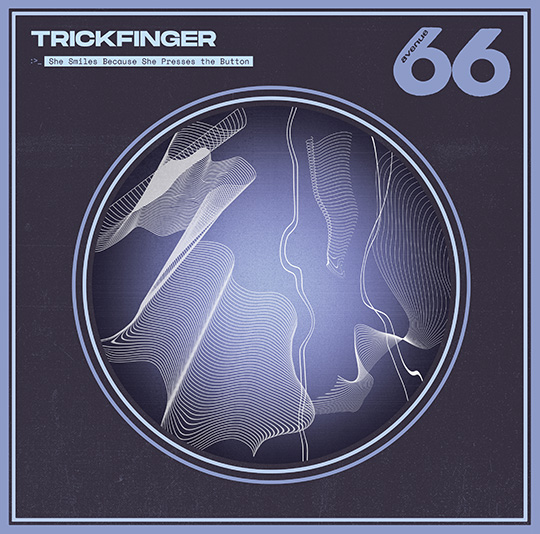
John Frusciante / Trickfinger — “Sea YX6”.
John Frusciante says “Sea YX6” was made with only a Yamaha RY30 and a DX100. It is a wonderfully pared-back production account: the RY30 supplies the entire drum-machine side of a track made by an artist better known for a guitar in his hands.
Read Interview with Trickfinger (John Frusciante) ↗More records in the archive
The machine keeps turning up.
Mark Gamble / Rhythmatic / Studio programming
Wheel-driven sound editing.
Read The Rhythm Method ↗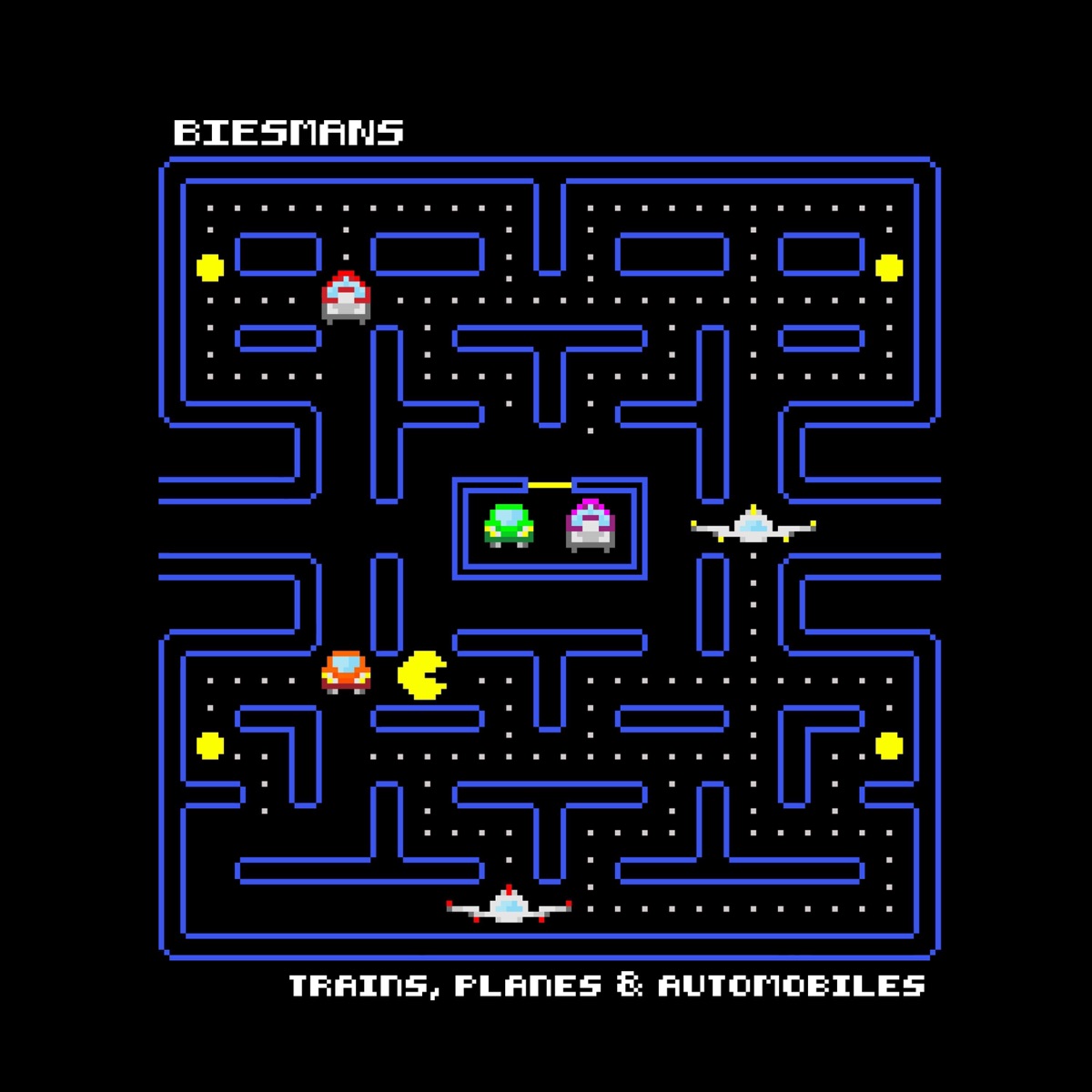
Biesmans / Trains, Planes & Automobiles — title track
RY30 snare layer.
Read Biesmans breaks down three tracks of his album Trains, Planes & Autmobiles ↗
Autechre / We R Are Why / Are Y Are We?
First two RY30 tracks, composed within machine.
Read Ask Autechre Anything — preserved transcript ↗John Frusciante / Trickfinger / Sea YX6
Frusciante says “Sea YX6” was completed using a Yamaha RY30 drum machine and a DX100.
Read John Frusciante / Trickfinger interview ↗Ian Pickering / Unnamed demos
RY30 returned to demo work.
Read Interviewing Ian Pickering ↗Reported association
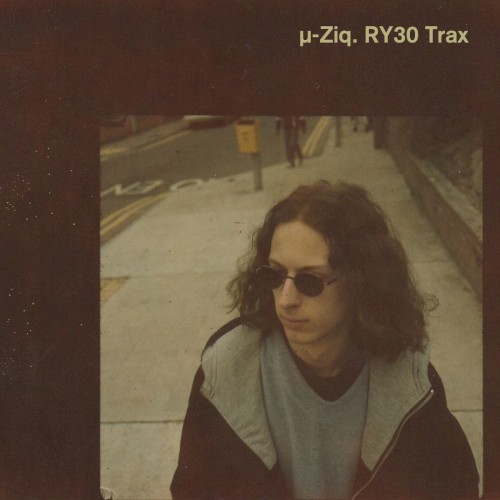
µ-Ziq / Mike Paradinas / RY30 Trax
Label verifies album and recording-year context.
Read RY30 Trax — ZIQ122 ↗
Proxy Wars / Proxy Wars
The group lists the RY30 among the record’s drum machines.
Read Proxy Wars / Proxy Wars ↗
BLIND SOULS / A Cold Day in Hell (1993–1995)
BLIND SOULS recall making every drum part for their 1993–95 home demos with a Yamaha RY30, a Commodore 64 and a Roland S-10 feeding a partly working Tascam cassette deck.
Read BLIND SOULS / A Cold Day in Hell (1993–1995) ↗
inri / Jessica Murray / inrisampled
The artist describes programming drum tracks into a Yamaha RY30 during 1997, then recording and reworking them over the following period.
Read inri — inrisampled ↗Archive source
SysEx Emporium / 2,081 Ultimate Vintage Drum Samples
SysEx Emporium lists Yamaha RY-30 samples in 2,081 Ultimate Vintage Drum Samples.
Read SysEx Emporium / 2,081 Ultimate Vintage Drum Samples ↗
craftmatic / craftmatic
The group identifies the Yamaha RY-30 as drums.
Read craftmatic — craftmatic ↗
Aleksi Perälä / GRACE 11
Perälä’s release gear list names a Yamaha RY-30 with Waveblade.
Read Aleksi Perälä — GRACE 11 ↗
Malin Genie / Superposition
The track credit names a Yamaha RY-30.
Read Malin Genie — Superposition ↗
Aleksi Perälä / GRACE 3
Perälä’s release gear list names a Yamaha RY-30 with Waveblade.
Read Aleksi Perälä — GRACE 3 ↗Mark Gamble / Rhythmatic / Studio programming
Wheel-driven sound editing.
Read The Rhythm Method ↗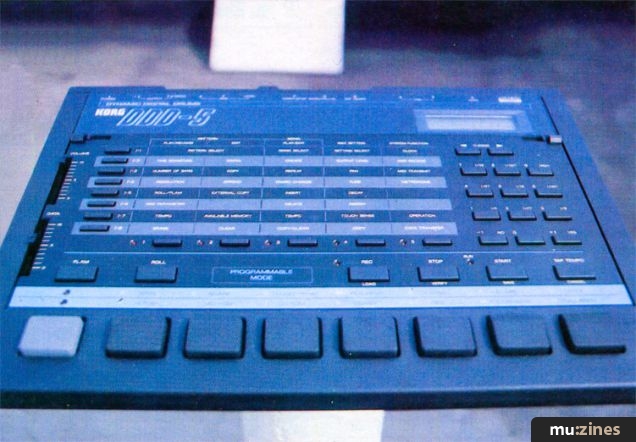
K.U.R.O. / Takeichiro Kurosaki / Revolution
Artist names all three machines in the album setup.
Read Artist: K.U.R.O. ↗A drum machine with a performance control
The RY30’s central idea was unusually direct: a player could use the modulation wheel to alter a voice while a pattern ran. Music Technology and Sound On Sound both presented the machine as an ambitious blend of samples, editable voices and performance control. The result was a drum machine that invited a player to treat a part as something to rehearse and change, rather than simply call up.
Building a kit from the panel
A voice could layer one or two waves, then be shaped with pitch, level, pan, decay and filtering. The programming was substantial, but it remained tied to a tangible purpose: make a kit, write a pattern, and turn the patterns into a song. The 1992 sound-card coverage shows how Yamaha extended that proposition beyond the factory set.
Yamaha RY30 Rhythm Programmer, pp. 66–70 ↗ Yamaha RY30 Sound Cards, pp. 128–130 ↗
A useful machine with a particular character
Contemporary reviewers liked the sounds and the organisation, while being candid about the limits of intensive programming and wheel capture. Those details help explain the RY30’s appeal. It was not trying to disappear into the background; it asked the musician to make decisions about the movement and shape of each part.
One drum machine, one DX100
John Frusciante’s electronic work as Trickfinger gives the RY30 an unusually clean credit. He says “Sea YX6” was completed with the Yamaha drum machine and a DX100. In a collection full of sprawling studio inventories, that small pairing is its own story: two machines, one finished track.
Autechre’s RY30 compositions
Sean Booth recalls that Autechre’s “We R Are Why” and “Are Y Are We?” were made within the RY30. Biesmans later names an RY30 snare layer on the title track of *Trains, Planes & Automobiles*. Those accounts span very different music, but both give the machine a specific role in the construction of a record rather than a generic gear-list association.
Ask Autechre Anything — preserved transcript ↗ Biesmans breaks down three tracks of his album Trains, Planes & Autmobiles ↗
A workstation heard in very different rooms
Mark Gamble described working with the RY30’s wheel-driven editing in Rhythmatic; Autechre’s Sean Booth remembers composing the first two RY30 tracks inside the machine; John Frusciante says Trickfinger’s “Sea YX6” was completed with an RY30 and DX100. They are not variations on the same use. The RY30 could be a programmable studio instrument, a self-contained compositional environment or a deliberately narrow two-box setup.
The Rhythm Method ↗ Ask Autechre Anything — preserved transcript ↗ John Frusciante / Trickfinger interview ↗
A snare layer, a demo room, a catalogue title
Biesmans identifies an RY30 snare layer on “Trains, Planes & Automobiles”; Ian Pickering keeps returning to an old RY30 for demo work; Planet Mu’s RY30 Trax preserves a title and recording-era connection to Mike Paradinas without claiming a complete instrument map. These smaller accounts make the case for a machine that stayed useful long after its original moment.
Biesmans breaks down three tracks of his album Trains, Planes & Autmobiles ↗ Interviewing Ian Pickering ↗ RY30 Trax — ZIQ122 ↗
Revolution’s three rhythm boxes
K.U.R.O.’s Takeichiro Kurosaki names the RY30 alongside an Akai XR10 and Korg DDD-5 in the setup for Revolution. No track is split between the three machines, and none needs to be. The account shows an artist choosing contrasting rhythm boxes as a small ensemble rather than asking one unit to do every job.
Sources
- Yamaha RY30
- Yamaha RY30 Rhythm Programmer, pp. 66–70
- Yamaha RY30 Sound Cards, pp. 128–130
- Interviewing Ian Pickering
- The Rhythm Method
- Biesmans breaks down three tracks of his album Trains, Planes & Autmobiles
- Ask Autechre Anything — preserved transcript
- AAA — Ask Autechre Anything — opening announcement
- RY30 Trax — ZIQ122
- Artist: K.U.R.O.
- John Frusciante / Trickfinger interview
The visual archive
Further visual evidence.
Sources for images shown earlier (14)
- Yamaha RY30 — visually reviewed image ↗
- Autechre ↗
- John Frusciante / Trickfinger — ele-king interview ↗
- Aleksi Perälä — GRACE 3 ↗
- Proxy Wars — Proxy Wars ↗
Release date not stated on source page · Proxy Wars / release artwork via Bandcamp · Official Bandcamp release-page artwork (Open Graph image) - BLIND SOULS — A Cold Day in Hell (1993–1995) ↗
Release date not stated on source page · BLIND SOULS / release artwork via Bandcamp · Official Bandcamp release-page artwork (Open Graph image) - inri / Jessica Murray — inrisampled ↗
1997-12-01 · inri / Jessica Murray / release artwork via Bandcamp · Official Bandcamp release-page artwork (Open Graph image) - SysEx Emporium — 2,081 Ultimate Vintage Drum Samples ↗
2023-02-20 · SysEx Emporium / release artwork via Bandcamp · Official Bandcamp release-page artwork (Open Graph image) - craftmatic — craftmatic ↗
1998-01-01 · craftmatic / release artwork via Bandcamp · Official Bandcamp release-page artwork (Open Graph image) - Aleksi Perälä — GRACE 11 ↗
2025-04-10 · Aleksi Perälä / release artwork via Bandcamp · Official Bandcamp release-page artwork (Open Graph image) - Malin Genie — Superposition ↗
2019-08-23 · Malin Genie / release artwork via Bandcamp · Official Bandcamp release-page artwork (Open Graph image) - µ-Ziq / Mike Paradinas — RY30 Trax ↗
2016-05-13 · µ-Ziq / Mike Paradinas / release artwork via Cover Art Archive · MusicBrainz release record and Cover Art Archive front artwork - Biesmans — Trains, Planes & Automobiles ↗
Undated document · Biesmans / release artwork via Apple Music catalogue · Release catalogue and retained front artwork - Trickfinger — She Smiles Because She Presses The Button ↗
2020-06-05 · Trickfinger / Acid Test (Avenue 66) release artwork via official Bandcamp · Official label Bandcamp album page and retained front artwork
Additional visual sources (3)
Original publications and related image sources.
- Yamaha RY30 operating manual ↗
Printing · Yamaha · 123-page PDF; relevant printed pages not yet established - Yamaha RY30 artist-card campaign ↗
Musician, August 1991 · Yamaha Corporation of America · Search-indexed advertisement; page number pending - Yamaha RY30 Rhythm Programmer; Yamaha RY30 Sound Cards ↗
Jun 1991 · Sound On Sound · Yamaha RY30 product photograph with Yamaha and RY30 markings clearly visible in its dedicated review.