
Hammond’s DPM-48 was reviewed in Britain in March 1984. A June advertisement offered the Japanese-made machine at a £699 including-VAT recommended price: twenty-two drum keys, eight output faders and a cartridge holding the player’s patterns and songs.
Period press
A £699 drum machine from the organ world.
Electronics & Music Maker met Hammond’s DPM-48 in 1984, when digital drum machines were still a serious purchase. The review puts its price and programming promise in the same frame as the crowded new market it entered.
Read the 1984 review ↗The machine in the record
Shahrooz Raoofi / the studio inventory.
A 2016 FACT studio visit identifies a Hammond DPM-48 in Shahrooz Raoofi’s room. It establishes inventory, not a named release. For a machine this obscure, a real working-studio sighting is a modest but meaningful piece of its continuing story.
Read In the studio with Shahrooz Raoofi ↗More records in the archive
The machine keeps turning up.
Reported association
Alan Replica / Personal DCB/MIDI studio workflow
Alan Replica says he used a Hammond DPM-48 for years as the master clock between a DCB drum machine and MIDI synthesizers.
Read Alan Replica on the Hammond DPM-48 as a studio clock ↗Reported association
Prince
Prince is sometimes linked to the DPM-48 in collector accounts: an owner writing under the name hinotori mortal called him the only user of the machine they had heard of. It is a tantalising lead, not a session credit.
Read Sakata DPM48 ↗Twenty-two keys, eight faders
The DPM-48 puts two jobs side by side. The drum keys let the player tap a part; the faders above them balance eight output groups. A kick can come forward while the cymbals sit back, with separate outputs available when the mix needs to move beyond the machine. That makes the panel a practical place to build a kit part, rather than simply choose an accompaniment. David Ellis’s March 1984 review describes twenty-two sound buttons and both mixed and separate outputs.
Write the bar, arrange the song
A rhythm can begin with the fingers against the metronome, then be corrected or entered one step at a time. The DPM-48 manual allows both methods within a pattern. Its Count and Last Step settings determine the timing framework; real-time correction brings the taps onto that framework. Once the bars are ready, forty-eight pattern locations feed three songs with 256 addresses each. Insert and Erase provide ways to revise the arrangement without starting again. The musical work happens in two scales: the placement of a hit, then the order of the bars.
Carry the arrangement with you
The RAM cartridge holds the patterns and songs. A player could keep a library of arrangements on additional cartridges, returning to the same drum part for a rehearsal or another session. The manual rates the cartridge batteries at about a year; that was a storage specification, and an old cartridge’s contents now depend on its condition. Repeat adds a performance gesture: its key or an optional footswitch can call the repeated section, leaving room for a break or fill while the rest of the setup keeps going.
A clock for the rest of the setup
The Hammond review describes 24-pulse-per-quarter-note sync and footswitch connections for Run/Stop and Repeat. These connections let the rhythm box take a place among other instruments, rather than remain an isolated backing track. They also distinguish its original interface from later MIDI additions. Christian Feyer’s 2021 project report belongs to that later life: an owner-built interface project around a surviving machine, not evidence that the original DPM-48 shipped with MIDI.
Hammond DPM-48 ↗ Entwicklung und Fertigung eines MIDI-Interface für DPM-48 Drum Machine ↗
Hammond at the programming desk
The Hammond name was familiar on organs, but this machine offered a different way to construct the accompaniment. A June 1984 British advertisement named Nihon Hammond Limited in Japan as the manufacturer and quoted a £699 including-VAT recommended price. Contemporary reviews placed the DPM-48 among the expanding field of digital drum machines. That price belongs to the British offer at that date; it does not date the first Japanese sale or set the price of the Sakata-badged machine distributed in the United States.
Hammond Digital Percussion Machine DPM-48 advertisement ↗ D is for Drum ↗ Electronic Percussion Checklist ↗ The Market Place: Sakata Digital Drum Machine ↗
On record
- Shahrooz Raoofi. A 2016 FACT studio visit identifies a Hammond DPM-48 in Shahrooz Raoofi’s studio. Source ↗
- Prince. Prince is sometimes linked to the DPM-48 in collector accounts: an owner writing under the name hinotori mortal called him the only user of the machine they had heard of. It is a tantalising lead, not a session credit. Source ↗
Sources
The visual archive
Further visual evidence.
Sources for images shown earlier (1)
Additional visual sources (6)
Original publications and related image sources.
- DPM-48 Owner’s Manual, annotated scan ↗
Undated · Original issuer not identified on inspected cover · 22 PDF pages; cover and printed pp2–3 inspected - Sakata DPM48 distributed by Multivox ↗
December 1984 · Modern Recording & Music · Printed p.62/PDF64, lower-left photograph and adjacent column - Entwicklung und Fertigung eines MIDI-Interface für DPM-48 Drum Machine ↗
January 2021 · Christian Feyer · 50-page report; licence p.i, conclusion p.22 - Hammond DPM-48 ↗
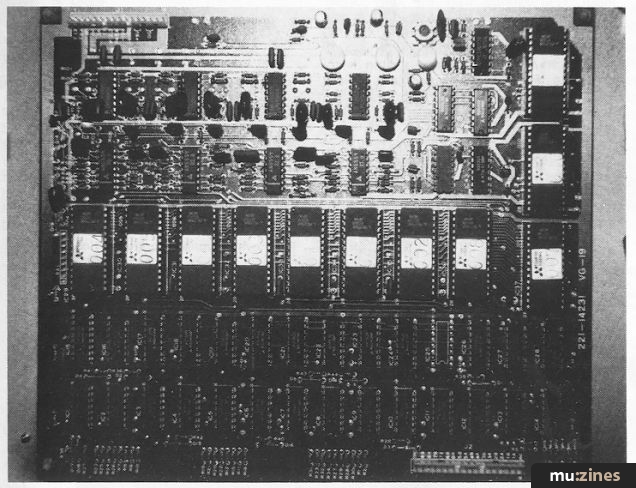
Mar 1984 · Electronics & Music Maker · Opened DPM-48 from the contemporary Hammond DPM-48 review; the article context does not identify the unbadged sample source or a Sakata specimen. - Hammond DPM-48 ↗
Mar 1984 · Electronics & Music Maker · Pattern-programming controls from the contemporary Hammond DPM-48 review; no evidence transfers the image to the unbadged or Sakata dossiers. - Hammond DPM-48 ↗
Mar 1984 · Electronics & Music Maker · Percussion voice selector controls from the contemporary Hammond DPM-48 review.