
An April 1983 Electronics & Music Maker Frankfurt report photographs the Rattlesnake under demonstration. The maker-associated retrospective places the concept in 1982.
The machine in the record
Hainbach / the Rattlesnake project.
Hainbach describes finally acquiring and playing a BME Rattlesnake, then building music and a sample project around its sounds. It is a present-day encounter, not a claim about the machine’s original users, showing how an improbable old device can still start a new body of work.
Read New Video: Luxembourg’s Forgotten Electro-Monster: BME Rattlesnake ↗More records in the archive
The machine keeps turning up.
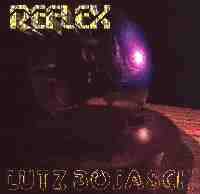
Lutz Bojasch / Cyborg / Reflex (1978–1982)
Cyborg’s artist archive lists a BME Rattlesnake among the instruments used for Lutz Bojasch’s Reflex recordings.
Read Cyborg — Lutz Bojasch: Reflex (1978–1982) ↗64 rhythms and their breaks
Four banks hold 64 basic rhythms and 64 breaks. BME’s archived product description explains how the player alternates them, or inserts a break after three basic cycles. A held Break footswitch can also make the opening a fill.
BME Parametric Percussion Rattlesnake: product and technical description ↗
Two sound settings under one switch
The Parametric controls reshape individual voices. Switch Parametric off to restore normal settings without moving the knobs; switch back to recover the altered kit.
BME Parametric Percussion Rattlesnake: product and technical description ↗
Let the claps follow the snare
The claps can follow their own rhythm track or the snare’s. Switch the snare off and its pattern can remain as claps. BME also describes routing the snare noise into them.
BME Parametric Percussion Rattlesnake: product and technical description ↗
Electronic voices with a metallic edge
The archived description calls the cymbal and hi-hat generators digital: complex pulse trains feed their sound-shaping circuits. The metal voices have their own Parametric control.
BME Parametric Percussion Rattlesnake: product and technical description ↗
A programmer beside the player
The 128 onboard sequences are preset. The Universal Port accepts external Big Brain or computer programming, with Rattlepad playing alongside. A backing and live strokes can share the instrument.
BME Parametric Percussion Rattlesnake: product and technical description ↗
On the Frankfurt stand
The April 1983 Frankfurt report shows the system under demonstration. That contemporary glimpse sits alongside the later account of its development: the Rattlesnake had reached a trade-show stand, where its combination of rhythm, sound controls and pads could be presented as one instrument.
On record
- Hainbach — Rattlesnake music and sample project. Hainbach describes finally acquiring and playing a BME Rattlesnake, then building a music and sample project around the machine’s sounds. Source ↗
- Lutz Bojasch / Cyborg — Reflex (1978–1982). Cyborg’s artist archive lists a BME Rattlesnake among the instruments used for Lutz Bojasch’s Reflex recordings. Source ↗
Sources
The visual archive