
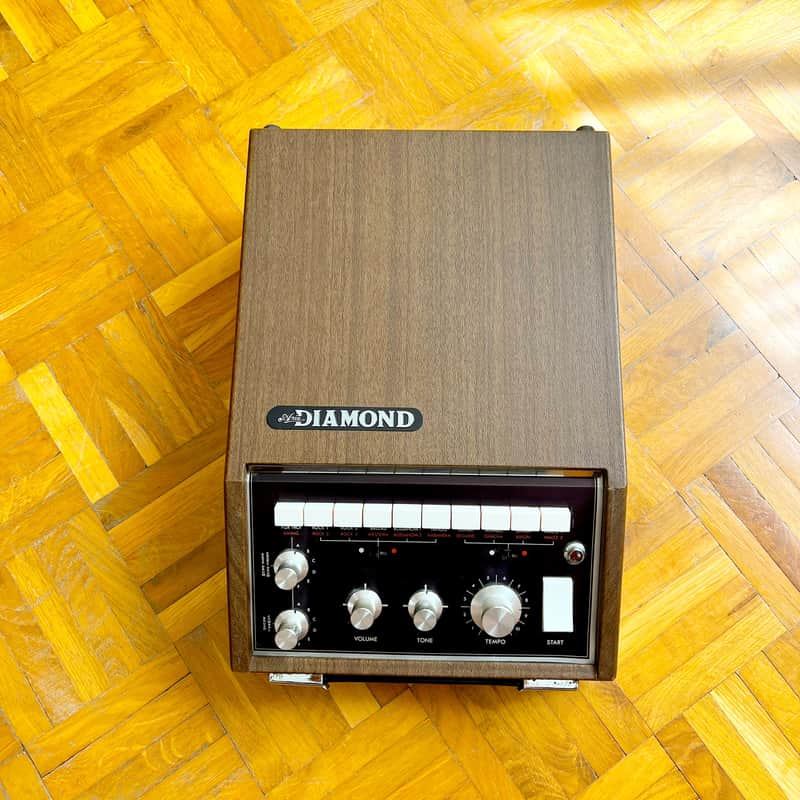
The Aria Diamond SR-55 Super Rhythmer belongs to the portable end of the first rhythm-box boom: a white-cased preset machine with a carry handle, dance-name buttons and a layout that asks to be used rather than filed away.
The evidence, in view
A document from the machine’s moment.
A dated period image belongs beside the history it helps to tell.
Surviving instrument
The Diamond remains a very particular box.
The surviving SR-55 makes the Aria story concrete: its panel and badge establish the exact object at the centre of the dossier, without borrowing certainty from related rhythm machines.
See the SR-55 specimen ↗The machine in the record
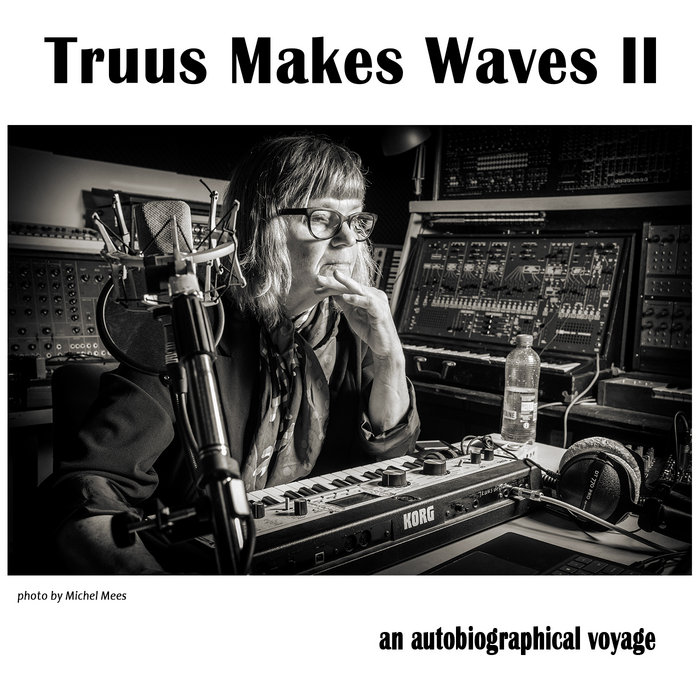
Truus de Groot / Plus Instruments — Truus Makes Waves II.
Truus de Groot credits an Aria Diamond on Truus Makes Waves II. The release credit does not split the Diamond’s contribution into individual patterns, yet it gives the scarce rhythm machine a clear place in the artist’s own stated equipment world.
Read Truus de Groot / Plus Instruments — Truus Makes Waves II ↗More records in the archive
The machine keeps turning up.
Sound Provider / Analog Drum Now sound-bank series
Sound Provider says they recorded an Aria Diamond and used it across most of the Analog Drum Now sound-bank series.
Read Recording an Aria Diamond Vintage Drum Machine ↗A handle, a row of dances
The Aria Diamond SR-55 looks ready to leave the house. Its carry handle, pale cabinet and plainly named rhythm buttons make it feel less like furniture and more like a compact accompanist for a player who wanted the pulse close at hand. The surviving panel makes the point before a note is played.Sources (2)
A family of familiar moves
Technical restorers and instrument makers have placed the Aria alongside the Mini Pops 3 and Univox SR-55 family. Across those related machines, the front-panel vocabulary—foxtrot, swing, rock, bossa nova, tango, mambo and cha-cha—maps a small social orchestra in pushbuttons.Sources (2)
Preset does not mean passive
The format may be automatic accompaniment, but the player still shapes the room. Selecting a rhythm, choosing a variation and leaning on the feel controls changes how a song sits. The SR-55 makes that old rhythm-box proposition especially visible: a finite set of patterns, made elastic by the person beside it.Sources (2)
Diamond on the lid
The Diamond badge is part of the machine’s charm. Its branding and enclosure give a familiar rhythm-box architecture a character of its own—a small, bright partner for rehearsal, home playing and the kind of one-person arrangement that starts when someone presses a button.Sources (2)
On record
- Sound Provider — Analog Drum Now sound-bank series. Sound Provider says they recorded an Aria Diamond and used it across most of the Analog Drum Now sound-bank series. Source ↗
- Truus de Groot / Plus Instruments — Truus Makes Waves II. The session equipment list names a Diamond 725 drum machine. Source ↗
Sources
The visual archive
Further visual evidence.
Sources for images shown earlier (2)
- Aria Diamond SR-55 Super Rhythmer ↗
- Truus de Groot / Plus Instruments — Truus Makes Waves II ↗
2024-05-02 · Truus de Groot / Plus Instruments / release artwork via Bandcamp · Official Bandcamp release-page artwork (Open Graph image)