
The Simmons SDS3 emerged at the turn of the 1980s as the four-channel electronic-percussion system from which the company’s later drum kits developed.
The machine in the record
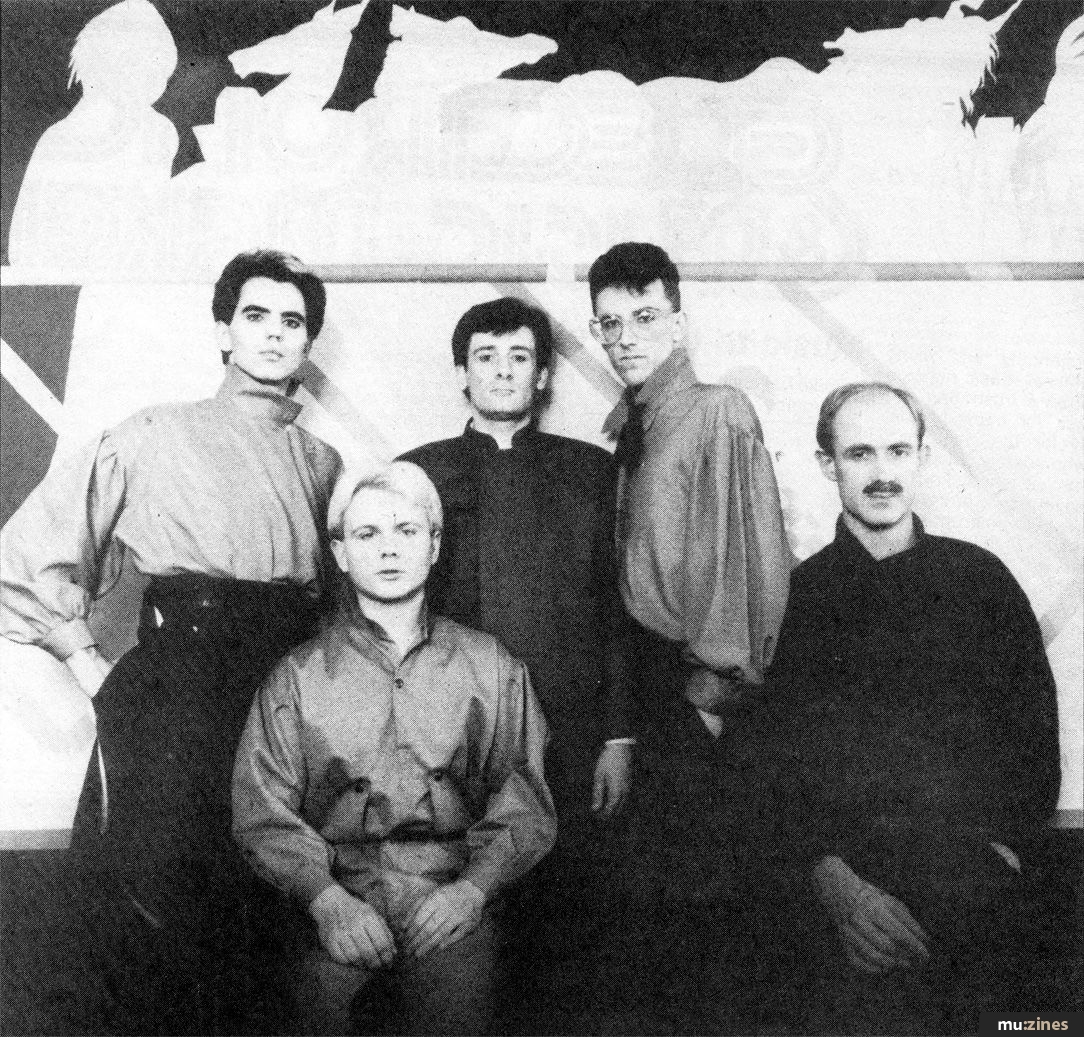
Richard James Burgess / “Angel Face”.
Burgess says “Angel Face” used an SDS3 alongside an SDS5 Drum Synth and Roland System 100M under MicroComposer control. It is an early electronic-drum system being treated as a compositional instrument, not a novelty pad at the edge of the studio.
Read Landscape Explored ↗More records in the archive
The machine keeps turning up.
Tim Simenon / Bomb the Bass / Digiland studio, no individual track allocation
Sound On Sound’s 1995 Digiland studio profile lists a Simmons SDS3 among Tim Simenon’s drum machines.
Read Tim Simenon / Bomb the Bass — Digiland studio inventory ↗Richard James Burgess / Landscape / Landscape’s early electronic-drum work; no named recording
Richard James Burgess says he used an SDS3 while developing his electronic-drum approach with Landscape.
Read Landscape Explored ↗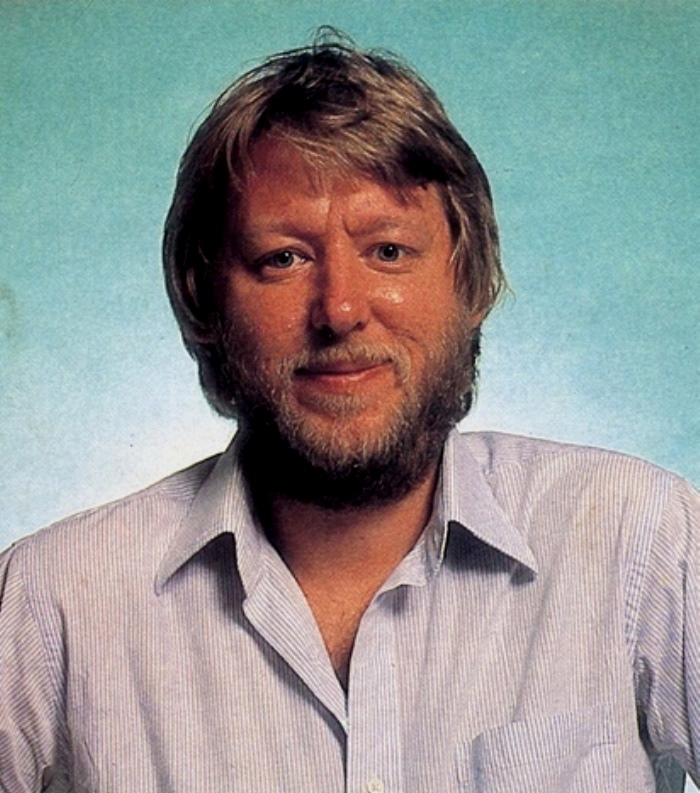
Visage / Rusty Egan / Early Genetic Sound Studios sessions; no named recording
Rusty Egan recalls Visage using a Simmons SDS3 prototype in early Genetic Sound sessions, combining triggered and pad-played percussion.
Read A Beginner’s Guide To Martin Rushent ↗Richard James Burgess / Landscape working method
Richard James Burgess describes using the Simmons SDS3’s adjustable impact click in his working method and recalls subsequent design discussions with Dave Simmons.
Read Landscape Explored ↗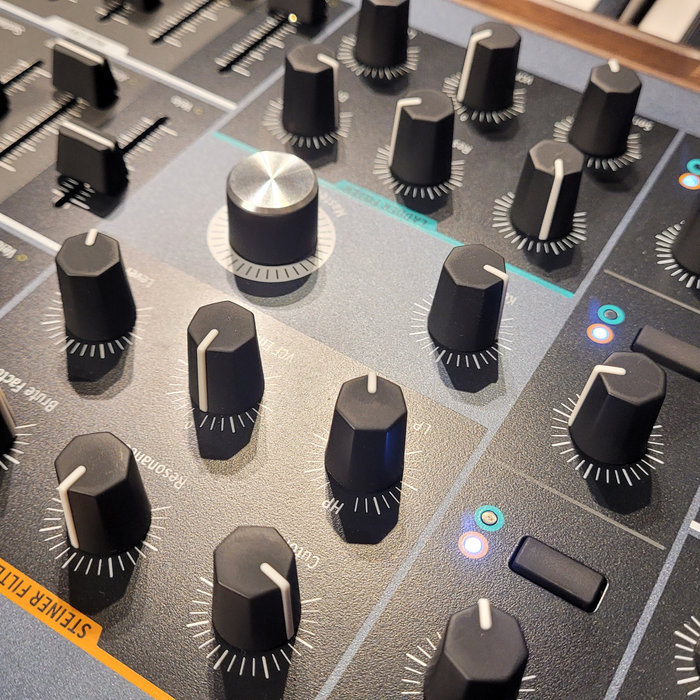
Alex Ball / YouTube Doodles 2022
Alex Ball’s collection includes SDS3-labelled System 100m pieces and an SDS-3/Ursa Major study, all credited as music he composed and performed.
Read Alex Ball / YouTube Doodles 2022 ↗Before the hexagons became a symbol
The SDS3 was the small, direct beginning of the Simmons story: four identical synthesiser channels played from conventionally shaped pads. It was not a self-running rhythm machine, nor a finished electronic replacement for an entire kit. It was an add-on — a way to put electronic impact, noise and pitch beside an acoustic drummer.
Industry Profile — Simmons Electronics ↗ Company Report — Simmons ↗
Four pads in a mahogany case
A 1985 company profile describes two pairs of shallow eight-inch Premier shells and heads connected to a compact mahogany enclosure. The pickups responded to the force of a strike, sending that gesture to the sound channels through a DIN connection. It is an appealingly physical design: the player struck a familiar surface, while the box translated the hit into a new kind of drum sound.
Company Report — Simmons ↗ Industry Profile — Simmons Electronics ↗
A musician’s useful click
Richard James Burgess remembered the SDS3’s adjustable impact click as a practical advance in a 1981 interview. Dave Simmons later recalled linking channels to make a larger tom-like sound and selling the instrument in bass-and-snare combinations. These details explain why the SDS3 mattered: its four channels were not merely four copies, but material a drummer could combine into the elements of a new electronic kit.
The seed of the Simmons kit
The SDS3’s wooden-framed pads and noise-generated voices are visible at the beginning of the later Simmons line. The famous angular electronic kit was still to come; here the invention is closer to a compact sound laboratory that a drummer could carry into an existing setup.
Industry Profile — Simmons Electronics ↗ Simmons Drums History ↗
Richard Burgess and the bridge to the new kit
Richard James Burgess was already looking for a way past the limits of amplified acoustic drums when he reached the SDS3. In a 1981 interview, he described the unit’s adjustable impact click as a meaningful step forward, then recalled meeting its designer, Dave Simmons, to talk through what a responsive electronic drum ought to be. The story makes the SDS3 more than a prelude to the famous hexagons: it was part of the conversation that shaped them.
A small machine inside a larger sound
Burgess also named the SDS3 in the equipment behind his 1981 single “Angel Face”, where it worked alongside the newer SDS5 Drum Synth and Roland System 100M, all guided by a MicroComposer. That is the revealing early-Simmons picture: a drummer’s instrument being folded into a sequenced, synthesised production rather than standing alone as a novelty effect.
The prototype arrives at Genetic Sound
Rusty Egan later remembered bringing a Simmons SDS3 prototype, supplied by Burgess, into Visage’s early sessions at Martin Rushent’s Genetic Sound Studios. With a CR-78, sequenced drums and hands on the pads, the group treated percussion as something to layer, trigger and play. It is a compact account of the working culture that formed around these first Simmons machines.
Sources
The visual archive
Further visual evidence.
Sources for images shown earlier (4)
- Company Report - Simmons ↗
- Landscape Explored — Richard Burgess and John Walters ↗
- Martin Rushent — 1982 portrait ↗
- Alex Ball — YouTube Doodles 2022 ↗
Release date not stated on source page · Alex Ball / release artwork via Bandcamp · Official Bandcamp release-page artwork (Open Graph image)
Additional visual sources (1)
Original publications and related image sources.
- Simmons Virtual Museum — SDS 3 device record ↗
Undated · Simmons Virtual Museum · SDS 3 device detail page