
The Kawai R-100 reached the British music press in late 1986. Reviews that followed through 1987 put it among the first wave of expressive, ROM-based professional drum machines.
The machine in the record
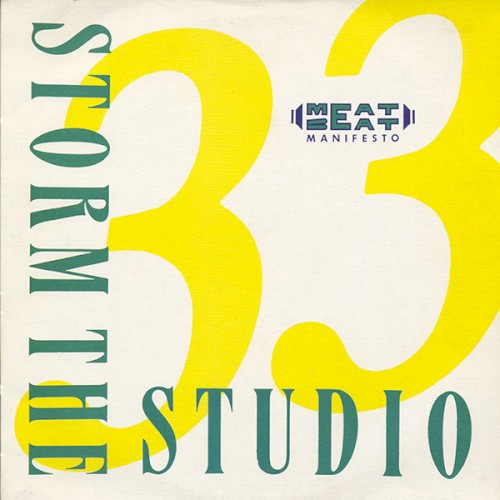
Meat Beat Manifesto / “Re-Animator (Part 2)”.
Jack Dangers says “Re-Animator (Part 2)” is built around the R-100 triggering a noise gate—“basically all Kawai”. It is the sort of single-machine method that turns an overlooked box into the spine of a whole record.
Read Classic album: Meat Beat Manifesto on Storm The Studio ↗More records in the archive
The machine keeps turning up.
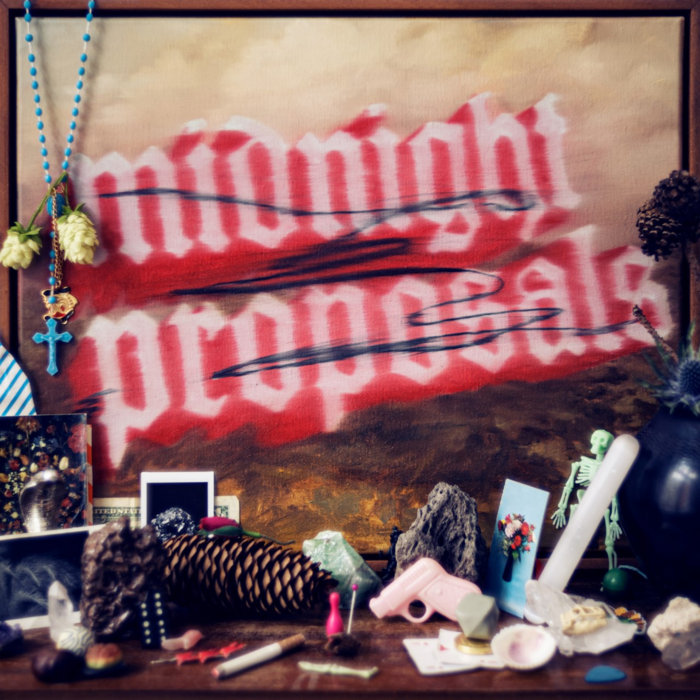
Jennifer Touch / Midnight Proposals
Jennifer Touch lists a Kawai R-100 among the drum machines used in the self-recorded, mixed and engineered Midnight Proposals set-up.
Read Jennifer Touch interview ↗
Arctic Sunrise / When Traces End
Arctic Sunrise count the R-100 among the instruments used for When Traces End.
Read ARCTIC SUNRISE Interview ↗Michael Fakesch / Studio inventory, 2007
R100 in working studio inventory.
Read Michael Fakesch Interview ↗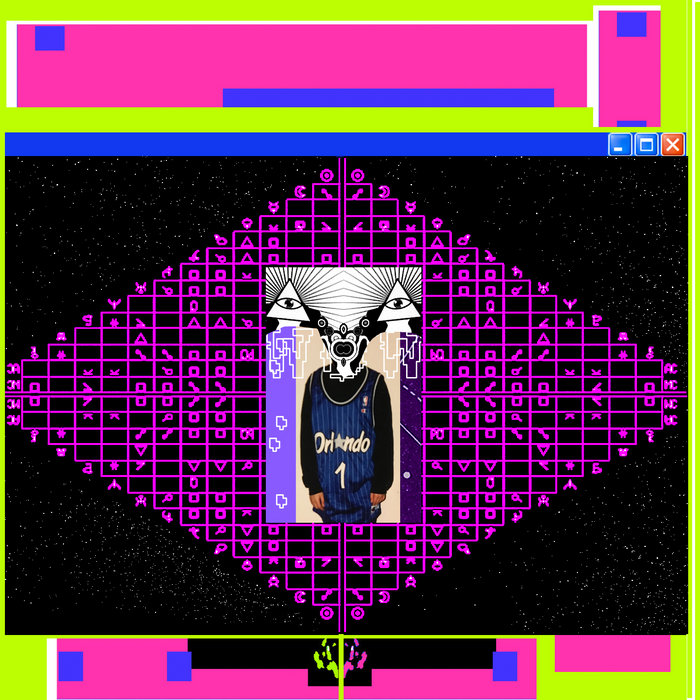
100 Psychic Dreams / Bronze Stroker
100 Psychic Dreams credits the Kawai R-100 among the machines providing original sounds for Bronze Stroker.
Read 100 Psychic Dreams / Bronze Stroker ↗
Mensah / Elusive Fantasy
Mensah’s Elusive Fantasy credits list a Kawai R-100 among Ed Wartts’s home-studio instruments across recordings made from 1982 to 2000.
Read Mensah / Elusive Fantasy ↗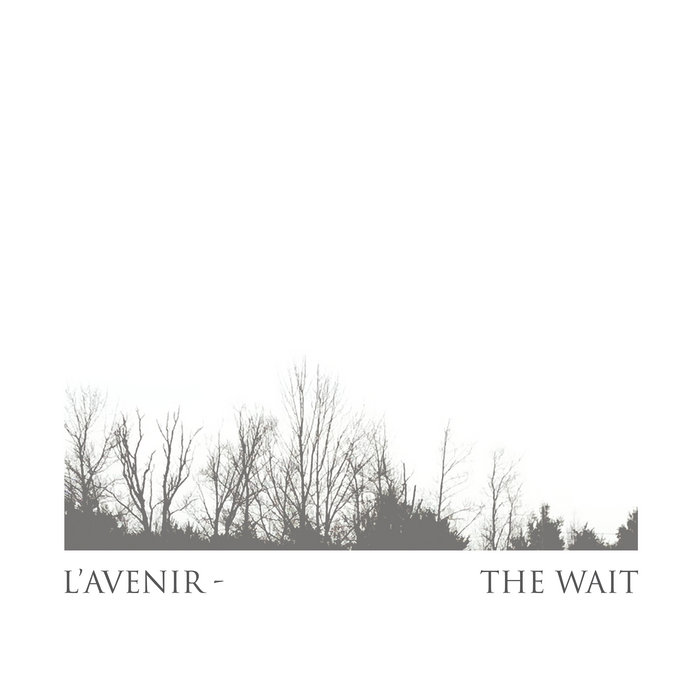
L’Avenir / The Wait
Jason Sloan lists a Kawai R-100 among the equipment used for L’Avenir’s The Wait.
Read L’Avenir — The Wait ↗
L’Avenir / The Wait
Jason Sloan lists the Kawai R-100 in the spare Baltimore setup behind L’Avenir’s The Wait, alongside a TR-606, DR-55 and SH-101.
Read L’Avenir / The Wait ↗
Sneaker & Scannoir / DoppelGOTT
Sneaker and Scannoir’s release credits list a Kawai R-100 among the instruments used for the DoppelGOTT material.
Read Sneaker & Scannoir — DoppelGOTT ↗
Bubblegum Octopus / Matthew Morden / ParaParaParasite
Morden lists a Kawai R-100 among the hardware used for ParaParaParasite.
Read Bubblegum Octopus — ParaParaParasite ↗
L’Avenir / The Wait
L’Avenir’s album equipment list includes the Kawai R-100.
Read L’Avenir / The Wait ↗L’Avenir / The Wait
Jason Sloan lists a Kawai R-100 among the equipment used for L’Avenir’s The Wait.
Read L’Avenir — The Wait ↗
L’Avenir / Jason Sloan / Étoiles
Jason Sloan lists a Kawai R-100 in the release-wide equipment list for Étoiles.
Read L’Avenir — Étoiles ↗
Becker & Mukai / Time Very Near
Becker & Mukai list a Kawai R-100 in the release-wide gear inventory for Time Very Near.
Read Becker & Mukai — Time Very Near ↗Meat Beat Manifesto / Jack Dangers / Re-Animator (Part 2)
Dangers says the piece is based around the Kawai R-100 triggering a noise gate and calls it “basically all Kawai.”
Read Classic album: Meat Beat Manifesto on Storm The Studio ↗A professional beatbox with a point of view
The R-100 came to market as Kawai’s ambitious drum machine: 24 sounds, velocity-sensitive pads, tuning, panning and separate outputs in a compact professional instrument. Simon Trask heard a distinctive sound and welcomed the interactive way a player could shape it; Tony Reed singled out the toms and the gated kick and snare.
Programming the individual hit
The R-100 made its samples behave less like a fixed kit. A player could tune and pan individual events, allowing repeated strikes of one sound to take different places in a pattern. Its 24 sounds share eight voice groups, so a player learns the character of the machine by deciding which sounds may overlap and which will cut one another short.
A first encounter in the British press
Tony Reed tested the R-100 against Korg’s DDD-1 in November 1986. He found the Kawai’s interface less immediately familiar but was clear about the quality of much of its sound. By June, Ian Waugh praised the programming possibilities while listening closely to the sample tails. Together the reviews capture the R-100 in use: a serious machine that rewarded patience at the panel.
Kawai R-100 Digital Drum Machine ↗ Kawai R100 Drum Machine ↗
A library that changed the machine
Kawai’s alternative 24-sound ROMs were fitted through an internal ZIF socket. The operation replaced the entire sound set, giving the R-100 a new character in one move. It made the machine an evolving instrument: a rhythm written for one library could be heard again through another.
The Atari on the other side of the desk
Compu-Mates’ DrumDroid brought the R-100 into the Atari ST world, where patterns could be written on screen, exchanged with the drum machine and subjected to random rhythm generation. Scott Gershin found it particularly useful for complex writing, while the R-100 itself remained part of the process for functions outside the MIDI link.
Into later studios
Steve Baltes has named the R-100 among the hardware used on Arctic Sunrise’s When Traces End, and Michael Fakesch kept one in his studio inventory. Those accounts give the Kawai an afterlife beyond its original market: an instrument valued for a particular set of sounds and a direct way of writing with them.
Jack Dangers’ gate machine
Jack Dangers says the second part of Meat Beat Manifesto’s “Re-Animator” was built around a Kawai R-100 triggering a noise gate. He calls it “basically all Kawai”: a rhythm programmer becomes a control signal, opening and cutting a free saxophone performance into the record’s nervous pulse.
A noise-gate instrument
Jack Dangers calls “Re-Animator (Part 2)” “basically all Kawai,” describing an R-100 triggering a noise gate at the centre of the piece. Arctic Sunrise name it among the instruments on When Traces End, and Michael Fakesch’s studio inventory confirms its continued presence in another working room. This is a machine story told by technique: a drum box becomes the thing that opens and closes the rest of the sound.
Classic album: Meat Beat Manifesto on Storm The Studio ↗ ARCTIC SUNRISE Interview ↗ Michael Fakesch Interview ↗
Sources
The visual archive
Further visual evidence.
Sources for images shown earlier (12)
- Kawai R-100 Digital Drum Machine ↗
- 100 Psychic Dreams — Bronze Stroker ↗
Release date not stated on source page · 100 Psychic Dreams / release artwork via Bandcamp · Official Bandcamp release-page artwork (Open Graph image) - Mensah — Elusive Fantasy ↗
Release date not stated on source page · Mensah / release artwork via Bandcamp · Official Bandcamp release-page artwork (Open Graph image) - L’Avenir — The Wait ↗
Release date not stated on source page · L’Avenir / release artwork via Bandcamp · Official Bandcamp release-page artwork (Open Graph image) - Sneaker & Scannoir — DoppelGOTT ↗
Release date not stated on source page · Sneaker & Scannoir / release artwork via Bandcamp · Official Bandcamp release-page artwork (Open Graph image) - Bubblegum Octopus / Matthew Morden — ParaParaParasite ↗
2026-01-06 · Bubblegum Octopus / Matthew Morden / release artwork via Bandcamp · Official Bandcamp release-page artwork (Open Graph image) - L’Avenir — The Wait ↗
2013-11-04 · L’Avenir / release artwork via Bandcamp · Official Bandcamp release-page artwork (Open Graph image) - L’Avenir / Jason Sloan — Étoiles ↗
2015-05-10 · L’Avenir / Jason Sloan / release artwork via Bandcamp · Official Bandcamp release-page artwork (Open Graph image) - Becker & Mukai — Time Very Near ↗
2020-04-03 · Becker & Mukai / release artwork via Bandcamp · Official Bandcamp release-page artwork (Open Graph image) - Meat Beat Manifesto / Jack Dangers — Re-Animator (Part 2) ↗
1989 · Meat Beat Manifesto / Jack Dangers / release artwork via Cover Art Archive · MusicBrainz release record and Cover Art Archive front artwork - Arctic Sunrise — When Traces End ↗
2016-10-28 · Arctic Sunrise / release artwork via Cover Art Archive · Release catalogue and retained front artwork - Jennifer Touch — Midnight Proposals ↗
2023-02-17 · Jennifer Touch / FatCat Recordings release artwork via official Bandcamp · Official artist Bandcamp album page and retained front artwork
Additional visual sources (7)
Original publications and related image sources.
- R100 patchbay, pitch control and ROM selector ↗
Undated · Circuitbenders / Pill Shovel Productions · Images alongside modification descriptions - Kawai R100 drum machine ↗
May 1987 · Making Music · Colour Kawai R-100 product photograph with Kawai and R-100 markings visible, restored to the originating May 1987 Making Music review. - Kawai R100 ↗
May 1987 · Music Technology · Kawai R-100 product photograph with the Kawai and R-100 model markings visible, restored to its originating May 1987 Music Technology review. - Compu-Mates R100 DrumDroid ↗
Feb 1988 · Music Technology · Contemporary R100 DrumDroid Multi Mode Selector/editor screen, an exact machine-specific software-documentation image from the February 1988 article. - Compu-Mates R100 DrumDroid; Kawai R100 Drum Machine; Kawai R100 ↗
Feb 1988 · Music Technology · Contemporary R100 DrumDroid Pattern Creator screen, an exact machine-specific software-documentation image from the February 1988 article. - Kawai R100 Drum Machine ↗
Jun 1987 · Sound On Sound · Kawai R-100 product photograph with the Kawai and R-100 markings visible, restored to its originating June 1987 Sound On Sound review. - Drum Machine Survey ↗
Mar 1987 · Sound On Sound · Kawai R-100 product photograph from the Drum Machine Survey; its model marking is visible.