
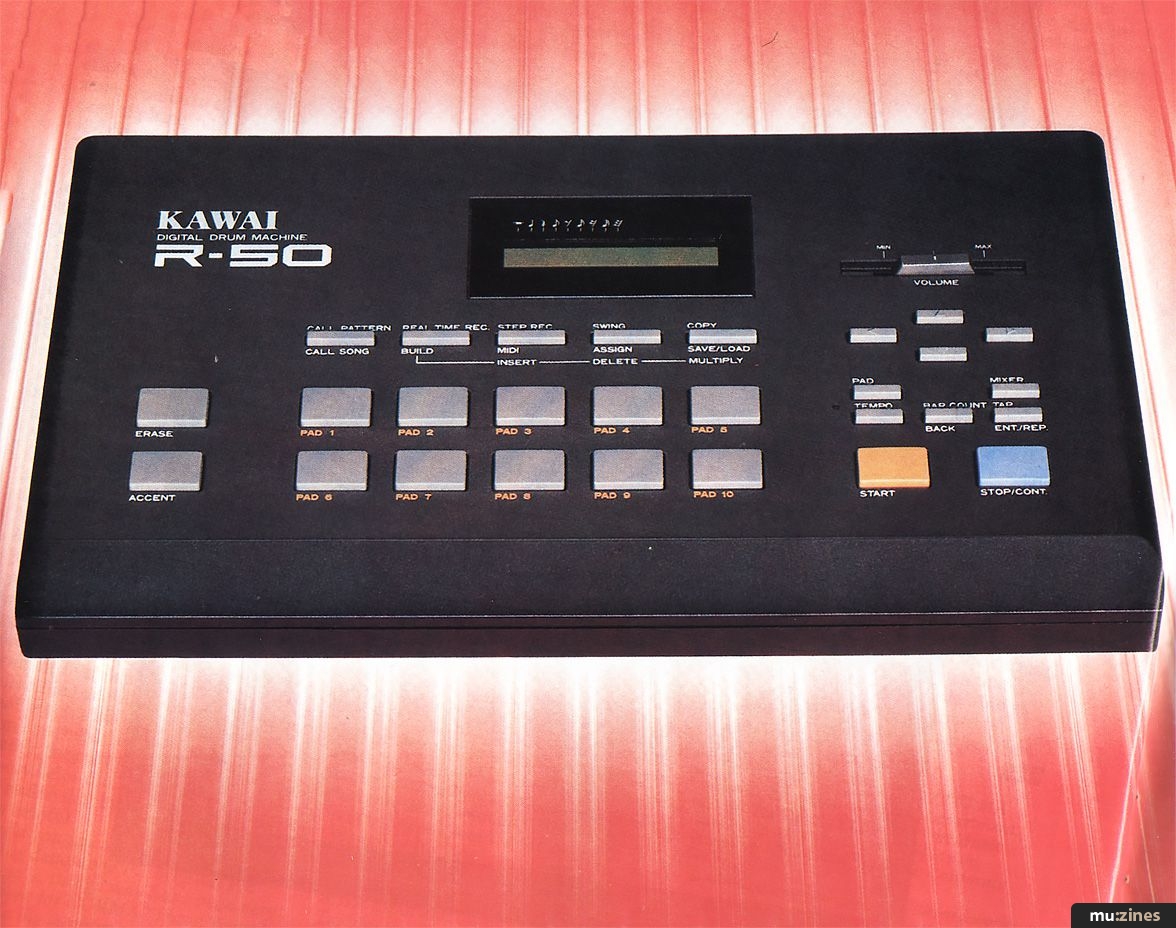
Kawai announced the R-50 in the British press in June 1987 at £360 including VAT. September reviews recorded dealer figures of £325 including VAT and introduced it as a compact companion to the R-100.
The machine in the record
Roman Flügel / early cassette work.
Roman Flügel places the R50 in his first electronic setup, around 1987. Before the later records, it was one of the machines teaching a young producer how a pattern could hold a track together.
Read Talking Tech with Roman Flügel ↗More records in the archive
The machine keeps turning up.
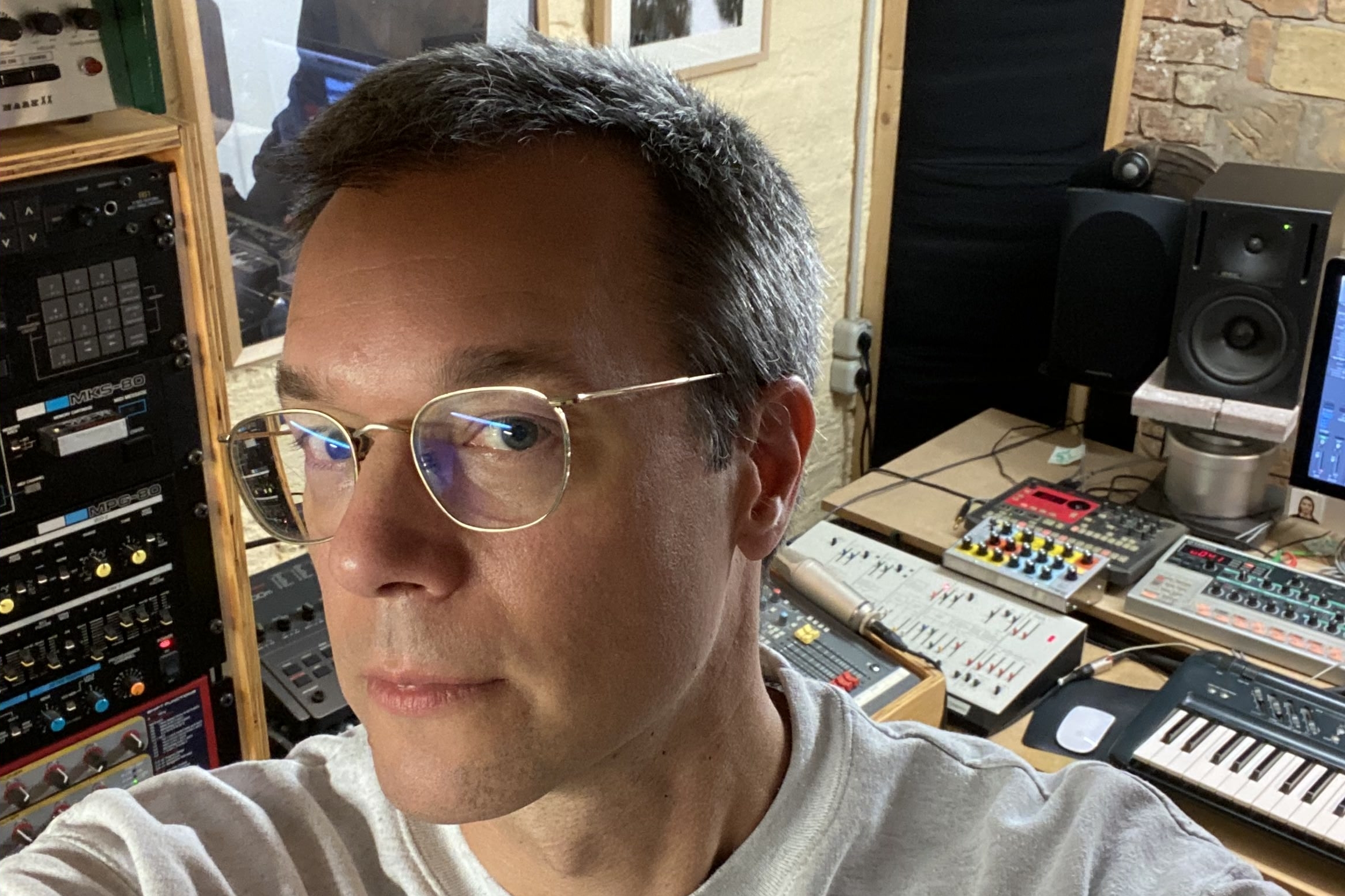
Roman Flügel / Early four-track cassette work
Roman Flügel recalls a Kawai R-50 as part of his first electronic set-up, recorded to a Tascam four-track cassette machine around 1987.
Read Talking Tech with Roman Flügel ↗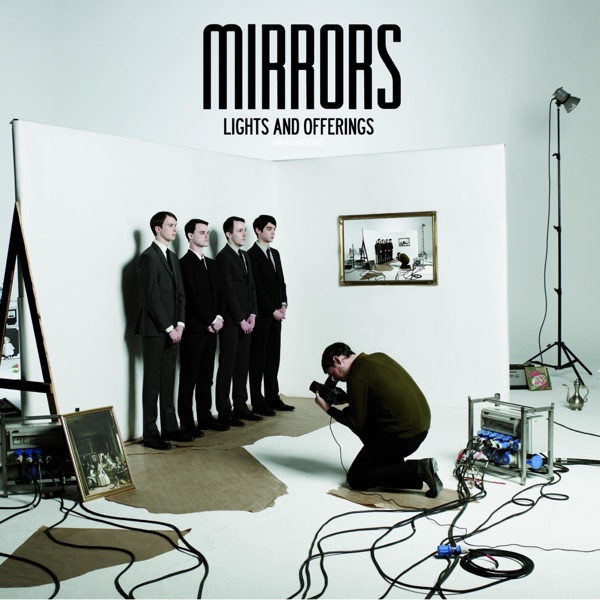
Mirrors / Lights and Offerings
R50 in album instrumentation.
Read Through The Looking Glass: An Interview With Mirrors ↗
Franz Scala / Mondo Della Notte
R-50 among album recording instruments.
Read Franz Scala – Mondo Della Notte (Interview) ↗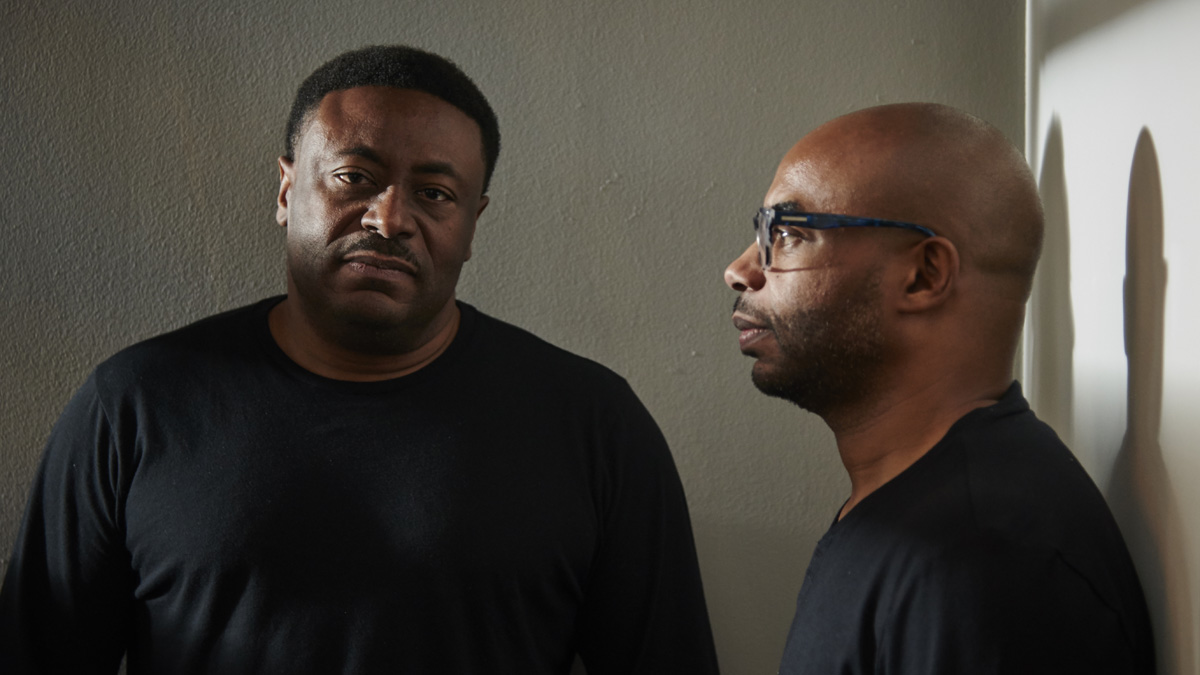
Octave One / Early production practice
Early two-machine sound combination.
Read Octave One on how hardware made them who they are today ↗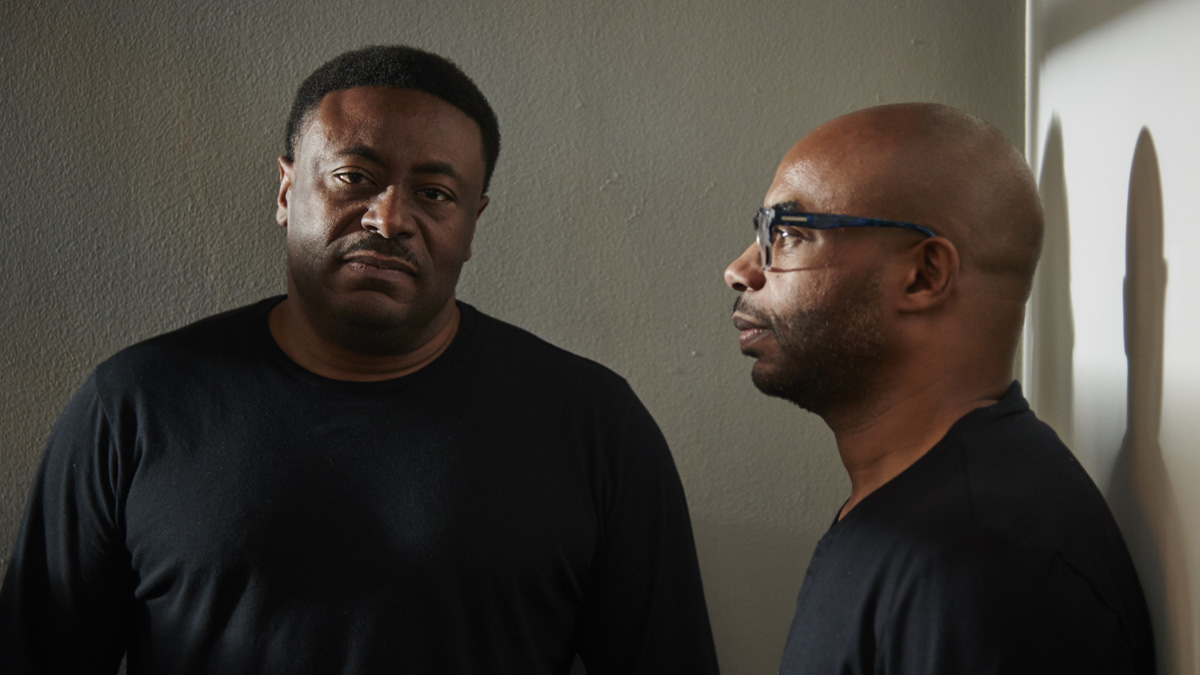
Octave One / the Burden brothers / Early Detroit drum songs; no named recording
Octave One identify a Kawai R-50 and Korg DDD-1 as the machines on which they began making drum songs.
Read Octave One: “We hope to inspire people” ↗
Beytah / Kawai R-100 DAC Bent Quad Rom Sample Pack
Beytah’s circuit-bent Kawai project captures the R-50 ROM among the four interchangeable sound sets sampled from the machine.
Read Beytah / Kawai R-100 DAC Bent Quad Rom Sample Pack ↗
Fermín Durán / Tapes from 1988
Durán recalls putting a newly acquired Kawai R-50 through gated reverb and manipulating it with the recorder.
Read Fermín Durán — Tapes from 1988 ↗
Telan Devik / Retro Illuminated / Attack of the Synthians
The release’s drum-sample inventory includes a Kawai R-50.
Read Telan Devik — Retro Illuminated / Attack of the Synthians ↗Roman Flügel / Early cassette work
R50 in first electronic setup, around 1987.
Read Talking Tech with Roman Flügel ↗A smaller box with a different freedom
The R-50 took the R-series idea into a smaller, more affordable body. It kept eight-voice playback, 50 preset patterns, 50 user patterns and ten songs, then put ten reassignable pads under the player’s fingers. Rick Davies saw its natural home in a recording room or MIDI setup, where a kick or snare could be sent out for treatment while the rest of the machine carried the pattern.Source (1)
A limited library that could move
Kawai gave the R-50 tuning, pan, level and effects controls, so its sounds could be reimagined inside a pattern instead of merely selected. Paul Colbert described three differently tuned versions of the same cymbal sounding together from separate pads, a small but telling example of the machine’s flexible voice handling.Sources (2)
Programming with a pulse
Contemporary reviewers liked the real-time writing and the way the pads encouraged experimentation. Simon Trask admired the value and potential of the machine, while Ian Gilby found the sound behaviour and MIDI implementation unusually capable for its size. The R-50 makes most sense as an active writing partner: tap a part, alter it, then hear the result immediately.Sources (2)
Changing the palette
A replacement sound chip and ZIF adaptor offered an alternative library of orchestral, bass-guitar and drum material. The swap changed the whole sound set at once, giving an R-50 owner a way to recast existing patterns without buying a new machine.Source (1)
First machines and later records
Roman Flügel recalls an R-50 in his first electronic setup, recorded through a Boss KM60 mixer to a Tascam four-track. James New included one among the instruments for Mirrors’ Lights and Offerings, while Franz Scala named it in the making of Mondo Della Notte. These stories follow the R-50 from an early home studio into later records that made use of its compact, changeable palette.
Small machine, separate lives
Roman Flügel remembers the R-50 in his first electronic cassette setup around 1987. It turns up again in Mirrors’ Lights and Offerings and Franz Scala’s Mondo Della Notte, while Octave One recall an early two-machine combination that included it. The R-50 did not become a universal shorthand for an era, which is precisely why these individual appearances matter.
Octave One begins with two drum machines
Octave One recall buying a Kawai R-50 and Korg DDD-1, then using them to make their first drum songs in late-1980s Detroit. It is a modest beginning for a major techno story: two affordable boxes, a local radio connection and a pair of artists learning what a programmed rhythm could become.Source (1)
In the market
- 1987-06: GBP 360 — UK preview price. R50 Source ↗
- 1987-09: GBP 325 — UK review price. R50 Source ↗
- 1987-09: GBP 53 — UK review accessory price. Replacement sound chip and ZIF adaptor Source ↗
On record
- Roman Flügel — Early cassette work. R50 in first electronic setup, around 1987. Source ↗
- Mirrors — Lights and Offerings. R50 in album instrumentation. Source ↗
- Franz Scala — Mondo Della Notte. R-50 among album recording instruments. Source ↗
- Octave One / the Burden brothers — Early Detroit drum songs; no named recording. Octave One identify a Kawai R-50 and Korg DDD-1 as the machines on which they began making drum songs. Source ↗
- Beytah — Kawai R-100 DAC Bent Quad Rom Sample Pack. Beytah’s circuit-bent Kawai project captures the R-50 ROM among the four interchangeable sound sets sampled from the machine. Source ↗
- Fermín Durán — Tapes from 1988. Durán recalls putting a newly acquired Kawai R-50 through gated reverb and manipulating it with the recorder. Source ↗
- Telan Devik — Retro Illuminated / Attack of the Synthians. The release’s drum-sample inventory includes a Kawai R-50. Source ↗
In the studio and on stage
- Octave One — Early production practice. Early two-machine sound combination. Source ↗
Sources
- Kawai R50 Drum Machine
- Kawai R50
- Kawai R50 Drum Machine, p. 25
- Kawai R50, p. 38
- Through The Looking Glass: An Interview With Mirrors
- Franz Scala – Mondo Della Notte (Interview)
- Talking Tech with Roman Flügel
- Mondo Della Notte Repress
- Octave One on how hardware made them who they are today
- Octave One: “We hope to inspire people”
The visual archive
Further visual evidence.
Sources for images shown earlier (8)
- Sound On Sound — Kawai R50 Drum Machine review ↗
- Octave One — MusicRadar interview image ↗
- Roman Flügel — Stamp The Wax Talking Tech portrait ↗
- Beytah — Kawai R-100 DAC Bent Quad Rom Sample Pack ↗
Release date not stated on source page · Beytah / release artwork via Bandcamp · Official Bandcamp release-page artwork (Open Graph image) - Fermín Durán — Tapes from 1988 ↗
2024-03-29 · Fermín Durán / release artwork via Bandcamp · Official Bandcamp release-page artwork (Open Graph image) - Telan Devik — Retro Illuminated / Attack of the Synthians ↗
2016-07-29 · Telan Devik / release artwork via Bandcamp · Official Bandcamp release-page artwork (Open Graph image) - Mirrors — Lights and Offerings ↗
2011-02-28 · Mirrors / release artwork via Cover Art Archive · MusicBrainz release record and Cover Art Archive front artwork - Franz Scala — Mondo Della Notte ↗
2020-12-05 · Franz Scala / release artwork via Cover Art Archive · Release catalogue and retained front artwork
Additional visual sources (4)
Original publications and related image sources.
- Kawai R50 ↗
Sep 1987 · Making Music · Kawai R-50 product photograph with R-50 marking clearly visible. Corrected from inherited R-100 contexts and restored to the originating September 1987 Making Music review. - Kawai R50 Drum Machine ↗
Jun 1987 · Music Technology · Kawai R-50 product photograph with the R-50 marking visible. Corrected from inherited R-100 contexts to the originating June 1987 R50 preview. - Kawai R50 ↗
Sep 1987 · Music Technology · Kawai R-50 product photograph with the R-50 marking visible. The pixels do not support inherited R-100 or alternate R-50e assignments. - Kawai R50 Drum Machine ↗
Sep 1987 · Sound On Sound · Clearly marked Kawai R-50 product photograph from its September 1987 Sound On Sound review, correcting the inherited R-100 assignment.