
Korg’s Mini Pops 120P was the portable form of the Mini Pops 120, putting preset rhythms and performance controls into a compact case.
The machine in the record
Bernd-Michael Land / the SynXsS studio.
A studio account identifies a Korg Mini-Pops 120P in Bernd-Michael Land’s SynXsS setup. No composition is assigned to it. The image is still useful: one more example of a preset machine retained as an individual colour inside a long-running electronic studio.
Read Bernd-Michael Land and the Korg Mini Pops 120P ↗More records in the archive
The machine keeps turning up.
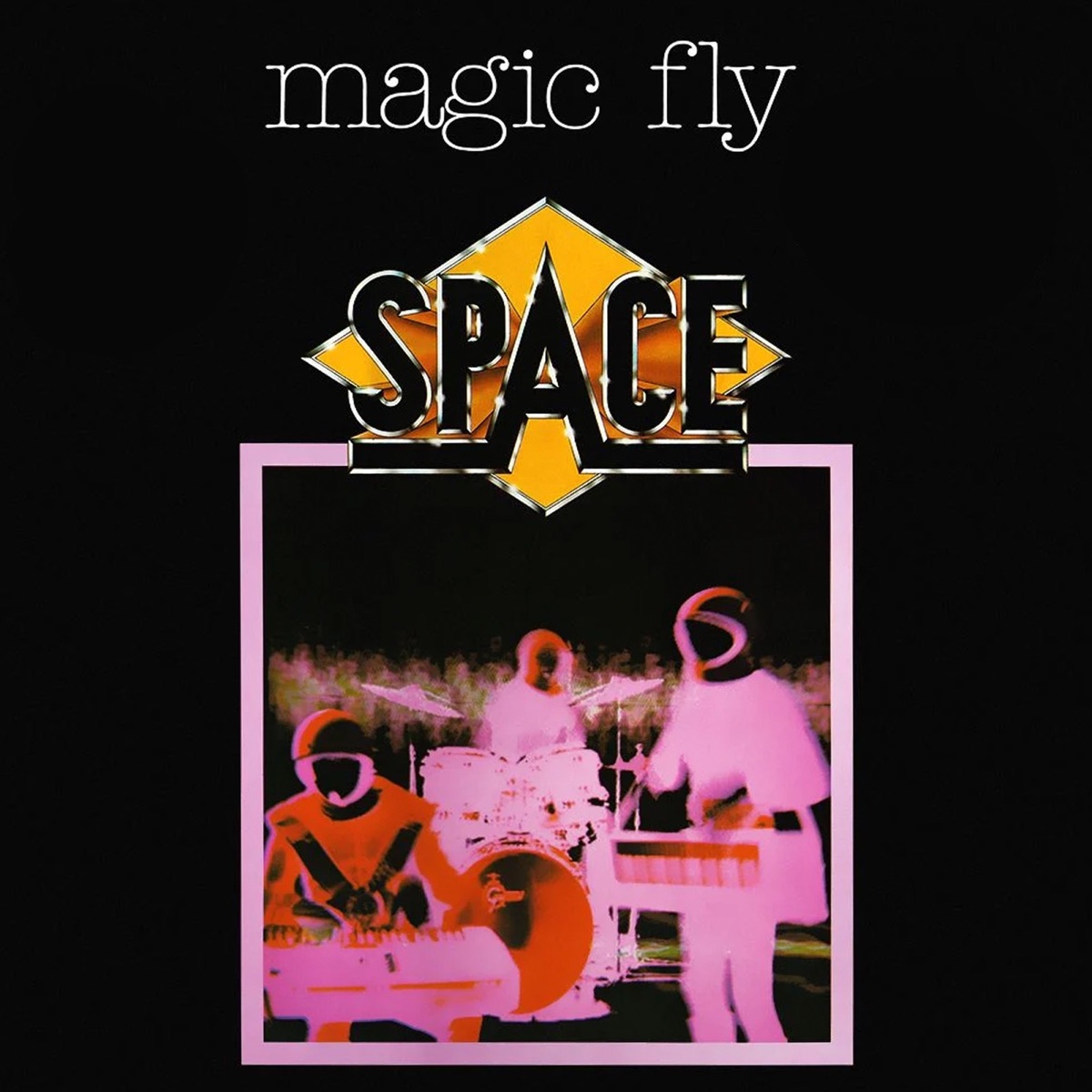
Space / Joe Hammer / “Magic Fly”
Hammer says the song’s bass sequence was triggered by a Mini Pops 120.
Read Electronic Sound interview ↗MESS Synthesiser Orchestra / Mat Watson / Magnitudes — planned live debut
Mat Watson’s instrument list for Magnitudes, the MESS Synthesiser Orchestra’s planned debut work, includes a Korg Mini Pops 120P. He describes a performance in which the archive machines would be played live rather than sequenced.
Read Magnitudes: Behind-the-scenes of the MESS Synthesiser Orchestra’s live debut ↗The 120 that could leave the room
Korg offered the Mini Pops 120 in two forms: the portable 120P and the wood-cased 120W. The 120P keeps a full automatic-rhythm instrument close at hand, ready to move between a living room, rehearsal space and working rig.Sources (2)
The rhythm waits for a foot
Start/stop, tempo, balance and fade sit on the front, with a footswitch connection for the player who wants the entrance to happen at the right moment. This is accompaniment designed as a performance gesture rather than a fixed background.Source (1)
Part of the 1979 Korg range
Korg’s 1979 catalogue carried both 120 versions among its rhythm products. That catalogue image captures the Mini Pops at home in a broad instrument line, before the later drum machine made programming the central event.
Sources
The visual archive
Further visual evidence.
Sources for images shown earlier (2)
- Korg Mini Pops 120P / 120W owner’s manual ↗
- Space — Magic Fly ↗
1977-04-01T12:00:00Z · Space / release artwork via Apple Music catalog artwork · Release catalogue and retained front artwork
Additional visual sources (1)
Original publications and related image sources.
- Mini Pops120P and120W factory illustrations and rhythm charts ↗
Undated · Korg · PDF pp1 and5 inspected;8 pages total