
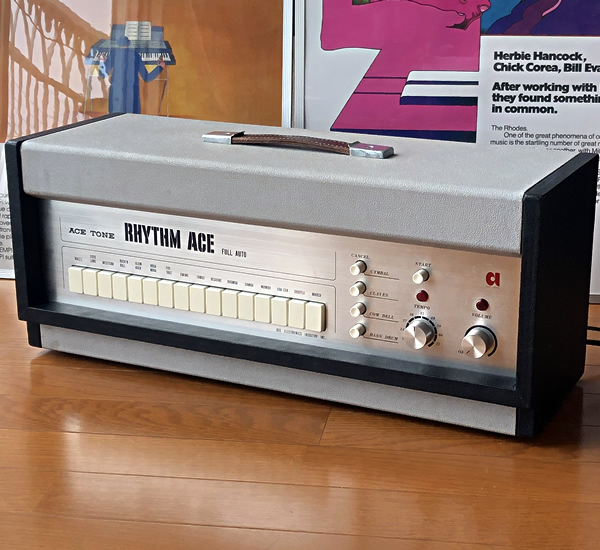
Ace Tone’s Rhythm Ace FR-1 was offered to Dutch musicians by July 1967 as a transistorised automatic accompaniment machine for organ and piano. Its rhythm selectors, tempo control and voice switches gave a solo player a pulse that could be actively shaped.
The machine in the record

Thamz / Slowz — Tỉnh!!!.
Thamz and Slowz credit an Ace Tone Rhythm Ace FR-1 on Tỉnh!!!. It is a release-level equipment credit rather than a track-by-track allocation, but it lets this early preset box step out of catalogue history and into a contemporary record’s stated palette.
Read Thamz / Slowz — “Tỉnh!!!” ↗More records in the archive
The machine keeps turning up.
Reported association
J.J. Cale / Naturally
An artist-equipment record citing Soundgas places an Ace Tone Rhythm Ace FR-1 on J.J. Cale’s debut album Naturally.
Read J.J. Cale and the Ace Tone Rhythm Ace FR-1 ↗Reported association
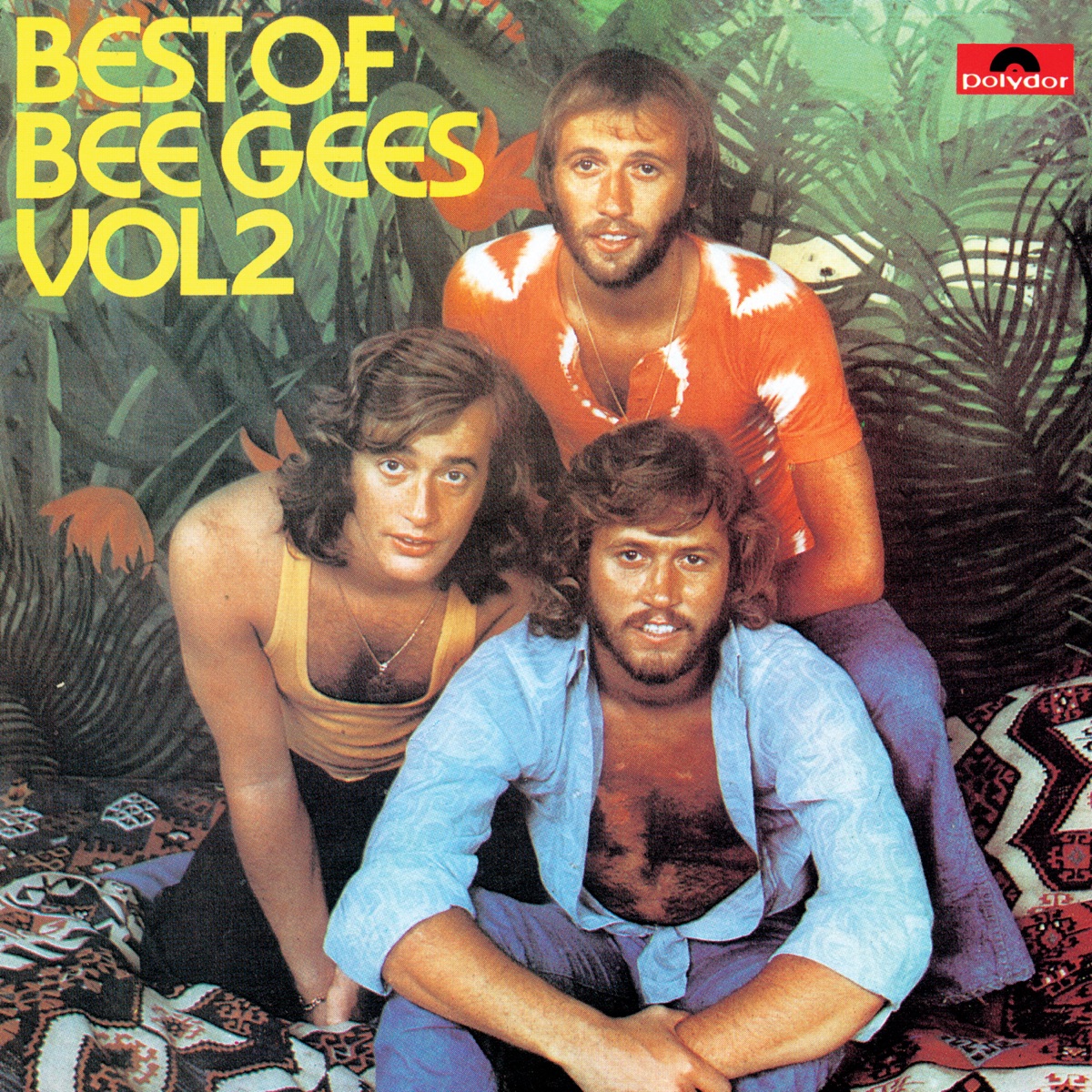
Robin Gibb / Saved by the Bell
A published account identifies Robin Gibb’s Ace Tone FR-1 as the rhythmic bed of “Saved by the Bell”, built with organ before guitar and vocal were added.
Read Robin Gibb and the Ace Tone Rhythm Ace FR-1 on Saved by the Bell ↗MESS Synthesiser Orchestra / Mat Watson / Magnitudes — planned live debut
Mat Watson’s instrument list for Magnitudes, the MESS Synthesiser Orchestra’s planned debut work, includes a Ace Tone Rhythm Ace FR-1. He describes a performance in which the archive machines would be played live rather than sequenced.
Read Magnitudes: Behind-the-scenes of the MESS Synthesiser Orchestra’s live debut ↗Automatic accompaniment at hand
Select a rhythm, combine it with another and adjust the tempo: the FR-1 puts prepared percussion within reach of a keyboard player. Its sixteen preset rhythms can be combined, while voice-defeat switches let the player remove individual sounds. A fixed pattern library becomes accompaniment with a balance the musician can change.
The commercial rhythm redesign
Ace Electronics had already tried an automatic rhythm instrument, the R-1. Gordon Reid describes the transistorised FR-1 as the successful commercial redesign. By July 1967 a Dutch dealer was offering it for electronic organ and piano at ƒ795: a dated shop-window glimpse of the machine reaching its intended players.
The History Of Roland: Part 1 ↗ Rhythm Ace FR-1 dealer advertisement ↗
A compact instrument for organ and piano
The FR-1 generates prepared rhythms with its preset circuitry. Playing it involves choosing combinations, setting their pace and deciding which percussion voices to leave in. Those decisions can be made beside the organ or piano, with volume under the same hand that selects the rhythm.
Rhythm Ace FR-1 dealer advertisement ↗ Ace Tone Rhythm Ace FR-1 ↗ Ace Tone FR-1 ↗
The visual archive
Further visual evidence.
Sources for images shown earlier (3)
- Organ69 — Ace Tone Rhythm Ace FR-1 ↗
- Thamz / Slowz — Tỉnh!!! ↗
Undated · Thamz / Slowz / release artwork via Bandcamp · Official Bandcamp release-page artwork (Open Graph image) - Robin Gibb — Saved By the Bell ↗
1973-08-01T12:00:00Z · Robin Gibb / release artwork via Apple Music catalog artwork · Release catalogue and retained front artwork
Additional visual sources (1)
Original publications and related image sources.
- Ace Tone Rhythm Ace FR-1 — surviving specimen ↗
Undated listing · |ohm|studi|ohm| seller photographs / Reverb · Reverb listing, product photographs 1–14