
A 1985 company report recalls an SDS5 hexagonal pad at the 1980 Over The Road Show. A September 1983 *Music UK* review describes the kit arriving around 1981, and a UK dealer advertised the named SDS5 in April 1984.
The machine in the record
Spandau Ballet / “Chant No. 1”.
Richard James Burgess says “Chant No. 1” was the first record to feature the prototype SDS-V played live by John Keeble. The story brings the hexagonal pads out of the showroom and onto a drummer’s hands at the moment the sound was becoming public.
Read Richard James Burgess on the Simmons SDS-V ↗More records in the archive
The machine keeps turning up.
Steve Jansen / Japan / Japan-era live performance
Jansen says he used a Simmons SDS5 live during the Japan era and describes its limited sensitivity, consistent sound and visual impact.
Read Steve Jansen on the Simmons SDS5 ↗Archive source
SysEx Emporium / 2,081 Ultimate Vintage Drum Samples
SysEx Emporium lists Simmons SDS-5 samples in 2,081 Ultimate Vintage Drum Samples.
Read SysEx Emporium / 2,081 Ultimate Vintage Drum Samples ↗
Telan Devik / Retro Illuminated / Attack of the Synthians
The release’s drum-sample inventory includes a Simmons SDS5.
Read Telan Devik — Retro Illuminated / Attack of the Synthians ↗
Data / Zoran Jevtic and Zoran Vracevic / Could You Find Your Analog Mind?
The reissue personnel credit lists a Simmons SDSV for Zoran Jevtic and Zoran Vracevic.
Read Data — Could You Find Your Analog Mind? ↗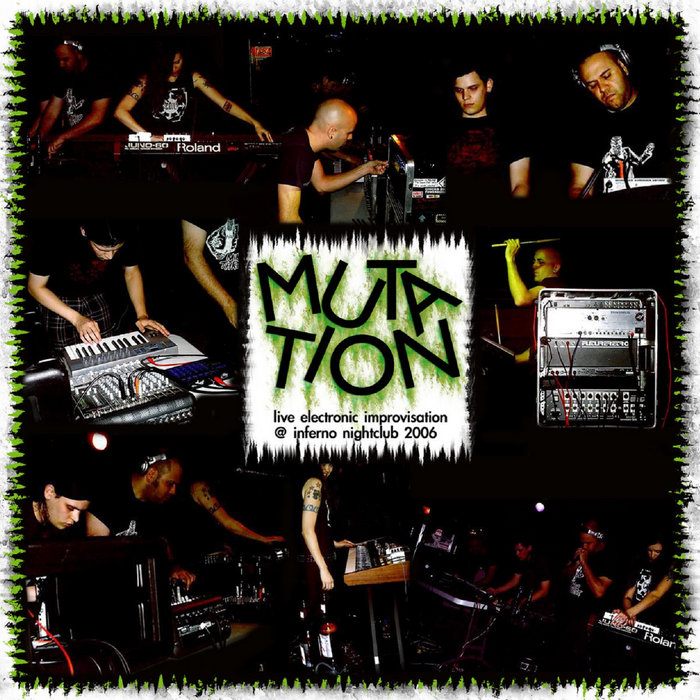
Endif v Caustic v CTRLSHFT / Jason Hollis / Mutation
The live-performance credit names Jason Hollis on Simmons SDSV.
Read Endif v Caustic v CTRLSHFT — Mutation ↗
Saberlike / Coup (Saberlike Italo Disco Remix)
Saberlike’s remix credits list a Simmons SDS-V among the instruments used.
Read Frost Children / Saberlike — Coup (Saberlike Italo Disco Remix) ↗Richard James Burgess / Spandau Ballet / Chant No. 1
Burgess says he used the prototype SDS-V on Shock and Landscape sessions and that Spandau Ballet’s Chant No. 1 was the first recording to feature the SDS-V played live by drummer John Keeble.
Read Richard James Burgess on the Simmons SDS-V ↗The kit that made the shape famous
The SDS5 was the Simmons system that announced itself from across the room: hexagonal trigger pads on a rack, feeding analogue voice modules in a separate frame. Dave Simmons described it as a complete alternative to an acoustic kit, and that is how contemporary reviewers met it—not as an automatic rhythm box, but as a new kind of played drum set.Sources (2)
Pads into a voice rack
A period review described up to seven sound modules, mixer facilities and six shaping controls per module. The player strikes a pad, then works with pitch, decay and the rest of the rack’s controls to turn the hit into something personal. The SDS5 made electronic drumming visible, tactile and deliberately theatrical.Sources (2)
An expensive new instrument
The same review listed a basic kit at £1,530.65 including VAT, placing it firmly in professional territory. By 1984, dealer advertising showed the SDS5 moving through the music-shop network alongside new Simmons products. It was a serious purchase for a musician who wanted a new kind of front line.Sources (2)
Before the familiar era
A 1985 company account remembered an SDS5 hexagonal pad at the 1980 Over The Road Show. Simmons’ later history also names Richard James Burgess’s early recordings with the system, including work by Landscape, Spandau Ballet and Shock. The association tells the story of a machine arriving before its image had become a pop-culture shorthand.Sources (2)
A system that invited expansion
The SDS5’s rack format and distinct trigger/output paths made it a system rather than a fixed object. It sat beside the SDS6 sequencer, SDS7 and later Simmons instruments while retaining its own place: the early analogue kit whose pads gave an electronic sound a physical presence.Sources (2)
Before the shape became an icon
Richard James Burgess remembers using the prototype SDS-V on Shock records and Landscape’s Tearooms of Mars. He calls Spandau Ballet’s “Chant No. 1”, played live by John Keeble, the first recording to put the SDS-V in a drummer’s hands. That account gives the hexagonal pads a proper beginning: an instrument made to be struck, before the silhouette hardened into an image of the decade.Source (1)
On record
- Richard James Burgess / Spandau Ballet — Chant No. 1. Burgess says he used the prototype SDS-V on Shock and Landscape sessions and that Spandau Ballet’s Chant No. 1 was the first recording to feature the SDS-V played live by drummer John Keeble. Source ↗
- Steve Jansen / Japan — Japan-era live performance. Jansen says he used a Simmons SDS5 live during the Japan era and describes its limited sensitivity, consistent sound and visual impact. Source ↗
- SysEx Emporium — 2,081 Ultimate Vintage Drum Samples. SysEx Emporium lists Simmons SDS-5 samples in 2,081 Ultimate Vintage Drum Samples. Source ↗
- Telan Devik — Retro Illuminated / Attack of the Synthians. The release’s drum-sample inventory includes a Simmons SDS5. Source ↗
- Data / Zoran Jevtic and Zoran Vracevic — Could You Find Your Analog Mind?. The reissue personnel credit lists a Simmons SDSV for Zoran Jevtic and Zoran Vracevic. Source ↗
- Endif v Caustic v CTRLSHFT / Jason Hollis — Mutation. The live-performance credit names Jason Hollis on Simmons SDSV. Source ↗
- Saberlike — Coup (Saberlike Italo Disco Remix). Saberlike’s remix credits list a Simmons SDS-V among the instruments used. Source ↗
Sources
- Industry Profile — Simmons Electronics
- Company Report — Simmons
- Simmons SDS 5 Electronic Drums Kit & SDS 6 Sequencer
- Eddie Moors Music — Simmons SDS5 dealer advertisement
- Simmons Electronic Drums Virtual Museum — SDS5 device record
- Simmons Electronic Drums Virtual Museum — manuals index
- Simmons Drums History
- Richard James Burgess on the Simmons SDS-V
- Steve Jansen on the Simmons SDS5
- Simmons SDS6 Sequencer
The visual archive
Further visual evidence.
Sources for images shown earlier (7)
- Simmons electronic drums dealer advertisement ↗
- SysEx Emporium — 2,081 Ultimate Vintage Drum Samples ↗
2023-02-20 · SysEx Emporium / release artwork via Bandcamp · Official Bandcamp release-page artwork (Open Graph image) - Telan Devik — Retro Illuminated / Attack of the Synthians ↗
2016-07-29 · Telan Devik / release artwork via Bandcamp · Official Bandcamp release-page artwork (Open Graph image) - Data / Zoran Jevtic and Zoran Vracevic — Could You Find Your Analog Mind? ↗
2017-10-31 · Data / Zoran Jevtic and Zoran Vracevic / release artwork via Bandcamp · Official Bandcamp release-page artwork (Open Graph image) - Endif v Caustic v CTRLSHFT / Jason Hollis — Mutation ↗
2013-10-08 · Endif v Caustic v CTRLSHFT / Jason Hollis / release artwork via Bandcamp · Official Bandcamp release-page artwork (Open Graph image) - Saberlike — Coup (Saberlike Italo Disco Remix) ↗
2023-05-18 · Saberlike / release artwork via Bandcamp · Official Bandcamp release-page artwork (Open Graph image) - Spandau Ballet — Chant No. 1 (I Don't Need This Pressure On) ↗
1982-05-25T12:00:00Z · Spandau Ballet / release artwork via Apple Music catalog artwork · Release catalogue and retained front artwork
Additional visual sources (3)
Original publications and related image sources.
- Simmons SDS6 Sequencer ↗
Feb 1983 · Electronics & Music Maker · Front view of the Simmons SDS5/SDSV drum synthesiser brain; the contemporary caption explicitly identifies SDS5. - Simmons SDS 5 Electronic Drums Kit & SDS 6 Sequencer ↗
Sep 1983 · Music UK · Simmons SDS-V/SDS5 electronic kit with distinctive hexagonal pads and bass pad. The companion review covers the SDS6 sequencer, but no SDS6 matrix unit is identifiable in this image. - David Sylvian with Steve Nye during the Tin Drum sessions ↗
1981 (photograph) · Steve Jansen / Sound On Sound · Classic Tracks: Japan’s “Ghosts”; caption identifies David Sylvian with co-producer Steve Nye