
Seeburg’s portable Select-A-Rhythm was reported available through U.S. franchised dealers by May 1965 at $289; a contemporary Down Beat advertisement followed that September.
A portable preset rhythm section
Select the rhythm buttons, set the tempo and volume, then cue the downbeat with the foot pedal. The SAR1 put those accompaniment controls in a carrying case with a downbeat lamp. Billboard reported U.S. dealer availability in May 1965 at $289; Seeburg advertised the portable machine in Down Beat that September.
Portable Select-A-Rhythm Service Manual No.55594 ↗ Seeburg Releases Select-A-Rhythm, Billboard p.71 ↗ Select-a-Rhythm advertisement, Down Beat p.38 ↗
Eighteen buttons, ten voices, one moving pulse
The service manual describes eighteen combinable rhythms and a metronome. Its ten percussion generators are sand block, brush, snare, tambourine, clave, cowbell, high and low conga, bass drum and cymbal. The pedal restarts the pattern at the downbeat and mutes the output on release, leaving the player’s hands available for another instrument.
The circuitry behind the beat
Richard H. Campbell Jr.’s Seeburg patent 3,358,068 explains a pulse generator, dividing counters and diode logic that select timed events for percussion circuits. Its timing chart divides two measures into 48 pulses. Related patents name Donald M. Park and Campbell together. These records explain the engineering family; matching a particular SAR1 circuit revision still requires the factory manual.
US Patent 3,383,452: Musical Instrument ↗ US Patent 3,358,068: Automatic Rhythm Device ↗ US Patent 3,255,292: Automatic Repetitive Rhythm Instrument Timing Circuitry ↗ Portable Select-A-Rhythm Service Manual No.55594 ↗
From organ name to portable box
The Select-A-Rhythm name appeared in Seeburg organ demonstrations in 1963, before the portable SAR1 brought rhythm accompaniment into a carrying case. A surviving Seeburg-Gulbransen 601B carries the same family name on its factory plate. It is a related model, with its own identity and history.
Seeburg Tells Europe To Think Big, Cash Box p.55 ↗ Seeburg-Gulbransen Select-A-Rhythm Model 601 B surviving unit ↗ Portable Select-A-Rhythm Service Manual No.55594 ↗
The machine in the record
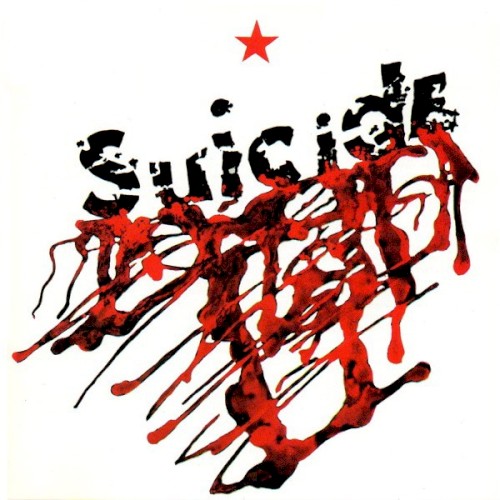
The related 601B / Suicide’s “Frankie Teardrop”.
Music reporting identifies a Seeburg Select-A-Rhythm 601B, set to Shuffle and sped up, as the electronic drumbeat of “Frankie Teardrop”. It is an attributed account rather than a recovered multitrack, yet it gives the little preset machine a remarkable place in the frightening, relentless centre of Suicide’s 1977 debut.
Read 13 Songs for Halloween: Frankie Teardrop by Suicide ↗A rhythm heard on “Frankie Teardrop”
The family’s later musical life takes a startling turn with the 601B. KEXP identifies that model, set to Shuffle and sped up, in Suicide’s 1977 “Frankie Teardrop”. Electronic Sound reports that Martin Rev brought the original machine to a Xeno & Oaklander session for their version of the song. These are 601B stories, rather than recording credits for the portable SAR1.
Xeno & Oaklander ↗ 13 Songs for Halloween: Frankie Teardrop by Suicide ↗
In the market
Explore 1 period price record
- 1965-05-15 · USD 289
Contemporary US release notice reports dealer availability and selling price. Portable Select-A-Rhythm,18 rhythms; accessories unspecified; article omits SAR1 code
Recording and working accounts
Explore 4 source accounts
- Suicide — Band rhythm-machine practice
- Xeno & Oaklander — Version of Frankie Teardrop with Martin Rev
- BDEE — AVMR Like Songs From The Suburban Black Maestro De La Musica
Read this account in the story ↑
BDEE — AVMR Like Songs From The Suburban Black Maestro De La Musica ↗
- Suicide — Frankie Teardrop
KEXP identifies a Seeburg Select-A-Rhythm Model 601B, set to Shuffle and sped up, as the electronic drumbeat on Suicide’s 1977 Frankie Teardrop.
Browse more working lives and sample archives
Working lives & sample archives
Records, performances and later libraries.
Reported association
Suicide / Band rhythm-machine practice
A Reverb seller description says Suicide used a Seeburg Select-A-Rhythm SAR1.
Read Seeburg Select-A-Rhythm and Suicide ↗
BDEE / AVMR Like Songs From The Suburban Black Maestro De La Musica
BDEE’s release note says its drums are sampled from a Seeburg Select-A-Rhythm vintage drum unit.
Read BDEE — AVMR Like Songs From The Suburban Black Maestro De La Musica ↗
Xeno & Oaklander / Version of Frankie Teardrop with Martin Rev
Electronic Sound reports that Martin Rev brought the Seeburg Select-A-Rhythm 601B used on Suicide’s original Frankie Teardrop to a Xeno & Oaklander session for their version of the song.
Read Xeno & Oaklander ↗Sources
- Portable Select-A-Rhythm Service Manual No.55594
- US Patent 3,383,452: Musical Instrument
- US Patent 3,358,068: Automatic Rhythm Device
- US Patent 3,255,292: Automatic Repetitive Rhythm Instrument Timing Circuitry
- Seeburg Releases Select-A-Rhythm, Billboard p.71
- Select-a-Rhythm advertisement, Down Beat p.38
- Seeburg Tells Europe To Think Big, Cash Box p.55
- Seeburg-Gulbransen Select-A-Rhythm Model 601 B surviving unit
- Xeno & Oaklander
- 13 Songs for Halloween: Frankie Teardrop by Suicide
The visual archive
Further visual evidence.
Sources for images shown earlier (3)
- Seeburg Select-A-Rhythm SAR1 surviving unit ↗
- Xeno & Oaklander — Dais Records press photograph ↗
- BDEE — AVMR Like Songs From The Suburban Black Maestro De La Musica ↗
Release date not stated on source page · BDEE / release artwork via Bandcamp · Official Bandcamp release-page artwork (Open Graph image)
Additional visual sources (8)
Original publications and related image sources.
- Seeburg Portable Select-A-Rhythm Service Manual 55594 ↗
Undated · Seeburg Sales Corporation · All74 PDF pages; cover, printed pp1–70 and complete schematics - US Patent 3,383,452: Musical Instrument ↗
Filed26 June1964 · Donald M. Park and Richard H. Campbell Jr. · All10 PDF pages; sheets1–5 and specification pp1–10 - US Patent 3,358,068: Automatic Rhythm Device ↗
Filed26 June1964 · Richard H. Campbell Jr. · All6 PDF pages; sheets1–2 and specification pp1–8 - US Patent 3,255,292: Automatic Repetitive Rhythm Instrument Timing Circuitry ↗
Filed26 June1964 · Donald M. Park · All10 PDF pages; sheets1–6 and specification pp1–8 - Seeburg Releases Select-A-Rhythm, Billboard p.71 ↗
15 May 1965 · Billboard, unsigned news report · Printed/PDF p71, dated footer - Select-a-Rhythm advertisement, Down Beat p.38 ↗
23 September 1965 · The Seeburg Corporation, Musical Instrument Division · Printed p38/PDF p36; cover PDF1 - Seeburg Tells Europe To Think Big, Cash Box p.55 ↗
30 November1963 · Cash Box · Printed/PDF p55 - Seeburg-Gulbransen Select-A-Rhythm Model 601 B front ↗
Listing inspected 20 September 2026 · Evolution Music · Listing image 5 of 12