
The Nomad Rhythm Maker 16 is a rare preset analogue rhythm machine whose panel offers sixteen ready-made ways into a song. Surviving examples preserve the Nomad name, the pattern controls and a small instrument made for accompaniment rather than spectacle.Sources (8)
Surviving instrument
Sixteen buttons, a cabinet, and a working invitation.
The surviving Nomad is worth looking at closely. Its tidy wooden cabinet and direct panel preserve what the machine offered: a ready-made accompaniment partner, with sixteen patterns waiting to turn a room into a song.
See the surviving Nomad ↗The machine in the record
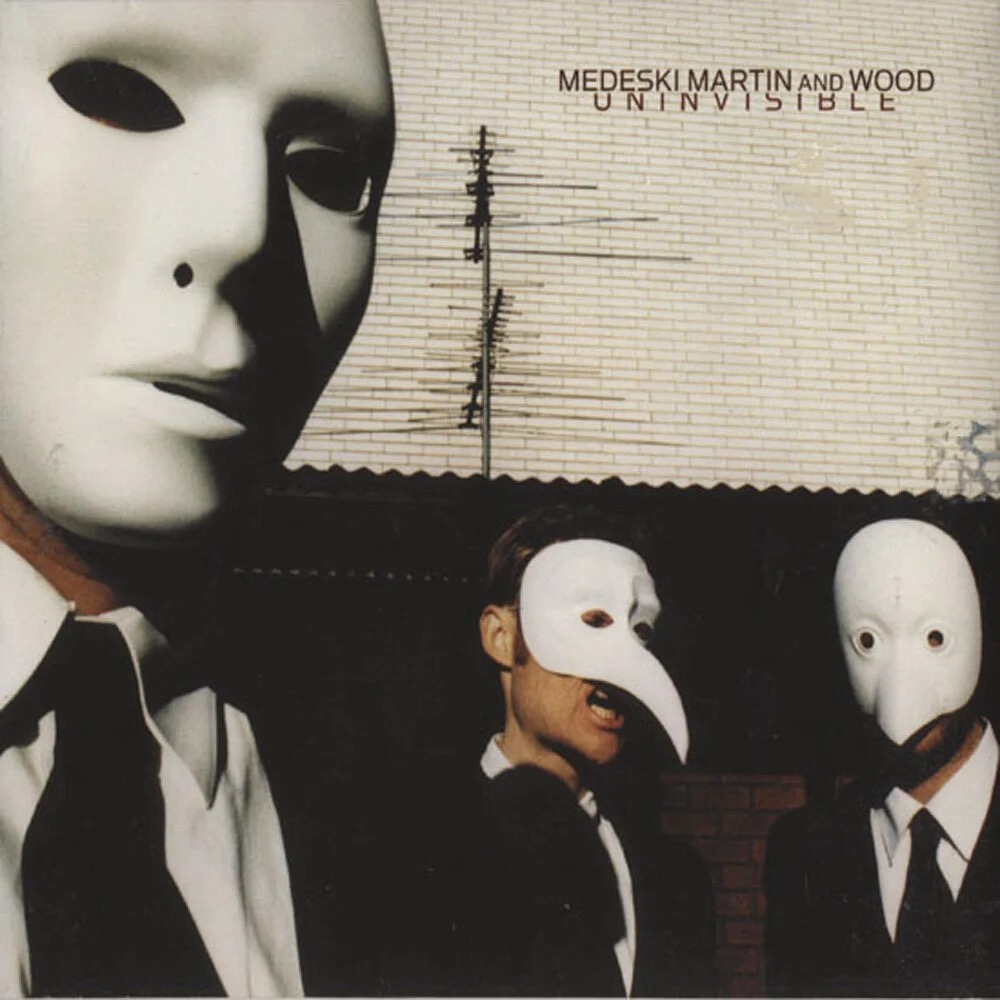
Medeski Martin & Wood / Uninvisible.
Medeski Martin & Wood credit Scotty Hard with a Nomad Rhythm Maker on “I Wanna Ride You” and “Nocturnal Transmission” from Uninvisible. The credit gives no model suffix, so it documents the Nomad family rather than certifying an RM-16 unit.
Read Uninvisible credits ↗Sixteen ways to begin
A surviving Nomad unit clearly carries the Rhythm Maker 16 name on its front panel. Its labelled patterns and direct controls place it in the era when an electronic rhythm box could accompany an organ, guitar or home-music session with a single selection and a turn of the tempo control.
An object whose name still matters
The Museum keeps the Nomad identity separate from visually similar rhythm machines because its badge and panel are concrete evidence. A second surviving unbadged example and collector documentation help describe the family resemblance without turning it into a false manufacturer history.
A rare machine in later preservation
Modern instrument libraries and archive interfaces have retained the Rhythm Maker 16 as a named source of drum sounds. An official Medeski Martin & Wood credit also names a Nomad Rhythm Maker on two tracks, preserving a documented musical trace while leaving the exact model suffix open.
On record
- Scotty Hard / Medeski Martin & Wood — Uninvisible — “I Wanna Ride You” and “Nocturnal Transmission”. Medeski Martin & Wood credit Scotty Hard with a Nomad Rhythm Maker on “I Wanna Ride You” and “Nocturnal Transmission” from Uninvisible. Source ↗
Sources
- Nomad Rhythm Maker 16 surviving unit
- Unbadged Rhythm Maker 16 surviving unit, listed as Farfisa
- Rhythm Maker 16 collector inspection
- Beat Machines and Drum Anthology Library 9 instrument lists
- MIDI for Acetone Rhythm Ace drum machines
- Farfisa Rhythm Maker 16 sample archive
- Nomad Rhythm Maker 16 auction record
- Uninvisible credits
The visual archive
Further visual evidence.
Sources for images shown earlier (1)
Additional visual sources (2)
Original publications and related image sources.
- Nomad Rhythm Maker 16 front panel and cabinet ↗
Listing inspected 20 September 2026 · WM Audio · Listing image 1 of 14 - Unbadged Rhythm Maker 16 listed as Farfisa ↗
Listing inspected 20 September 2026 · ohm studi ohm · Listing image 1 of 13