
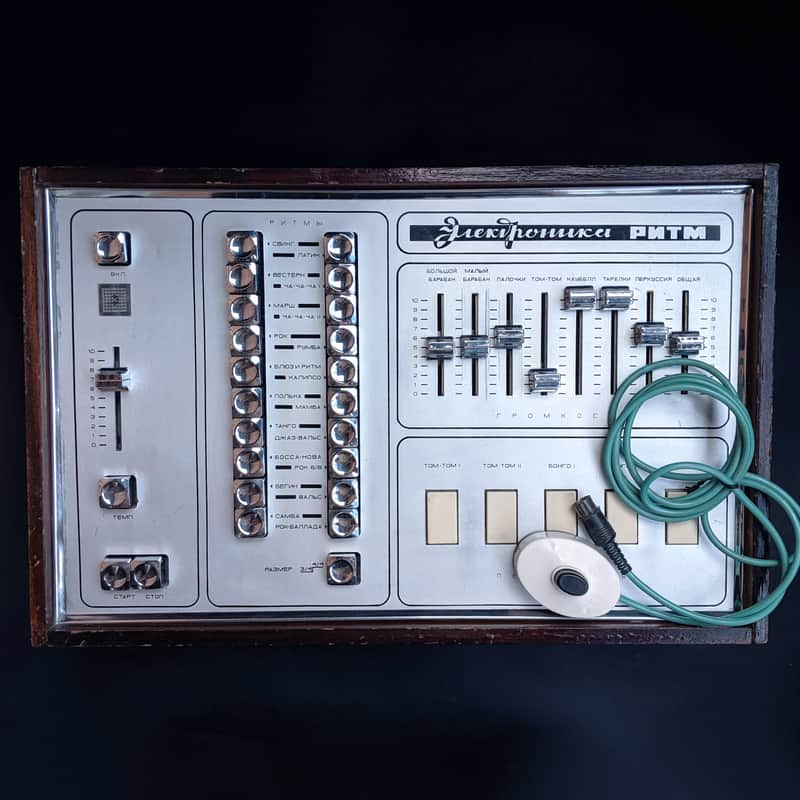
Elektronika-Ritm has a 1981 catalogue presence as an accompaniment instrument; specialist indexes preserve its identity while a verified manual remains a research gap. The catalogue OCR needs visual confirmation before its dimensions or typography are treated as definitive.
Surviving instrument
A Soviet rhythm box in clear view.
The Elektronika-Ritm specimen gives the Museum an object to read: printed Cyrillic labelling, a particular cabinet and an instrument whose identity begins with what is actually visible.
See the Elektronika-Ritm specimen ↗More records in the archive
The machine keeps turning up.
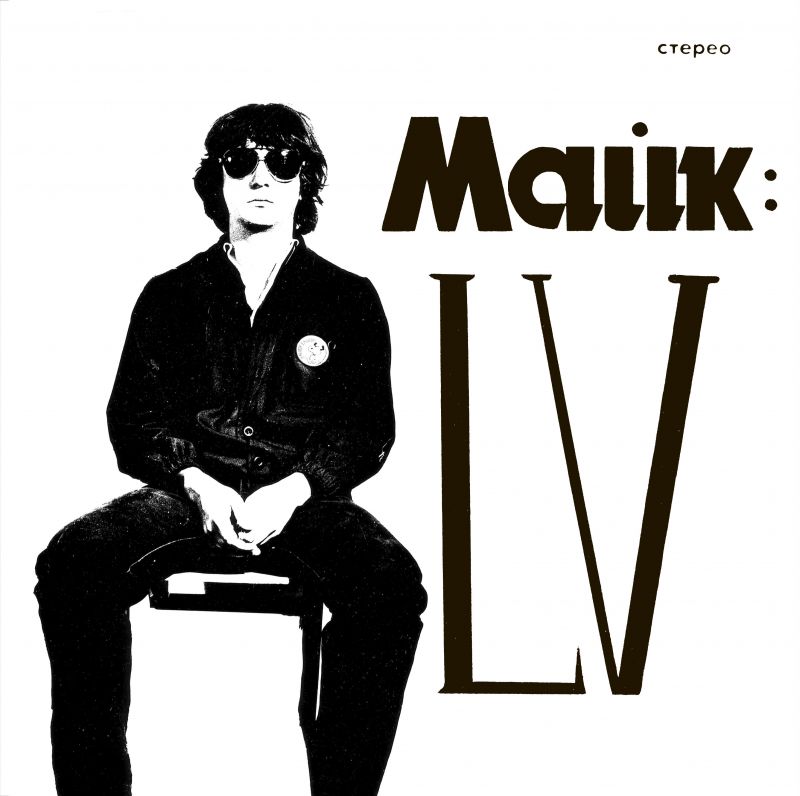
Mike Naumenko / Zoopark / LV
A Vyrgorod release-history essay says Mike Naumenko made LV with a domestic “Elektronika” rhythm box borrowed from Tropillo, identifying it as the same box used on Kino’s 45.
Read Zoopark / Mike “LV” — release-history essay ↗Buttons for rhythms, sliders for sounds
The surviving Elektronika-Ritm photographed by Audiodrome has paired rows of rhythm buttons beside a bank of sound sliders. Tempo and start/stop controls occupy the left-hand strip; large rectangular buttons sit below the sound bank. These are visible features of a later sale specimen, not evidence that the Museum has tested its operation.
Accompaniment in the catalogue
A 1981 Soviet consumer-electronics catalogue lists Elektronika-Ritm for rhythmic accompaniment to dance melodies. The specialist rw6ase index also places the model under 1981. The catalogue establishes an advertised use; it does not establish an exact first-sale date. Its dimensional OCR still needs checking against the page image.
1981 Soviet consumer-electronics catalogue ↗ Soviet electronic musical instruments index ↗
A borrowed box under the guitar
The LV release essay reproduced by Vyrgorod describes Mike Naumenko borrowing a domestic Elektronika rhythm box from Tropillo when live drums were impractical in the studio. In that account, guitar was laid over the rhythm box, then vocals and other parts were overdubbed. The essay identifies it as the same box used on Kino’s 45, but gives no factory model number. It is a retrospective working account, not proof that the borrowed instrument was Elektronika-Ritm.
What the name does not settle
Audiodrome’s listing explicitly attributes an Elektronika-Ritm to Viktor Tsoi’s Kino on 45. That is a seller’s claim, not a musician’s testimony or session document. Specialist and community pages offer further technical leads, but no verified factory manual has yet been established here. The shared Elektronika name cannot turn the seller attribution and the LV narrative into independent exact-model recording credits.
Elektronika RITM: Analog Drum Machine — seller listing ↗ Museum of Soviet synthesizers: rhythm boxes ↗ Soviet radio-electronics museum community post ↗
Recording and working accounts
Explore 2 source accounts
- Viktor Tsoi / Kino — 45
A surviving seller’s note attributes an Elektronika-Ritm to Viktor Tsoi’s Kino on 45, placing the rare Soviet box inside the group’s earliest recorded world.
- Mike Naumenko / Zoopark — LV
Sources
The visual archive
Further visual evidence.
Sources for images shown earlier (2)
Additional visual sources (1)
Original publications and related image sources.
- Violity — Электроника Ритм (СССР) ↗
Current seller listing · Violity seller · Exact-label listing and numbered specimen photographs