
Winter NAMM reporting places the XR20’s public introduction on 19–20 January 2008. Launch coverage gave Q2 2008 and a $499 MSRP, DJ Mag reported April availability at £219 in the UK, and a May review listed £219 / $499.
The machine in the record
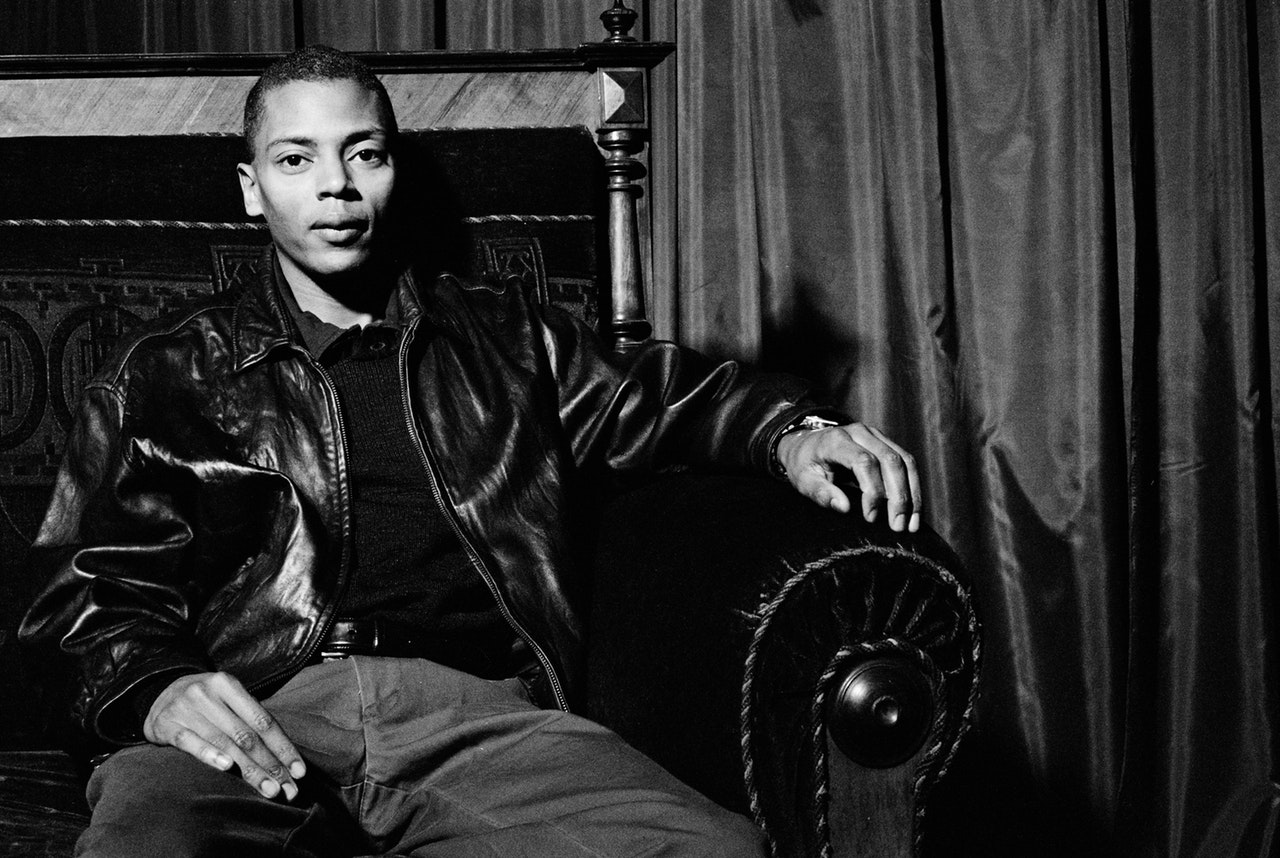
Robert Hood / “Towns That Disappeared Completely”.
Robert Hood identifies the XR20 as the source of both bassline and drums on “Towns That Disappeared Completely.” It is a concise but unusually exact account of a small rhythm box carrying both ends of the track’s foundation.
Read Robert Hood interview ↗More records in the archive
The machine keeps turning up.
Reported association
Robert Hood / a weapon of choice
A gear index quotes Hood naming the Akai XR20 among his “weapons of choice.”
Read Robert Hood and the Akai XR20, reported interview attribution ↗
Uniform / Ben Greenberg / Perfect World
The XR20 is identified as the record’s deliberately restricted drum machine.
Read Uniform / Ben Greenberg / Perfect World ↗A beat station that could leave the studio
Akai introduced the XR20 at Winter NAMM in 2008 as a portable Beat Production Station for hip-hop and R&B work. By April it was listed at £219 in the UK, while the US launch material carried a $499 MSRP. It was intentionally a rhythm writer, not a reduced MPC sampler: the appeal lay in getting a playable beat moving fast. The NAMM reports describe an introduction and a shipping plan, not completed deliveries worldwide.
Akai XR20 Beat Production Station ↗ Akai Intros XR20 Beat Production Station ↗ NAMM Show 2008 — Akai XR20 ↗
Twelve pads and a big sound set
The reference manual lists twelve velocity-sensitive pads, more than 700 sounds in a 32 MB sound set, 32-voice polyphony, 100 preset patterns, 100 user patterns and 100 songs. Reverb, EQ, compression, MIDI clock/position and microphone, headphone and auxiliary/main connections made the small case ready for more than a bedroom sketch.
Built to move
AC or six-AA battery operation gave the XR20 a useful independence from the mains. That battery-ready design, paired with pads and its compact case, explains why the machine reads less like a rack-bound production tool and more like a beat notebook that can be opened anywhere.
A concise 2008 verdict
MusicRadar found the XR20 inspiring, lightweight and playable, praising its sound while wishing for USB, replaceable sounds and record-time quantise. The response captures the machine cleanly: direct enough to invite a rhythm now, with a few fixed boundaries that kept the player focused.
Robert Hood’s “Towns That Disappeared Completely”
Robert Hood identifies the XR20 directly in his account of “Towns That Disappeared Completely” [2010]: it supplied both bassline and drums. The interview does not inventory the rest of the production, but it gives this small rhythm box a rare, exact place in a finished track — carrying both ends of the foundation.
Recording and working accounts
Explore 3 source accounts
- Robert Hood — “Towns That Disappeared Completely”
Robert Hood says he used an Akai XR20 Music Production Center for the bassline and drums on “Towns That Disappeared Completely.”
- Robert Hood — a weapon of choice
A gear index quotes Hood naming the Akai XR20 among his “weapons of choice.”
Robert Hood and the Akai XR20, reported interview attribution ↗
- Uniform / Ben Greenberg — Perfect World
The XR20 is identified as the record’s deliberately restricted drum machine.
Sources
The visual archive
Further visual evidence.
Sources for images shown earlier (3)
- Akai XR20 Reference Manual v1.3 ↗
- Robert Hood / Red Bull Music Academy ↗
- Uniform / Ben Greenberg — Perfect World ↗
Release date not stated on source page · Uniform / Ben Greenberg / release artwork via Bandcamp · Official Bandcamp release-page artwork (Open Graph image)