Sampling production centre

Akai MPC1000

A studio small enough to travel. The MPC1000 carries sampling and sequencing into a compact pad-led instrument, with a working life extended by Akai’s updates, JJOS and the musicians who kept it in their rigs.

New performance instruments →
The portable MPCPads

Sample · Sequence · Perform

A physical workflow that travels from the first beat to the live rig

Akai’s operating guide ↗

Akai disclosed the MPC1000 in September 2003 and showed it publicly at AES that October.

Sources (23)
  1. AKAI MPC1000 desvelada ↗
  2. 115th AES Convention: AKAI MPC1000 ↗
  3. What’s New: Akai MPC1000; manufacturer advertisement ↗
  4. MPC1000 Operator’s Manual ↗
  5. Octave One on how hardware made them who they are today ↗
  6. MPC1000 Software Release Notes, versions 2.0–2.13 ↗
  7. MPC1000 v2 Operator’s Manual, rev 1.0 ↗
  8. 2006 NAMM Show: Akai MPC 1000 Updated ↗
  9. MPC1000 JJOS downloads ↗
  10. Gold Panda ↗
  11. Gold Panda on how his new album was inspired by De La Soul, Mobb Deep, Ensemble & more ↗
  12. The Work — release page ↗
  13. I Only Know Nothing — artist production notes and credits ↗
  14. MPC1000 Service Manual ↗
  15. MPC 1000 / MPK Pad Sensors (2nd Version) ↗
  16. MPC1000 Review: MPC1000 vs MPC2000XL ↗
  17. Elektron Talk with O.N.O from Tha Blue Herb ↗
  18. WNAMM04: Akai’s Newest MPC Ships ↗
  19. Technoscan Awards Results ↗
  20. December 2003 News: The 2003 AES Show Special Report ↗
  21. WNAMM04: Akai’s Newest MPC Ships ↗
  22. MPC1000 Operator’s Manual ↗
  23. Akai MPC-1000 Drum Machine/Sequencer ↗

Portable production

From sample to song

The small machine that stayed in the room

An MPC is often pictured as a grid of pads and a large promise about feel. The MPC1000 made a more particular promise: take the sequence, the sampled sounds and the hands-on controls with you. Akai put sixteen pads, two Q-Link sliders, a small screen, sampling inputs, MIDI and CompactFlash into a case only 330 millimetres wide. It was not a miniature imitation of the MPC4000. It offered an entire working route from recording a sound to arranging a song, in a box small enough to move between rooms.

MPC1000 Operator’s Manual ↗ 115th AES Convention: AKAI MPC1000 ↗

A difficult moment for Akai

The machine appeared first as a glimpse. In September 2003, Hispasonic reported a briefly visible page on Akai's own site and could say little beyond the compact format, sixteen pads and multiple outputs. A month later Sweetwater described the MPC1000 at the 115th AES Convention as a portable member of the MPC family. Its reporting repeated Akai's feature claims; it was an announcement, not a long-term test. A contemporary Futuremusic writer, visiting the same show, thought the machine unattractive and predicted that it might never find a life. The launch met uncertainty as well as enthusiasm.

The original Akai operator's manual is dated 1 December 2003, revision 1.1. It gives us the physical and operational picture after the unveiling: sixteen velocity- and pressure-sensitive pads, four banks, a 240 × 64 display, two Q-Link sliders, 16 MB of standard memory, and an expansion path to 128 MB. Its specified CompactFlash range was 32 MB to 2 GB. Akai supplied a 32 MB card. The card was storage, not a streaming sound drive: a sample had to be loaded into RAM before the MPC could play it. That distinction shaped the work. The machine asked its user to choose, trim and save, not merely scroll through an endless library.

AKAI MPC1000 desvelada ↗ 115th AES Convention: AKAI MPC1000 ↗ December 2003 News: The 2003 AES Show Special Report ↗ MPC1000 Operator’s Manual ↗

The pad is only the beginning

The pad grid is where the story starts, but the manual describes a deeper choreography. Four banks bring up to 64 pad assignments into reach. A pad can trigger one sample or several layers; velocity can decide which layer speaks. A recorded phrase can be trimmed, discarded outside its useful boundaries, or extracted into a new sample. The user could give a sound a one-shot life, or make it last only while the pad was held. Those choices turn a source recording into an instrument.

The sequencer recorded those decisions as performance. Record could replace existing events; Over Dub could add to them. Timing Correct could move played events towards eighths, sixteenths, thirty-seconds and their triplets, or be switched off. Note Repeat borrowed the chosen timing value while a pad was held. The manual also makes room for the opposite of a rigid grid: a sequence could be edited after the fact, pads could mute tracks or call the next sequence, and song mode could order sequences into a longer form. The two Q-Link sliders could be assigned to tune, filter, layer, attack or decay, and their variation could be recorded.

The rear panel explains why this small device could become the centre of a bigger setup. Two MIDI inputs and two MIDI outputs, stereo analogue input and output, four assignable individual outputs and S/PDIF digital connections let it exchange timing, notes and sound with other instruments. USB presented its storage to a computer. That is a different role from the MPC's own sampling and playback: the connection helped move files; the card and RAM still determined what the machine could play.

MPC1000 Operator’s Manual ↗

The instrument changed after release

An MPC1000 from 2003 is not the whole MPC1000 story. Akai's release history dates software 2.0 to 17 November 2005. It added offline time stretching and pitch shifting, reverse sample playback, slicing and patched phrases, new Q-Link modulation and other changes. Later notes document revisions through version 2.13 in January 2010, including fixes and support changes. These later functions expanded what the machine could do beyond its original software.

There is a second afterlife: JJOS, an independently distributed alternative operating system, and a repair economy around the pads. The developer's downloads and replacement pad assemblies kept software and hardware support available. Owners could keep the original Akai system, update it or adopt JJOS; an MPC1000's working capabilities therefore depend on the software and hardware fitted to that particular unit.

MPC1000 Software Release Notes, versions 2.0–2.13 ↗ MPC1000 Operator’s Manual ↗ MPC1000 v2 Operator’s Manual, rev 1.0 ↗ MPC1000 JJOS downloads ↗ MPC 1000 / MPK Pad Sensors (2nd Version) ↗

The music gives the portability a purpose

In a 2017 interview, Octave One described the MPC1000 with JJOS as the main brain and MIDI clock of their live rig. They carried a second unit with the same programs and information as a backup; drums also came from the MPC, alongside other machines. Their account describes the live rig rather than a particular studio record. The backup detail is revealing: on stage, portability mattered, but so did the ability to restore the whole performance system if one piece failed.

Gold Panda offers a different span of time. In 2013 he described taking an MPC1000 onstage because the MPC2000XL was too large to tour. He preferred the bigger machine, and found some of the MPC1000's controls awkward in performance; its compactness was a compromise, not universal praise. He also described a live set built from sequences and muting samples. His later account links the MPC1000 to much of The Work, but does not give a sound-by-sound ledger for the album. On the 2024 Bandcamp page for I Only Know Nothing, he directly credits himself and an MPC1000 and dates the making to 1 October. That page offers an unusually close match between artist, instrument and a named release.

Other musicians found their own uses for the compact MPC. Jabun's account describes live performances captured on an MPC1000; Bill Converse names the machine in an album equipment list; AceMo speaks of breaks and drum samples kept on his unit; Sean Momberger remembers the MPC1000 changing his early beatmaking. Their accounts describe different roles for the instrument, from capturing a performance to holding the drum sounds that begin a track.

The MPC1000 lasted because the work it allowed remained useful: capture a sound, give it a pad, play a phrase, decide where it sits in a song, and carry that decision to another room or stage. The story is not that it defeated the computer, nor that every owner used it alike. It is that a modest-sized machine could continue to be a studio, a performance clock, a sampler and a repairable project for people who had reasons to keep reaching for it.

Octave One on how hardware made them who they are today ↗ Gold Panda ↗ Gold Panda on how his new album was inspired by De La Soul, Mobb Deep, Ensemble & more ↗ The Work — release page ↗ I Only Know Nothing — artist production notes and credits ↗ MPC1000 Operator’s Manual ↗ MPC1000 Software Release Notes, versions 2.0–2.13 ↗

Manual-backed working path

From sound to pad.

This silent study follows the original operator manual: a CompactFlash card stores files, but a sample is loaded to RAM before it can play. It does not emulate an MPC1000 or play substitute audio.

330 mm working surface · 16 pads · 4 banks · 2 Q-Link sliders

Pad 1Pad 2Pad 3Pad 4Pad 5Pad 6Pad 7Pad 8Pad 9Pad 10Pad 11Pad 12Pad 13Pad 14Pad 15Pad 16

Four banks can bring up to 64 pad assignments into reach; the diagram labels the documented layout without reproducing a programme, pattern or sound.

1. Capture

Record or load a source, then keep the file and its working copy distinct.

2. Trim / extract

Set useful boundaries or make a new sample from the selected material.

3. Assign / layer

Use one of four pad banks; velocity can select a layer.

4. Record / sequence

Perform into a sequence, then edit timing and arrangement deliberately.

The machine in the record

Cover artwork for Gold Panda — The Work.
The sleeve gives Gold Panda’s MPC1000-led album a place in the story; it identifies the release, not the machine or a recording session.

Gold Panda / The Work.

Gold Panda’s account of The Work puts the MPC1000 in the centre of a record built from editing, sampling and small-scale decisions. The evidence is session-specific: the compact MPC becomes part of the way a finished album was assembled, rather than a generic badge of electronic production.

Read Gold Panda on how his new album was inspired by De La Soul, Mobb Deep, Ensemble & more ↗

More records in the archive

The machine keeps turning up.
Gold Panda / Early production work

Gold Panda discusses the Akai MPC1000 as part of his early production practice.

Read Gold Panda ↗
Cover artwork for Jabun — Tides.
Jabun — Tides: retained artwork identifies the release context, not a machine, session or sound allocation.

Jabun / Tides

Jabun identifies particular 2021 live performances captured on an MPC1000, preserving performance rather than presenting the record as conventional studio construction.

Read Jabun — Tides ↗
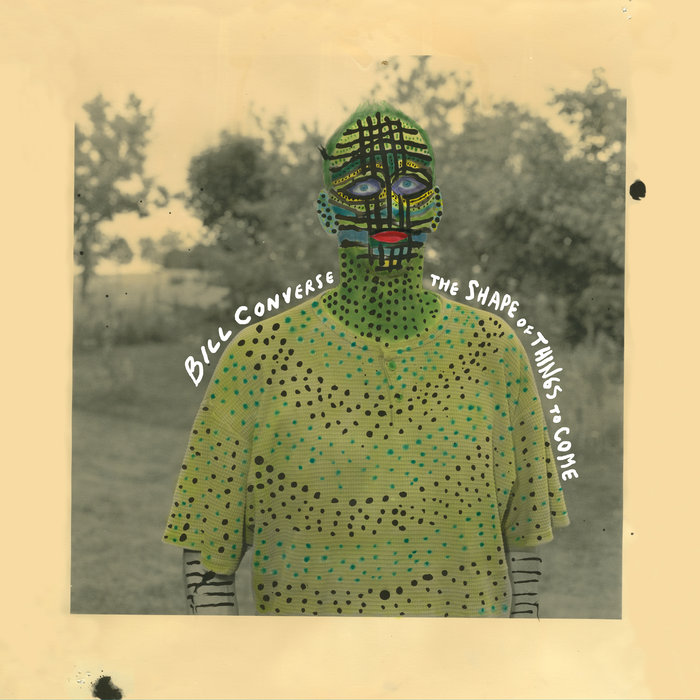
Cover artwork for Bill Converse — The Shape Of Things To Come.
Bill Converse — The Shape Of Things To Come: retained release artwork gives the documented machine story a record-world context; it does not depict the hardware, a session, or an individual track allocation.

Bill Converse / The Shape Of Things To Come

Bill Converse’s equipment list for The Shape Of Things To Come names an Akai MPC1000.

Read Bill Converse / The Shape Of Things To Come ↗
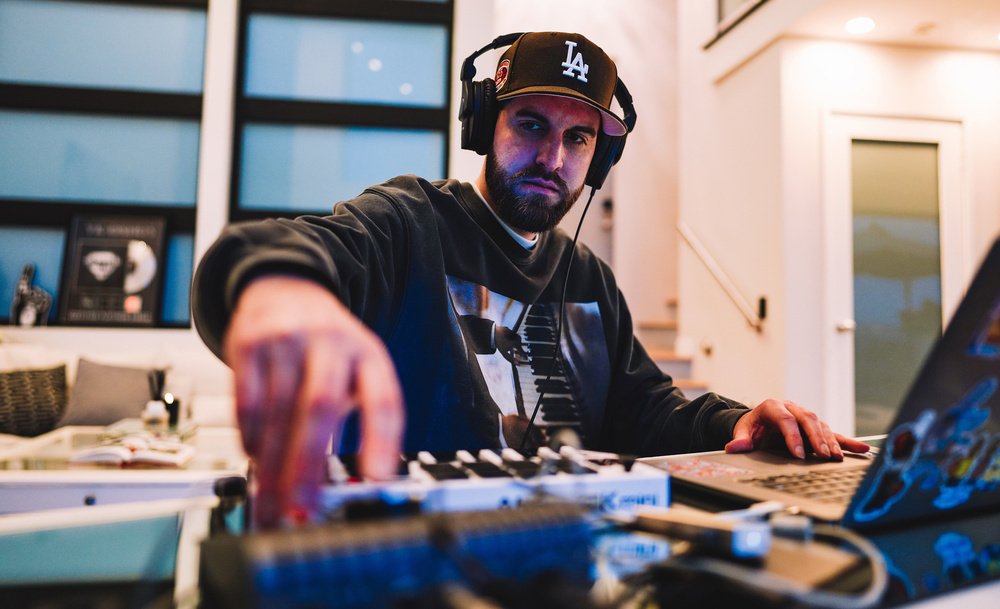
Producer Sean Momberger at work in a studio, photographed for Sound On Sound.
Sean Momberger, photographed for Sound On Sound in 2024. In the accompanying first-person account, he remembers starting with an Alesis SR-16 and later finding “a whole new sound” with an Akai MPC1000; the photograph does not show either machine.

Sean Momberger / Formative beatmaking practice

Sean Momberger says the Akai MPC1000 opened up a new sound in his early beatmaking practice.

Read Inside Track: Jack Harlow ‘Lovin On Me’ ↗
01 // Akai’s MPC1000: a compact sampler-sequencer that carried the MPC workflow into backpacks, bedrooms and touring rigs.

The portable MPC

The MPC1000 condensed the familiar pad-and-sequencer idea into a smaller machine with sampling, storage and a physical workflow that could travel. Its appeal was practical: make a beat, chop sounds and take the project with you.

Sources (3)
  1. AKAI MPC1000 desvelada ↗
  2. 115th AES Convention: AKAI MPC1000 ↗
  3. MPC1000 Operator’s Manual ↗

02 // Akai’s MPC1000: a compact sampler-sequencer that carried the MPC workflow into backpacks, bedrooms and touring rigs.

A machine people kept improving

Akai’s revisions and the JJOS community extended the MPC1000 far beyond its first release. New operating systems, user fixes and replacement parts turned it into one of the clearest examples of a production instrument sustained by its owners.

Sources (4)
  1. MPC1000 Software Release Notes, versions 2.0–2.13 ↗
  2. MPC1000 v2 Operator’s Manual, rev 1.0 ↗
  3. MPC1000 JJOS downloads ↗
  4. MPC 1000 / MPK Pad Sensors (2nd Version) ↗

03 // Akai’s MPC1000: a compact sampler-sequencer that carried the MPC workflow into backpacks, bedrooms and touring rigs.

A compact studio with a long life

Reviews and user accounts placed the MPC1000 in DJ, beat-making and live-electronic settings. Its legacy is the combination of a modest footprint with a durable pad-first way of thinking. Source ↗ Source ↗

04 // Akai’s MPC1000: a compact sampler-sequencer that carried the MPC workflow into backpacks, bedrooms and touring rigs.

The portable MPC keeps working

Gold Panda identifies the MPC1000 in the making of most of The Work, then directly credits it on “I Only Know Nothing”. Octave One’s later live setup used an MPC1000 with JJOS for sequencing, clock and drums. The smaller MPC earned its place by being easy to carry from an idea into a working performance system.

Sources (3)
  1. Gold Panda on how his new album was inspired by De La Soul, Mobb Deep, Ensemble & more ↗
  2. I Only Know Nothing — artist production notes and credits ↗
  3. Octave One on how hardware made them who they are today ↗
MUSIC HISTORY

In the market

  • December 2003: USD 995 — US period announcement price, Electronic Musician p.20. MPC1000; price basis not specified Source ↗
  • 30 January 2006: USD 1499 — Suggested retail price in NAMM announcement coverage. MPC1000 in version 2 / black-finish announcement; optional hard-drive hardware separate Source ↗
  • 2004-01-19: USD 999 — US NAMM report retail price accompanying shipping statement. MPC1000; options/package not specified Source ↗

On record

  • Gold Panda — The Work. Artist identifies MPC1000 in making most of the album. Source ↗
  • Gold Panda — I Only Know Nothing. Artist directly credits MPC1000; creation dated 1 October 2024. Source ↗
  • Gold Panda — Early production work. Gold Panda discusses the Akai MPC1000 as part of his early production practice. Source ↗
  • Jabun — Tides. Jabun identifies particular 2021 live performances captured on an MPC1000, preserving performance rather than presenting the record as conventional studio construction. Source ↗
  • Bill Converse — The Shape Of Things To Come. Bill Converse’s equipment list for The Shape Of Things To Come names an Akai MPC1000. Source ↗

In the studio and on stage

  • Octave One — Live setup described in 2017 interview. Sequencing, clock and drums with JJOS. Source ↗

Sources

  1. AKAI MPC1000 desvelada
  2. 115th AES Convention: AKAI MPC1000
  3. What’s New: Akai MPC1000; manufacturer advertisement
  4. MPC1000 Operator’s Manual
  5. Octave One on how hardware made them who they are today
  6. MPC1000 Software Release Notes, versions 2.0–2.13
  7. MPC1000 v2 Operator’s Manual, rev 1.0
  8. 2006 NAMM Show: Akai MPC 1000 Updated
  9. MPC1000 JJOS downloads
  10. Gold Panda
  11. Gold Panda on how his new album was inspired by De La Soul, Mobb Deep, Ensemble & more
  12. The Work — release page
  13. I Only Know Nothing — artist production notes and credits
  14. MPC1000 Service Manual
  15. MPC 1000 / MPK Pad Sensors (2nd Version)
  16. MPC1000 Review: MPC1000 vs MPC2000XL
  17. Elektron Talk with O.N.O from Tha Blue Herb
  18. WNAMM04: Akai’s Newest MPC Ships
  19. Technoscan Awards Results
  20. December 2003 News: The 2003 AES Show Special Report
  21. WNAMM04: Akai's Newest MPC Ships
  22. MPC1000 Operator's Manual
  23. Akai MPC-1000 Drum Machine/Sequencer

The visual archive

Further visual evidence.

These displayed records are labelled by their documented role, date and source; source-only records are listed separately below.

Sources for images shown earlier (5)
Additional visual sources (6)

Original publications and related image sources.

Machine Museum image viewer

Period image shown in the dossier.