
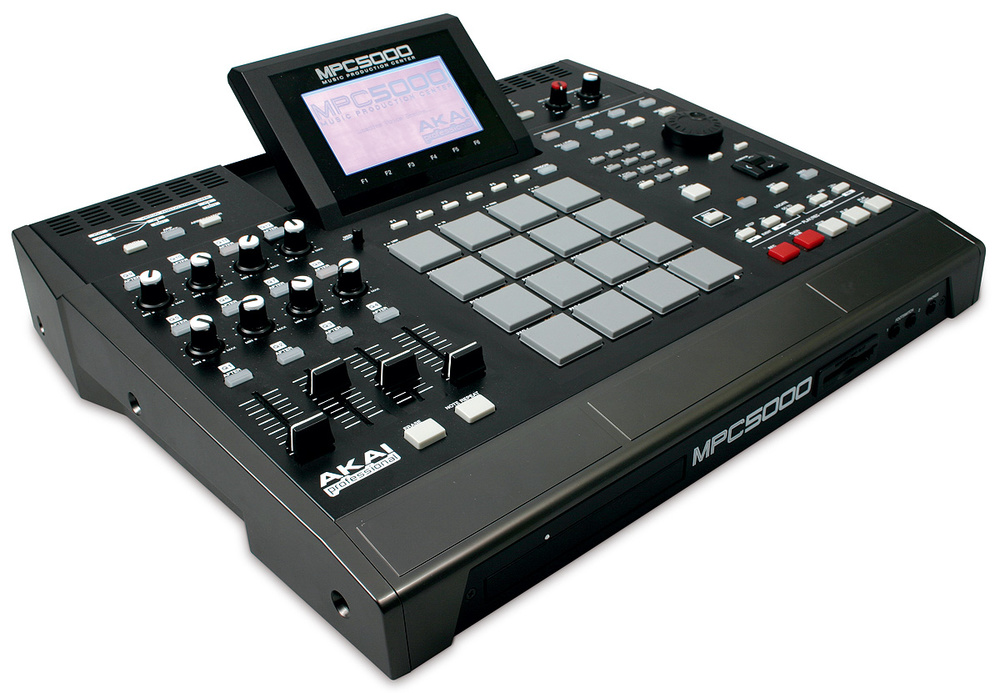
Akai announced the MPC5000 at Winter NAMM in January 2008 with Q2 availability and a $3,499 MSRP. A June availability report repeated the price; OS 1.02 followed in August 2008 and the v2.00 materials in February 2009.
The machine in the record
Just Blaze / the compact home MPC.
A preserved Just Blaze comment describes buying an MPC5000 as a compact machine for home use, while being frank about its early software. The original post has not survived in this research set and no record is named, so it reads as a reported working-life association.
Read Just Blaze on the MPC5000, preserved forum repost ↗More records in the archive
The machine keeps turning up.
Reported association
DJ Muggs / the MPC5000
A gear index reports DJ Muggs discussing the MPC5000 in video and calling it a “beast.”
Read DJ Muggs and the MPC5000, reported video attribution ↗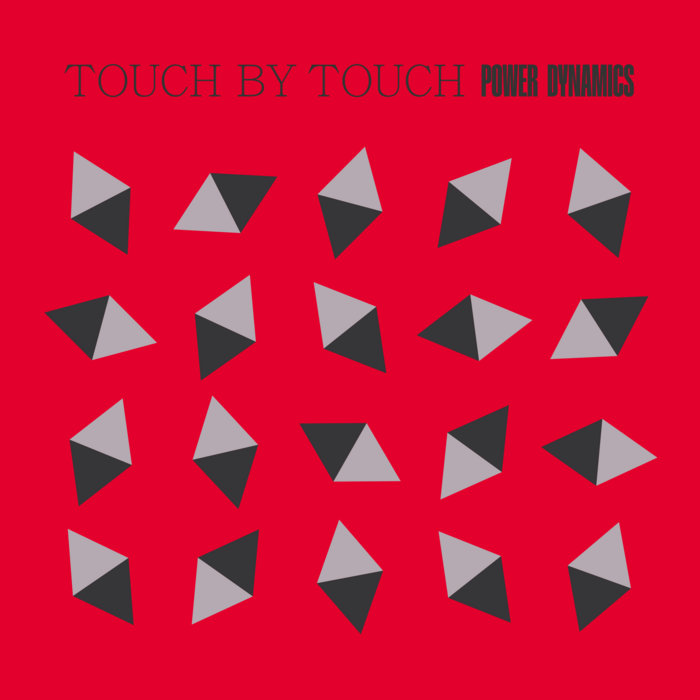
Touch by Touch / Power Dynamics
Touch by Touch list the MPC5000 in the studio equipment for Power Dynamics, recorded and produced by the duo with Lukas Roth.
Read Touch by Touch / Power Dynamics ↗Akai’s big 2008 proposition
Akai introduced the MPC5000 at NAMM in January 2008 as its new flagship Music Production Center. It was reported available that June at a $3,499 MSRP, a price that put it among the serious all-in-one production workstations of its moment.
Akai MPC5000 Music Production Center ↗ Akai Pro MPC 5000 ↗ Akai MPC5000 ↗
An MPC with a wide horizon
The MPC5000 joined 64-voice sampling, 64 MIDI tracks, a hard disk, multitrack recording, digital I/O and a virtual-analogue synth. It was built for the producer who wanted beats, samples, MIDI arrangements and sound design under one lid instead of scattered across a room.
A powerful machine that asked for patience
A contemporary Sound On Sound review admired its scope but found parts of the interface frustrating. That is a revealing first impression: the MPC5000 promised a huge amount, and its users had to learn where the ambitious design made the route to that result more complicated.
Software became part of the instrument
Akai refined the machine quickly. OS 1.02 added fixes and legacy MPC2000-program loading in 2008; version 2.00, dated February 2009, added SysEx recording, track lock, MIDI-receive indication and changes to metronome and sequencing behaviour. The MPC5000’s later working life is inseparable from those updates.
Akai updates MPC software — MPC5000 OS 1.02 ↗ MPC5000 Software Release Notes v2.00 ↗ MPC5000 Reference Manual v2.00 ↗
A production centre in the literal sense
The MPC5000 is most interesting as a picture of a transitional studio: hardware still central, but expected to take on more and more of the job. Its sampler, sequencer and synth were meant to meet a whole song halfway.
Just Blaze’s qualified MPC5000 mention
Just Blaze’s 2008 MPC5000 commentary survives as a forum repost. He describes acquiring one for home use, then criticises its early software. It is a useful, qualified association: a major producer did meet the machine, but the encounter was not a simple endorsement.
The visual archive
Further visual evidence.
Sources for images shown earlier (2)
- Sound On Sound — Akai MPC5000 ↗
- Touch by Touch — Power Dynamics ↗
Release date not stated on source page · Touch by Touch / release artwork via Bandcamp · Official Bandcamp release-page artwork (Open Graph image)