
ER-9, the original DRM and the later DRM1 instruments share the Vermona name but offer different ways to make rhythm. This family page connects the accompaniment unit, the self-contained programmable machine and the later drum synthesizer without treating them as one model.
More records in the archive
The machine keeps turning up.
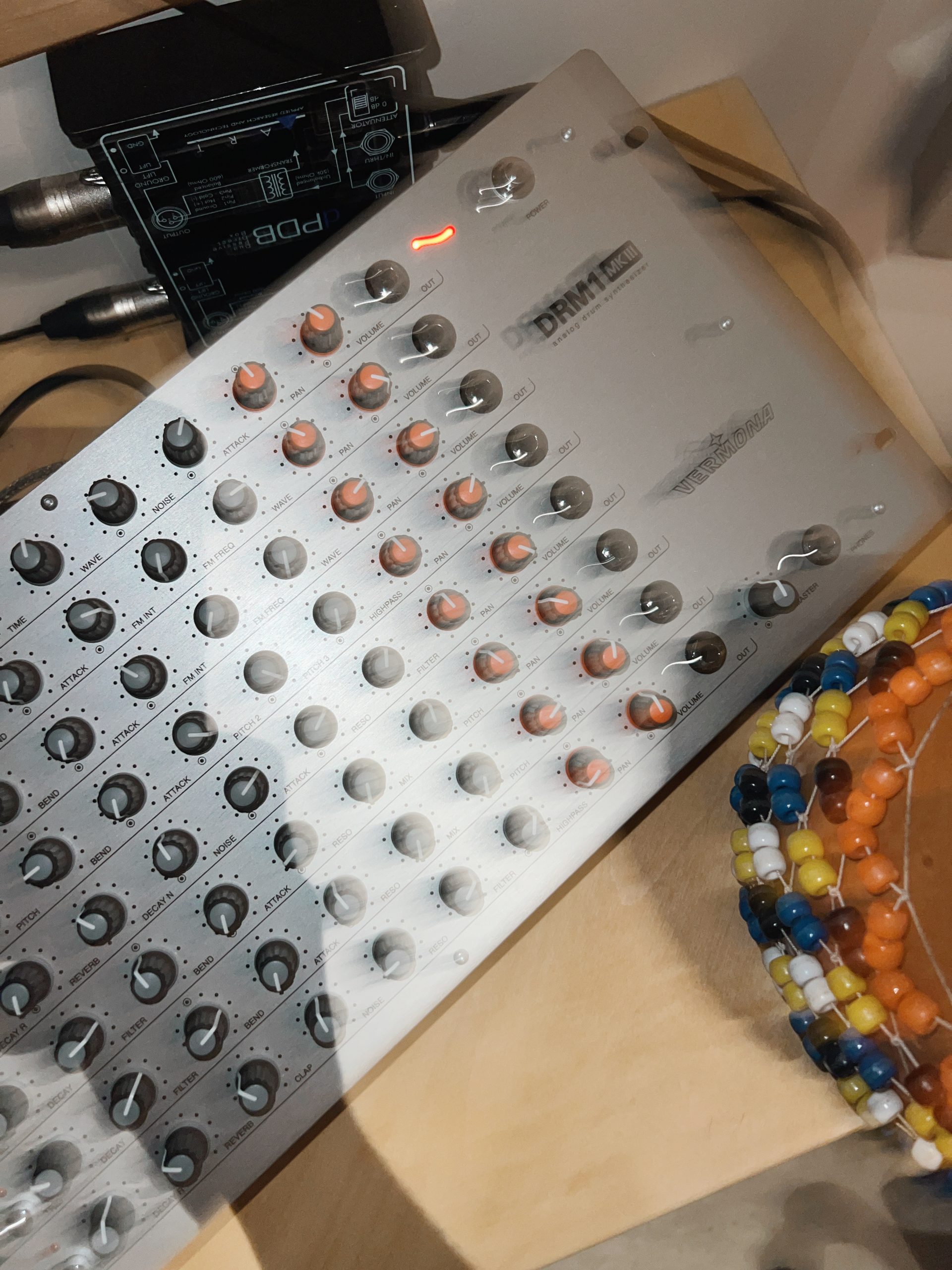
Errance / Pente Douce
Errance says Pente Douce used a Vermona DRM-1 MK3 for swung drum patterns, adjusting hi-hat length and snare pitch in real time alongside field-recording textures.
Read How It Was Made: Errance — Pente Douce ↗
Jay Rudolph / Miley Cyrus / “Walk of Fame” from Something Beautiful
The published credits for Miley Cyrus’s “Walk of Fame” list Jay Rudolph on a Vermona DRM-1 and Syndrum.
Read Miley Cyrus — Something Beautiful full credits ↗
Alex Banks / “Stratosphere” from Projections
Alex Banks identifies the bold metallic drum hits on Stratosphere as a later Vermona DRM-1. This is a related-instrument account, not a recording credit for the original programmable DRM.
Read Alex Banks — Projections track by track ↗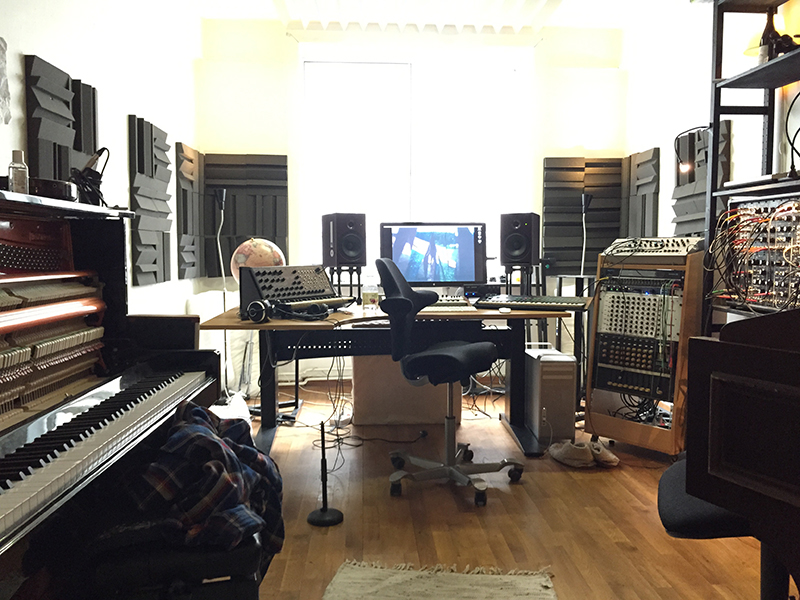
André Bratten / the EP with Machinedrum
Bratten names a Vermona DRM throughout an EP made with Machinedrum after extensive external processing. The shorter name does not identify the original programmable DRM or a particular later DRM1 revision.
Read André Bratten’s Vermona DRM ↗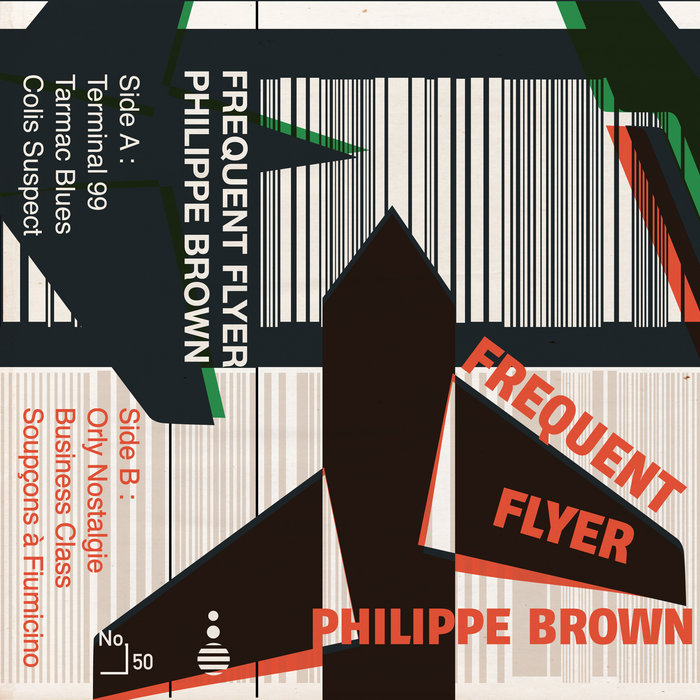
Philippe Brown / Frequent Flyer
Philippe Brown lists a Vermona DRM among the gear for Frequent Flyer. The credit does not identify which DRM-named instrument was used.
Read Philippe Brown — Frequent Flyer ↗VERMONA Heritage archive / Vermona DRM operating manual archive
VERMONA’s own heritage archive keeps the programmable DRM’s operating record available, allowing later players to recover its voices, patterns and programming method from the original documentation.
Read Vermona Heritage archive ↗ER-9: a rhythm beside the player
The ER-9 belongs to the accompaniment side of the family. Its operating instructions cover organ-installed and standalone forms, keeping rhythm close to someone already playing another instrument. Selection and accompaniment are the centre of that relationship: the player supplies the changing musical part while the rhythm unit provides its repeating support. The separate ER-9 dossier follows that instrument and its documented later uses.
Bedienanleitung Rhythmuseinrichtung ER 9 ↗ Bedienungsanleitung Rhythmusgerät ER 9 — multilingual edition ↗
The original DRM: write and keep the pattern
The historic DRM’s manual names a Digital Rhythm Machine with twelve fixed-pan percussion voices, sixteen presets and ten battery-backed user-program locations. Step and real-time programming give it a different working role from the ER-9: the musician can write a rhythm and keep it in the instrument. Preset transitions and its documented connections belong to this particular DRM. They should not be carried over to a later box simply because its panel also says Vermona. The original guide also describes I/O and a 30-pin interface labelled MIDI In/Out; that connection belongs to its own operating documentation.
DRM1 MKIII: hands on the sound
The later DRM1 MKIII is an analogue drum synthesizer. Vermona describes eight instrument channels with their own sound controls, pan and volume, played through MIDI or optional analogue gate inputs. Here the player works directly on the voice while another instrument or sequencer can supply the events. Those knobs and connections belong to the MKIII described by the manufacturer; the older DRM’s pattern-memory figures are not its specification.
Changing a drum part as it plays
Errance’s account of Pente Douce puts a DRM-1 MK3 inside a working arrangement: swung patterns, hi-hat length and snare pitch adjusted in real time, alongside field-recording textures. The published Walk of Fame credits name Jay Rudolph on a Vermona DRM-1 and Syndrum. Alex Banks identifies a DRM-1 on Stratosphere. These accounts show different uses of later DRM1 instruments; they do not identify the ER-9 or the historic programmable DRM as the source of those parts.
How It Was Made: Errance — Pente Douce ↗ Miley Cyrus — Something Beautiful full credits ↗ Alex Banks — Projections track by track ↗
Follow the name to the right instrument
The original DRM and ER-9 have their own dossiers and original operating documents. Some artist credits give only the shorter name Vermona DRM; those accounts remain useful, but the words alone do not identify a revision. The family page keeps a place for them while the exact-model pages keep the controls and memory that their own manuals describe.
The name on the sample bank
The archive also retains a source bank named Vermona Drum, alongside separately named ER-9 and DRM1 banks. The shorter label does not establish which physical instrument supplied it. Keep that listening source under its recorded name, and follow the identified instruments for their documented controls and musical accounts.
On record
- VERMONA Heritage archive — Vermona DRM operating manual archive. VERMONA’s own heritage archive keeps the programmable DRM’s operating record available, allowing later players to recover its voices, patterns and programming method from the original documentation. Source ↗
Sources
- Bedienanleitung Rhythmuseinrichtung ER 9
- Bedienungsanleitung Rhythmusgerät ER 9 — multilingual edition
- VERMONA DRM operating manual
- Vermona Heritage archive
- DRM1 MKIII — manufacturer product description
- How It Was Made: Errance — Pente Douce
- Miley Cyrus — Something Beautiful full credits
- Alex Banks — Projections track by track
- Big Beat Studio collection — Vermona Drum
The visual archive
Further visual evidence.
Sources for images shown earlier (2)
Additional visual sources (1)
Original publications and related image sources.
- DRM Service Manual (German) ↗
Original date and · Vermona · Instruments: DRM Service Manual, 17 MB