
Elka brought the Sidekick 32 into its British range in late 1981: a compact accompaniment machine built for players who wanted a steady rhythm section beside an organ or keyboard.
The machine in the record
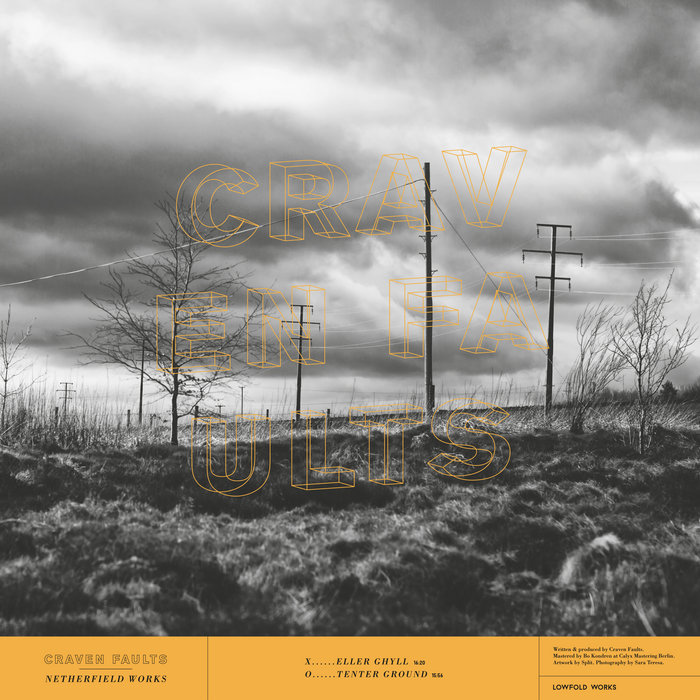
Craven Faults / “Eller Ghyll”.
For “Eller Ghyll”, Craven Faults isolated drum hits from Sidekick preset rhythms and worked them through an Akai S950 sampler, making woodblock-like percussion for the arrangement. His account describes earlier drum and bass experiments being discarded before this new rhythm approach took shape. The parts were arranged in Pro Tools. A box designed to supply a complete backing had become material to cut, reshape and place inside a larger composition.
Read The modular mathematics behind Craven Faults’ expansive kosmische musik ↗More records in the archive
The machine keeps turning up.
Craven Faults / home-studio work
Craven Faults’ sleeve-notes equipment list names an Elka Sidekick 32 among the home-studio machines.
Read Craven Faults and the Elka Sidekick 32 ↗In the Elka line
A November 1981 equipment report introduced the Sidekick 32 to British readers, and Elka’s December campaign placed it beside the Elkatwin 61, X-50 and R.M. 140. The message was practical: a portable rhythm partner, with its own place in a keyboard player’s setup.
Music Maker Equipment Scene, p.12 ↗ A lot more sounds for a lot less pounds — Elka advertisement, p.53 ↗
Thirty-two choices, with a break
The Sidekick offered sixteen named rhythms, each with an A or B version. Waltz, tango and march sat beside rock, disco and Latin patterns. Each rhythm had a break that could be called from the front panel or a remote footswitch. A player could change the accompaniment with a foot while keeping both hands on a keyboard.
A lot more sounds for a lot less pounds — Elka advertisement, p.53 ↗
Move the balance, change the band
The balance slider gave those patterns another kind of movement. Elka’s advertisement describes cymbals, hi-hat, cabasa and brushed bass at one end, with snare, toms, rim shot, cowbell, bongos, conga and bass at the other. In the middle, both groups played together. Moving that control could change the backing without choosing a different rhythm.
A lot more sounds for a lot less pounds — Elka advertisement, p.53 ↗
A ready-made part beside the player
In July 1982, Electronics & Music Maker listed the Sidekick at £250, including VAT. Its guide classified the Elka as a preset instrument and noted the optional pedal-controlled fill. Those details capture its working role: a player could call up accompaniment, bring in a break and continue performing on another instrument.
From preset rhythm to separate notes
A later modification opened a different route into the box. Tubbutec’s 2021 uniPulse installation connects MIDI to the individual sounds and gives most trigger paths velocity response. The installation also distinguishes the original bass-drum trigger from an alternative velocity-sensitive path. These are capabilities of the modified instrument, adding note-by-note access to the earlier preset machine.
In the market
- 1982-07: GBP 250 — UK contemporary buyer guide price. Sidekick 32; foot-pedal control described as optional Source ↗
- 1981-11: GBP 225 — UK new-equipment news retail quotation. Sidekick 32; accessories inclusion unspecified Source ↗
On record
- Craven Faults — Eller Ghyll — Netherfield Works. Craven Faults drew Sidekick presets into an S950 and reshaped them into woodblock-like percussion for “Eller Ghyll”. Source ↗
In the studio and on stage
- Craven Faults — home-studio work. Craven Faults’ sleeve-notes equipment list names an Elka Sidekick 32 among the home-studio machines. Source ↗
Sources
The visual archive
Further visual evidence.
Sources for images shown earlier (2)
- Elka–Orla Sidekick 32 advertisement in Electronics & Music Maker ↗
- Craven Faults — Netherfield Works ↗
2017-09-22 · Craven Faults / release artwork via Bandcamp · Official Bandcamp release-page artwork (Open Graph image)
Additional visual sources (1)
Original publications and related image sources.
- Music Maker Equipment Scene ↗
1981-11 · Electronics & Music Maker · Printed page 12; PDF page 14