
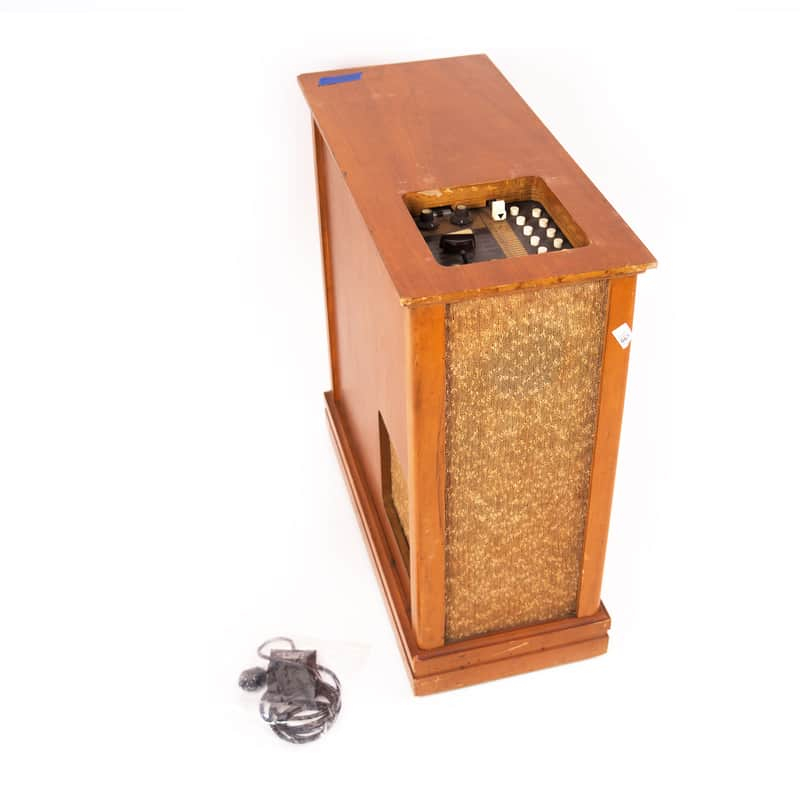
Wurlitzer marketed the Side Man publicly by spring 1960. Billboard reported the newly marketed machine on 21 March; an April New York demonstration followed, and a June Down Beat advertisement listed it at $395 in mahogany.
The machine in the record

LCD Soundsystem / “Somebody’s Calling Me”.
The release credits for This Is Happening name James Murphy playing Wurlitzer SideMan on “Somebody’s Calling Me”. The oldest machine in this group turns up on a twenty-first-century album as a particular rhythmic personality, not an antique decoration.
Read LCD Soundsystem — This Is Happening track credits ↗More records in the archive
The machine keeps turning up.

Geir Sundstøl / “Pøs”
Geir Sundstøl describes “Pøs” as pairing 1980s vocoder and Shankar guitar with the Wurlitzer Side Man.
Read Geir Sundstøl / St.hanshaugen Steel ↗
John Carroll Kirby / Oropendola
A filmed “Oropendola” performance shows John Carroll Kirby working the Side Man’s individual drum buttons before moving to Rhodes.
Read John Carroll Kirby and the Wurlitzer Sideman on Oropendola ↗
Joe Mansfield / Personal drum-machine collection
Joe Mansfield recalls finding a Wurlitzer Side Man on a 1993 Detroit record-buying trip and keeping it in his drum-machine collection.
Read Joe Mansfield, “Beatbox Drum Machine Obsession” ↗
Willy DeVille / John Philip Shenale / Crow Jane Alley
The personnel list credits Shenale with Wurlitzer SideMan and loops on “Chieva” and “Trouble Comin’ Everyday in a World Gone Wrong”.
Read Crow Jane Alley personnel listing ↗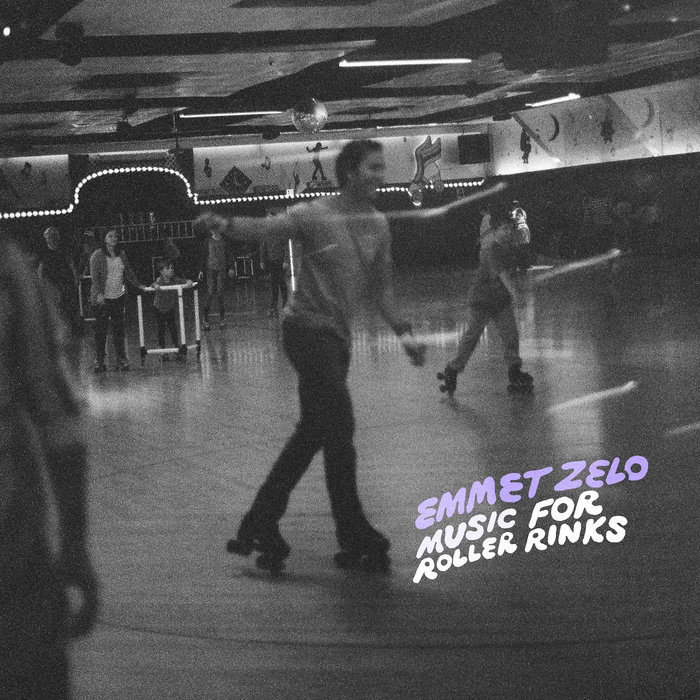
Emmet Zelo / Music for Roller Rinks
The release account says Emmet Zelo hoped the sounds of his Wurlitzer Sideman Drum Machine would move the skaters around the rink.
Read Emmet Zelo — Music for Roller Rinks ↗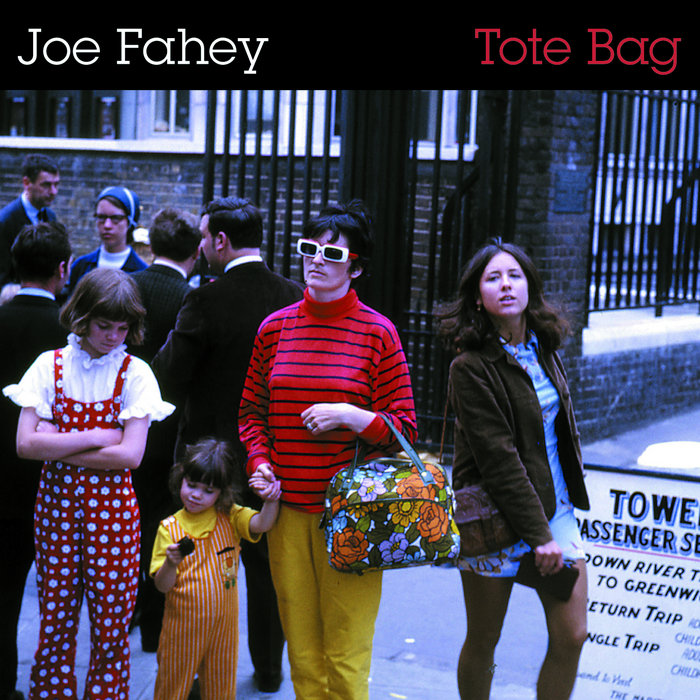
Joe Fahey / Tom Herbers / Tote Bag
The personnel credit for “rhibrhumba” names Tom Herbers on Wurlitzer Sideman, slide guitar, theremin and tabla.
Read Joe Fahey — Tote Bag ↗
J’AIME / Jaime Cristóbal / 700,000 Records
The release account says Cristóbal sampled an old 1959 Wurlitzer Sideman for the track.
Read J’AIME / Jaime Cristóbal — “700,000 Records” ↗Moby / Official Reverb Shop collection sale
Moby’s official Reverb shop sold a Wurlitzer Side Man Model 5000 Kit 9021 with footswitch from his private drum-machine collection.
Read Wurlitzer Side Man owned by Moby ↗A founding-era rhythm machine
The Side Man brought electronic accompaniment into homes, clubs and organ showrooms. The Swiss Museum of Electronic Music Instruments dates it to 1959; the contemporary notices retained here document Wurlitzer’s public marketing in spring 1960. Those records describe different moments in the machine’s arrival.
A spinning disc of dances
Vacuum tubes produce ten electronic drum sounds while a rotating metal-contact disc selects twelve rhythms: Beguine, March, Western, Waltz, Shuffle, Bolero, Rhumba, Cha Cha, Tango, Samba and two Fox Trot forms, with a metronome alongside. Its 36–195 BPM range gave the machine a broad domestic dance-band vocabulary without tape loops.
Built for accompaniment
A top rotary selector chooses a style, a rod controls speed and power, and ten manual sound buttons let a player punctuate the automatic rhythm. The cabinet carries its own circuitry, amplifier and speaker, while a remote player brought the Side Man within reach of an organ keyboard.
Wurlitzer Side Man Electro-Mechanical Tube Drum Machine ↗ Wurlitzer Sideman advertisement attribution ↗
The advertisement as a window
A Popular Mechanics advertisement from November 1960 gives the Side Man a striking period presence: furniture-like cabinet, musical promise and a direct appeal to the player looking for a rhythm section at home. It catches the moment when a domestic accompaniment machine could still feel like a small technological marvel.
A public arrival in 1960
Billboard’s March 1960 report describes Wurlitzer’s plan to introduce the Side Man through NBC’s Today and Jack Paar. The New Yorker then reported from an April Wurlitzer lunch demonstration in New York. Those contemporary notices show the company taking the machine into public view.
Wurlitzer’s $395 offer
In June 1960, Wurlitzer advertised the Side Man for $395 in mahogany, with walnut, cherry, blond oak and ebony alternatives. The same advertisement promoted 36–195 BPM, ten instruments, a syncopation footswitch, three hi-fi speakers, an amplifier and a 26 × 25 × 11½-inch cabinet.
An electronic accompaniment instrument
The June advertisement emphasised that the Side Man ran without tapes or recordings. Contemporary reporting described oscillating tubes, a top-panel rhythm selector and manual sound buttons. The result is an electronic and electro-mechanical accompaniment instrument made for choice, interruption and participation.
A Side Man in James Murphy’s studio
Fifty years after Wurlitzer sold the Side Man as an organist’s companion, James Murphy brought one into LCD Soundsystem’s This Is Happening. The published track credits name it on “Somebody’s Calling Me”. That is a lovely afterlife for the furniture-like rhythm machine: not preserved behind glass, but folded into a record built from a crowded, curious room of old electronic instruments.
Recording and working accounts
Explore 9 source accounts
- James Murphy / LCD Soundsystem — “Somebody’s Calling Me”
A public transcription of This Is Happening’s release credits names James Murphy playing Wurlitzer SideMan on “Somebody’s Calling Me”.
- Joe Mansfield — Personal drum-machine collection
- John Carroll Kirby — Oropendola
Read this account in the story ↑
John Carroll Kirby and the Wurlitzer Sideman on Oropendola ↗
- Willy DeVille / John Philip Shenale — Crow Jane Alley
- Geir Sundstøl — “Pøs”
- Emmet Zelo — Music for Roller Rinks
- Joe Fahey / Tom Herbers — Tote Bag
- J’AIME / Jaime Cristóbal — 700,000 Records
- Moby — Official Reverb Shop collection sale
Sources
The visual archive
Further visual evidence.
Sources for images shown earlier (9)
- Wurlitzer Side Man owned by Moby ↗
- Geir Sundstøl — “Pøs” ↗
2021-10-01 · Geir Sundstøl / release artwork via Bandcamp · Official Bandcamp release-page artwork (Open Graph image) - Emmet Zelo — Music for Roller Rinks ↗
2019-03-25 · Emmet Zelo / release artwork via Bandcamp · Official Bandcamp release-page artwork (Open Graph image) - Joe Fahey / Tom Herbers — Tote Bag ↗
Undated · Joe Fahey / Tom Herbers / release artwork via Bandcamp · Official Bandcamp release-page artwork (Open Graph image) - J’AIME / Jaime Cristóbal — 700,000 Records ↗
Undated · J’AIME / Jaime Cristóbal / release artwork via Bandcamp · Official Bandcamp release-page artwork (Open Graph image) - John Carroll Kirby — Oropendola ↗
2023-05-02T07:00:00Z · John Carroll Kirby / release artwork via Apple Music catalog artwork · Release catalogue and retained front artwork - Willy DeVille — Crow Jane Alley (For Jack) ↗
2004-01-01T12:00:00Z · Willy DeVille / release artwork via Apple Music catalog artwork · Release catalogue and retained front artwork - LCD Soundsystem — This Is Happening ↗
2010-05-17 · LCD Soundsystem / release artwork via Bandcamp · Official band Bandcamp release-page artwork and track listing - Joe Mansfield — Beat Box: A Drum Machine Obsession ↗
2013-12-06 · Joe Mansfield / Hip Hop Battlefield · Lead Beat Box graphic in Hip Hop Battlefield’s feature on Mansfield’s drum-machine collection and publication.
Additional visual sources (1)
Original publications and related image sources.
- Wurlitzer Side Man — Down Beat advertisement ↗
9 June 1960 · Wurlitzer / Down Beat · Wurlitzer Side Man full-page advertisement